Trouble regulating emotions is a core symptom of Borderline Personality disorder. Trouble controlling emotions can cause impulsive actions. It can also negatively influence relationships with others, as well as create a warped self- image.
Other symptoms include:
Intense and unstable interpersonal relationships
Strong feelings of dissociation (feeling cut off from oneself, a feeling of observing oneself outside one’s body)
Trouble controlling anger and or inappropriate outbursts of anger
Suicidal thinking
Long lasting feelings of emptiness
Intense moods that often vary (these episodes can last for hours or days)
Impulsive actions that can often be dangerous (unsafe sex, spending sprees, reckless driving, substance abuse, etc)
Acts of self-harm (cutting, etc)
Attempts to avoid real or perceived abandonment (quickly getting into an intense relationship or quickly leaving one)
If you or someone you know is struggling, please contact our psychotherapy offices in New York or New Jersey to talk to one of our licensed professional psychologists, psychiatrists, psychiatric nurse practitioners, or psychotherapists at Arista Psychotherapy & Psychiatric Services. Contact our Manhattan, NY or Paramus, NJ offices respectively at (201) 368-3700 or (212) 722-1920 to set up an appointment. For more information, please visit https://www.counselingpsychotherapynjny.com
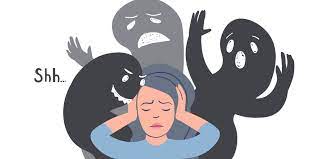
Schizophrenia is a mental illness that is usually diagnosed in people between the ages of 16 and 30. The way a person thinks, feels, and behaves can be highly affected by Schizophrenia. Symptoms of this disorder can make functioning and performing everyday tasks very challenging. Symptoms of Schizophrenia can often differ between patients. Symptoms usually fall into three different categories (psychotic, negative, and cognitive).
Psychotic: Symptoms include changes in behavior and a person’s perception of the world. Symptoms vary on how often they occur. For some, symptoms can be less frequent or more frequent.
Hallucinations: Hallucinations can occur in several forms. One can experience hallucinations visually, aurally, and through perceived taste or smell. Despite feeling very real, these hallucinations aren’t actually happening.
Delusions: Delusions are powerful beliefs that a person with Schizophrenia has that are untrue and somewhat illogical.
Ex: believing, voices on TV and Radio are sending special messages.
Thought disorder: Unusual and nonsensical ways of thinking. Having trouble organizing thoughts and speech. Abnormal pauses in the middle of talking while concentrating on a thought.
Movement disorder: Abnormal body movements such as repeating movements over and over.
Negative:
Feeling a loss of motivation or lack of interest in daily activities, Isolating oneself and withdrawal from social life, having trouble functioning.
Symptoms include: trouble sticking to tasks, feeling pressure in everyday life, having low energy, avoiding social interaction.
Cognitive:
Having problems with memory and concentrating, having trouble processing information and using information after learning it.
If you or someone you know is struggling, please contact our psychotherapy offices in New York or New Jersey to talk to one of our licensed professional psychologists, psychiatrists, psychiatric nurse practitioners, or psychotherapists at Arista Psychotherapy & Psychiatric Services. Contact our Manhattan, NY or Paramus, NJ offices respectively at (201) 368-3700 or (212) 722-1920 to set up an appointment. For more information, please visit https://www.counselingpsychotherapynjny.com
Dealing with anxiety is often a lot easier said than done. It’s common to find yourself feeling powerless. Coping skills can not only provide a relief but can also give you more confidence when dealing with your anxiety.
When trying to use different anxiety coping skills, it is important to remember that some things can work better or worse for different people. It is also important to remind yourself to not be discouraged when a coping skill does not work right away. It can take practice to master these types of skills.
Some helpful anxiety coping skills:
Distraction; Whether it’s listening to music, watching a TV show, doing a physical activity, or any other activity that can occupies your mind, distraction can be a simple way to focus your mind on something less stressful.
Deep breathing; Practice focused deep breathing (breathe in for four counts and breathe out for four counts. Try this for a few minutes).
Progressive muscle relaxation; Find a private, quiet location. Close your eyes and slowly tense each of your muscles from your head to your toes. Hold for a few seconds each and then release. This technique can help loosen and relax muscles that become tense due to anxiety.
Grounding techniques; Grounding techniques can help someone struggling with anxiety to get out of their head and re-anchor themselves to reality. An example of a grounding technique is the 5-4-3-2-1 technique. It includes listing 5 things you see, 4 things you feel, 3 things you hear, 2 things you can smell, and 1 thing you can taste.
Communicating/expressing anxiety; Sometimes, clearly expressing your anxieties through words (whether through writing or vocalization) can help you fully understand your anxiety and help you let go of it.
If you or someone you know is struggling with anxiety contact our psychotherapy offices in New York or New Jersey to talk to one of our licensed professional psychologists, psychiatric, psychiatric nurse practitioners, or psychotherapists at Arista Psychotherapy & Psychiatric Services. Contact our Manhattan, NY, or Paramus,NJ offices respectively at (201) 368-3700 or (212) 722-1920 to set up an appointment. For more information please visit https://counselingpsychotherapynjny.com
Raising children on your own can result in an overwhelming amount of stress and pressure into parenting. Aside from the financial obligations of raising a family and maintaining a roof over your head with food on the table, single parenting comes with more obstacles than one may think. Emotionally, a single parent must take on the role of both parents at once which leaves them to be both “bad” and “good” cop all at once. This can allow one to feel lonely and isolated when it comes to decision making because they often feel lost without another opinion. Guilt will arise from these situations but your own well-being it is better to focus on any accomplishments.
There are many ways to reduce the stress and attempt to live in a calmer environment. One thing that can be done is to set up a support system. All parents need a little help here and there so do not feel ashamed to ask for it. Maintaining a daily routine can allow you to find yourself with more time to relax. For example, set up a schedule for meals, chores, bedtimes and anything else that is included in your day to day routine. Treat your children like children; although the other parent is absent you should not rely too heavily on the child. A way to notice if you are relying on them too much is if your frustration is being shown more on them than in any other aspect of your life. Lastly, stay positive and take time for yourself.
If you or someone you know is struggling with single parenting stress contact our psychotherapy offices in New York or New Jersey to talk to one of our licensed professional psychologists, psychiatric, psychiatric nurse practitioners, or psychotherapists at Arista Psychotherapy & Psychiatric Services. Contact our Manhattan, NY, or Paramus,NJ offices respectively at (201) 368-3700 or (212) 722-1920 to set up an appointment. For more information please visit https://counselingpsychotherapynjny.com
Communication in romantic relationships: Healthy communication and its importance
By: Anna Giammanco
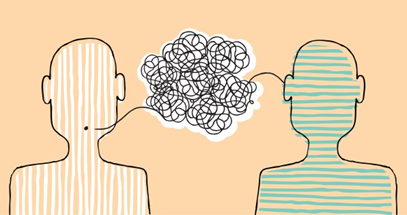
Communication is key to maintaining a stable and healthy relationship. Whether romantic or platonic, open communication can help deal with conflict by vocalizing issues and concerns within a relationship. Working through obstacles can create a stronger relationship.
Tips for healthy communication:
Be clear and concise about what you want to communicate. Make sure your partner understands what it is you are trying to communicate and doesn’t misconstrue your words.
Talk about the situation and how it has been affecting you.
Use ‘I’ statements such as “I feel …” “I need …” “I want …”
Accept responsibility for your own actions, feelings, and mistakes.
Listen to what your partner has to say and put aside your own thoughts for the time being to completely hear them out.
Share positive feelings with your partner. Let them know that they are appreciated and important to you.
Be aware of your tone of voice.
Negotiate and try to compromise on the issue.
If you or someone you know needs help please contact our psychotherapy offices in New York or New Jersey to talk to one of our licensed professional psychologists, psychiatrists, psychiatric nursepractitioners, or psychotherapists at Arista Psychotherapy & Psychiatric Services. Contact our Manhattan, NY or Paramus, NJ offices respectively at (201)368-3700 or (212) 722- 1920 to set up an appointment. For more information, please visit https://counselingpsychotherapynjny.com
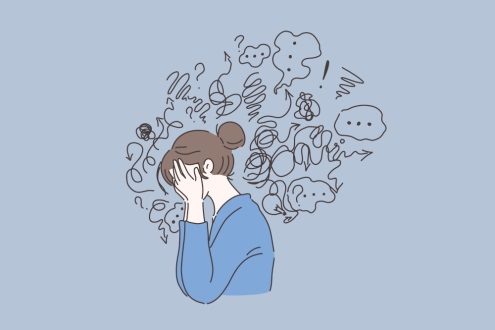
Do you experience a feeling of your worries being hard to manage? Do you find yourself preoccupied with what-if thinking or imagining the worst possible outcome? This can be a sign of Obsessive Compulsive Disorder (also known as OCD). OCD is a disorder in which people have recurring, unwanted thoughts, ideas or sensations (obsessions). To get rid of these thoughts, they feel driven to do something repetitively (compulsions). Chronic worrying is not always linked to a mental health disorder but in some cases it may be.
Troubles managing your chronic worries can come in many different scenarios but the most common are:
Family situations / Relationships
Health / Other Personal Issues
Money / Work
The state of the world
OCD compulsions include but are not limited to the following: (performed excessively)
Praying / Counting / Cleaning / Pacing
Checking on something / Arranging objects
Repeating a word / phrase / activity
Obsessive compulsive disorder may seem difficult to conquer; however there are many healthy habits which can eliminate your cycle of chronic worrying. Hypnosis can help you learn to live in the moment and mute any other thoughts. A deep breathing exercise allows you to focus on your breath which will calm your mind and body. A good night rest by prioritizing your sleep and increasing your optimal sleep hygiene will lessen the worrying feeling. Although all individuals seem to worry here and there, if you find yourself being prevented from enjoying the present and engaging in things you love, you may want to seek help.
If you or someone you know is struggling with OCD : chronic worrying please contact our psychotherapy offices in New York or New Jersey to talk to one of our licensed professional psychologists, psychiatrists, psychiatric nursepractitioners, or psychotherapists at Arista Psychotherapy & Psychiatric Services. Contact our Manhattan, NY or Paramus, NJ offices respectively at (201)368-3700 or (212) 722- 1920 to set up an appointment. For more information, please visit https://counselingpsychotherapynjny.com
Misuse of the Term “Gaslighting” in Popular Culture: What does it really mean?
By: Caroline Clarke
In this generation it is not uncommon to hear from friends about how someone they know “gaslit” them. When scrolling through Twitter, Instagram, or TikTok, it is virtually impossible to evade the word “gaslighting”. So what is gaslighting anyway? Where does it come from?
The term “gaslighting” originates from the 1938 play Gas Light in which the husband turns down the gas-powered lights to make them flicker. When his wife points out the lights have been flickering, he denies her claim and instead pushes her to believe that it is all in her head.
Nowadays, when someone uses the term “gaslighting”, they are often referring to a time when someone lied to them. However, lying and gaslighting are not interchangeable terms, despite that being the trend in popular culture. Gaslighting is a manipulation tactic often used in abusive relationships to maintain power over the victim. A technique much more malicious than lying, gaslighting causes the victim to question their perception of reality and their mental sanity. This breaking down of the victim’s mental state and their ability to trust themselves is a major reason victims will feel it is impossible for them to leave the relationship.
Signs you are being gaslit include (but are not limited to):
Consistently second-guessing yourself and your instincts
Excessively apologizing to the person
Believing that you are too sensitive or over-emotional
Doubting your own memory
Blaming yourself for the way the other person treats you
Walking on eggshells around the person
Feeling like you cannot do anything correctly
Making excuses for the person’s behavior or withholding information from family and friends
If any of these experiences ring true for you and you suspect you may be a victim of gaslighting, know that help is always available. Remember: you are not at fault in this relationship. The first step is to reach out and tell someone about the abuse.
If you or someone you know is a victim of gaslighting please contact our psychotherapy offices in New York or New Jersey to talk to one of our licensed professional psychologists, psychiatrists, psychiatric nurse practitioners, or psychotherapists at Arista Psychotherapy & Psychiatric Services. Contact our Manhattan, NY or Paramus, NJ offices respectively at (201) 368-3700 or (212) 722-1920 to set up an appointment. For more information, please visit https://www.counselingpsychotherapynjny.com
Premenstrual Dysphoric Disorder (PMDD): What is it and how can it be treated?
By: Caroline Clarke
Do you experience premenstrual syndrome (otherwise known as PMS)? Do you feel like your PMS tends to be more extreme than those around you? You may want to consider looking into premenstrual dysphoric disorder (PMDD). Premenstrual dysphoric disorder is considered to be a severe and chronic form of PMS, and can be dangerous due to possible suicidal ideation or suicidal actions.
Any person can develop PMDD, but you are at an increased risk if:
There is a family history of PMDD.
There is a personal or family history of depression, mood disorders, or postpartum depression.
PMDD symptoms most often occur during the days leading up to your menstrual cycle. These symptoms are not experienced during other times during the month.
Some common symptoms of PMDD include but are not limited to:
Anger or Irritability
Depression
Severe fatigue
Difficulty concentrating
Crying spells
Moodiness
Diminished sex drive
Appetite changes
Lack of interest in activities once enjoyed
The cause for PMDD is not known. However, there are treatment options available. Some treatment options available include:
Regular exercise
Vitamin supplements
Selective serotonin reuptake inhibitors (SSRI)
Birth control pills
Anti-inflammatory medicines
Dietary changes
Due to this disorder being centered around a person’s menstrual cycle, there tends to be a stigma and significant lack of recognition surrounding PMDD. Do not let this deter you from seeking help as this is a serious disorder that requires treatment. If you or someone you know feels their PMS symptoms are more severe than the average, do not hesitate to reach out to a licensed professional and ask questions.
If you or someone you know is struggling with premenstrual dysphoric disorder please contact our psychotherapy offices in New York or New Jersey to talk to one of our licensed professional psychologists, psychiatrists, psychiatric nurse practitioners, or psychotherapists at Arista Psychotherapy & Psychiatric Services. Contact our Manhattan, NY or Paramus, NJ offices respectively at (201) 368-3700 or (212) 722-1920 to set up an appointment. For more information, please visit https://www.counselingpsychotherapynjny.com
As the weather gets colder, the colorful leaves fall off the trees, and the holiday decorations start to light up the night, the feeling of the best time of the year starts to kick in. As merry and cozy as these holidays seem to be, they do not always have the same effect on everyone. Grieving around the holidays can feel extremely lonely, sad, and overwhelming. The first holiday season is always the hardest for individuals and families who have just lost someone close to them, such as a grandparent, parent, sibling, child, or other close relative that they would usually see during the holidays. The empty chair at the dining table during Thanksgiving, or the wonder of who is going to make the Christmas cookies this year can be extremely heartbreaking. Even after you feel as if you have started to feel better through your grieving process, the holidays can dig up more emotion than you have felt since losing your loved one. You may start to feel more down, tired, unmotivated, sluggish, and lonely. You may also start to get flashbacks of your loved one when they passed that may also make you feel as if you are grieving from the beginning all over again. As hard as the holiday season may be for grieving individuals and families, here are some tips to help make your holiday season a bit brighter this year[1]:
Surround yourself with people you love and care about. Being with a big group of people during the holidays after losing a loved one can help you feel less lonely and can also be a great opportunity to share stories about your loved one with your family.
Do not “cancel” the holiday. As tempting as it may be to forget about the holidays after losing your loved one it is important to keep it going and grieve along the way. Experiencing the holiday season after the death of a loved one is part of the grieving process from which you should not run away.
Create new traditions. Finding new traditions can also be a create way to cope during the holiday season. This can include changing the location of where holiday dinner is hosted, picking new family members to carve the turkey or make the Christmas cookies, or even coming up with a new holiday game to play to fill the emptiness that everyone may feel.
Practice self-care. Try not to indulge in alcohol or drugs during the holiday season to cope with your grief; instead, try journaling, spending time with friends, or physical activity to boost your mood. It is also important to let yourself feel any emotions that arise and to not fight the conflicting feelings of anger, sadness, joy, and happiness.
Seek professional help. It is important to be aware of your feelings during such a difficult time and recognize that if the holiday season is too much for you to handle to seek professional help to assist you during this challenging period.
If you or someone you know is struggling with grief this holiday season and wants help, please contact our psychotherapy offices in New York or New Jersey to talk to one of our licensed professional psychologists, psychiatrists, psychiatric nurse practitioners, or psychotherapists at Arista Counseling & Psychotherapy. Contact our Paramus, NJ or Manhattan, NY offices respectively at (201) 368-3700 or (212) 722-1920 to set up an appointment. For more information, please visit https://www.counselingpsychotherapynjny.com
Shopping Addiction? Can’t Save Money? That May Be A Real Issue
By Erika Ortiz
Most people like to spend and buy things, but some take that splurging a bit to the max and do it any opportunity possible. Shopping makes some feel good, however; some get this “high” feeling since the brain releases endorphins and dopamine as they shop. It’s one thing to shop while on a budget, while it’s another to shop with no budget in mind. All of the spending, unnecessary buying, and accumulation of debt is an actual issue called shopping addiction. It is imperative to break down shopping addiction and the different types. First, there is impulse buying which is buying something you did not plan on purchasing in the first place. It can range from buying a chocolate bar from the grocery store while waiting in line or buying your 50th pair of shoes. Compulsive buying is when you plan your shopping, but to an extreme and on unnecessary items. Compulsive buying is usually where the shopping addiction behavior occurs most. For example, say you did not do so well on an exam or had a bad day at work, your immediate solution is to go shopping afterward to make yourself feel better. Another type is bargain shoppers who think they are getting a steal price or great deal. They are still spending a lot instead of saving. Finally, there is bulimic shopping or circular shopping. These people buy and return just for fun; even though they are staying within their budget, they are wasting a lot of time and energy.
Shopping addiction can be due to stress, loneliness, sadness, the need to fill a void, lack of control, avoidance of reality, depression, anxiety, etc. Nonetheless, this is a severe problem that needs an urgent solution because shopping addiction can lead to issues in relationships, growing debt, constant overspending, and even lying about spending. One way to help with this issue is to create a budget and try sticking with it. There are many resources online that can be great budgeting tools. It is critical to immediately get help if you have a very severe case of shopping addiction. Seek a mental health professional who can help you get to the root of the issue and understand what you are going through. Remember that there is hope and you can get through this.
If you or someone you know is struggling with a shopping addiction please contact our psychotherapy offices in New York or New Jersey to talk to one of our licensed professional psychologists, psychiatrists, psychiatric nurse practitioners, or psychotherapists at Arista Counseling & Psychotherapy. Contact our Paramus, NJ or Manhattan, NY offices respectively at (201) 368-3700 or (212) 722-1920 to set up an appointment. For more information, please visit https://www.counselingpsychotherapynjny.com










 CounselingRx