Passive Aggressiveness: Origins and How to Respond

Passive Aggressiveness: Origins and How to Respond

By Crystal Tsui

At one point or another, we have all seen or engaged in passive aggressive behaviors, whether it’s giving the silent treatment, making subtle insults, or sending one of those “as per my last email” emails. We do this because we are suppressing our anger or frustration from someone or something. Fear and anger are controlled by a region in the brain called the amygdala. Passive aggressiveness stems from that basic emotion of anger.

Anger is neither good nor bad. It is a basic, spontaneous, neurophysiological part of human emotion. As children, we were often scolded or punished for expressing anger. For example, throwing a temper tantrum is considered unacceptable. So at a young age, we started to perceive anger as taboo. As a result, we learned to suppress our feelings and engage in an indirect expression of hostility through subtle acts.

Children are most likely to act in a passive aggressive manner. Nonetheless, children are the most susceptible to change. Teaching our children that anger is just like every other emotion and directing their anger towards a positive, productive activity will help the child grow into an adult knowing how to manage their emotions properly. Some positive activities may include writing, exercising, drawing, meditating, and listening to music. These activities provide a form of distraction that can alleviate one’s mood, by stimulating another part of the brain that is not associated with the amygdala.

However, adults act this way as well because it’s easier to be passive than to be assertive and emotionally open. When children are taught to suppress their anger and they mature into an adult, it’s harder for them to stand up for themselves and to confront their source of anger.

It is best to avoid raising your voice, lecturing, or knee-jerk consequences that can exacerbate the situation. If an individual is trying to express their anger through communication, it is best to listen instead of reprimanding them for being angry.

When someone is passive-aggressive towards you, fight the urge to mirror their behavior. Instead confront the behavior because when passive-aggressive behavior is confronted directly and assertively, the hidden anger is weakened. Assertive communication and being emotionally open, no matter how hard it is, is the most effective way to acknowledge and accept anger. This builds a foundation for lifelong emotional intelligence and strong, secure relationships.

If you or someone you know has difficulty managing their anger, please contact our psychotherapy offices in New York or New Jersey to talk to one of our licensed professional psychologists, psychiatrists, psychiatric nurse practitioners, or psychotherapists at Arista Counseling & Psychotherapy. Contact our Paramus, NJ or Manhattan, NY offices respectively, at (201) 368-3700 or (212) 722-1920 to set up an appointment. For more information, please visit http://www.counselingpsychotherapynjny.com/ .

Sources:

https://www.psychologytoday.com/us/blog/passive-aggressive-diaries/201712/the-angry-smile-responding-passive-aggressive-behavior

https://www.psychologytoday.com/us/blog/passive-aggressive-diaries/201709/how-respond-effectively-young-persons-anger

https://www.verywellmind.com/what-is-passive-aggressive-behavior-2795481

https://vignette.wikia.nocookie.net/pixar/images/7/7a/Io_Anger_standard2.jpg/revision/latest/scale-to-width-down/2000?cb=20150425021210

Hypnosis: The Basics!

Hypnosis: The Basics!

By Lauren Hernandez

            In today’s fast paced, technology filled world, it is important to take care of your mental health and address stress and anxiety with a mental health professional. There are various methods of treating anxiety, stress, and depression, and one of those methods is Hypnosis. According to PsychologyToday, hypnosis is the technique of “putting someone into a state of heightened concentration where they are more suggestible”. Hypnosis is achieved through soothing verbal repetition which relaxes a patient into a trance-like state, allowing the patient to be more open minded to transformative messages. Hypnosis allows a patient to be guided through relaxation, while still being in control. Hypnosis is utilized in accordance with other treatments to help patients overcome mental health issues. Hypnosis is ineffective as a sole treatment method, but is beneficial to a patient when used with other methods of therapy.

Hypnosis can help treat:

  • Bad habits such as smoking
  • Stress, anxiety, and depression
  • Pain, pain associated with autoimmune diseases
  • Fatigue
  • Mood disorders
  • Insomnia
  • Specific phobias

If you are interested in trying another method to treat your anxiety, depression, or any other mental health issues, it is important to reach out to a licensed psychotherapist who can safely and effectively assist you with the use of hypnosis.


Sources:

https://www.psychologytoday.com/us/basics/hypnosis

https://www.psychologytoday.com/us/blog/life-without-anxiety/201706/hypnotherapy-and-its-benefits-autoimmune-disease

Image Source:

https://www.bing.com/images/search?view=detailV2&id=8D025584803526770A48CA5EEC0B18B1B5C9F019&thid=OIP.y6nddEUu23PK3TscNApqDAHaEK&mediaurl=https%3A%2F%2Fi.ytimg.com%2Fvi%2Fyf42hiij63U%2Fmaxresdefault.jpg&exph=720&expw=1280&q=hypnosis&selectedindex=4&ajaxhist=0&vt=0&eim=1,2,6

Narcissism

Narcissism 

Narcissism

By: Julia Keys

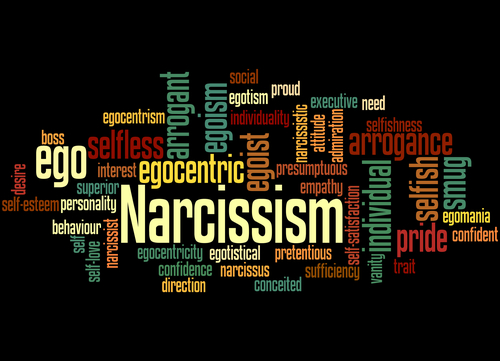
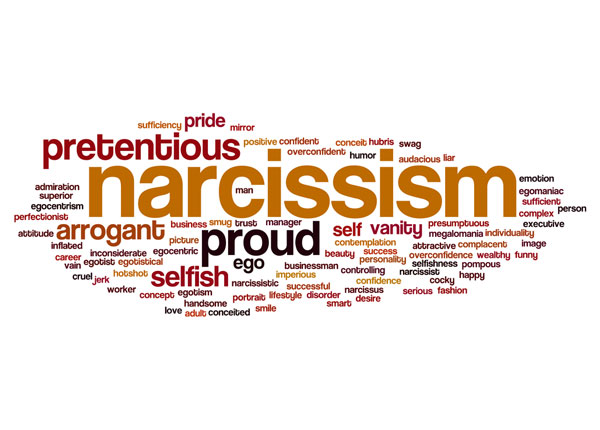
It is common in today’s world to call someone who is very clean “OCD”, or someone who is very active “ADHD”, or someone who is overly confident a “narcissist”.  What many people do not know is that narcissism is not an adjective to describe someone’s personality, but a real psychiatric diagnosis. The DSM IV identifies narcissism as a personality disorder. Personality disorders are characterized by a set of rigid traits, thoughts, and behaviors that are unhealthy and inflexible. Narcissistic personality disorder or (NPD) is characterized by an overinflated sense of self, preoccupation with personal success, and apathy for other’s emotions.

Signs of narcissistic personality disorder:

  • Grandiose sense of self-importance
  • Preoccupation with fantasies of success, power, brilliance, beauty.
  • Belief that one is unusually special or unique
  • Need for excessive admiration
  • Strong sense of entitlement
  • Exploitative of others
  • Lacks empathy
  • Is often envious of others or believes that others are envious of them
  • Frequent display of arrogant or haughty behavior

Although people with NPD display an arrogant and larger-than-life picture to the outside world, they can also suffer from low self-esteem internally. The constant need for approval and obsession with success can be stressful because in reality, one will never gain approval from everyone and one will never achieve everything they want.  Trouble with interpersonal relationships often results from the exploitative and apathetic behaviors that people with NPD believe will help them achieve their goals.

People with NPD can look like the perfect partner upon first meeting. They are often charismatic and appear to be very put together. However, being in a relationship with a person with NPD can be complicated and stressful. People with NPD lie frequently to get what they want, which can cause a breach of trust in a serious relationship. People with NPD rarely apologize because they lack the empathy to understand the point of view of their partners. Additionally, people with NPD think that they are perfect and will dismiss others who have opinions contrary to theirs. Although people with NPD can be extremely difficult to live with, they can still be a loved one that you care about.

If you or someone you love has narcissistic personality disorder and is struggling with the symptoms, please contact our psychotherapy offices in New York or New Jersey to talk to one of our licensed professional psychologists, psychiatrists, psychiatric nurse practitioners, or psychotherapists at Arista Counseling & Psychotherapy. Contact our Paramus, NJ or Manhattan, NY offices respectively, at (201) 368-3700 or (212) 722-1920 to set up an appointment. For more information, please visit http://www.counselingpsychotherapynjny.com/ 

Sources:

https://psychcentral.com/disorders/narcissistic-personality-disorder/

https://www.psychologytoday.com/us/blog/mind-games/201905/five-narcissistic-traits-harm-intimate-partner

Source for Picture:

https://www.google.com/search?biw=1391&bih=654&tbm=isch&sa=1&ei=UenvXLaCJeWJggeP6ZHYAw&q=narcissus+myth&oq=narcissus+&gs_l=img.1.1.0j0i67l3j0j0i67l2j0j0i67l2.620.620..2327…0.0..0.69.69.1……0….1..gws-wiz-img.eaqpLt3PV-c#imgrc=fUnycKFz1Mb7jM:&spf=1559226710308

Childhood Trauma: Effects on Adult Wellbeing

Childhood Trauma: Effects on Adult Wellbeing

Childhood Trauma: Effects on Adult Wellbeing

By: Julia Keys

The child brain grows and makes connections at a rapid rate and is extremely emotionally sensitive. Unfortunately, children that experience some sort of major trauma such as emotional, physical, or sexual abuse, neglect, war, poverty, or unsafe living conditions can be greatly negatively impacted later on in life.

Children who have parents that are for some reason unwilling or unable to provide the love and care they need oftentimes blame themselves for the lack of parental attention. In response to this lack of care, children may start to act in ways in which they feel would help the parents love them more. As the child grows up, they can become detached from their own needs because they are so focused on the love they receive from others.

Another effect of childhood trauma is victimhood thinking. Although a child may have been helpless when they were raised, self-victimization does not help an adult in the long run because it robs them of the self-empowerment they need to change their lives in the ways they desire.

Children growing up in environments where anger is expressed violently may begin to learn that anger is dangerous and therefore should be avoided. However, suppressing emotional expression is unhealthy and can cause individuals to be passive aggressive, which is an ineffective way to communicate. The most damaging effect of childhood trauma can have on an adult is the development of psychological disorders such as depression, anxiety, or post-traumatic stress disorder.

If you or someone you love is struggling with the effects of childhood trauma, please contact our psychotherapy offices in New York or New Jersey to talk to one of our licensed professional psychologists, psychiatrists, psychiatric nurse practitioners, or psychotherapists at Arista Counseling and Psychotherapy. Contact our Paramus, NJ or Manhattan, NY offices respectively, at (201) 368-3700 or (212) 722-1920 to set up an appointment. For more information, please visit http://www.counselingpsychotherapynjny.com/. 

Self-Esteem and Shaming Parents

By Stephanie Osuba

We have all felt, in one way or another, like we weren’t good enough or even felt embarrassed after making a mistake at work. This is healthy in that we are expressing sadness or just reflecting on a situation that could have been handled differently, but we move on and eventually feel valued and confident again. However, for some, that feeling of shame and guilt never goes away. Some believe they are inherently flawed, worthless, and inferior to everyone else. These negative emotions and lack of self-esteem are largely rooted in repeated childhood and adolescence trauma that is often left unprocessed. Internalization of this emotional abuse leads to a conditioning of sort, usually by the primary caregiver, that the negative emotions constantly felt reflect who one is as a person. This person comes to genuinely believe that he or she is a bad person, unlovable, never good enough, and deserves to be treated with disrespect.

The constant shame is also accompanied by a constant feeling of guilt. Everything is his or her fault, regardless of the context. There is a sense of unjust responsibility for other people’s emotions and the outcome of all situations. Its no wonder why low self-esteem can manifest itself in anxiety, self-harm or poor self-care, or on the other extreme, narcissism and antisocial tendencies. Here are some behaviors that can be a manifestation of low self-esteem:

  • Lack of healthy self-love: poor self-care, self-harm, lack of empathy, and inadequate social skills
  • Emptiness: loneliness, lack of motivation, and finding distractions from emotions
  • Perfectionism: this is often a behavior that manifests as adults because of the unrealistic standards these children were held to by their parents and were punished for not meeting
  • Narcissism: grandiose fantasies of who they want others to perceive them to be; even if they do succeed however, this protective personality doesn’t numb the negative emotions they truly feel.
  • Unhealthy relationships: people with low self-esteem are incapable of building and maintaining a relationship with others, largely because they don’t know what a healthy relationship looks like. Both parties are usually extremely dependent.
  • Susceptibility to manipulation: the constant self-doubt, shame and guilt make it too easy to bend a person with low self-esteem to an experienced manipulator’s will.

Source: Cikanavicius, D. (2018, September 03). A Brief Guide to Unprocessed Childhood Toxic Shame. Retrieved from https://blogs.psychcentral.com/psychology-self/2018/09/childhood-toxic-shame/ 

If you or someone you know is struggling with self-esteem, the licensed psychologists, psychiatrists, psychiatric nurse practitioners, and psychotherapists at Arista Counseling & Psychotherapy can assist you. Contact our Paramus, NJ or Manhattan, NY offices respectively, at (201) 368-3700 or (212) 722-1920 to set up an appointment. For more information, visit http://www.counselingpsychotherapynjny.com/

Narcissism: 5 Major Signs You’re Missing

By Stephanie Osuba

According to PsychCentral.com, there are a few trademark signs of a narcissist that are pretty hard to miss. They all think the world revolves around them and are very much preoccupied with themselves, their preferences, needs, success, and, most importantly, how they are viewed by other people. Even more important still, their aesthetics.

Narcissism usually stems from a major attachment dysfunction, whether from parents or primary caregiver, and that dysfunction is attributed to a major emotional trauma or a culmination of repeated trauma or neglect. This separation or attachment trauma stunts emotional capacity and maturity, usually from an age of adolescence. Because the emotional pain is too much to bare, the child than creates a false persona in order to cope and have the world perceive them to be better off than they actually are. On the other hand, narcissism can also be attributed to overindulgence from parents when their child does the bare minimum.

Here are 5 major signs a narcissist exhibits:

  1. False Humility: A narcissist may put him or herself down on purpose and bait you into complimenting them. They are attention-seeking and have a need for their ego to be stroked constantly.
  2. Lack of Empathy: Because they are only interested in fulfilling their own agendas, narcissists often see people as things to be used. Once you have given them what they wanted, emotionally or physically, they discard you and don’t feel guilty about it. Narcissists are selfish and their relationships are very much one-sided as they are expecting of others to constantly serve them and give nothing in return.
  3. Immature Responses: Narcissists are extremely reactive and highly sensitive people. The slightest criticism can be perceived as the highest of offenses. They blow perceived or actual threats out of proportion and often blame others for their reactivity. Narcissists will also often become passive-aggressive when dealing with a situation that angers them or engage in childish bullying.
  4. Simplification of Other’s Needs: In short, narcissists don’t care about your problems, only their own. They will find a way to minimize any situation that isn’t worth their time in order to brush it off as stupid or useless. Belittling emotions and deflecting in order to blame others is also a common tactic.
  5. Inability to Listen: Narcissists will often give generic advice if forced to speak and not ask questions during a conversation in order to keep dialogue to a minimum. They don’t care about your emotions or what you have to say unless it benefits them.

If either you or anybody you know may be suffering from narcissistic personality disorder, the licensed psychologists, psychiatrists, psychiatric nurse practitioners, and psychotherapists at Arista Counseling & Psychotherapy can help you. Contact our Paramus, NJ or Manhattan, NY offices respectively, at (201)-368-3700 or (212)-722-1920 to set up an appointment. For more information, visit us at https://www.counselingpsychotherapynjny.com/.

Source: Bogdanos, M. (2017, July 11). 5 Signs of Covert Narcissism. Retrieved from https://psychcentral.com/blog/5-signs-of-covert-narcissism/

Group Therapy

Alice Cordero

According to psychcentral.com, Group therapy is a form of psychotherapy treatment where several people meet together under the supervision of a therapist in a particular setting. Group therapy is a form of therapy that can be used in conjunction with individual therapy and medication.  The benefits of group therapy include:

  • Modeling
    • Patients are able to witness how others in the group cope with their problems in positive ways and apply it to their lives.
    • Patients learn from other group member’s mistakes.
  • Helps improve social skills
    • In group therapy, most of the time each individual has to share something about themselves and how they are doing; this helps improve the patient’s interpersonal relationships and understand that they are not alone in this particular process.
  • Increased feedback
    • Provides patients with different perspectives/ coping methods
    • Gives patients a view of how others handle their particular situation
    • Provides individuals with personal feedback through other patients perceptions of themselves
  • Support Network
    • Having multiple individuals who are going through the same gives each patients the opportunity to build a support system that they can use


Group therapy involves members expressing their feelings, problems, ideas, and reactions towards other members. Studies have shown that group therapy has been effective in addressing countless problems, including: anxiety, depression, addictive disorders, substance abuse, death, lifestyle issues, and relationship issues.

If you or someone you know is suffering from any of the conditions listed above or think you/ they could benefit from group therapy, please contact our psychotherapy offices in New York or New Jersey to talk to one of our licensed professional psychologists, psychiatrists, psychiatric nurse practitioners, or psychotherapists at Arista Counseling & Psychotherapy. Contact our Paramus, NJ or Manhattan, NY offices respectively, at (201) 368-3700 or (212) 722-1920 to set up an appointment. For more information, please visit http://www.counselingpsychotherapynjny.com/.

Neurofeedback

Leah Flanzman

There has recently been a great deal of discussion on a psychological treatment called neurofeedback. Neurofeedback assists people in consciously controlling their brain waves by attaching subjects to an EEG machine that extracts various brain-activity components and feeds them back to the patient.  The most common protocols used in neurofeedback training are alpha, beta, theta, and alpha/theta protocols.  The way that you select the placement of electrodes on a patients head depends on their specific brain functions and specific symptoms.  The goal is to allow the subject to assess their progress and adjust their brain waves accordingly to achieve optimal performance.  However, the effectiveness and practicality of the treatment is under debate.

According to the Basic and Clinical Neuroscience journal, many studies conducted on neurofeedback therapy reveal methodological limitations that question its effectiveness. For example, with the alpha treatment protocols, it remains unknown exactly how many treatment sessions are necessary before patients can consciously possess the ability to control their alpha waves.  Once an optimal performance is achieved, it’s difficult to study the long-term effects of these treatments, in other words how long the effects last without feedback.

The pros of neurofeedback are that it’s a safe and non-invasive procedure that has been proven effective in treating certain disorders such as ADHD, anxiety, depression, epilepsy, insomnia, drug addictions, and learning disabilities. Despite this, more scientific evidence of its effectiveness must be conducted before we can consider it a valid treatment.  It’s also important to keep in mind that it’s a very expensive procedure that is not covered by many insurance companies, and is very time consuming to complete.

If you or someone you know thinks they have ADHD, anxiety, depression, or drug addictions, or learning disabilities, the psychologists, psychiatrists, and psychotherapists at Arista Counseling and Psychiatric Services can help.  Contact the Bergen County, NJ or Manhattan offices at (201) 368-3700 or (212) 722-1920.  Visit http://www.counselingpsychotherapynjny.com for more information.

Leaving an Abusive Relationship

By: Emily Ramos

Note: Abuse is not sex-linked. Just as men can abuse women, women can abuse males, and vice-versa. This article applies to everyone who is a victim of abuse.

Why do people stay in abusive relationships if they are unhappy? It is easy to put the blame on victims for choosing to remain with their abuser when you don’t know the extent of what they are going through.  Many times they worry their attacker will do one of the following if they end up leaving:

  • stalk and harass them
  • kill them
  • hold their children hostage
  • kill their pets
  • threaten to commit suicide

It would be easier for someone to leave if they were guaranteed protection from their assailant like a witness protection program. Luckily there are restraining orders that can be filed on behalf of the victim and their loved ones. Here are some helpful tips if you or someone you know is in an abusive relationship:

  1. Make sure you have a strong support system. The more people you have to provide moral and emotional support the more likely you are to follow through with leaving.
  2. Pack your things. Actions speak louder than words, saying you plan to leave is not the same as actually leaving. If you continue to hold off, the situation will only get worse. Abusive relationships never get better and, in some instances, end in death. Taking steps now will improve your chances of being able to escape. If you don’t already have one, open a savings account in your name. Start to put together personal items and important documents that you can leave with a trusted friend and make sure these items won’t get noticed it’s missing.
  3. IF you decide to end the relationship in person, make sure it is done in a public setting. Let your friends know where you are meeting and have someone close by waiting to make sure it all goes according to plan. Also, bring your cellphone and have the number of a local domestic violence shelter on speed dial in case of an emergency.
  4. DO NOT STAY IN CONTACT. Any attempt on the part of your abuser to reach out to you is just their way of manipulating you into taking them back. Agreeing to meet in person is very dangerous.
  5. NEVER assume you’re safe just because you successfully left. Make sure you have a backup plan for every possible scenario that may arise. Avoid participating in the same routines as previously or going to places you previously frequented. Make sure you never do things alone and switch all your social media to private (tell your family and friends to do so as well).
  6. Instead of changing your number, get an alternate number and only give it out to people you trust. Keep your old one and let all calls go straight to voicemail; this will give your abuser the impression that it is still your current number. Save any threatening e-mails, texts, or letters as evidence in case you need to get a restraining order in the future.

By taking the right precautionary steps, you can safely leave your relationship and live a better life.

If you or a person you know is struggling with an abusive relationship, it may be beneficial to have them contact a mental health professional and receive therapy for their illnesses. The psychologists, psychiatrists, and therapists at Arista Counseling and Psychiatric Services can help.  Contact the Bergen County, NJ or Manhattan offices at (201) 368-3700 or (212) 722-1920.  Visit http://www.acenterfortherapy.com for more information.

Narcissistic Personality Disorder

Isabelle Kreydin

You’ve heard about bipolar personality obsessive-compulsive disorder, paranoia disorder, and probably a handful of other ones. One of the less uncommon and less discussed one is narcissistic personality disorder. This is a mental condition in which a person has an inflated sense of their own importance, a deep need for excessive attention and admiration, troubled relationships, and a lack of empathy for others.

What lies behind the disorder? Behind the mask of extreme confidence, arrogance and/or pompousness there is a fragile self-esteem that’s vulnerable to the slightest criticism, insult, or contempt. They may find their relationships unfulfilling, and others may not enjoy being around them when they feel the persons need for superiority which can lead to actions and words of disrespect.

Why does this disorder get diagnosed? Most believe that the causes are due to genetics as well as social factors, and the person’s early development such as family, personal temperament, school system, and learned coping skills to deal with stress.

What are some more possible symptoms? It’s their way or the highway, they won’t ever be wrong in situations, and if they admit to be wrong, they will put another down just in order to convince themselves that they are in the right, they can have ease lying; they can charm, falsely accuse, mooch, betray, mirror, compete, destroy, and manipulate easily. They are known also to commonly abuse drugs, alcohol or nicotine.

What problems does this disorder cause? It causes unstable and trouble in relationships, work, school or financial affairs. People with narcissistic personality disorder may be generally unhappy, and may take this out on another human and gain the personality trait that is sadistic.

How can we help the issue? After acceptance, treatment of this personality disorder typically involves long-term therapy, possible medication, and continuing to relate better with others in relationships, working towards empathy, understanding the cause of ones emotions and what drives one to compete and distrust, practicing tolerance, and trying to release ones desire for unattainable goals and ideal conditions.If you or a person you know is struggling with a narcissistic personality disorder, or any personality disorder, it may be beneficial to have them contact a mental health professional and receive therapy for their illnesses. The psychologists, psychiatrists, and therapists at Arista Counseling and Psychiatric Services can help.  Contact the Bergen County, NJ or Manhattan offices at (201) 368-3700 or (212) 722-1920.  Visit http://www.acenterfortherapy.com for more information.

To find out more information, visit: https://www.mayoclinic.org/diseases-conditions/narcissistic-personality-disorder/symptoms-causes/syc-20366662