Oppositional Defiant Disorder: What Is It?

Oppositional Defiant Disorder: What Is It?

By Madison Gesualdo

Oppositional defiant disorder (ODD), as defined by the Diagnostic and Statistical Manual of Mental Disorders-Fifth Edition, is a type of conduct disorder in which an individual exhibits frequent patterns of irritable mood, defiant behavior, and vindictiveness. ODD can be specified as mild, moderate, or severe depending on whether the symptoms of the disorder occur only in one setting, at least two settings, or three or more settings, respectively. For an official diagnosis of ODD, individuals must meet the diagnostic threshold of the behavior lasting at least six (6) months, and being evidenced by at least four (4) symptoms of the disorder; additionally, the individual’s disturbance in behavior must exist within the context of social distress, and negatively impact his or her social, educational, or occupational functioning. The individual’s behavior must not also occur as a result of a psychotic, depressive, substance use, or bipolar disorder, and must not fall under the category of disruptive mood dysregulation disorder. Once all of these criteria are met, a diagnosis of ODD can be made.

Symptoms of Oppositional Defiant Disorder:

The DSM-5 mandates that, as part of the diagnostic criteria for ODD, an individual must exhibit four (4) or more of the following symptoms. It is important to note that these symptoms should be frequent and persistent, exceeding the normal limit of this type of behavior in individuals. Symptoms of ODD include:

  • Frequent loss of temper
  • Is often touchy or easily annoyed
  • Is often angry and resentful
  • Often argues with authority figures (or, for children and adolescents, with adults)
  • Often does not comply with rules or requests from authority figures
  • Often deliberately annoys others
  • Often blames others for his or her mistakes or misbehavior
  • Has been spiteful or vindictive at least twice within the past six (6) months

If you or someone you know is struggling with oppositional defiant disorder or with mental health in general, please contact our psychotherapy offices in New York or New Jersey to talk to one of our licensed professional psychologists, psychiatrists, psychiatric nurse practitioners, or psychotherapists at Arista Counseling & Psychotherapy. Contact our Paramus, NJ or Manhattan, NY offices respectively, at (201) 368-3700 or (212) 722-1920 to set up an appointment. For more information, please visit http://www.counselingpsychotherapynjny.com/

References:

American Psychiatric Association. (2013). Disruptive, impulse control, and conduct disorders. In Diagnostic and statistical manual of mental disorders (5th ed.). https://doi.org/10.1176/appi.books.9780890425596

Anxiety: Social Anxiety

Anxiety: Social Anxiety

By: Stefani Stojanoska

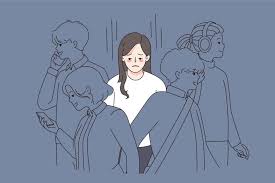
Social anxiety disorder is a persistent and intense fear of social settings. People who have social anxiety are afraid of being judged by others or humiliated. This disorder can affect an individual’s daily life such as work and school. Being able to do daily things such as eating or using the bathroom can cause an individual to have an intense amount of anxiety.

Here are some symptoms of Social Anxiety Disorder

  1. Avoiding eye contact and speaking in a soft voice
  2. Feeling self-conscious or feeling others are always judging you
  3. Sweating, trembling, shaky voice, and rapid heartbeat when in social settings
  4. Worrying about upcoming events or activities

Some treatments for Social Anxiety Disorder

  1. Cognitive behavioral therapy-This therapy helps individuals learn how to think, behave, and react to social situations to help reduce anxiety
  2. Medications are also helpful for social anxiety. The best types of medications for this disorder are SSRIs and SNRIs. SSRIs increase serotonin levels while SNRIs increase serotonin and norepinephrine levels.
  3. Hypnotherapy is a great way to help reduce anxiety. Individuals who choose hypnotherapy will learn how to get into a state of relaxation. This will allow them to learn how to relax their mind without feeling anxious.

If you or someone you know is struggling with anxiety or their mental health, please contact our psychotherapy offices in New York or New Jersey to talk to one of our licensed professional psychologists, psychiatrists, psychiatric nurse practitioners, or psychotherapists at Arista Counseling & Psychotherapy. Contact our Paramus, NJ, or Manhattan, NY offices respectively, at (201) 368-3700 or (212) 722-1920 to set up an appointment. For more information, please visit https://aristapsychiatrypsychotherapy.com/

Work-Life Balance

Work-Life Balance

By: Josette DeFranco

Are you feeling overwhelmed due to the lack of balance in your work and personal life?

Work-life balance is important because it affects you, your family, and others. You need the time and energy to participate in your own personal interests, family, and community activities. A workplace that supports employees’ well-being and allows their employees to focus on their mental health is an excellent way for them to avoid burnout.

Here are some healthy work-life balance tips:

  • Take breaks
  • Set boundaries
  • Learn to say no
  • Prioritize your mental health
  • Set goals
  • Practice Mindfulness
  • Create a flexible work schedule
  • Seek support

It is important to acknowledge how this balance can benefit you. It’s easy to get caught up in your job and neglect your wants and needs. These are just a couple ways having a work-life balance can help you; create healthier workplace relationships, improve your mental health, enhance your physical health, and have better productivity at work.

If you, your child, or someone you know is experiencing back-to-school anxiety, social anxiety, or other anxiety disorders or mental health issues, please contact our psychotherapy offices in New York or New Jersey to talk to one of our licensed professional psychologists, psychiatrist, psychiatric nurse practitioners, or psychotherapists at Arista Counseling & Psychotherapy. Contact our Paramus, NJ or Manhattan offices respectively, at 201-368-3700 or 212-722-1920 to set up an appointment. Please visit http://www.counselingpsychotherapynjny.com/ for more information.

Sources:

https://www.psychologytoday.com/us/blog/presence-of-mind/201509/hows-your-work-life-balance

https://www.timedoctor.com/blog/work-life-balance-tips

School Shootings and the Vicarious Trauma for Children and Adults

By: Tehila Strulowitz

Coming right after students ran along the newly waxed floors, parents were absolutely certain that there were no more 1” binders at Target, and the fumes from the fresh coats of paint in the hallways were still in the air, a student asked the teacher to go to the main office to speak with someone, hid in the bathroom, removed an AR-15 assault rifle and a knife from his backpack, and snuck through the hallways before unleashing a spray of bullets. September 5, 2024, is a day when we add another school shooting to the growing list and write four new names among those who have already died while trying to learn or teach.

The recent horrific events at Apalachee High School in Winder, Georgia, have caused a surge in fear and mental health concerns among children and adults. As a 2021 study by researchers Kira E. Riehm, Ramin Mojtabai, Leslie B. Adams, and their colleagues shows, high levels of fear and anxiety immediately following a school shooting or any form of extreme violence in a school cause children and teenagers to experience symptoms of generalized anxiety disorder and panic disorder, even though these experiences are somewhat vicarious. Dr. Aradhana Bela Sood, professor of psychiatry and pediatrics at Virginia Commonwealth University, said that while all children could display these kinds of signs following a shooting, researchers have identified younger children as having an increased likelihood of developing signs that meet the criteria for disorders like anxiety and post-traumatic stress disorder (PTSD). The difference, said Sood, is that younger children haven’t built up shields and space to mentally process traumatic experiences or news because they don’t have as much life experience, leaving them with fewer opportunities to practice those mental processes. Dr. Sood and her fellow researchers also highlighted the dangers of high amounts of social media usage and constantly reading news reports about mass shootings, noting that, at the very least, they can create short-term psychological issues for children living in communities that are not the site of the shooting, with issues like elevated fear and a perception of reduced safety.

Dr. Sood’s message to parents and guardians of children directly or indirectly affected by a mass shooting is that it is crucial for those around the child to be aware and perceptive so that they can be encouraging, caring, and acknowledge the ups and downs that accompany grief. Some tips Sood suggests are giving the child a predictable routine, allowing them to talk about the experience without judgment, and limiting the news they consume about the tragic event. Lastly, parents and guardians should be aware of their own mental health and seek help for themselves if needed.

Most importantly, remember that children of all ages are remarkably resilient. They might initially experience feelings of trauma because of the news, but time heals, and these feelings will decrease.

Disorders related to school shootings, whether experiencing one directly or indirectly, are: acute stress disorder, depression, generalized anxiety disorder, panic disorder, post-traumatic stress disorder, and substance abuse disorder.

If you or someone you know is struggling with trauma-related issues or with mental health in general, please contact our psychotherapy offices in New York or New Jersey to talk to one of our licensed professional psychologists, psychiatrists, psychiatric nurse practitioners, or psychotherapists at Arista Counseling & Psychotherapy. Contact our Paramus, NJ, or Manhattan, NY offices respectively, at (201) 368-3700 or (212) 722-1920 to set up an appointment. For more information, please visit https://aristapsychiatrypsychotherapy.com/

https://jaapl.org/content/51/3/314

https://time.com/6182235/mass-shootings-children-mental-health-anxiety-depression/

How to Help Children Cope with Grief and Loss

How to Help Children Cope with Grief and Loss

By: Josette DeFranco

A question you don’t hear enough but should be asked more is “What is grief?” Grief is the terrible pain that accompanies loss. Since grief is a reflection of our love, it can feel suffocating. There is no time limit for healing the pain that comes along with loss. Many individuals try to suppress their pain and agony causing them to feel guilt and stagnant. Many individuals may experience grief in short passes where the feeling of distress and sadness comes and goes. Meanwhile, others may experience grief for a long period, such as months or years. It’s important to remind yourself and others that you can grieve at your own pace.

In addition, children experience grief and loss in many different ways. Children are like sponges; they take in information through observation and learned behavior. Although they are young they have deep feelings and can understand their own emotions more than it is perceived. When children grieve it can be a confusing time for them and parents. Do you tell the truth? Or do you rationalize and give simple answers such as “Grandpa is just sleeping.” Being present with them allows you to grieve as well. When children see that their parents can be vulnerable and compassionate it allows them to express themselves and be who they really are.

Here are a couple of ways to help children cope with grief:

  • You can tell children the truth, even though you might not include all the specific information. Mentioning to them that Grandpa is sleeping may cause them to feel afraid to go to sleep or telling them he is in heaven may make them pack their belongings and find heaven. Be clear, honest, and simple.
  • Allow them to ask questions. You can’t protect them from the truth but you can give them your empathetic support and love.
  • Attending the funeral or keeping children home. Ask your child and allow them to decide. If they say yes, have someone who will be present with them and can keep them occupied in case being around sad adults gets overwhelming. If they say no, you can offer another way to remember or honor the person such as showing pictures or lighting a candle.
  • Give reassurance.

If you or someone you know is struggling with their mental health, please contact our psychotherapy offices in New York or New Jersey to talk to one of our licensed professional psychologists, psychiatrists, psychiatric nurse practitioners, or psychotherapists at Arista Counseling & Psychotherapy. Contact our Paramus, NJ, or Manhattan, NY offices respectively, at (201) 368-3700 or (212) 722-1920 to set up an appointment. For more information, please visit https://aristapsychiatrypsychotherapy.com/

Sources:

https://www.psychologytoday.com/us/blog/playful-parenting/202301/how-to-help-children-cope-with-death-and-grief

https://www.psychologytoday.com/us/blog/tales-of-grief/201903/when-children-grieve

https://www.psychologytoday.com/us/basics/grief

Social Anxiety in Back to School Students

Social Anxiety in Back to School Students

By Melissa Rodriguez

Going back to school can be exciting for students of all ages. Along with the feelings of newness and back-to-school excitement, feelings of nervousness and social anxiety can also arise. Students may feel nervous or anxious starting a new school year. All of the new people students will be around and the new environment they are placed in can cause them to feel socially anxious, unsure, or nervous about the new changes. According to the National Institute of Mental Health, about an estimated 31.9% of young people experience at least one anxiety disorder in their lifetime.  

Social anxiety is a fear of social situations. Those with social anxiety are usually more shy, quiet, and overall socially reserved. Some physical symptoms students with social anxiety may feel are: shortness of breath, a churning sensation in the stomach, palpitations, out of body experiences, muscle tension, and feeling lightheaded or dizzy sensations. Some psychological symptoms students may face are: a constant feeling of being judged in social settings, always worrying that you will embarrass or humiliate yourself, having a crippling fear of interacting socially with others, avoiding an event or interaction where you feel you are the center of attention, and constantly being critical of and judging oneself.

If back-to-school anxiety persists longer than the first couple weeks and if you notice that it is causing distress to the daily life of the student, meeting with a therapist may be beneficial to help the student better manage their symptoms and help them go back to school comfortably. This may increase their confidence in school or other social settings, and help them feel more comfortable and confident in their new social environments.  

If you, your child, or someone you know is experiencing back-to-school anxiety, social anxiety, or other anxiety disorders or mental health issues, please contact our psychotherapy offices in New York or New Jersey to talk to one of our licensed professional psychologists, psychiatrist, psychiatric nurse practitioners, or psychotherapists at Arista Counseling & Psychotherapy. Contact our Paramus, NJ or Manhattan offices respectively, at 201-368-3700 or 212-722-1920 to set up an appointment. Please visit http://www.counselingpsychotherapynjny.com/ for more information.

Sources:

https://adaa.org/learn-from-us/from-the-experts/blog-posts/consumer/back-school-anxiety-what-parents-and

Image Source: https://www.educare.net.au/living-with-social-anxiety-personal-stories-and-coping-mechanisms/

Social Anxiety: The Impact of Social Media on Social Anxiety

Social Anxiety: The Impact of Social Media on Social Anxiety

By: Josette DeFranco

Social anxiety is very common and can be a part of your everyday living whether it is online or offline. Social anxiety means you have persistent fears about being in social situations. Social media has become society’s major way of communicating. It has allowed users to create their own distinctive profiles and content to share with others. It has been found that social media use has caused unrealistic goals and expectations. This can create low self-esteem and a lack of in-person interactions. This may lead to anxiety because you may feel like you don’t live up to your social media image. Nonetheless, it may cause you to feel judged by your choices or appearance. It is important to pay attention to your emotions when logged onto social media and to remember that others experience similar thoughts.

Should you take a break from social media?

Social media can affect individuals differently. However, if you notice social media is causing damage to your mental health, self-esteem, social interactions, and making your moods worse then you may want to consider a social media break. Having a social media break even for a week or a month could enhance your mental state, allowing you to reflect and focus on your mental health needs. It has been noticed that individuals felt more grounded and less anxious, isolated, and depressed.

If you or someone you know is struggling with their mental health, please contact our psychotherapy offices in New York or New Jersey to talk to one of our licensed professional psychologists, psychiatrists, psychiatric nurse practitioners, or psychotherapists at Arista Counseling & Psychotherapy. Contact our Paramus, NJ or Manhattan, NY offices respectively, at (201) 368-3700 or (212) 722-1920 to set up an appointment. For more information, please visit https://aristapsychiatrypsychotherapy.com/

Sources:

https://www.sciencedirect.com/science/article/pii/S245195882100018X

https://www.psychologytoday.com/us/blog/thriving-with-the-challenges/202208/a-social-media-vacation-is-waiting-for-you

Fear of Flying

Fear of Flying

By:Stefani Stojanoska

Have you ever felt an immense feeling of fear before flying? There are many symptoms that indicate that you may have aerophobia. Some symptoms include excessive sweating, increased heart rate, shaking, and nausea. These symptoms can occur anywhere between before and during a flight. Typically these symptoms occur during take-off, landing, and while in the air. There can be many reasons why an individual has a fear of flying. These include the fear of takeoff and landing, fear of heights, turbulence, and news stories about violence and crashes.

There are a few ways to get help for aerophobia.

  1. One form of therapy is exposure therapy. This type of therapy exposes people to various kinds of air travel. People can use virtual reality tools to help with their fear. People with this type of therapy are put through a simulation of a flight.
  2.  Another treatment for aerophobia is cognitive behavioral therapy. This helps individuals change the way they feel about flying.
  3.  Hypnotherapy is another great way to overcome the fear of flying. During hypnotherapy your therapist will help you get into a state of relaxation. Your therapist will then work with you to identify and address the cause of your fear of flying. It will be easier to think about flying since you are in a deep state of relaxation.
  4.  Another way to help aerophobia is practicing meditation before and during the flight. You can try breathing techniques that will help reduce your anxiety while traveling by air. A great method is the 5-5-5 technique. Breathe in for 5 seconds, hold your breath for 5 seconds, and exhale for 5 seconds.

1If you or someone you know is struggling with their mental health, please contact our psychotherapy offices in New York or New Jersey to talk to one of our licensed professional psychologists, psychiatrists, psychiatric nurse practitioners, or psychotherapists at Arista Counseling & Psychotherapy. Contact our Paramus, NJ, or Manhattan, NY offices respectively, at (201) 368-3700 or (212) 722-1920 to set up an appointment. For more information, please visit https://aristapsychiatrypsychotherapy.com/

The Lessons of 9/11: Therapy and Resilience

By: Tehila Strulowitz

The other day I was sitting in my college Renaissance History course, learning about the joy, beauty, and creative innovation of an era that spanned three centuries following roughly 1,000 years of life so bleak and horrible that it gained an additional name: the “Dark Ages.” At one point during the lecture, my professor made an off-the-cuff remark about how since every generation spans more or less 20 years, and within that generation, everything that happens in the world is considered “current events,” the 23rd anniversary of the tragic day that is 9/11 is now considered “history.” We all sat there a little shocked and confused because how could over twenty years have passed and how could something discussed so frequently in the United States be considered history?

On the morning of Tuesday, September 11, 2001, first responders flocked by the thousands to the only building complex in the 10048 zip code in Lower Manhattan upon hearing the devastation that was unfolding in New York City. Thousands of therapists (social workers, psychologists, other mental health professionals, and so on) rushed to Manhattan in what psychologist Ghislaine Boulanger described as a “feeding frenzy” of therapists hurrying to help, (some even walking to fire stations and simply standing outside in case someone wanted therapy) all without knowing what helping would entail, all to assist in the efforts taking place in the aftermath of such a traumatic event witnessed live by hundreds of thousands of people. Boulanger, along with psychoanalyst and interfaith chaplain Margaret Klenck, described how at first the mental health professionals on the scene at that time were diving right into “the nitty-gritty” of therapy or “overmedicating people with tranquilizers and antidepressants,” when in reality, Klenck said, they were not depressed. They were traumatized and grieving, so naturally they were crying.

Psychologist Donna Bassin, who was a therapist for victims and their family members following 9/11, noticed that she was “emotionally transformed” by being a therapist during that time. “I started becoming more aware of community trauma, realizing how much people needed each other, not just 45 minutes in the psychotherapy office.” Years of trauma research and research on effective therapeutic practices have proven that most clients do not respond positively to long, detailed, and intense therapy immediately following a traumatic event. Richard McNally, a psychologist at Harvard, remarked how one of the most impactful lessons that were learned due to 9/11 was that people are far more resilient than we, specifically therapists in this case, thought.

As we look back on the past 23 years following a day that caused a loss of life for nearly 3,000 people and injured over 6,000, one lesson is starkly clear: we, as a community and as a nation, are more resilient than we think. We have built a bronze memorial, and etched in its surface the names of every single victim. We have built a new building in its place, 1,792 feet in the air, looking down over not only the historical New York City but also the 70-foot-deep memorial for the buildings. Therapists, first responders, the government, and doctors alike have all discovered new and more effective ways to deal with a country wreaked by terror and tragedy, and have created and discovered new ways to help people, built on the ashes of terror of times past.

Just like the “rebirth” that the Renaissance was, in 2024 we, too, can usher in our own enlightenment.

Psychiatric disorders associated with trauma exposure: PTSD, major depressive disorder, generalized anxiety disorder, panic disorder, and substance abuse disorders.

If you or someone you know is struggling with trauma-related disorders or with mental health in general, please contact our psychotherapy offices in New York or New Jersey to talk to one of our licensed professional psychologists, psychiatrists, psychiatric nurse practitioners, or psychotherapists at Arista Counseling & Psychotherapy. Contact our Paramus, NJ or Manhattan, NY offices respectively, at (201) 368-3700 or (212) 722-1920 to set up an appointment. For more information, please visit http://www.counselingpsychotherapynjny.com/

https://www.nytimes.com/2009/09/11/nyregion/11nyc.html

https://www.nytimes.com/2011/07/29/health/research/29psych.html

https://www.sciencedirect.com/science/article/pii/S2214999614002926

Autism in the Justice System

Autism in the Justice System

By: Nicole Cutaia

A big issue in the Justice System is the lack of representation for certain groups of people. Neurodivergent individuals, specifically those with autism or autism spectrum disorder (ASD), face this lack of acknowledgment in the judicial system.

Autism is a neurological and developmental disorder that affects social skills, repetitive behaviors, speech, and non-verbal communication. Depending on the functionality of the disorder, performing basic tasks such as reading, writing, and comprehending information may be more or less difficult.

When it comes to criminal and civil cases, autistic clients find it challenging to find lawyers to represent them. These challenges may be due to the stigma around the spectrum.

Most individuals with autism, especially low functioning, depend on a guardian or caretaker for the majority of their life. During police investigations, a guardian or caretaker is necessary to support and assist successful communication. In some instances, individuals with autism do not get a fair shot at their statement or testimony.

The lack of representation in the justice system for autism is a social injustice that is so overlooked and needs instant attention.

It can be difficult to see a loved one struggle with autism spectrum disorder. If you or a family member are struggling with mental health, please contact our psychotherapy offices in New York or New Jersey to talk to one of our licensed professional psychologists, psychiatrists, psychiatric nurse practitioners, or psychotherapists at Arista Counseling & Psychotherapy. Contact our Paramus, NJ, Manhattan, NY offices respectively at (201) 368- 3700 or (212) 722- 1920 to set up an appointment. For more information, please visit http://www.counselingpsychotherapynjny.com/