Eating Disorders Part 5: Eating Disorders among Latina Women

By: Abby Erasmus

Latina women are caught between two cultures and are therefore at risk of experiencing acculturative stress (a term discussed in “Eating Disorders: Part 4”). As mentioned previously, increased acculturative stress is linked to an increase in eating- related pathology, thus disordered eating patterns are not uncommon among Latina women. The rate of occurrence of eating disorders among Latina women is equivalent to the rate of the general population of U.S. females; however, anorexia nervosa (AN) is rarely noted in Eating Disorder (ED) studies in regard to Latina women. This does not mean AN does not exist among Latina Women, AN is just thought to be the least prevalent in the community. Researchers have found that bulimia nervosa (BN) and binge eating disorder (BED) are the most common, with lifetime prevalence rates of 2% to 2.3-2.7% respectively. Further, researchers have identified key differences in the presentation of both dietary restriction and drive for thinness in comparison to European- American white women. Latina women are less likely to engage in dietary restriction, and if they do, it is often followed by a binge- eating episode. Latina women also find themselves caught between the thin ideal belonging to Western culture and the curvy but flat- stomached ideal belonging to the Latinx community, and these conflicting body image ideals can result in disordered eating behaviors. Additionally, and quite similarly to Asian American culture, food is the love language of the Latinx community, yet, similarly to Asian American women, these women will be scrutinized for gaining weight. Latina women also experience the paradox, and providers should keep this paradox in mind to understand root causes of EDs within the Latinx community.

Binge eating within the Latinx community is associated with significant levels of distress as well as psychopathology, and is often accompanied by obesity. Despite reporting significant levels of distress, the majority of Latina women do not seek treatment, and when they do, they often refer to primary care doctors in which obesity is the only thing that gets identified. Their ED goes unnoticed. In order to correctly diagnose EDs among Latina women, providers must understand the high prevalence rates of BED, BN, and binge- eating behaviors within the population which, in turn, can result in obesity. Once the ED is addressed, obesity can be addressed. Again, with cultural competency added into the equation of treatment, Latina women’s EDs will be correctly diagnosed and they will receive proper treatment.

If you or someone you know is seeking therapy for an eating disorder, please contact our psychotherapy offices in New York or New Jersey to talk to one of our licensed professional psychologists, psychiatrists, psychiatric nurse practitioners, or psychotherapists at Arista Counseling & Psychotherapy. Contact our Paramus, NJ or Manhattan, NY offices respectively, at (201) 368-3700 or (212) 722-1920 to set up an appointment. For more information, please visit http://www.counselingpsychotherapynjny.com/

Sources:

https://yourlatinanutritionist.com/blog/eating-disorders-among-latinas

https://www.ncbi.nlm.nih.gov/pmc/articles/PMC2680162/

https://www.ncbi.nlm.nih.gov/pmc/articles/PMC4078895/

Eating Disorders Part 4: Eating Disorders among Asian- American Women

By: Abby Erasmus

Unique cultural values and experiences of Asian Americans can lead to the development of an eating disorder for individuals in the community. Similar to Western culture, Asian American (AA) culture idealizes the thin body and individuals face scrutiny from family members if they don’t meet this ideal; paradoxically, food is said to be the love language of Asian culture. Many AAs report being “force fed” by the same family members who criticize their weight. This creates pressure and anxiety around food, and due to this paradox, the complex relationship between food, love, and weight, bulimia nervosa (BN) tends to be the most pervasive ED in the AA community. Furthermore, AAs have to go through the process of acculturation: they must adapt to the practices and values of the dominant culture while maintaining their own. This can result in acculturative stress which is a positive predictor of disordered eating. In turn, research shows that AA college students report higher rates of restrictive eating, purging, and muscle building in comparison to their white counterparts. Also, second generation AA women report more ED behaviors than first and third generation women. This gives us insight into who is more likely to be affected within the community and what the ED behaviors are.

Different cultural values in the AA community such as interdependency, a complete reliance on the family for help rather than a stranger (therapist), and stigma surrounding mental health in general, contribute to the lack of help seeking. Further, some mental health providers are unable to recognize ED- like behaviors in the AA community as they are an under researched group when it comes to this pathology; lack of diagnosis and treatment can thus lead to poor prognosis. Once EDs are officially seen as a disorder that affects all ethnic and demographic groups at similar rates, stigma can be lessened and providers will recognize ED symptoms in this community. Again, cultural competency must be encouraged. Providers should understand the unique stressors AAs face like acculturative stress, as well as the complex relationship between food, showing love, and the idealization of the thin body. Although anorexia nervosa is prominent in the AA community, BN and binge- eating behaviors are the most common in the community; 1.50% are diagnosed with BN and 4.74% experience binge eating behaviors (See Eating Disorders Part 1 for DSM definitions). Once providers are more familiar with BED and BN, as well as the unique factors AAs face, they will be able to have culturally appropriate treatment for AAs with EDs.

If you or someone you know is seeking therapy for an eating disorder, please contact our psychotherapy offices in New York or New Jersey to talk to one of our licensed professional psychologists, psychiatrists, psychiatric nurse practitioners, or psychotherapists at Arista Counseling & Psychotherapy. Contact our Paramus, NJ or Manhattan, NY offices respectively, at (201) 368-3700 or (212) 722-1920 to set up an appointment. For more information, please visit http://www.counselingpsychotherapynjny.com/

Sources

https://www.eater.com/2019/11/19/20955556/my-discomfort-with-comfort-food

https://centerfordiscovery.com/blog/eating-disorders-and-the-api-community/

Eating Disorders in the Asian American Community: A Call for Cultural Consciousness

https://www.nationaleatingdisorders.org/blog/anorexia-for-an-asian-american-a-recovery-story

https://www.frontiersin.org/articles/10.3389/fpsyg.2019.01950/full

https://anad.org/get-informed/about-eating-disorders/eating-disorders-statistics/

https://psychnews.psychiatryonline.org/doi/full/10.1176/appi.pn.2014.6b4

How Social Media Affects Mental Health

By Jillian Hoff

In a world where most individuals are obsessively using social media, it can be detrimental to a person’s mental health.  Some of the most common symptoms that come from excessive use of social media include an increase in anxiety, depression, isolation, and fear of missing out (FOMO). Humans need social interaction, which can be given through social media but only to an extent. Humans need an in person social interaction with the people around them to feel connected. There is a reliance on social media to be able to connect with others now, especially during the pandemic. The convenience that comes from using social media may seem like it is beneficial but it the overuse of it can be the reason for your decline in mental health.

How to know when social media is affecting your mental health:

  • You start spending more time on social media than with your friends in person.
  • You compare yourself to others on social media.
  • You find yourself being distracted while you are at work or school.
  • Using social media is disrupting you sleep.

Ways to improve on mental health after a social media addiction:

  • Turn off your phone at certain times of the day.
  • Keep your phone or tablet in a different room when you are completing a task or going to bed.
  • Use social media in an active way instead of passively. This means you are using social media for a purpose.
  • Take on a new hobby or adventure to new places as a means of meeting new people and getting off of your phone.
  • Interact with others when you go somewhere instead of sitting on your phone.

Know when to put down your phone, it will make all the difference in your mental health!

If you or someone you know is seeking therapy, please contact our psychotherapy offices in New York or New Jersey to talk to one of our licensed professional psychologists, psychiatrists, psychiatric nurse practitioners, or psychotherapists at Arista Counseling & Psychotherapy. Contact our Paramus, NJ or Manhattan, NY offices respectively, at (201) 368-3700 or (212) 722-1920 to set up an appointment. For more information, please visit http://www.counselingpsychotherapynjny.com/

Sources

https://www.riseservices.org/the-impact-of-social-media-on-mental-health/

https://www.helpguide.org/articles/mental-health/social-media-and-mental-health.htm

Eating Disorders Part 3: Eating Disorders in the LGBTQ Community

Members of the LGBTQ community experience an array of challenges that pose as risk factors in developing an eating disorder. Many members of the community experience fear of rejection from individuals they are close with and those outside their immediate circle; they often experience verbal or non- verbal violence, PTSD, discrimination, inability to meet the body image ideals within some LGBTQ contexts, internalized homophobia or transphobia, and more. These negative experiences can lead to depression or anxiety, which in turn can result in unhealthy coping mechanisms like an eating disorder. Past research indicates that about 54% of LGBT adolescents have been diagnosed with a full blown eating disorder (ED), and an additional 21% of LGBT adolescents reported they suspected having had an ED at some point in their lives. Further, about 61% of LGBT adolescents in one study reported that they had engaged in at least one disordered eating behavior in the past year. These statistics emphasize the importance of learning about the diverse, root causes of EDs within the community and how they manifest.

EDs manifest differently in the sub- groups of the LGBTQ community, and are experienced at higher rates compared to their straight or cis- gendered counterparts. In one study, adult and adolescent lesbians reported more binge eating, purging, and laxative use than their heterosexual counterparts, as well as the highest rate of binge- eating compared to any other sexual orientation. Lesbian women also report the highest rates of weight- based self- worth, while bisexual women have been found to report the highest levels of eating pathology compared to lesbian and gay men. Further, gay men report a higher likelihood of engaging in exercise with the intention of losing weight, restrictive eating, fasting, bingeing, purging, and diet pill use compared to their heterosexual counterparts. Lastly, transgender and gender- nonconforming youth seem to be at particular risk for developing an ED; this is due to all risk factors mentioned above, as well as conflicting gender identity and being dissatisfied with their body.

Despite these findings and the clear prevalence rate of such pathology within the community, and increased rates in relation to their straight/ cis- gendered counterparts, many members do not seek help. Many LGBTQ individuals fear their therapist or doctor won’t understand the unique problems within their community. In order to increase rates of treatment, we need to strive for cultural competency in which providers understand the unique experiences of LGBTQ individuals that can lead to EDs, and what EDs look like within the subgroups of the community.

If you or someone you know is seeking therapy for an eating disorder, please contact our psychotherapy offices in New York or New Jersey to talk to one of our licensed professional psychologists, psychiatrists, psychiatric nurse practitioners, or psychotherapists at Arista Counseling & Psychotherapy. Contact our Paramus, NJ or Manhattan, NY offices respectively, at (201) 368-3700 or (212) 722-1920 to set up an appointment. For more information, please visit http://www.counselingpsychotherapynjny.com/

Sources:

https://jeatdisord.biomedcentral.com/articles/10.1186/s40337-020-00327-y

https://www.nationaleatingdisorders.org/learn/general-information/lgbtq

https://jeatdisord.biomedcentral.com/articles/10.1186/s40337-020-00327-y

https://onlinelibrary.wiley.com/doi/full/10.1002/eat.23257

Vaping; Vaping Addiction is Becoming More Prevalent in Teenagers and Young Adults

Vaping; Vaping Addiction is Becoming More Prevalent in Teenagers and Young Adults

By: Priya Desai

Vaping has risen tremendously in the past couple of years, especially within the teenage population.  Patients as young as 13 years old were reported to either get sick or die after they vaped. Products that are harmful to your body would be e-cigarettes that include nicotine, THC, and even vitamin E acetate. Many users started using vapes that contain vitamin E to help them reduce their use or contain their use, but these were recently found to be harmful too. People’s lungs end up looking like popcorn lungs due to vaping. Vaping is linked to EVALI which stands for e-cigarette or vaping use-associated lung injury. Symptoms for this disease include shortness of breath, coughing, vomiting, fever and chills, chest pain, dizziness, headache, and diarrhea. To diagnose this, doctors evaluate the patient’s history of vaping devices and take an X-ray of the chest or a CT scan of the lungs. This disease is newer, and among the cases reported, about 96% of patients have needed to be hospitalized.

Vaping is extremely addictive and many teens smoke this to fit in, but this is also why many of them enter early adulthood with a nicotine addiction. Teenager’s vape out of curiosity. There are a variety of different flavors these products provide, and so the teens often do tricks with the device. Normal cigarette smoking has gone down within the teenage population, but e-cigarettes have gone up because they are “easier” to get away with since there is no odor and they are easier to hide. People are also attracted to the different flavors that stores sell. Although e-cigarettes might not seem that harmful, one pod of liquid nicotine is equivalent to smoking one pack of cigarettes.

If you or someone you know is seeking therapy for a vaping addiction, please contact our psychotherapy offices in New York or New Jersey to talk to one of our licensed professional psychologists, psychiatrists, psychiatric nurse practitioners, or psychotherapists at Arista Counseling & Psychotherapy. Contact our Paramus, NJ or Manhattan, NY offices respectively, at (201) 368-3700 or (212) 722-1920 to set up an appointment. For more information, please visit http://www.counselingpsychotherapynjny.com/

Citations: https://www.psychologytoday.com/us/blog/mind-matters-menninger/202001/vaping-teens-are-dying-be-cool-and-collected

https://www.lung.org/lung-health-diseases/lung-disease-lookup/evali

https://www.rallyhealth.com/quit-smoking/why-do-so-many-teens-vape

Image Citation: https://www.google.com/url?sa=i&url=https%3A%2F%2Fwww.ochd.org%2F2020%2F09%2F18%2Fcdc-study-reveals-teen-vaping-use-down-in 2020%2F&psig=AOvVaw1NH06SDRcHM5tWOL_daimc&ust=1631802234262000&source=images&cd=vfe&ved=0CAsQjRxqFwoTCIDMk6uXgfMCFQAAAAAdAAAAABAM

PTSD in First Responders

By Jillian Hoff

Post-Traumatic Stress Disorder is extremely common among first responders. This is because of their high exposure rate to traumatic incidents. Some of the common signs and symptoms for PTSD include flashbacks or dreams about the incident, losing interest in activities, refusing to talk about the event and sleep disturbances. Most first responders do tend to avoid seeking treatment for their PTSD. This typically is because of the stigma that surrounds mental health in general. These individuals might feel as though people will see them as weak for seeking the help they need, which is not the case. Often times when the individual does not treat their PTSD it will worsen, which since first responders do not get to just stop working makes their symptoms even worse.

Some ways that first responders can help their PTSD would be to have a support system. This especially could be the people who were also there during the traumatic event, this way they can talk about what happened and how it made them feel with an individual who was also there.  To gain positive coping strategies, it could be extremely helpful to engage in Cognitive Behavioral Therapy. This could help the person manage some of their stress that relates to the incident. Most importantly, the person needs to remember why they love being a first responder and all the positives that come from their job. While the negative times within this profession can be hard to handle, it is important to remember all the good that comes from what first responders do.

If you or someone you know is suffering from PTSD, please contact our psychotherapy offices in New York or New Jersey to talk to one of our licensed professional psychologists, psychiatrists, psychiatric nurse practitioners, or psychotherapists at Arista Counseling & Psychotherapy. Contact our Paramus, NJ or Manhattan, NY offices respectively, at (201) 368-3700 or (212) 722-1920 to set up an appointment. For more information, please visit http://www.counselingpsychotherapynjny.com/

Sources

https://eraseptsdnow.org/first-responder/shining-a-light-on-ptsd-among-first-responders

https://www.suicideinfo.ca/resource/first-responders-trauma-intervention-suicide-prevention/

https://www.jems.com/administration-and-leadership/first-responders-and-ptsd-a-literature-review/

Borderline Personality Disorder: A Battle Within The Mind

Borderline Personality Disorder: A Battle Within The Mind

By: Arianna DiRaggio

Personality disorders can often go unnoticed. This is because they are typically difficult to spot and hard to treat. It is very easy to dismiss or look past one’s behavior and simply label it as their personality, never looking more into it. Since it is so difficult to spot, it is important for these individuals to seek help for themselves when the symptoms may be atypical or cause distress.

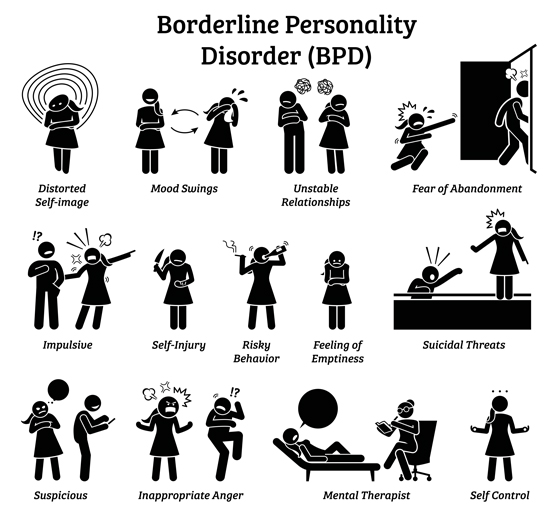
Borderline personality disorder, also known as BPD, is a mental health disorder characterized by instability and impulsivity. This instability and impulsivity often makes it difficult to function in everyday life.

Symptoms of BPD:

  • Efforts to avoid real or imagined abandonment
  • A pattern of unstable and intense interpersonal relationships
  • Persistent and unstable sense of self
  • Impulsive behaviors
  • Self-harming behavior
  • Rapidly changing mood swings
  • Feeling like they are “losing touch with reality”
  • Difficulty regulating emotional reactions

About 2% of adults are affected by BPD and 75% of those affected are women. Luckily, considerable amounts of research on BPD have been done over the years, allowing us to further understand and assist those struggling with BPD. Different forms of therapy, medications and holistic treatments have all shown positive effects in helping to suppress symptoms. 

If you or a loved one is suffering from Borderline Personality Disorder, please contact Arista Counseling & Psychotherapy, located in New York and New Jersey to speak to licensed professional psychologists, psychiatrists, psychiatric nurse practitioners or psychotherapists. To contact the office in Paramus NJ, call (201) 368-3700. To contact the office in Manhattan, call (212) 722-1920. For more information, please visit http://www.counselingpsychotherapynjny.com/ .

Sources: 

https://www.psychologytoday.com/us/basics/borderline-personality-disorder

https://www.mayoclinic.org/diseases-conditions/borderline-personality-disorder/symptoms-causes/syc-20370237

https://www.dummies.com/health/mental-health/borderline-personality-disorder-for-dummies-cheat-sheet/

Eating Disorders Part 2: Black Women with Eating Disorders

By: Abby Erasmus

Black women in America have a unique experience; their intersecting identities make them one of the most discriminated- against groups in America, resulting in mental health issues. Eating disorders (ED), for example, are not new within the Black community. Black women live with EDs at similar rates to all ethnic and demographic groups- but often times in the shadows. The majority of ED studies focus on white women. This ignores the fact that ED causes and manifestation can be different in other populations. Further, the most commonly researched ED is Anorexia Nervosa (AN), yet AN is not the typical ED experience of Black women. Binge Eating Disorder (BED) and Bulimia nervosa (BN) are the most common EDs among Black women, with Black girls being 50 times more likely to engage in BN behaviors than white girls. Because BED and BN aren’t frequently researched, they’re harder to correctly diagnose in patients; it is thus highly unlikely Black women will be diagnosed with an ED at all. To increase the likelihood that Black women will be correctly diagnosed and receive treatment, it is important to know the key symptoms of BED and BN. Listed here are some key symptoms:

BED: Recurrent, persistent episodes of binge eating & absence of compensatory behaviors like purging. The binge eating episodes are associated with 3 or more of the following: eating more rapidly than normal, eating until uncomfortably full, eating large amounts when not physically hungry, eating alone due to embarrassment of how much one is eating, feeling disgusted with oneself, depressed, or guilty after overeating.

BN: Recurrent episodes of binging that are characterized by eating an amount of food within a 2- hour period that is definitively larger than what most people eat in that time period, accompanied by feeling unable to stop eating/ control the amount one is eating & recurrent compensatory behaviors like: self- induced vomiting, misuse of laxatives, excessive exercise, and more.

Additionally, stigma exists in the Black community in regard to receiving help due to complex stereotypes, histories, etc., and stigma in regard to EDs is dramatized as they are labeled a white woman’s problem. Once we call attention to ED prevalence and manifestation in the community, stigma will be reduced both within and outside of the community. This will then increase the likelihood that Black woman will receive an accurate diagnosis and appropriate treatment for their ED. Further, when providers are made aware of the daily micro and macro aggressions that can result in poor mental health and potentially maladaptive coping mechanisms like an ED, providers will be prepared to address such issues during sessions. The nuanced narrative of EDs within the Black community must be disseminated.

If you or someone you know is seeking therapy for an eating disorder,  please contact our psychotherapy offices in New York or New Jersey to talk to one of our licensed professional psychologists, psychiatrists, psychiatric nurse practitioners, or psychotherapists at Arista Counseling & Psychotherapy. Contact our Paramus, NJ or Manhattan, NY offices respectively, at (201) 368-3700 or (212) 722-1920 to set up an appointment. For more information, please visit http://www.counselingpsychotherapynjny.com/

Sources:

https://www.nationaleatingdisorders.org/blog/new-dsm-5-binge-eating-disorder

https://www.centralcoasttreatmentcenter.com/blog-1/invisibility-of-eating-disorders-in-the-black-community-its-more-than-the-eating-disorder-stereotype

https://www.ncbi.nlm.nih.gov/books/NBK519712/table/ch3.t16/

Beyond “Eating Disorders Don’t Discriminate”

Eating Disorders Part 1: More than Just One Narrative

Eating Disorders Part 1: More than Just One Narrative

By: Abby Erasmus

Eating disorders don’t discriminate; about 1 in 7 male individuals and 1 in 5 female individuals experience an eating disorder by age 40. Girls as young as 8 or 9 are walking into the doctor’s office with cases of anorexia nervosa, bulimia nervosa, and other types of eating disorders. Individuals regardless of race, class, gender, religion, and sexual orientation can suffer from an eating disorder (ED). EDs are an extremely serious matter; they have the highest mortality rate of all mental illnesses. Keeping all of this information in mind, it is extremely important to understand and acknowledge that EDs affect all demographic groups and can manifest differently within these groups. Different demographics have complex histories with different cultural backgrounds that can affect how one displays an ED, and why a group develops one. Because people are unaware that different demographic groups experience EDs, stigma often surrounds their diagnosis by both people within their community as well as outside the community. Knowing that EDs have the highest mortality rate, it is our responsibility to reduce the stigma by disseminating information about how EDs affect a wide variety of populations.

The typical narrative of an ED tells the struggle of a white, straight, cis- gender woman. This population does experience EDs, and it’s extremely important to provide them with appropriate help and support; however, this typical narrative leaves out the experience of many other groups of people with EDs and why different demographics might development them. In reality, the rates of EDs are about the same across demographic groups in the United States, but because one narrative is told, other groups are significantly less likely to receive treatment. In a series of blog posts, I will discuss how EDs affect different populations: Black women, the LGBTQ community, Asian American women, Latina Women, and men in general.

If you or someone you know is seeking therapy for an eating disorder, please contact our psychotherapy offices in New York or New Jersey to talk to one of our licensed professional psychologists, psychiatrists, psychiatric nurse practitioners, or psychotherapists at Arista Counseling & Psychotherapy. Contact our Paramus, NJ or Manhattan, NY offices respectively, at (201) 368-3700 or (212) 722-1920 to set up an appointment. For more information, please visit http://www.counselingpsychotherapynjny.com/

Sources:

https://www.state.sc.us/dmh/anorexia/statistics.htm

https://jamanetwork.com/journals/jamanetworkopen/article-abstract/2752577

https://www.webmd.com/mental-health/eating-disorders/anorexia-nervosa/features/changing-face-anorexia

https://www.nationaleatingdisorders.org/people-color-and-eating-disorders#:~:text=Eating%20disorders%20have%20historically%20been,help%20for%20their%20eating%20issues.

Social Anxiety; Going Back to Normalcy After the Pandemic 

By Jillian Hoff

As everyone starts to go back to their lives before the pandemic it is important to recognize that some individuals will feel uncomfortable after being in quarantine for so long. Some people will most likely feel some amount of social anxiety when going back out. It is important to recognize that most people are going to feel anxious when returning back to normalcy. Most people will just feel these emotions a different degree. Social anxiety is more than just feeling nervous. It could occur when a person feels as though they are being judged or being put down by the people around them when that isn’t the case. This will be normal as people go back to socializing in any type of setting. One major issue society might have would be to relearn social behaviors. Some things that we previously would not have thought about doing became common actions for us during the pandemic. Things like making facial expressions under our masks or talking during a meeting because that is what we got used to doing, is not going to be acceptable behavior when one’s in person.

It is important not to rush into socializing in person. Start by having in-person meetings or work once or twice a week and slowly add more days after you are comfortable. If you have an event that you need to go to, try planning a solution in advance that will make you most comfortable to be there. You can also practice mindfulness and deep breathing exercises as a way to gain some control over your anxiety. However, what is most important is to realize that everyone is getting back to normalcy and that others will feel the same way as you do.

If you or someone you know is seeking therapy for social anxiety, please contact our psychotherapy offices in New York or New Jersey to talk to one of our licensed professional psychologists, psychiatrists, psychiatric nurse practitioners, or psychotherapists at Arista Counseling & Psychotherapy. Contact our Paramus, NJ or Manhattan, NY offices respectively, at (201) 368-3700 or (212) 722-1920 to set up an appointment. For more information, please visit http://www.counselingpsychotherapynjny.com/

Sources:

https://www.mprnews.org/story/2021/06/21/the-19th-explains-how-to-manage-postpandemic-social-anxiety

https://www.cedars-sinai.org/newsroom/managing-post-pandemic-social-anxiety/

https://tulsaworld.com/opinion/columnists/cartoon-post-pandemic-anxiety/article_453797b8-8804-11eb-a763-3371541a6ae8.html