Family Therapy: Reasons to Seek Treatment & What to Expect

Family Therapy: Reasons to Seek Treatment & What to Expect

By Jackie Molan

Family therapy is a form of psychotherapy aimed at improving communication and relationships within a family unit. The therapeutic environment offers a safe and confidential space for family members to express thoughts and feelings that they might otherwise be uncomfortable sharing. Family therapy is usually about 12 sessions in length, allowing the therapist to follow a method with a clear end goal that is understood by each family member. Even though this is a short-term type of therapy, it can teach skills and coping strategies that can be used to remedy family problems even after the course of treatment has ended.

Family therapy is typically sought out by families experiencing one or more of the following issues:

  • Parent/child conflict
  • Child behavioral problems
  • Financial stress
  • Grief
  • Anger issues
  • Communication difficulties
  • A family member’s substance abuse or mental illness (depression, anxiety, schizophrenia, etc.) is negatively impacting the rest of the family

It is important to know what to expect when starting family therapy. During the first session, the therapist will likely want to meet with the family as a group in order to gather information about the issue and see how family roles and dynamics operate. In the subsequent sessions, they may sometimes choose to meet with each family member individually to focus more on personal considerations. Overall, you can expect to gain the skills to:

  • Identify strengths and weaknesses within the family
  • Learn to effectively express emotions with family members
  • Analyze existing factors that may contribute to both present and future conflicts, such as family roles

Family stressors can turn into damaging problems if they are not addressed in a timely fashion. Family therapy provides the tools needed to restore a dysfunctional family to a more healthy, unified, and empathetic unit.

If you or someone you know is seeking family therapy, please contact our psychotherapy offices in New York or New Jersey to talk to one of our licensed professional psychologists, psychiatrists, psychiatric nurse practitioners, or psychotherapists at Arista Counseling & Psychotherapy. Contact our Paramus, NJ or Manhattan, NY offices respectively, at (201) 368-3700 or (212) 722-1920 to set up an appointment. For more information, please visit http://www.counselingpsychotherapynjny.com/

Sources:

https://www.mayoclinic.org/tests-procedures/family-therapy/about/pac-20385237

https://www.psychologytoday.com/us/therapy-types/marriage-and-family-therapy

https://www.123rf.com/clipart-vector/family_therapy.html

Suicide: What is Suicide Grief?

Suicide: What is Suicide Grief

By Lynette Rivas

At some point in almost everyone’s life, they will experience losing a loved one, which can then be followed by grief. But what about losing your loved one to suicide? This type of grief is known as suicide grief, where an individual feels both despair and guilt after losing a loved one to suicide.

It is important to note that not everyone experiences grief in the same way or for the same amount of time. The intensity and the complexity of grief are determined by the relationship with the person that died, how the death occurred, any existing coping strategies, and if support is available. 

Suicide grief can be a period of intense emotions for some people. These include emotions such as shock, guilt, anger, confusion, and/or despair. These emotions can even be accompanied by nightmares, flashbacks, social withdrawal, difficulty concentrating, and/or loss of interest. Anyone that is experiencing grief should keep in mind that it is important to:

  • Keep in touch – reaching out to loved ones, friends, and spiritual leaders
  • Grieve in your own manner – everyone does not grieve in the same way
  • Do not rush yourself – grieving can be as short as a few days to as long as a couple of months

If the grief is too much to bear and becomes too intense, then it is time to turn to a mental health provider for help. Unresolved grief can become difficult over time to the point where the individual is no longer able to go back to their normal life. If the individual thinks that they might be unusually depressed, it is important that they seek professional mental health help.

If you or someone you know is struggling with grief please contact our psychotherapy offices in New York or New Jersey to talk to one of our licensed professional psychologists, psychiatrists, psychiatric nurse practitioners, or psychotherapists at Arista Counseling & Psychotherapy. Contact our Paramus, NJ or Manhattan, NY offices respectively at (201) 368-3700 or (212) 722-1920 to set up an appointment. For more information, please visit https://www.counselingpsychotherapynjny.com/

Sources:

https://www.mayoclinic.org/healthy-lifestyle/end-of-life/in-depth/suicide/art-20044900

https://www.beyondblue.org.au/the-facts/suicide-prevention/after-a-suicide-loss/suicide-and-grief#:~:text=Grief%20in%20response%20to%20suicide,the%20stigma%20associated%20with%20suicide.

Image Source:

https://time.com/6117708/grief-isolation/

Anxiety in Young Adults During COVID-19

Anxiety in Young Adults During COVID-19

By Jackie Molan

Since the onset of the COVID-19 pandemic, rates of anxiety have sharply increased, especially in the young adult population (ages 18-24). Young adults are particularly susceptible to pandemic anxiety because they experienced enough “normal,” pre-COVID life to understand the current uncertainty of their own futures and the future state of the world.

Potential Anxiety Risk Factors

New studies have provided evidence that certain traits present in childhood and adolescence can lead to anxiety in young adulthood. One of these traits is behavioral inhibition, a childhood temperament characterized by nervousness and fear in response to new people and situations. Those who display behavioral inhibition during childhood are more likely to experience worry dysregulation – inadequate worry management skills – during adolescence. Worry dysregulation is a strong predictor of anxiety later in life, which can be brought on by a stressful life event. Therefore, the onset of the COVID-19 pandemic likely triggered anxiety in young adults who demonstrated this pattern of temperaments earlier in life.

Causes of Pandemic Anxiety

For young adults, the pandemic has interfered with their school, work, home, and social lives, leading to a significant upending of usual routines. Maintaining a daily routine often provides comfort, so it can be anxiety-inducing when this is lost due to external factors. Further, many people are experiencing “reentry anxiety” as more places reopen without mask mandates. It is difficult to navigate reentering society when there is lingering anxiety about future variants, vaccines, and mandates.

Steps to Improve Anxiety

The following are steps you can take to improve COVID-related anxiety:

  • Make time for stress reduction and self-care – This can be as simple as taking a walk or finding a few minutes during the day to meditate.
  • Follow a daily routine – Routines may be different than they were pre-COVID, but they can still be helpful.
  • Distinguish work/school life from home life – Even though you may be spending more time in your house than before, you can set boundaries to make work/school feel separate from home. Try designating certain times, or even rooms in the house, to leisure activities.
  • Seek help from a mental health professional.

Anxiety can feel like an uphill battle, but seeking help from a mental health professional can provide you with the resources you need to cope with post-COVID life.

If you or someone you know is seeking therapy for pandemic-related anxiety, please contact our psychotherapy offices in New York or New Jersey to talk to one of our licensed professional psychologists, psychiatrists, psychiatric nurse practitioners, or psychotherapists at Arista Counseling & Psychotherapy. Contact our Paramus, NJ or Manhattan, NY offices respectively, at (201) 368-3700 or (212) 722-1920 to set up an appointment. For more information, please visit http://www.counselingpsychotherapynjny.com/

Sources:

https://www.nimh.nih.gov/news/science-news/2021/study-identifies-risk-factors-for-elevated-anxiety-in-young-adults-during-covid-19-pandemic

https://psychcentral.com/coronavirus/coronavirus-overview

https://www.nytimes.com/2020/08/13/health/Covid-mental-health-anxiety.html

https://stayprepared.sg/mymentalhealth/articles/impact-of-covid-19-on-mental-health/

The Evolution of Electroconvulsive Therapy

The Evolution of Electroconvulsive Therapy

By Lynette Rivas

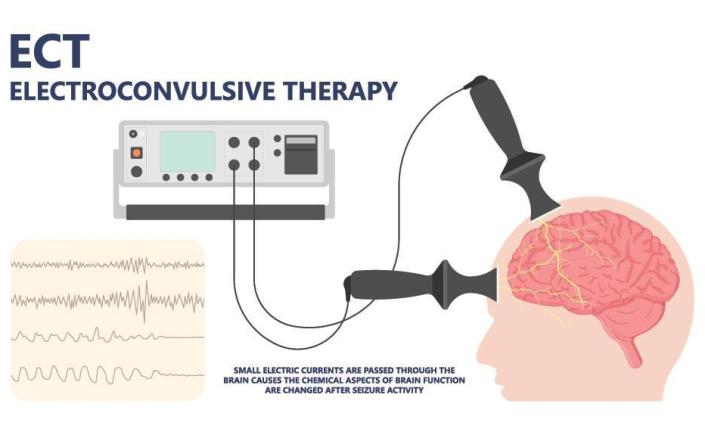
Electroconvulsive Therapy (ECT) has been and remains as one of the most controversial, yet effective, forms of therapy. But how did this idea come along and how does it work? How has the procedure changed throughout the years?

The idea of inducing a seizure to aide a patient was first thought of in the late 1920s by a scientist named Meduna. The main purpose of ECT at the time was to treat patients with schizophrenia. After successfully treating over 100 patients through a chemically induced seizure, two other scientists with the names of Ugo Cerletti and Lucio Bini decided to conduct the first electrically induced seizure.

Almost a century later, ECT is still widely used throughout the world. ECT is mostly used when other treatments are found to be unsuccessful, such as therapy and medication.  It can treat severe depression, treatment-resistant depression, severe mania, catatonia, and agitation and aggression in people with dementia. Over the years, the ECT procedure has greatly changed in order to ensure the patient’s safety and to reduce side effects.

The general procedure of ECT includes:

  • General anesthesia – makes you unconscious and unaware of the procedure
  • A brief physical exam
  • An intravenous line (IV) inserted
  • Electrode pads placed on the head
  • Muscle relaxant – helps minimize the seizure and prevent injury
  • Monitoring the patient’s brain, heart, blood pressure, and oxygen
  • Mouth guard – helps to protect the teeth and tongue from injury

With all of these features in place, the patient can relax and be completely unaware of the procedure. After ECT, the patient is put into a recovery room where they will be monitored for any potential issues. It usually takes a total of 6-12 treatments for the patient to see results. Even after symptoms improve, the patient will have to continually visit their therapist in order to keep up with the progress that they have made.

If you or someone you know is struggling with depression and/or mania please contact our psychotherapy offices in New York or New Jersey to talk to one of our licensed professional psychologists, psychiatrists, psychiatric nurse practitioners, or psychotherapists at Arista Counseling & Psychotherapy. Contact our Paramus, NJ or Manhattan, NY offices respectively at (201) 368-3700 or (212) 722-1920 to set up an appointment. For more information, please visit https://www.counselingpsychotherapynjny.com/

Sources:

https://www.mayoclinic.org/tests-procedures/electroconvulsive-therapy/about/pac-20393894

https://www.ncbi.nlm.nih.gov/pmc/articles/PMC6323557/

https://www.shutterstock.com/search/electroconvulsive-therapy

Alcohol Addiction: How to Support a Loved One with a Drinking Problem

Alcohol Addiction: How to Support a Loved One with a Drinking Problem

By Jackie Molan

Alcohol addiction is a very difficult problem to deal with, not only for the person struggling with it, but also for their loved ones. Since addiction and the subsequent recovery process tend to occur over a period of many years, it is important to understand how to support those we care about who are struggling with alcohol addiction.

Preparing for the Conversation

If you are concerned that a loved one is misusing alcohol, the first step is to do your own research about alcohol use disorder. Once you understand the signs, symptoms, and types of treatments, it will be easier to have an informed discussion with the person struggling. Give plenty of thought to what you want to say, and aim to start the discussion when the person is sober and you are both in a private space with limited likelihood for interruptions. You should avoid using terms with stigma attached, like “alcoholic,” and try to use “I” statements as much as possible to avoid sounding accusatory. For example, instead of saying “You have a problem and need to get help,” say “I care about you and am concerned for your health.”

The Conversation

It is often difficult for people to admit that they have an alcohol problem. Therefore, their first instinct might be to defend themselves and become argumentative. It is important that you stay as calm as possible and remind them that you are coming from a place of genuine care and concern. Offer to help them make a plan and take steps toward recovery, like calling a therapist to schedule an appointment. Remember that you cannot force them to go to treatment if they are unwilling, but initiating a conversation can be a good first step which might help them become more open to the idea. Many people will try to achieve sobriety on their own first, but ultimately, professional mental health treatment is the most effective way to confront alcohol addiction. 

Personal Considerations

While supporting someone with alcohol addiction issues, it is essential to remember to care for yourself as well. Set boundaries to prevent codependence, or becoming more invested in your loved one’s health than your own life. Discuss their comfort level with having alcohol in the house or having others drink in front of them. Above all, remain interested and invested in their recovery process. Support them in situations where they are involuntarily exposed to alcohol, and ask them about their treatment. Your support can be an incredibly meaningful piece in their journey to recovery.

If you or someone you know is struggling with addiction, please contact our psychotherapy offices in New York or New Jersey to talk to one of our licensed professional psychologists, psychiatrists, psychiatric nurse practitioners, or psychotherapists at Arista Counseling & Psychotherapy. Contact our Paramus, NJ or Manhattan, NY offices respectively, at (201) 368-3700 or (212) 722-1920 to set up an appointment. For more information, please visit http://www.counselingpsychotherapynjny.com/

Sources:

https://www.psychologytoday.com/us/basics/alcohol#supporting-someone-with-a-drinking-problem

https://www.healthline.com/health/most-important-things-you-can-do-help-alcoholic#takeaway

https://americanaddictioncenters.org/alcoholism-treatment/loving-an-addict

Anxiety: Student Anxiety in the Era of Mass Shootings

Anxiety: Student Anxiety in the Era of Mass Shootings

By Lynette Rivas

Within this current year, there have been a total of 27 school shootings where several individuals were either injured or killed. This rising number of school shootings is leaving a drastic impact on the mental health of students throughout the country. Research has shown that this stressor has contributed to an increase in depression and anxiety in students of all ages, whether or not the student was directly involved in the mass shooting. Students who were not involved in the school shooting can still be impacted by media coverage or by close proximity to the event.

According to a study from the American Journal of Preventative Medicine, at least 30% of students feel unsafe at school. This fear can cause anxiety in students, especially young children who are more prone to experiencing PTSD from these events. Student anxiety and depression are problematic and can affect a child’s learning. Research has shown that when a child is worried about different stressors, such as a possible school shooting, they end up using more of their mental resources towards emotions instead of learning, memory, and attention.

Signs of anxiety in students include:

  • Appearing shy, nervous, or cautious
  • Seeking constant approval
  • Expressing fears by throwing tantrums or crying
  • Sweating, headaches, stomach aches, and/or difficulty breathing

Any student who is experiencing these symptoms of anxiety should turn to a psychologist for help in order to overcome the fear of a possible school shooting. Periods of prolonged anxiety can hinder a student from excelling academically, socially, and/or emotionally.

If you or someone you know is seeking therapy for anxiety, please contact our psychotherapy offices in New York or New Jersey to talk to one of our licensed professional psychologists, psychiatrists, psychiatric nurse practitioners, or psychotherapists at Arista Counseling & Psychotherapy. Contact our Paramus, NJ or Manhattan, NY offices respectively, at (201) 368-3700 or (212) 722-1920 to set up an appointment. For more information, please visit https://www.counselingpsychotherapynjny.com/

Sources:

https://time.com/6182235/mass-shootings-children-mental-health-anxiety-depression/

https://www.apa.org/monitor/2022/09/news-mass-shootings-collective-traumas

https://rogersbh.org/about-us/newsroom/blog/how-identify-and-manage-anxiety-students

Obsessive-Compulsive Disorder: The Effects of OCD on Productivity

Obsessive-Compulsive Disorder: The Effects of OCD on Productivity

By Jackie Molan

Obsessive-compulsive disorder (OCD) is characterized by a cycle of obsessions and compulsions that interfere with the person’s daily life. Obsessions are unwanted thoughts and impulses that occur repeatedly and induce fear and/or anxiety in the person experiencing them. Compulsions are repetitive behaviors that occur in response to obsessions. They are typically intended to reduce the fear or anxiety brought on by obsessions, but this effect is short-lived, and thus the cycle continues.

Approximately 2% of the population suffers from OCD. Symptoms most often appear during adolescence or adulthood and are usually chronic. Therefore, if someone develops symptoms during adolescence, OCD is likely to cause them difficulties in numerous aspects of their lives as they age. A notable example of one of these aspects is productivity, which is relevant in both school and work environments.

Perfectionistic obsessions surrounding productivity and success are common in people with OCD. If an obsession causes anxiety about failing a task or assignment, the resultant compulsion might cause that person to spend hours checking and rechecking their work. This reduces productivity in the long run because it takes up valuable time and energy that could have been spent completing more tasks. Additionally, many compulsions involve some sort of movement, so it can be difficult for someone with OCD to sit at a desk for long periods of time. When OCD gets in the way of being productive, the person is likely to stress about their lack of productivity, which further exacerbates their OCD symptoms.

Although OCD has the potential to hinder productivity, there are steps you can take to improve it:

  • Go to therapy – The techniques employed in therapy can help you keep your OCD symptoms under control, allowing for increased productivity.
  • Manage stress – Finding ways to cope with stress will help prevent OCD symptoms from worsening.
  • Gain a better understanding of perfectionism – Learning about the pitfalls of perfectionism can allow you to set more realistic goals.
  • Practice self-care and compassion – Be kind to yourself even when you are feeling unproductive.

Living with OCD can certainly be challenging, but a more productive future is not impossible if you understand the nature of your problem and seek professional help with a psychologist or psychiatric nurse practitioner.

If you or someone you know is seeking therapy for obsessive-compulsive disorder, please contact our psychotherapy offices in New York or New Jersey to talk to one of our licensed professional psychologists, psychiatrists, psychiatric nurse practitioners, or psychotherapists at Arista Counseling & Psychotherapy. Contact our Paramus, NJ or Manhattan, NY offices respectively, at (201) 368-3700 or (212) 722-1920 to set up an appointment. For more information, please visit http://www.counselingpsychotherapynjny.com/

Sources:

https://psychcentral.com/ocd/ocd-and-productivity#How-OCD-can-affect-productivity

https://www.psychologytoday.com/us/basics/ocd

https://adaa.org/learn-from-us/from-the-experts/blog-posts/consumer/what-happened-my-child-understanding-and

Anxiety in Athletes

Anxiety in Athletes

By Fiona McDermut

            Anxiety disorders are quite common in recent times, and can interfere with completing simple daily tasks. One population in which anxiety disorders can be particularly concerning is student athletes. Student athletes experience a tremendous amount of pressure coming from multiple facets of life. This includes pressure to perform/compete well, pressure to attend athletic training daily, pressure to maintain a healthy/fit figure, and the pressure to keep up with academic assignments. Competition and a moderate level of stress have proven to be beneficial to performance in many circumstances, but the overwhelming stress that often results from being a student athlete can be debilitating and may impact success.

            Although athletes may be at an increased risk for anxiety disorders, they often find that their schedules are too busy to seek help. In order to perform physically to one’s fullest potential, mental health is just as important as physical health. Anxiety can cause both mental and physiological symptoms that can impact athletic performance.

These symptoms include:

  • Feeling powerless
  • Feeling weak or tired
  • Increased heart rate
  • Rapid breathing
  • Trembling

            While decreasing the level of competition and pressure for student athletes may be a lost cause, there are ways to help deal with the feelings of anxiety that accompany this. First and foremost, it is crucial to allow yourself to take a day off when the pressure becomes too overwhelming. Do something that makes you happy, or simply give your body and mind a day of relaxation. This is especially important if you are injured, or not feeling well mentally or physically.

            If feelings of anxiety persist, it can be helpful to seek therapy. Therapy sessions provide an outlet to share emotions, as well as a professional who can help to manage anxiety. Some of the main treatments for anxiety include Cognitive Behavioral Therapy, Psychotherapy, and medication (mainly SSRIs and antidepressants). A mental health professional will work with your personal needs to establish the most effective treatment plan.

If you or someone you know is struggling with anxiety, please contact our psychotherapy offices in New York or New Jersey to talk to one of our licensed professional psychologists, psychiatrists, psychiatric nurse practitioners, or psychotherapists at Arista Counseling & Psychotherapy. Contact our Paramus, NJ or Manhattan, NY offices respectively, at (201) 368-3700 or (212) 722-1920 to set up an appointment. For more information, please visit http://www.counselingpsychotherapynjny.com/

Sources:

https://www.ncaa.org/sports/2014/10/8/mind-body-and-sport-anxiety-disorders.aspx

Image Source:

https://www.cnbc.com/2021/09/13/heres-impact-of-ncaa-letting-college-athletes-profit-off-their-marketability.html

School Shootings: How to Help Your Child’s Anxiety Following Tragedy

School Shootings: How to Help Your Child’s Anxiety Following Tragedy

By Kim Simone

In times of uncertainty and fear, children will often turn to those who bring them certainty and calm. Unfortunately, in the aftermath of a school shooting, parents may not be able to give their children the answers they need to alleviate their anxiety. Even when a child is far removed from the setting of a school shooting, being in a school setting can induce anxiety. It is important that parents recognize signs of distress and anxiety exhibited by their child following a tragedy.

Elementary school students will likely have questions that have no definitive answers, such as the motives behind a school shooting. Parents need to be prepared to answer their child with caution as children may not be emotionally prepared to hear explicit details. Furthermore, children may be concerned with how the shooting may have impacted them, or rather, how a shooting may impact them in the future. Questions such as “Could this happen to me?” or “Could this happen at my school?” show how uncertainty can lead to excessive levels of anxiety in a child. 

Symptoms of anxiety in children can include unexplained stomachaches, headaches, and changes in sleeping and eating behaviors. It is also important to note any changes in academic and social behavior in school, as anxiety may be heightened in this environment.

If your child is experiencing excessive worry and anxiety as a result of tragedy, consider having them speak to a child psychologist. Prolonged anxiety can harm a student academically, socially, and emotionally. Building a support system for children who are overcome by distress and anxiety is crucial in bringing a sense of calm to their environment in a time of uncertainty.

If you or someone you know is struggling with anxiety after a tragedy, please contact our psychotherapy offices in New York or New Jersey to talk to one of our licensed professional psychologists, psychiatrists, psychiatric nurse practitioners, or psychotherapists at Arista Counseling & Psychotherapy. Contact our Paramus, NJ or Manhattan, NY offices respectively, at (201) 368-3700 or (212) 722-1920 to set up an appointment. For more information, please visit http://www.counselingpsychotherapynjny.com/

Sources:

https://childmind.org/article/anxiety-school-shooting/

https://www.usnews.com/education/k12/articles/school-shootings-how-to-help-kids-cope

Image Source:

Post-Traumatic Stress Disorder: The Aftermath of a School Shooting

Post-Traumatic Stress Disorder: The Aftermath of a School Shooting

By Fiona McDermut

            After yet another school shooting in the United States left 19 children dead, many parents in grief, and a multitude of survivors in agony, it is time we recognize the impact that is left on the survivors of such devastating events. Although children are known to be particularly resilient, such impactful experiences may lead to post-traumatic stress disorder (PTSD).

            In children, PTSD symptoms are often overlooked or confused with other psychiatric disorders. These symptoms may include restlessness, fidgety behavior, trouble focusing or staying organized, reliving traumatic events through thought or play, nightmares, inconsistent sleep patterns, intense fear or sadness, angry outbursts, avoiding topics associated with the traumatic event, and feelings of denial. These emotions may be triggered by something that reminds the child of the event.

            Such devastating events are hard for anyone to understand, especially a child. If your child has experienced trauma, the symptoms can be best treated if they get in contact with a mental healthcare provider as soon as possible. Even if the child is not ready to talk about the events, many psychologists and psychotherapists can understand the situation by observing the child’s behaviors. Multi modal psychotherapy including cognitive behavioral therapy is frequently used in these situations. In certain situations, your child’s therapist may recommend the addition of safe and helpful medication.

            School should be a safe space for children, but after recent events, apprehensiveness in regard to attending school is understandable. If you or your child is experiencing extreme persistent fear following the recent events, your child will benefit from meeting with a mental health professional to get necessary treatment for his or her symptoms.

            If you or someone you know is struggling with post-traumatic stress disorder, please contact our psychotherapy offices in New York or New Jersey to talk to one of our licensed professional psychologists, psychiatrists, psychiatric nurse practitioners, or psychotherapists at Arista Counseling & Psychotherapy. Contact our Paramus, NJ or Manhattan, NY offices respectively, at (201) 368-3700 or (212) 722-1920 to set up an appointment. For more information, please visit http://www.counselingpsychotherapynjny.com/

Sources:

https://www.cdc.gov/childrensmentalhealth/ptsd.html

Image Source:

https://www.unicef.org/parenting/how-talk-your-children-about-conflict-and-war