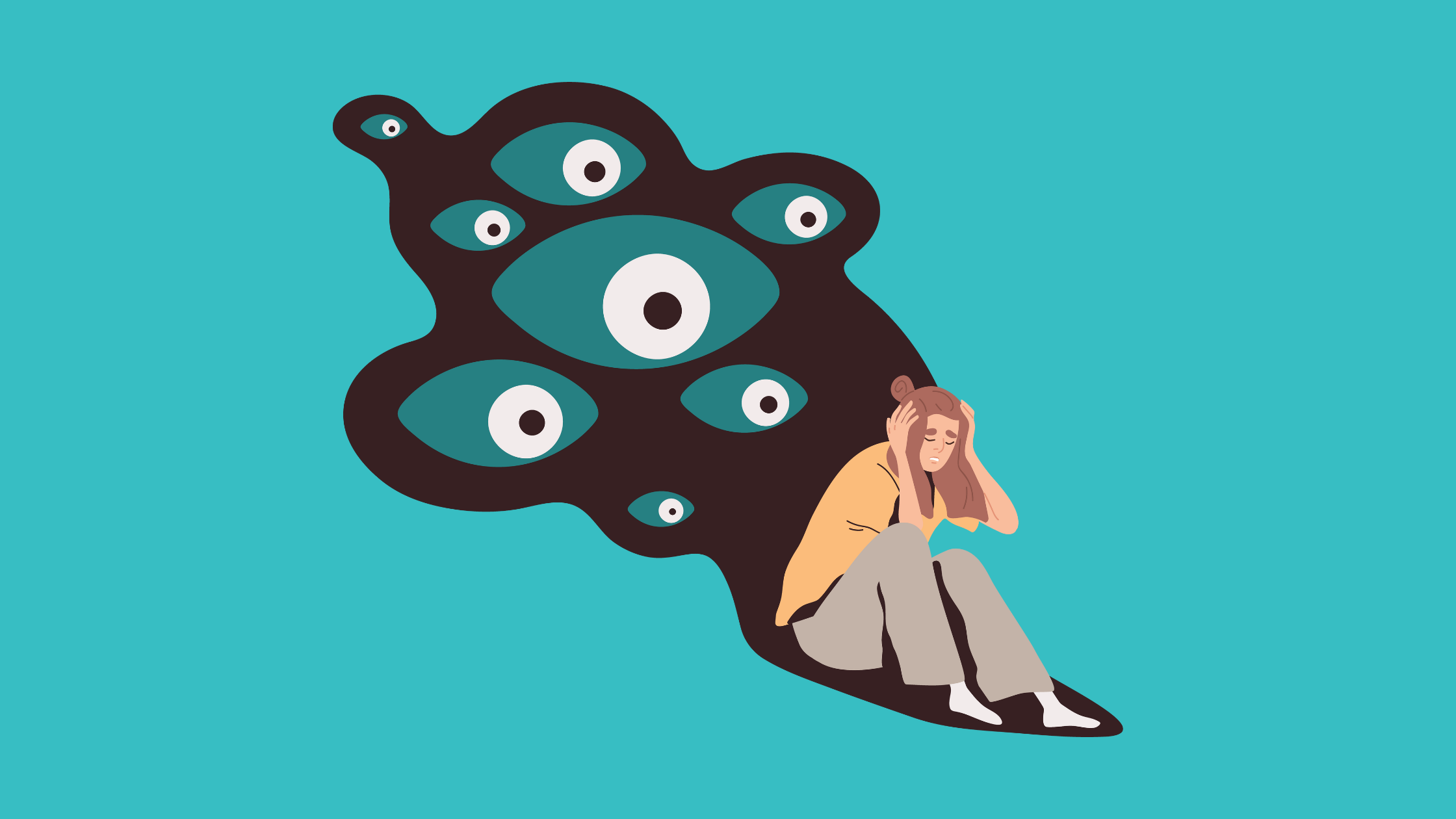
Anxiety: Identifying and Coping With Triggers in the New Year

By: Seunghee (Sunny) Rhew

It’s New Year’s Eve. You’re frantically scribbling last-minute resolutions on a scrap of paper, hoping that somehow the clock striking midnight will transform you into a brand-new person with a clean slate. But as you write these big, ambitious goals, a familiar pressure starts to build in your chest. Your mind races: Will I actually be able to do all of this? Am I taking on too much? What if I disappoint myself again?

The questions multiply, pulling you back into memories of the past year—every misstep, every abandoned plan, every moment you felt less than who you wanted to be. Suddenly you’re not just thinking about resolutions anymore. You’re questioning your life choices, your abilities, even your purpose. That’s exactly how anxiety tends to show up: quietly at first, then all at once, flooding your mind with what-ifs and worst-case scenarios.

But the start of a new year doesn’t have to trigger panic or self-doubt. It can be an opportunity to understand your anxiety with more compassion and to build healthier, calmer routines. One of the most effective ways to do that is by practicing mindfulness and grounding—skills that help bring you back into the present moment instead of spiraling into the future or the past!

Some common triggers of anxiety are:

  • Health issues
  • Negative thinking
  • Financial concerns
  • Social events
  • Conflicts with friends, families, and partners
  • Medication
  • Not having a significant other
  • Skipping meals
  • Worries about the future

Some exercises you can do to combat these triggers include…

  • 5-4-3-2-1 Method: Identify 5 things you see, 4 you can touch, 3 you hear, 2 you smell, and 1 that you can taste.
  • 4-7-8 Breathing Exercise: Breathe in through your nose for 4 counts, hold your breath for 7 counts, and exhale through your mouth for 8 counts.
  • Repeat positive statements to yourself: Reciting daily affirmations about yourself might sound like “I am capable,” “I am worthy of love,” “I am safe in this moment,” or “Everything is going to be okay.”

If you or someone you know is struggling with mental health, please contact our psychotherapy offices in New York or New Jersey to talk to one of our licensed professional psychologists, psychiatrists, psychiatric nurse practitioners, or psychotherapists at Arista Counseling and Psychotherapy. Contact our Paramus, NJ, or Manhattan, NY offices respectively, at (201) 368-3700 or (212) 722-1920 to set up an appointment. For more information, please visit https://www.counselingpsychotherapynjny.com/.

Sources:

https://www.calm.com/blog/how-to-be-more-present

https://www.healthline.com/health/anxiety/anxiety-triggers#identifying-triggers

Social Anxiety: The Surprising Ways Parents Contribute to Social Anxiety in Their Kids

Social Anxiety: The Surprising Ways Parents Contribute to Social Anxiety in Their Kids

By, Maro Mikhaeil

Being a parent means you will have a defining influence on your child’s emotional and social development. From an early age, your child’s distinct temperament will control how they would respond to the environment. Temperament refers to personality traits that determine individuals’ interactions with their environment. While some children are ready for new experiences, others may demonstrate shyness or uneasiness when faced with unpredictable events. Shyness is a feature of childhood; however, children whose shyness, hesitation to engage in social interactions, or other inhibited behaviors are consistent from infancy to adolescence are more likely to be diagnosed with anxiety disorders such as social anxiety in their teenage years. Discovering this connection could aid you in nurturing your child’s emotional health from birth.

Moreover, a child that shows signs of shyness may hesitate when contacting new people and places, only look down or ignore other children or adults they do not know, and feel uncomfortable to express themselves when participating in social activities. Although, shyness can be temporary, the occurrence of shy behavior in several stages of childhood may mean that there is a need for such a child to have some extra support in their social skills.

Research highlights the crucial role of early intervention as children with shy or cautious natures during their early years have a higher chance of developing social anxiety disorder in their teenage years (Chronis-Tuscano et al., 2009). Researchers considered the possibility that kids who have been shy or anxious from infancy through childhood are more likely to develop anxiety disorders as teenagers (Chronis-Tuscano et al., 2009).

In a similar study, Poole and other researchers followed a group of infants from the age of four months. They monitored their social and emotional development until they were 13 years old. They wanted to know if the infants’ type of response to new situations (positive, negative, or neutral) would influence their behavior and social skills in the future as they grow older. Their research outlined how social anxiety can evolve and how early characteristics may influence these paths (Poole et al., 2022).

For example, if your child’s shyness is why they cannot participate in activities that are part of their day-to-day life or make friends. Then, it may be time to seek the help of a pediatrician or a clinical psychologist. The early intervention could assist in identifying any anxiety that might be the root cause of the problem, and your child will be equipped with the required abilities for a better future. Knowing that temperament from early on can influence mental health later on, one can take active roles in building the child’s development. It’s important to work out open communication with your child and make sure that you pay attention to their emotional needs. The more you do, the better it will be for your child to build these skills and establish valuable social interactions to help children reach their full potential.

If you or someone you know is struggling with social anxiety or mental health, please contact our psychotherapy offices in New York or New Jersey to talk to one of our licensed professional psychologists, psychiatrists, psychiatric nurse practitioners, or psychotherapists at Arista Counseling & Psychotherapy. Contact our Paramus, NJ or Manhattan, NY offices respectively, at (201) 368-3700 or (212) 722-1920 to set up an appointment. For more information, please visit http://www.counselingpsychotherapynjny.com/

References:

https://kidsinfinitelearning.com/social-anxiety-in-kids/

Chronis-Tuscano, A., Degnan, K. A., Pine, D. S., Perez-Edgar, K., Henderson, H. A., Diaz, Y., Raggi, V. L., & Fox, N. A. (2009). Stable early maternal report of behavioral inhibition predicts lifetime social anxiety disorder in adolescence. Journal of the American Academy of Child & Adolescent Psychiatry, 48(9), 928–935. https://doi.org/10.1097/chi.0b013e3181ae09df

Poole, K. L., Degnan, K. A., Harrewijn, A., Almas, A., Fox, N. A., & Henderson, H. A. (2022).Trajectories of socially anxious behavior from age 5 to 13: Temperamental and sociocognitive pathways. Child Development, 93(5), 1334–1346. https://doi.org/10.1111/cdev.13767

Social Anxiety: How Bullying Affects The Disorder

Social Anxiety: How Bullying affects the disorder

By, Maro Mikhaeil

Do you find yourself seeking the approval of people yet being bullied in return?  Often, we feel the need to be liked by others and we find ourselves changing who we are. When you are continuously attempting to impress others by pretending to be someone you are not or hiding your genuine self, you are manifesting a fear of rejection. Unfortunately, others may be able to notice your fears and use them against you since you are trying too hard to “fit in”.

Emotional abuse is real, and it may be just as harmful as physical abuse. Emotional abuse creates distress in the individual’s emotional or psychological state. Kids can be harsh, and the Pew Research Center reports that at least 59% of kids in the United States have been bullied. Bullying can lead to low self-esteem and increased self-consciousness. This creates a negative feedback loop in which bullied people are more inclined to suffer from social anxiety, and vice versa. Bullying can potentially escalate into physical violence, resulting in pain on both fronts.

But what is Social Anxiety?

According to the DSM-IV, Social Anxiety is defined as feeling frightened or worried in social situations, which may lead to the desire to avoid social encounters altogether. Unfortunately, bullying does not help; instead, it can worsen symptoms as anxiety sets in, when anything one does is criticized and, as a result, is emotionally abused.

What can you do about it?

First and foremost, in dealing with the disorder, you must not feed the desire to avoid social interactions. The more we care about what others think, the more we lose ourselves and suppress our genuine identities. It is crucial to remember that bullying occurs more frequently than you think and if you allow it to disrupt your life, you are merely hurting yourself.

If you or someone you know is a victim of bullying and/or experiencing social anxiety, please contact our psychotherapy offices in New York or New Jersey to talk to one of our licensed professional psychologists, psychiatrists, psychiatric nurse practitioners, or psychotherapists at Arista Counseling & Psychotherapy. Contact our Paramus, NJ or Manhattan, NY offices respectively at  (212) 722-1920 or (201) 368-3700 to set up an appointment. For more information, please visit https://www.counselingpsychotherapynjny.com

Sources:

https://www.verywellfamily.com/bullying-and-anxiety-connection-460631#:~:text=It%20is%20not%20surprising%20that,them%20over%20and%20over%20again.

 https://www.brosix.com/blog/cyberbullying-statistic/

Social Anxiety: Social Anxiety vs. Introversion

Social Anxiety: Social Anxiety vs. Introversion

By, Maro Mikhaeil

People often find themselves confusing social anxiety with just being shy. This leaves many individuals go undiagnosed and may even worsen overtime. But what’s the difference?

First and foremost, social anxiety disorder is characterized as feeling symptoms of anxiety when it comes to social situations. Social anxiety is the feeling of being judged by others causing one to feel suppressed and feel unable to express oneself. One who feels symptoms of anxiety when presenting in front of a class or even have trouble making friends may be experiencing social anxiety.

However, introversion can certainly look the same as well. Introversion is characterized as being quiet most of the time in social situations and feeling more energy when spending time alone. An introverted individual spends time alone as a way of recharging for a social event and is a choice as opposed to individuals who experience social anxiety.

Individuals who experience social anxiety want to connect with others but feel held back because of the anxiety that is attached to the idea. They will often use alone time not to recharge themselves but as a way of protecting themselves and ultimately avoiding a social situation altogether.

If you or someone you know is struggling with their mental health, and may be experiencing social anxiety please contact our psychotherapy offices in New York or New Jersey to talk to one of our licensed professional psychologists, psychiatrists, psychiatric nurse practitioners, or psychotherapists at Arista Counseling & Psychotherapy. Contact our Paramus, NJ or Manhattan, NY offices respectively, at (201) 368-3700 or (212) 722-1920 to set up an appointment. For more information, please visit http://www.counselingpsychotherapynjny.com/.

Sources:

https://www.nimh.nih.gov/health/publications/social-anxiety-disorder-more-than-just-shyness#:~:text=They%20feel%20symptoms%20of%20anxiety,of%20situations%20or%20social%20interactions.

https://www.psychologytoday.com/us/basics/shyness#what-causes-shyness

https://mhanational.org/introversion-vs-social-anxiety#:~:text=With%20social%20anxiety%2C%20avoidance%20of,care%20rather%20than%20self%2Dprotection.

Psychotherapy: Benefits of Rational Emotive Behavior Therapy (REBT)

By: Jasmyn Cuate

Rational emotive behavior therapy (REBT) is a type of cognitive behavioral therapy (CBT) that focuses on helping people recognize and change negative thinking patterns into positive, healthier ones. This method is an action-oriented approach helping to overcome any psychological problems or mental distress. The goal of REBT is to help people respond rationally to situations that would cause stress, depression, or other negative feelings. How does it work?

The ABC model is one concept of REBT. The model suggests that we may blame external situations for our unhappiness and it is our interpretation of these situations that truly causes the psychological distress. ABC stands for:

  • A: Activating event, when something happens in your environment
  • B: Belief, describes your thoughts about the situation
  • C: Consequence, which is your emotional response to your belief

With REBT, your therapist will help you learn how to apply the ABC model in your daily life. Your therapist may help you identify the activating event before encouraging you to figure out which belief led you to your negative feelings. Once you’ve identify the underlying issue, your therapist will work with you to change those beliefs and your emotional response towards the issue. Before changing your belief, a process called disputation takes place where your therapist will challenge your irrational beliefs using direct methods such as asking questions which causes you to re-think or have you imagine another point of view that you may have not considered before. REBT can help with Anxiety, Social anxiety disorder, distress, Depression, Disruptive behavior in children, Obsessive-compulsive disorder (OCD) and Psychotic symptoms.

Benefits of REBT:

  • Reduce feelings of anger, depression, anxiety, and distress
  • Improves health and quality of life
  • Better social skills and school performance

REBT helps you understand that you are worthy of self-acceptance no matter what even if you or others are struggling; there is no need for shame or guilt because everyone makes mistakes and it’s normal to feel some discomfort. REBT gives insight that others are also worthy of acceptance even if their behavior involves something you don’t like. Overall, REBT helps you have a healthy emotional response on learning from a situation and moving on. This allows you to understand that negative things will sometimes happen in life therefore there is no rational reason to always expect it to be positive when faced with a situation.

If you or someone you know is seeking for cognitive behavioral therapy or rational emotive behavior therapy, please contact our psychotherapy offices in New York or New Jersey to talk to one of our licensed professional psychologists, psychiatrists, psychiatric nurse practitioners, or psychotherapists at Arista Counseling & Psychotherapy. Contact our Paramus, NJ or Manhattan, NY offices respectively, at (201) 368-3700 or (212) 722-1920 to set up an appointment. For more information, please visit http://www.counselingpsychotherapynjny.com/

Source: https://www.verywellmind.com/rational-emotive-behavior-therapy-2796000

How Social Media Affects Mental Health

By Jillian Hoff

In a world where most individuals are obsessively using social media, it can be detrimental to a person’s mental health.  Some of the most common symptoms that come from excessive use of social media include an increase in anxiety, depression, isolation, and fear of missing out (FOMO). Humans need social interaction, which can be given through social media but only to an extent. Humans need an in person social interaction with the people around them to feel connected. There is a reliance on social media to be able to connect with others now, especially during the pandemic. The convenience that comes from using social media may seem like it is beneficial but it the overuse of it can be the reason for your decline in mental health.

How to know when social media is affecting your mental health:

  • You start spending more time on social media than with your friends in person.
  • You compare yourself to others on social media.
  • You find yourself being distracted while you are at work or school.
  • Using social media is disrupting you sleep.

Ways to improve on mental health after a social media addiction:

  • Turn off your phone at certain times of the day.
  • Keep your phone or tablet in a different room when you are completing a task or going to bed.
  • Use social media in an active way instead of passively. This means you are using social media for a purpose.
  • Take on a new hobby or adventure to new places as a means of meeting new people and getting off of your phone.
  • Interact with others when you go somewhere instead of sitting on your phone.

Know when to put down your phone, it will make all the difference in your mental health!

If you or someone you know is seeking therapy, please contact our psychotherapy offices in New York or New Jersey to talk to one of our licensed professional psychologists, psychiatrists, psychiatric nurse practitioners, or psychotherapists at Arista Counseling & Psychotherapy. Contact our Paramus, NJ or Manhattan, NY offices respectively, at (201) 368-3700 or (212) 722-1920 to set up an appointment. For more information, please visit http://www.counselingpsychotherapynjny.com/

Sources

https://www.riseservices.org/the-impact-of-social-media-on-mental-health/

https://www.helpguide.org/articles/mental-health/social-media-and-mental-health.htm

Social Anxiety; Going Back to Normalcy After the Pandemic 

By Jillian Hoff

As everyone starts to go back to their lives before the pandemic it is important to recognize that some individuals will feel uncomfortable after being in quarantine for so long. Some people will most likely feel some amount of social anxiety when going back out. It is important to recognize that most people are going to feel anxious when returning back to normalcy. Most people will just feel these emotions a different degree. Social anxiety is more than just feeling nervous. It could occur when a person feels as though they are being judged or being put down by the people around them when that isn’t the case. This will be normal as people go back to socializing in any type of setting. One major issue society might have would be to relearn social behaviors. Some things that we previously would not have thought about doing became common actions for us during the pandemic. Things like making facial expressions under our masks or talking during a meeting because that is what we got used to doing, is not going to be acceptable behavior when one’s in person.

It is important not to rush into socializing in person. Start by having in-person meetings or work once or twice a week and slowly add more days after you are comfortable. If you have an event that you need to go to, try planning a solution in advance that will make you most comfortable to be there. You can also practice mindfulness and deep breathing exercises as a way to gain some control over your anxiety. However, what is most important is to realize that everyone is getting back to normalcy and that others will feel the same way as you do.

If you or someone you know is seeking therapy for social anxiety, please contact our psychotherapy offices in New York or New Jersey to talk to one of our licensed professional psychologists, psychiatrists, psychiatric nurse practitioners, or psychotherapists at Arista Counseling & Psychotherapy. Contact our Paramus, NJ or Manhattan, NY offices respectively, at (201) 368-3700 or (212) 722-1920 to set up an appointment. For more information, please visit http://www.counselingpsychotherapynjny.com/

Sources:

https://www.mprnews.org/story/2021/06/21/the-19th-explains-how-to-manage-postpandemic-social-anxiety

https://www.cedars-sinai.org/newsroom/managing-post-pandemic-social-anxiety/

https://tulsaworld.com/opinion/columnists/cartoon-post-pandemic-anxiety/article_453797b8-8804-11eb-a763-3371541a6ae8.html

Post Pandemic Social Anxiety

By Katie Weinstein ­­­­­­­­

Whether it is anxiety about rusty social skills or interacting with unvaccinated people, adjusting back to normalcy will be a challenge for everyone, so it is essential to find ways to cope with returning back to normal. 

One thing to keep in mind is that it is normal to have social anxiety about the adjustments that are to come. Everyone has been out of practice of picking up on social cues through Zoom. Like any skill, it might seem overwhelming to relearn at first, but with practice, people can regain their social skills. 

One way to help adjust and prevent post pandemic social anxiety is to gradually build up the amount of social interactions you are having and to slowly increase your group size. It is important to stretch a little out of your comfort zone by saying yes to some plans to get back into regularly seeing people, but it is also important to stand up for yourself and not participate in events that make you outwardly uncomfortable. Another thing that you can do to cope with post-pandemic social anxiety is reward yourself for going a little out of your comfort zone with things that you enjoy like ice cream or watching a movie. You can also try dressing up to go out. While lounging out in sweats is sometimes the most comfortable option, dressing up a little can make you feel like your best self and help you incentivize you to go out. It is also important to acknowledge when you need help and when to see someone to help cope with social anxiety.

Sources

If you or someone you know is struggling with social anxiety, please contact our psychotherapy offices in New York or New Jersey to talk to one of our licensed professional psychologists, psychiatrists, psychiatric nurse practitioners, or psychotherapists at Arista Counseling & Psychotherapy. Contact our Paramus, NJ or Manhattan, NY offices respectively, at (201) 368-3700 or (212) 722-1920 to set up an appointment. For more information, please visit http://www.counselingpsychotherapynjny.com/

https://www.healthline.com/health-news/after-a-year-of-isolation-social-interaction-may-cause-anxiety#Why-you-may-feel-anxious-about-returning-to-normal

https://www.verywellmind.com/social-anxiety-disorder-tips-302420

Anxiety: Drinking Large Quantities of Alcohol Can Increase Anxiety

By: Lauren Zoneraich

Binge-drinking dominates many young social scenes, especially those of high school students, college students, and young adults. Besides harming the liver, binge-drinking has negative effects on one’s mental state. What seems like a harmless night of fun can cause increased feelings of anxiety the next day, especially for individuals who already struggle with an anxiety disorder. Anxiety is an emotional state defined by feelings of unease, stress, and nervousness. Anxiety is also characterized by worried thoughts and changes in physiological states, such as increased heart rate. People with anxiety disorders experience anxiety regularly for prolonged periods or short, intense periods. These periods are characterized by repetitive, obsessive, or intrusive thoughts; panic attacks; and physiological symptoms such as sweating and increased blood pressure. Heavy drinking can induce feelings of anxiety and heighten pre-existing anxiety, especially the next day when the effects of alcohol have worn off.

Alcohol is a depressant and a sedative. It alters the balance of neurotransmitters in the brain, such as serotonin. When the body metabolizes alcohol, the brain’s neurotransmitter levels readjust, and this change may cause one to feel anxious. Also, the physical symptoms of a hangover, such as headache, dehydration, and dizziness, may increase anxiety. Mental and emotional states are linked to physical states, so if one is not feeling well physically, one’s mental state may also worsen. Additionally, people with social anxiety may feel anxious about their actions or words from the night before, as alcohol lowers one’s inhibitions. They may worry that they said something they would not have said in a sober state, which can cause anxiety.

If you find that heavy drinking causes you to feel anxious or increases your anxiety, it may be best to adjust your drinking behavior.

If you or someone you know is struggling with anxiety or alcohol abuse, please contact our psychotherapy offices in New York or New Jersey to talk to one of our licensed professional psychologists, psychiatrists, psychiatric nurse practitioners, or psychotherapists at Arista Counseling & Psychotherapy. Contact our Paramus, NJ or Manhattan, NY offices respectively, at (201) 368-3700 or (212) 722-1920 to set up an appointment. For more information, please visit http://www.counselingpsychotherapynjny.com/

Sources:

https://www.apa.org/topics/anxiety

https://www.drinkaware.co.uk/facts/health-effects-of-alcohol/mental-health/alcohol-and-anxiety

https://www.healthline.com/health/alcohol-and-anxiety#consequences

Image Source:

https://www.cnet.com/a/img/Jh55LlQZsT04K-qgcvoBsQes-ZU=/1200×675/2020/07/21/6094c226-5b00-49c8-a802-e0f36614255d/gettyimages-1193256860.jpg

Anxiety: Social Anxiety during COVID-19

Anxiety: Social Anxiety during COVID-19

By: Rebecca Collette

As a society, we are accustomed to our regular routines, including spending time in close quarters with others and visiting public places. As we are occupying more time indoors due to COVID-19, there has been an increase in stress and anxiety when we see ourselves having to interact with others in public. This type of anxiety is also referred to as social anxiety; where an individual fears the chance of being judged or rejected by others in social or public settings. Since COVID-19 has introduced some questionable boundaries for social relationships, more individuals are experiencing instances of social anxiety than average. Here are some tips to help manage your anxiety if you’re planning on venturing out!

Set Realistic Expectations – You can’t please everyone! When going out in public, prepare yourself to come into contact with a few uncomfortable situations. If you understand that if you upset someone and can forgive yourself for it, it will only help to decrease your anxiety.

Avoid the Need for Reassurance – Reassurance means you are checking that you are doing everything “right.” With the unpredictability and questionability of the situation that COVID-19 has brought upon us, we cannot expect to be doing everything “right.” You must allow yourself to make mistakes and realize that you cannot please everyone.

Seek Help When Needed – Uncomfortable situations are going to come up. It’s normal to feel uncomfortable when faced with a new problem or situation and it’s not a sign you did something wrong. However, if the anxiety doesn’t go away, you may suffer from social anxiety and should seek professional help.

If you or someone you know needs support with anxiety, please contact our psychotherapy offices in New York or New Jersey to talk to one of our licensed professional psychologists, psychiatrists, psychiatric nurse practitioners, or psychotherapists at Arista Counseling & Psychotherapy. Contact our Paramus, NJ or Manhattan, NY offices respectively, at (201) 368-3700 or (212) 722-1920 to set up an appointment. For more information, please visit http://www.counselingpsychotherapynjny.com/

Source: https://adaa.org/learn-from-us/from-the-experts/blog-posts/consumer/social-anxiety-during-covid-19

Image Source: https//:mentalhealthtoday.co.in/wp-content/uploads/2020/03/20APS-Web-COVID-19-Public-1000×500-1.png