Vaping’s Effect on Weight Loss

By: Kassandra Lora

E-cigarettes were first introduced into society around the early 2000’s.  Although they existed around that time they were not widely used especially not by young adults. In 2015 the company JUUL created a newer more eye-catching version of e-cigarettes. This caught the attention of many young adults and thus has increased the number of young adults using e-cigarettes.

When JUUL became popular in 2015 many of the young adults who were smoking it were not aware that JUUL pods contained nicotine. According to an article written in the Psychology Today magazine, 1 cart, or pod, that is placed inside the JUUL contains the same amount of nicotine as 1 pack of cigarettes.

            How does vaping affect someone’s weight? As stated previously, vaping contains nicotine, a highly addictive chemical. According to the article in the Psychology Today magazine, some effects of nicotine include:

  • Cutting craving for sweets
  • Increased metabolism
  • Decreased Snacking
  • Reduced weight

            Since many or almost all of the JUUL pods or carts are available in fruity and sweet flavors, individuals may substitute a craving for a cake or an unhealthy meal for a few puffs of a JUUL. This habit will cause many to begin to substitute a JUUL puff for a meal resulting in an increase in weight loss. In another study titled, Weight Concerns and Use of Cigarettes and E-Cigarettes Among Young Adults, it was mentioned how “someone suffering from anorexia or binge eating is more likely to use vaping as a way to control food intake.” This substitution of vaping instead of having a meal may eventually become an addiction or something that is difficult to control.

            If you or someone you know is struggling with a vaping addiction, please contact our psychotherapy offices in New York or New Jersey to talk to one of our licensed professional psychologists, psychiatrists, psychiatric nurse practitioners, or psychotherapists at Arista Counseling & Psychotherapy is located in Paramus, NJ and Manhattan. Call (201) 368-3700 or (212) 722-1920 to set up an appointment. For more information, please visit http://www.counselingpsychotherapynjny.com.

Sources: https://www.psychologytoday.com/us/blog/the-antidepressant-diet/201905/vaping-is-not-the-way-lose-weight

https://pubmed.ncbi.nlm.nih.gov/29843377/

Image source: : https://www.refinery29.com/en-us/2020/01/9328587/how-to-quit juul


Anxiety: Why Do Negative Things Happen To Me?

Anxiety: The Locus of Control

By Lauren Hernandez

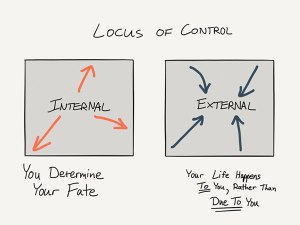
            It is easy to assign blame when something unfortunate happens in life. The locus of control is the perception an individual has regarding their sense of control in life. The way in which an individual perceives a negative event to happen is dependent upon their internal or external locus of control.

An internal locus of control is when an individual believes that the things that happen to them are a product of their own actions or mistakes. An individual with an external locus of control believes random occurrences, environmental factors, or other people are more responsible for events that occur in their life.

Studies have shown that people of high socioeconomic status typically demonstrate an internal locus of control due to their financial stability. Those of low socioeconomic background blame their environment and have an external locus of control. Children typically have an external locus of control because they lack maturity and control of their emotions. As we age, our locus of control develops internally because we are aware of the consequences of our actions. However, some adults continue to demonstrate the external locus of control and blame outside factors. This continuation of external locus of control into adulthood is thought to be caused by lack of maturity, and lack of guidance throughout childhood. It is possible that genetic factors may play a role in an individual’s locus of control in addition to their childhood experiences and their caregivers.

Studies have shown that individuals who have an internal locus of control are more successful in their personal, financial, and social lives compared to people with an external locus of control. An internal locus of control is typically associated with higher rates of health and happiness. An external locus of control may lead to anxiety, depression, and learned helplessness, causing a person distress or other mental health issues.

If you think you might have an external locus of control and believe that this perception is causing you distress or symptoms of depression and anxiety, it is important to reach out to a professional such as a psychologist or psychiatric nurse practitioner. A provider will help you to learn coping skills and how to handle difficult obstacles in life, as well as they will be able to treat your depression or anxiety in the process.

If you or someone you know who may be suffering from depression or anxiety, please contact our psychotherapy offices in New York or New Jersey to talk to one of our licensed professional psychologists, psychiatrists, psychiatric nurse practitioners, or psychotherapists at Arista Counseling & Psychotherapy. Contact our Paramus, NJ or Manhattan, NY offices respectively, at (201) 368-3700 or (212) 722-1920 to set up an appointment. For more information, please visit http://www.counselingpsychotherapynjny.com/ .


Sources:

https://www.psychologytoday.com/us/blog/darwins-subterranean-world/201803/florida-teens-and-the-let-me-talk-the-manager-effect

https://www.psychologytoday.com/us/basics/locus-control

https://www.psychologytoday.com/us/blog/handy-hints-humans/201608/take-back-control-and-reach-the-stars

https://www.psychologytoday.com/us/blog/your-personal-renaissance/201404/how-much-control-do-you-have-in-your-life

Image Source:

https://www.bing.com/images/search?view=detailV2&id=008E323C4EFEF360AB625614E1241444185F12AF&thid=OIP.2bm4WsM3cgl3QRoZzPJanQHaFj&mediaurl=https%3A%2F%2Fwww.cedarcolorado.org%2Fwp-content%2Fuploads%2F2018%2F03%2FCeDAR-Psychotherapy-Locus-of-Control-image-01.jpg&exph=450&expw=600&q=locus+of+control&selectedindex=33&ajaxhist=0&vt=0