Kratom Craze

By Charlotte Arehart

If something is legal, that must mean that it’s safe, right? While this would be great to believe, unfortunately it is not true.  An example of something that is not illegal yet but is still unsafe is the drug kratom. Although banned in 6 states, kratom is still legal in the United States. It can easily be purchased at drug stores and even online. Kratom, a psychoactive plant, comes from the leaves of kratom trees that grow in Southeast Asia, where it has traditionally been used for teas and medicines. Only recently has kratom been used frequently in Western societies. Many people praise kratom for alleviating their pain from headaches or even bad knees. However, kratom comes with some not-so-great side effects, and some that are quite aversive.

Low doses of kratom seem very beneficial. Users may experience increased energy, lower pain levels, and feelings of relaxation. However, continued consistent use of kratom or large doses of kratom pose some serious side effects. And since kratom is so addictive, it is easy for users to work their way up to this point. Users may begin to hallucinate, become depressed, have seizures, enter comas, or even die when mixing kratom with other substances. There have been many deaths recorded because of kratom usage with other substances like alcohol. One user on WebMD begs others to be wary of kratom, stating that their family member died from a third seizure caused by the drug. Another user warned of the addictive effects of the drug, saying that kratom advocates downplay the withdrawal symptoms to be similar to caffeine withdrawal when in reality it is more like “full on opioid withdrawal” symptoms. Since kratom has a very similar chemical reaction in the body as opioid drugs, it makes sense that the withdrawal symptoms would be very similar. Other users have stated that while the drug may be efficient in alleviating pain, the dependency that comes with the drug is not worth it.

Even though kratom is not illegal, there is no such thing as a “good” addiction. If you or someone you know is facing a kratom addiction, there are ways to get help. It is important that anyone who is facing a kratom addiction seeks therapy as soon as possible, before it is too late.

If you or someone you know needs substance abuse support, please contact our psychotherapy offices in New York or New Jersey to talk to one of our licensed professional psychologists, psychiatrists, psychiatric nurse practitioners, or psychotherapists at Arista Counseling & Psychotherapy. Contact our Paramus, NJ or Manhattan, NY offices respectively, at (201) 368-3700 or (212) 722-1920 to set up an appointment. For more information, please visit http://www.counselingpsychotherapynjny.com/

Sources:

https://www.mayoclinic.org/healthy-lifestyle/consumer-health/in-depth/kratom/art-20402171

https://www.healthline.com/health/kratom-and-alcohol#effects

https://www.ncbi.nlm.nih.gov/pmc/articles/PMC4657101/

Image Source: https://www.healthline.com/health/kratom-and-alcohol

Mental Health during Pride Month

By Charlotte Arehart

With June finally starting, this means that it is officially Pride Month! Pride Month is celebrated in June in the USA and many other countries. During Pride Month, we celebrate and recognize the impact that  lesbian, gay, bisexual, transgender, queer LGBTQ+ individuals have on their communities. We celebrate their history, whether it be locally, nationally, or internationally. Unfortunately, there is a stigma surrounding the LGBTQ+ community regarding mental health. There are a plethora of statistics about LGBTQ+ individuals and mental health, including the fact that members of the community are less likely to seek treatment for mental health, substance abuse, and eating disorders. This is largely due to fear of being discriminated against because of their sexuality. Pride Month is the perfect opportunity to prioritize and learn more about mental health for LGBTQ+ individuals.

There are many barriers that LGBTQ+ individuals face when it comes to finding mental health treatment. Many mental health centers lack culturally-competent or diverse staff and/or treatment. It was not very long ago that homosexuality and bisexuality were themselves considered mental illnesses. This was thought to be true until the 1960’s. Gay men and lesbian women were frequently forced to undergo “treatment” for their sexuality against their will, such as aversion, conversion, and even shock therapies. Also damaging to mental health, LGBTQ+ individuals are at a higher risk for bullying, and sometimes even hateful violent crimes. The best way to help the LGBTQ+ community regarding mental health efforts is to support the community not only through words but through actions. By reducing the stigma around mental health and making LGBTQ+ individuals feel as comfortable as possible, hopefully we can make mental health treatment more accessible for everyone. Luckily, the vast majority of mental health professionals today are accepting and positive towards the LGBTQ+ community. Everyone deserves to have efficient, effective, and professional mental health no matter how they identify as individuals.

If you or someone you know needs mental health support, please contact our psychotherapy offices in New York or New Jersey to talk to one of our licensed professional psychologists, psychiatrists, psychiatric nurse practitioners, or psychotherapists at Arista Counseling & Psychotherapy. Contact our Paramus, NJ or Manhattan, NY offices respectively, at (201) 368-3700 or (212) 722-1920 to set up an appointment. For more information, please visit http://www.counselingpsychotherapynjny.com/

Sources:

Image Source: https://lgbt-speakers.com/news/top-10-lists/10-lgbt-speakers-for-pride-month-2021

Social Media: Self-Diagnosing

By Charlotte Arehart

For many people, it has become a habit to turn to the internet with any questions that one might have. While it is great to have the answers to the world at our fingertips, we have to keep in mind that just because we find an answer on the internet does not mean it is the correct one. Googling the answers to everything can be particularly harmful when it comes to physical and mental health. Searching a simple symptom such as a stomach ache may lead to answers that suggest the individual has appendicitis, when in reality they may only be having indigestion. With the internet becoming more powerful than ever, more people have been self-diagnosing with physical and mental health issues without seeking help from a professional.

Social media has played a huge role in the increase of self-diagnosing. Many influential social media users with a large platform use their platform to speak and educate viewers about mental illnesses. While this is great in terms of normalizing and reducing the stigma around mental health issues, it becomes harmful when viewers use this information to self-diagnose. I personally have seen many videos on platforms such as Instagram and Tiktok where the creator lists several widely general and common “symptoms,” such as sleeping in too much or having a short attention span, then follow up with something along the lines of “if you are experiencing these symptoms, you may have ADHD!” In the comments section, I see floods of viewers who are now concerned that they may have a mental disorder simply because they experience a few of the general symptoms listed. It seems that these videos create a lot of stress in people who do not actually need to be worried, since the symptoms listed are often so generalized. However, I do think that it is very beneficial for those who are struggling with mental health issues to receive support and a sense of community through social media. It can be very comforting to know that you are not alone going through something. If creators wish to speak about mental health issues on social media, it should be done in a very careful way. Addressing mental health on social media does present a wide variety of benefits, however it becomes an issue when people are self-diagnosing and becoming worried without speaking to a professional.

If you or someone you know needs mental health support, please contact our psychotherapy offices in New York or New Jersey to talk to one of our licensed professional psychologists, psychiatrists, psychiatric nurse practitioners, or psychotherapists at Arista Counseling & Psychotherapy. Contact our Paramus, NJ or Manhattan, NY offices respectively, at (201) 368-3700 or (212) 722-1920 to set up an appointment. For more information, please visit http://www.counselingpsychotherapynjny.com/

Sources:

https://etactics.com/blog/problems-with-self-diagnosis

Image Source: https://dailytitan.com/opinion/column-self-diagnosing-mental-health-disorders-is-hazardous/article_d953ca7f-0eae-57d2-81fb-d0d339734788.html

Post Pandemic Social Anxiety

By Katie Weinstein ­­­­­­­­

Whether it is anxiety about rusty social skills or interacting with unvaccinated people, adjusting back to normalcy will be a challenge for everyone, so it is essential to find ways to cope with returning back to normal. 

One thing to keep in mind is that it is normal to have social anxiety about the adjustments that are to come. Everyone has been out of practice of picking up on social cues through Zoom. Like any skill, it might seem overwhelming to relearn at first, but with practice, people can regain their social skills. 

One way to help adjust and prevent post pandemic social anxiety is to gradually build up the amount of social interactions you are having and to slowly increase your group size. It is important to stretch a little out of your comfort zone by saying yes to some plans to get back into regularly seeing people, but it is also important to stand up for yourself and not participate in events that make you outwardly uncomfortable. Another thing that you can do to cope with post-pandemic social anxiety is reward yourself for going a little out of your comfort zone with things that you enjoy like ice cream or watching a movie. You can also try dressing up to go out. While lounging out in sweats is sometimes the most comfortable option, dressing up a little can make you feel like your best self and help you incentivize you to go out. It is also important to acknowledge when you need help and when to see someone to help cope with social anxiety.

Sources

If you or someone you know is struggling with social anxiety, please contact our psychotherapy offices in New York or New Jersey to talk to one of our licensed professional psychologists, psychiatrists, psychiatric nurse practitioners, or psychotherapists at Arista Counseling & Psychotherapy. Contact our Paramus, NJ or Manhattan, NY offices respectively, at (201) 368-3700 or (212) 722-1920 to set up an appointment. For more information, please visit http://www.counselingpsychotherapynjny.com/

https://www.healthline.com/health-news/after-a-year-of-isolation-social-interaction-may-cause-anxiety#Why-you-may-feel-anxious-about-returning-to-normal

https://www.verywellmind.com/social-anxiety-disorder-tips-302420

The Importance of Mental Health

By Charlotte Arehart

When thinking about their health, most people only consider the physical state of their bodies. However, it is important that we take our mental health into consideration as well. Not only are these two aspects equally important, but they are actually very closely related. People who have poor mental health are at greater risk of having poor physical health. For example, people who experience depression are at a 50% increased risk of dying from cancer and a 67% increase for heart disease. Stress and anxiety also have a huge impact on the body, affecting the respiratory system, the cardiovascular system, as well as the gastrointestinal system.

Since mental health is so important, why do people usually disregard it? Many people are afraid of the stigma that surrounds mental health. Since you cannot always “see” mental health problems, some people view them as “not real.” Many people fear that others will look at them differently if they seek mental help. They do not want to be seen as emotionally weak. People are especially worried that seeking mental help with affect their careers, however this is not true. In fact, taking proactive steps to help mental health will reduce possible repercussions for the future. It is better to address the issue sooner rather than later, since unchecked mental health symptoms usually worsen over time. If you are experiencing mental health troubles, by no means are you alone. Many mental health issues are actually more prevalent than one would expect. By realizing that there are tons people who are experiencing something similar to them, people may feel better about reaching out for mental health.

If you or someone you know needs mental health support, please contact our psychotherapy offices in New York or New Jersey to talk to one of our licensed professional psychologists, psychiatrists, psychiatric nurse practitioners, or psychotherapists at Arista Counseling & Psychotherapy. Contact our Paramus, NJ or Manhattan, NY offices respectively, at (201) 368-3700 or (212) 722-1920 to set up an appointment. For more information, please visit http://www.counselingpsychotherapynjny.com/

Sources: https://www.mentalhealth.org.uk/a-to-z/p/physical-health-and-mental-health

https://www.pdhealth.mil/news/blog/reducing-self-stigma-mental-health-important-physical-health

Image Source: https://www.hrcsb.org/may-mental-health-awareness-month/

Anxiety: Drinking Large Quantities of Alcohol Can Increase Anxiety

By: Lauren Zoneraich

Binge-drinking dominates many young social scenes, especially those of high school students, college students, and young adults. Besides harming the liver, binge-drinking has negative effects on one’s mental state. What seems like a harmless night of fun can cause increased feelings of anxiety the next day, especially for individuals who already struggle with an anxiety disorder. Anxiety is an emotional state defined by feelings of unease, stress, and nervousness. Anxiety is also characterized by worried thoughts and changes in physiological states, such as increased heart rate. People with anxiety disorders experience anxiety regularly for prolonged periods or short, intense periods. These periods are characterized by repetitive, obsessive, or intrusive thoughts; panic attacks; and physiological symptoms such as sweating and increased blood pressure. Heavy drinking can induce feelings of anxiety and heighten pre-existing anxiety, especially the next day when the effects of alcohol have worn off.

Alcohol is a depressant and a sedative. It alters the balance of neurotransmitters in the brain, such as serotonin. When the body metabolizes alcohol, the brain’s neurotransmitter levels readjust, and this change may cause one to feel anxious. Also, the physical symptoms of a hangover, such as headache, dehydration, and dizziness, may increase anxiety. Mental and emotional states are linked to physical states, so if one is not feeling well physically, one’s mental state may also worsen. Additionally, people with social anxiety may feel anxious about their actions or words from the night before, as alcohol lowers one’s inhibitions. They may worry that they said something they would not have said in a sober state, which can cause anxiety.

If you find that heavy drinking causes you to feel anxious or increases your anxiety, it may be best to adjust your drinking behavior.

If you or someone you know is struggling with anxiety or alcohol abuse, please contact our psychotherapy offices in New York or New Jersey to talk to one of our licensed professional psychologists, psychiatrists, psychiatric nurse practitioners, or psychotherapists at Arista Counseling & Psychotherapy. Contact our Paramus, NJ or Manhattan, NY offices respectively, at (201) 368-3700 or (212) 722-1920 to set up an appointment. For more information, please visit http://www.counselingpsychotherapynjny.com/

Sources:

https://www.apa.org/topics/anxiety

https://www.drinkaware.co.uk/facts/health-effects-of-alcohol/mental-health/alcohol-and-anxiety

https://www.healthline.com/health/alcohol-and-anxiety#consequences

Image Source:

https://www.cnet.com/a/img/Jh55LlQZsT04K-qgcvoBsQes-ZU=/1200×675/2020/07/21/6094c226-5b00-49c8-a802-e0f36614255d/gettyimages-1193256860.jpg

Low Self-Esteem: Dating Apps Can Decrease One’s Self-Confidence

By: Lauren Zoneraich

With the advent and prolonged continuation of the COVID-19 pandemic, many young adults have turned to dating apps as a way to connect with potential romantic partners, speak to new people, and entertain themselves. The most popular dating apps among young adults are Tinder, Bumble, Hinge, and Grindr, which are visually-based dating apps. Instead of text-heavy profiles, like those seen on Match.com, users swiftly accept or reject others based on their profile photographs, which dominate the page display. How does the visually-based nature of dating apps affect the self-esteem of dating app users?

One’s physical appearance and self-esteem are strongly linked. Self-esteem is defined as the self-evaluation a person holds regarding their worth, success, and capabilities. In a survey-based study of young adults, researchers determined that the visual nature of Tinder could raise or lower the self-esteem of users. Users who matched with a lot of attractive users and received many messages experienced an ego boost. Contrarily, many participants reported that the visual nature of the Tinder made them feel more self-conscious about their appearance. Users felt a decrease in self-esteem when they did not match with a lot of people or when they only received messages from unattractive matches. Many participants reported “swiping left on” (rejecting) users who they anticipated would not “swipe right on” (accept) them, or swiping left on users they liked to avoid the possibility of being rejected and experiencing a decrease in self-confidence. These reports highlight how Tinder can trigger negative assessments of the self even before a user is rejected, and of course, decrease a user’s self-confidence after rejection.

Online dating apps are not meant for everyone. If you find that apps such as Tinder are lowering your self-esteem, it may be best to delete these apps and meet partners through other avenues.

If you or someone you know is struggling with low self-esteem, please contact our psychotherapy offices in New York or New Jersey to talk to one of our licensed professional psychologists, psychiatrists, psychiatric nurse practitioners, or psychotherapists at Arista Counseling & Psychotherapy. Contact our Paramus, NJ or Manhattan, NY offices respectively, at (201) 368-3700 or (212) 722-1920 to set up an appointment. For more information, please visit http://www.counselingpsychotherapynjny.com/

Reference:
Kallis, R. (2021). Creating a future relationship or destroying my self-esteem? An exploratory study on dating app experiences and well-being. Journal of Communication Technology, 4(1), 78-100. https://doi.org/10.51548/joctec-2021-005

Image Source:

https://www.theverge.com/2016/1/11/10749670/tinder-secretly-ranks-users-desirability

Body Image: Body Dysmorphic Disorder

Body Image: Body Dysmorphic Disorder
By Kaitlyn Choi

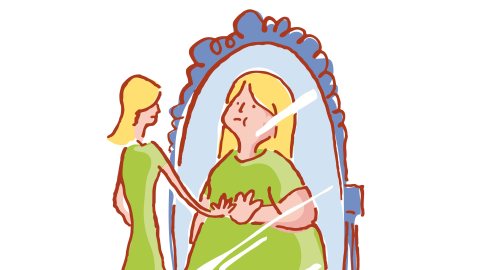
Body dysmorphic disorder is a type of obsessive-compulsive disorder that is marked by fixation on one’s imaginary or minor physical flaws. People who have body dysmorphia are overly worried about what are perceived as overt imperfections in their appearance. They continue to experience negative and anxious thoughts about their face, hair, and/or body. However, in reality, these perceived flaws are hardly noticeable by other people; there may not be any “defect” in their physical appearance at all. The amount of concern experienced by the individual is considerably disproportionate to the flaw they are obsessing over.

Symptoms of body dysmorphic disorder include preoccupation to the point of significant distress, impairment in functioning, or isolating oneself due to self-consciousness and insecurity. Moreover, people with body dysmorphia exhibit performance of repetitive behaviors such as mirror checking, excessive grooming, and skin picking. They may also seek reassurance from other people and compare their appearance with that of others throughout the day. Because they believe their physical flaw is so gross and noticeable, they may constantly try to “fix” these flaws by consulting with plastic surgeons or cosmetic professionals.

Primary treatments for body dysmorphic disorder include cognitive behavioral therapy and antidepressant medication. The goal of treatment is to recognize the triggers of the behaviors/thoughts, to improve management of the stress experienced, and to help patients learn to view themselves in a non-judgmental way.

In a society that glorifies only certain face and body types, many individuals can feel overwrought about their appearance and consequently experience symptoms of body dysmorphic disorder. It is crucial that individuals learn to love themselves and perceive themselves in a self-encouraging manner.

If you or someone you know is struggling with body image or body dysmorphia, please contact our psychotherapy offices in New York or New Jersey to talk to one of our licensed professional psychologists, psychiatrists, psychiatric nurse practitioners, or psychotherapists at Arista Counseling & Psychotherapy. Contact our Paramus, NJ or Manhattan, NY offices respectively, at (201) 368-3700 or (212) 722-1920 to set up an appointment. For more information, please visit http://www.counselingpsychotherapynjny.com/.

Sources:
https://www.psychologytoday.com/us/conditions/body-dysmorphic-disorder
https://my.clevelandclinic.org/health/diseases/9888-body-dysmorphic-disorder

Image Source:
https://www.additudemag.com/adhd-related-body-dysmorphic-disorder/

COVID-19 and Teletherapy

COVID-19 and Teletherapy
By Kaitlyn Choi

COVID-19 most certainly has impacted not only the mundane aspects of our everyday lives but also the essential delivery of health care services. This is a significant transition for all health care providers and patients. For those who had been receiving therapy or counseling, the pandemic caused a major increase in the shift from in-person to phone therapy.

Although teletherapy may seem out of the ordinary, there are many advantages to being able to access health care services through the internet or phone. First of all, by staying at home, patients can avoid health risks. It is crucial that we take caution of the virus; this is a perfect way to stay safe while receiving quality care. Furthermore, it is simply convenient. There is no need to physically come to the office or schedule an appointment according to travel availability. Thus there is increased flexibility with appointments, according to the patient’s needs and comfort. Patients can even have sessions while they are away from home or on vacation. This is great for individuals who are busy or unavailable for long periods of time.

Many might be wondering if the quality of therapy or health care services changes with the shift from in-person counseling to telehealth. In fact, it was proven that cognitive behavioral therapy and other forms of treatment are equally effective when administered via telephone as it is when administered face-to-face. In other words, telehealth is both valuable and convenient.

This might be a great time to seek therapy if you have been hesitating. With teletherapy available for all individuals, you can receive quality mental health care in the comfort of your own home.

If you or someone you know needs help with anxiety, panic attacks, fatigue, or lack of motivation, please contact our psychotherapy offices in New York or New Jersey to talk to one of our licensed professional psychologists, psychiatrists, psychiatric nurse practitioners, or psychotherapists at Arista Counseling & Psychotherapy. Contact our Paramus, NJ or Manhattan, NY offices respectively, at (201) 368-3700 or (212) 722-1920 to set up an appointment. For more information, please visit http://www.counselingpsychotherapynjny.com/.

Sources:
https://www.psychologytoday.com/us/blog/social-instincts/202003/will-covid-19-make-teletherapy-the-rule-not-the-exception
https://www.psychologytoday.com/us/blog/think-well/202008/10-advantages-teletherapy

Image Source:
https://www.consumerreports.org/mental-health/how-to-find-affordable-mental-teletherapy/

Addiction: Supporting My Adult Child Through Addiction

Addiction: Supporting My Adult Child Through Addiction
By Emma Yasukawa

Being a parent means that your children always come first and from a young age, you teach them to make good decisions because children form plenty of life decisions on their own. For example, there are plenty of adult children who make the decision on whether or not they will try drugs or alcohol; even after hearing all of the possible side-effects and risks of addiction. This decision ultimately has an effect on parents and may leave them second-guessing their parenting skills and whether or not they did something wrong as parents.

If you are a parent of an adult child who is not making good decisions and their future seems uncertain, this can be a heavy burden on you. You must take a deep breath and remind yourself that your child is no longer your responsibility legally, and that they inevitably chose this path. Though, there are a few ways that a parent can help their adult child dealing with addiction:

1. Adult children who are addicted to a substance tend to feel as if the whole world is against them and that they feel as if they ‘had no other choice.’ As a parent it is important to remind your child that it was their conscious decision that leads them to where they are. Ultimately, this can remind them that they always have a choice and that it is not too late to seek help.

2. As a parent, you will always want to support your child emotionally and financially if needed. It is a parent’s heart to want to always help, but sometimes you are causing more harm than good. It is important to offer assistance and support but only to the degree that you are able to, and knowing that it is actually bettering your child’s future.

3. Love your child. Love comes in many different forms and sometimes integrating tough love is the best kind of love. This means holding him/her accountable for their behavior, and possibly setting up an intervention if needed.

4. While it is easy for the addicted child to become the center of attention, it is important to not allow this to affect the rest of your family. Of course it will be on everyone’s mind but, it should not get to the point where it will split up a family.

If you or someone you know is struggling with addiction, please contact our psychotherapy offices in New York or New Jersey to talk to one of our licensed professional psychologists, psychiatrists, psychiatric nurse practitioners, or psychotherapists at Arista Counseling & Psychotherapy. Contact our Paramus, NJ or Manhattan, NY offices respectively, at (201) 368-3700 or (212) 722-1920 to set up an appointment. For more information, please visit http://www.counselingpsychotherapynjny.com

Resources: https://www.psychologytoday.com/us/blog/lifetime-connections/201410/7-tips-mothers-adult-addicts

Image Source: https://vertavahealth.com/wp-content/uploads/2019/07/Addictioncampuses.com-Getting-Help-For-An-Adult-Child-Addicted-To-Drugs-And-Alcohol.jpg