Bulimia and Binge Eating Disorder: Similarities and Differences

Bulimia and Binge Eating Disorder: Similarities and Differences

By: Diane Ulloa
Bulimia as categorized by the DSM V under bulimia nervosa is a diagnosis assigned to individuals who recurrently overeat and use inappropriate measures to prevent weight gain afterwards, such as purging, fasting or exercising excessively. A criterion would include, “Recurrent inappropriate compensatory behaviors in order to prevent weight gain such as self-induced vomiting; misuse of laxatives, diuretics, or other medications; fasting or excessive exercise” (National Library of Medicine).
There are 5 criterion for binge eating disorder that include:

  1. Eating in a discrete period of time (within 2 hour periods), an amount of food that is larger than most people would eat in a similar period of time under similar circumstances. A feeling that one cannot stop eating or control what or how much one is eating. . Eating until feeling uncomfortably full, eating large amounts of food when not feeling physically hungry.
  2. Recurrent inappropriate compensatory behaviors in order to prevent weight gain such as self-induced vomiting; misuse of laxatives, diuretics, or other medications; fasting or excessive exercise
  3. The binge eating and inappropriate compensatory behaviors occur, on average, at least twice a week for 3 months.
  4. Self-evaluation is unjustifiably influenced by body shape and weight.
  5. The disturbance does not occur exclusively during episodes of anorexia nervosa.

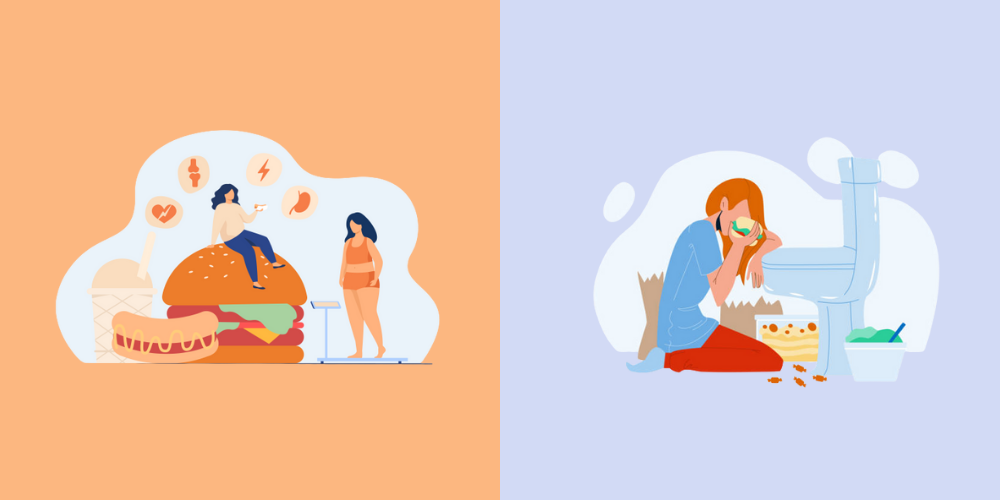
Both have the shared behavior of binge eating food, but what is binge eating? When someone cannot control their eating and they eat much more food than they would normally eat in one sitting often to the point of major discomfort. Oftentimes binging happens when one is not hungry and many report binge eating home alone, or at night when no one is up or around to see them. People may binge eat as a coping mechanism when they are stressed, anxious, bored, or experiencing any other negative emotion. For those struggling with bulimia, binging and then purging can be a way of coping with those negative emotions. For someone who struggles with binge eating disorder, binging can also be a way to self-soothe or distract in the presence of very difficult emotions. Many people who engage in these behaviors have feelings of social isolation and anxiety, and many have reported feeling hopeless and helpless.
What’s the difference? The main difference is that bulimia nervosa is characterized by purging after binge eating. While everyone has very different reasons and experiences, often those who struggle with bulimia also struggle with gaining weight and often have a distorted body image. As opposed to those with binge eating disorders who may feel uncomfortable in their bodies, but do not have as strong preoccupation with their body image, or weight, as those with bulimia.  

If you or someone you know is struggling with their mental health, bulimia nervosa, or binge eating disorder please contact our psychotherapy offices in New York or New Jersey to talk to one of our licensed professional psychologists, psychiatrists, psychiatric nurse practitioners, or psychotherapists at Arista Counseling & Psychotherapy. Contact our Paramus, NJ or Manhattan, NY offices respectively, at (201) 368-3700 or (212) 722-1920 to set up an appointment. For more information, please visit http://www.counselingpsychotherapynjny.com/

Sources:

Substance Abuse and Mental Health Services Administration. DSM-5 Changes: Implications for Child Serious Emotional Disturbance [Internet]. Rockville (MD): Substance Abuse and Mental Health Services Administration (US); 2016 Jun. Table 20, DSM-IV to DSM-5 Bulimia Nervosa Comparison. Available from: https://www.ncbi.nlm.nih.gov/books/NBK519712/table/ch3.t16/
Berkman ND, Brownley KA, Peat CM, et al. Management and Outcomes of Binge-Eating Disorder [Internet]. Rockville (MD): Agency for Healthcare Research and Quality (US); 2015 Dec. (Comparative Effectiveness Reviews, No. 160.) Table 1, DSM-IV and DSM-5 diagnostic criteria for binge-eating disorder. Available from: https://www.ncbi.nlm.nih.gov/books/NBK338301/table/introduction.t1/

https://www.centralcoasttreatmentcenter.com/blog-1/bulimia-v-binge-eating-disorder

Depression: Does Social Media Cause Depression?

Depression: Does Social Media Cause Depression?

By: Michelle Chinchilla

Around 4.62 billion of us are engaging on social media platforms. You can like someone’s post or share a picture or video- there is always a new update or post. After endless amounts of scrolling it can be pretty tiring. Social media as a whole can make a person feel so many different ways: meaningful, euphoric, isolated, and even depressed.

What type of depression can social media be caused by?

Social media isn’t inherently harmful to your mental health, especially if it doesn’t replace other forms of healthy social interaction. However, exposure to harmful behavior and rhetoric through social media can impact your mood and even cause depressive symptoms. Comparison, jealousy, addiction, and many more are reasons to feeling down.

Prevention

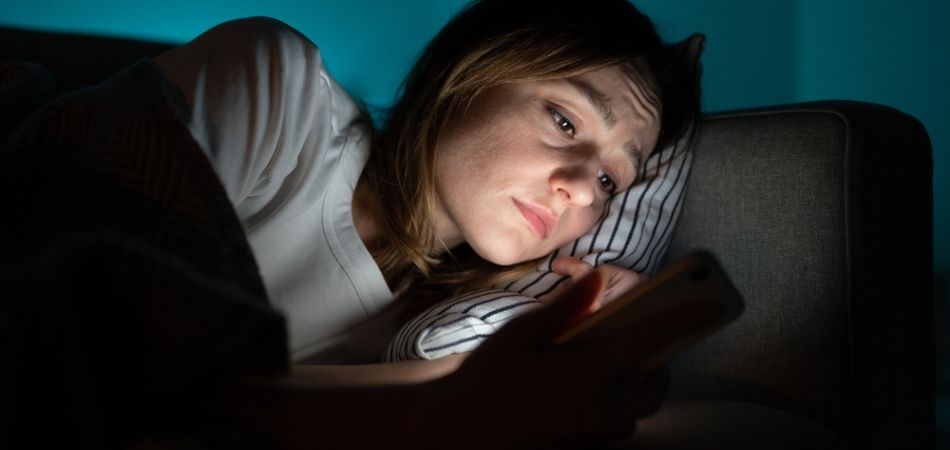
Do you notice you’re feeling more sad, lonely, isolated, or depressed when you spend time on social media? Or do you walk away feeling recharged, or like you have spent your time meaningfully? If you have an iPhone, consider using the “Screen Time” feature to track how you’re using your phone. When social media becomes too distracting, consider turning off notifications for a while or removing the app from your phone until you feel like you’re in a better place to log in again.

If you or someone you know is struggling with depression, contact our psychotherapy offices in New York or New Jersey to talk to one of our licensed professional psychologists, psychiatrists, psychiatric nurse practitioners, or psychotherapists at Arista Psychotherapy & Psychiatric Services. Contact our Manhattan, NY or Paramus, NJ offices respectively at (201)368-3700 or (212)722-1920 to set up an appointment. For more information, please visit https://counselingpsychotherapynjny.com

Reference: https://psychcentral.com/depression/does-social-media-cause-depression#tips

PTSD in Military Veterans

PTSD in Military Veterans

By: Mercedes Renter

What does PTSD stand for? Post-traumatic stress disorder is a mental health disorder which often develops after someone goes through or sees a life-threatening event. The symptoms of PTSD tend to start soon after the traumatic event but may not appear until months or years later. There are four common symptoms of PTSD. The first symptom is reliving the event which can feel very scary and real. Nightmares can occur as well as flashbacks and you may see, hear, or smell something that can remind you of the event. The second symptom is avoiding things that remind you of the event. For example, for veterans they may avoid gun ranges when they are not deployed because it can trigger past emotions. The third symptom is having negative thoughts and feelings which did not occur before the traumatic event. An individual suffering from PTSD can feel numb or may think the world is full of danger and have a hard time with trusting anyone. The fourth symptom is feeling on edge which can lead to having a hard time falling asleep, find it hard to concentrate, or even become startled by a loud noise or surprise.

There are lifestyles changes that can help a veteran cope with post-traumatic stress disorder. Interacting with trauma survivors and other veterans who have experienced PTSD can be beneficial. Additionally, exercising can be helpful by providing a steady schedule into your everyday life. Eating healthy and spending more time with loved ones are also healthy habits that can help cope with post-traumatic stress disorder. These are all helpful changes for an individual suffering from PTSD because it allows a positive change in their daily life.

If you or someone you know is struggling with Post-traumatic stress disorder please contact our psychotherapy offices in New York or New Jersey to talk to one of our licensed professional psychologists, psychiatrics, psychiatric nurse practitioners, or psychotherapists at Arista Counseling and Psychotherapy. Contact our Paramus, NJ or Manhattan, NY offices respectively at (201)-368-3700 or (212)-722-1920 to set up an appointment. For more information, please visit https://www.counselingpsychotherapynjny/com

Reference: https://www.ptsd.va.gov/understand/common/common_veterans.asp

Physician Burnout during a Global Pandemic

By Eleanor Kim

Physicians and nurses around the world have been at the front lines fighting the coronavirus and saving the lives of those infected. Now more than ever, citizens are coming to realize the importance of those within the medical field and the bravery that comes with entering medicine. That being said, there has been an immense amount of pressure placed upon healthcare workers, often causing stress, anxiety, and depression. At the end of the day, doctors, nurses, and other healthcare workers are humans and can feel the effects of burnout during such a heightened and high stakes moment in medical history.

Burnout is when someone becomes overwhelmed by the demands of their daily life, becoming emotionally and physically exhausted and creating a sense of depersonalization and weakened personal accomplishments. Burnout is a common occurrence among physicians and nurses given the great amount of pressure that comes with saving lives. That being said, these feelings of burnout have skyrocketed given the additionally taxing nature of current frontline medical work such as the stress of isolating from friends and family, the extended hours of work, the tragic lack of medical supplies, and the fear of contracting or spreading the virus, to name a few. Physicians are also left to deal with the other struggles and anxieties that the past year has brought upon the general population regarding economic, political, racial, and other personal effects of the pandemic.

During these elongated periods where healthcare workers are left sleep deprived, improperly fed, and overall anxious about the current status of the pandemic, they are exposed to both mentally and physically long lasting effects. In 2020, there have been a record number of physicians who have reported feelings of burnout and other mental health concerns since the start of the pandemic. Should these issues go untreated, there is an increased risk for depression, self-medication, substance abuse, and suicidal thoughts or attempts. Burnout is more than just stress; it is a mental health crisis and should be treated as such.

If you or someone you know is feeling the effects of physician and healthcare worker burnout, please contact our psychotherapy offices in New York or New Jersey to talk to one of our licensed professional psychologists, psychiatrists, psychiatric nurse practitioners, or psychotherapists at Arista Counseling & Psychotherapy. Contact our Paramus, NJ or Manhattan, NY offices respectively, at (201) 368-3700 or (212) 722-1920 to set up an appointment. For more information, please visit http://www.counselingpsychotherapynjny.com/.

Resources:

https://www.forbes.com/sites/lipiroy/2020/05/17/doctor-heal-thyself-physician-burnout-in-the-wake-of-covid-19/

Image Source:

More than a third of medical staff suffered insomnia during the COVID-19 epidemic in China

Alcohol Usage Increase during Covid-19

By. Alexis Yennie

Alcohol consumption has been rising consistently since the beginning of the Covid-19 outbreak. Having people see alcohol as an “effective pain killer”, women’s rates of consuming alcohol are much higher than men’s; due to the increase of work stress and also domestic duties (childcare, homeschooling, and being in charge of the household), Experts are becoming gradually more concerned with individuals and the choices they are making about how they choose to ease the pain during the pandemic. During this pandemic, times are uncertain; including things such as death and unemployment.

A survey that was done by the RAND Corporation and overseen by the National Institute of Alcohol Abuse and Alcoholism (NIAAA) compared different drinking habits from 2019 to the present day with a collection of 1,540 participants. The results showed that both men’s and women’s rates have been dramatically increasing since the pandemic began. It also showed an increase in binging episodes as well. The results also showed that it was on average, five more drinks for men and four more drinks for women, within a couple of hours; women’s consumption amount increase by at least half.

The study that was done did not only show the amount of excess drinking that occurring but also showed the psychological impact that binge drinking has created for a majority of people.  Emotions such as guilt, shamefulness, and depression, have all been a common theme of emotions between individuals. A lot of individuals feel that there is no better option and it was an easy way to cope with the new “norm”. Unfortunately, there are new innovative ways of obtaining alcohol from the comfort of your home through liquor store home delivery apps; only adding more fuel to an already big fire.

If you or someone you know is struggling with high levels of alcohol usage, please contact our psychotherapy offices in New York or New Jersey to talk to one of our licensed professionals who deal with drug and alcohol problems. We have psychologists, psychiatrists, psychiatric nurse practitioner, and psychotherapist Arista Counseling and Psychotherapy is located in Paramus, NJ, and Manhattan, NY you can reach us at (201)-368-3700 or (212)-722-1920 to set up an appointment. For more information, please visit https://www.counselingpsychotherapynjny.com/

Source: https://abcnews.go.com/US/alcohol-consumption-rising-sharply-pandemic-women/story?id=73302479

Image Source: https://www.recoveryintune.com/drug-and-alcohol-abuse/


World Kindness Day: How to stay positive in dark times

World Kindness Day: How to stay positive in dark times

By: Zoe Alekel

As Friday November 13, 2020 is World Kindness Day, it only felt right to talk about the impact that positivity and kindness have on our mental health. Keeping a positive mindset and attitude is seemingly easy when life is smooth-sailing. However, when we hit the inevitable bumps in the road that life comes with, it is a lot easier said than done. Maintaining optimism in difficult times can often seem impossible—at the least, it seems like a lot of work. If you are struggling to stay positive during a difficult time, especially during a pandemic like COVID-19, you can try to focus on the following:

  • Focus on what you can control: Remember there are things in life we can’t control, but the things we can control like how we decide to seize the day and how we treat others.
  • Limit your media intake: Social media and news media can put us in a rut when we are already feeling negative about the world. Make sure you don’t spend too much time on media and give yourself a break from negative news stories.
  • Invest in uplifting others: Acts of kindness can not only uplift others and change someone’s day, but it can also help keep you in a more optimistic mindset.
  • Set personal schedules and goals: By setting small daily goals for yourself, such as making your bed and brushing your teeth in the morning. You can start the day off accomplishing something and setting a productive mindset for the rest of the day.

Keeping these pointers in mind is important when trying to stay optimistic during a difficult time. Some additional ideas of ways to cope with a difficult time are:

  • Find a therapist or mental health professional: This can become an outlet to help you process the difficult time you are having and to get professional recommendations for keeping a positive mindset.
  • Find a hobby or a group to join with people that have similar interests as yours.
  • Invest in self-care: Make sure you are taking care of you! Do things that bring you joy, even if it is as simple as taking a warm shower, eating a meal you enjoy, listening to music, or calling a loved one or friend.
  • Take a few minutes every day to write down the positive events that happened during that day, or things for which you are grateful.

If you or someone you know is struggling with keeping positive or with mental illness, please contact our psychotherapy offices in New York or New Jersey to talk to one of our licensed professional psychologists, psychiatrists, psychiatric nurse practitioners, or psychotherapists at Arista Counseling & Psychotherapy. Contact our Paramus, NJ or Manhattan, NY offices respectively, at (201) 368-3700 or (212) 722-1920 to set up an appointment. For more information, please visit http://www.counselingpsychotherapynjny.com/


Source: https://www.psychologytoday.com/us/blog/stronger-fear/202003/how-stay-positive-during-the-pandemic?collection=1151836

Image Source: https://i.pinimg.com/736x/bb/e7/2c/bbe72cda72203d29a2f24459962c6f7a.jpg

Anxiety, Depression, Eating Disorders, ADHD, Et al: How to Support a Friend with Mental Illness

By: Sarah Cohen

When helping a friend with a mental illness, the first step should be assessment of their symptoms. Sometimes they just might be going through a difficult time, but if certain common symptoms associated with mental health issues persist it is imperative to respond sensitively. Majority of the time, friends will just want to know they have your support and that you care about them. A good way to show your support is by talking to them. If you provide a non-judgmental space for them to speak about their issues it will help encourage them to be open with their problems. Let them lead the conversation and don’t pressure them to reveal information. It can be incredibly difficult and painful to speak about these issues and they might not be ready to share everything. If you aren’t their therapist do not diagnose them or make assumptions about how they are feeling, just listen and show you understand. If someone doesn’t want to speak with you, don’t take it personally, just continue to show them you care about their wellbeing and want to help as much as possible. Just knowing they have support can give them the strength they need to contact someone who can help them.

If a friend is having a crisis, such as a panic attack or suicidal thoughts, you must stay calm. Try not to overwhelm them by asking a lot of questions and confronting them in a public setting. Ask them gently what would be helpful to them right now or reassure them. If they hurt themselves, get first aid as soon as possible. If someone is suicidal, contact the suicide hotline at 800-237-8255 immediately.

The best way to help someone is by connecting them to professional help. By expressing your concern and support you can show them that they can get help and their mental health problems can be treated.

If you or someone you know needs support with their mental illness, please contact our psychotherapy offices in New York or New Jersey to talk to one of our licensed professional psychologists, psychiatrists, psychiatric nurse practitioners, or psychotherapists at Arista Counseling & Psychotherapy. Contact our Paramus, NJ or Manhattan, NY offices respectively, at (201) 368-3700 or (212) 722-1920 to set up an appointment. For more information, please visit http://www.counselingpsychotherapynjny.com/

https://www.mentalhealth.org.uk/publications/supporting-someone-mental-health-problem

https://www.mentalhealth.gov/talk/friends-family-members

Mental Illness: Genetics or Environment?

Mental Illness: Genetics or Environment?

By: Isabelle Siegel

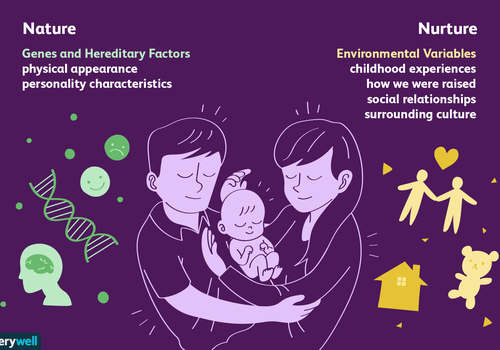
The term “Nature vs. Nurture” describes an age-old scientific debate regarding whether behavior, personality, and other individual characteristics are the result of nature—one’s biology and genetics—or nurture—one’s environment and upbringing. The development of mental illness is a prime example of the Nature vs. Nurture debate, as scientists and others seek to understand: Is mental illness caused by genetics or environment?

The Big Question. Is Nature or Nurture responsible for mental illness? This is essentially a trick question, as both Nature and Nurture contribute to the development of mental illness. In fact, it is ultimately the interaction between one’s genes and one’s experiences and environment that leads a person to develop a mental illness. According to the Diathesis-Stress Model, genetic predispositions develop into mental illnesses when they are met with stressful environments and/or experiences. For example, a person can be born with a genetic predisposition for depression, but that person may not develop depression unless they experience stressful environmental events such as abuse.

Nature. What are the biological and genetic causes of mental illness? It is well-documented that mental illness can be hereditary, or passed on within families. For example, a person is four to six times more likely to develop Bipolar Disorder if someone in their family has or had Bipolar Disorder. Another potent biological factor contributing to the development of mental illness is brain anatomy and brain chemistry. Research suggests, for instance, that people with schizophrenia have less active prefrontal cortices (the area of the brain associated with decision-making, planning, and personality). Other biological factors implicated in the development of mental illness include exposure to infection or toxins, damage during pregnancy, and use of substances.

Nurture. What are the environmental causes of mental illness? The development of mental illness can often be associated with one’s childhood experiences. Exposure to abuse is a potent example of an environmental factor that can lead to mental illness. Other experiences can also result in the onset of mental illness, including death, divorce, and/or other forms of grief or trauma.

In conclusion, neither Nature nor Nurture is solely responsible for the development of mental illness. Rather, genetic and biological factors combine with environmental and experiential factors to result in the onset of mental illness. 

If you or a loved one needs support for mental illness, the licensed psychologists, psychiatrists, psychiatric nurse practitioners, and psychotherapists at Arista Counseling & Psychotherapy can assist you. Contact our Paramus, NJ or Manhattan, NY offices respectively, at (201) 368-3700 or (212) 722-1920 to set up an appointment. For more information, visit http://www.counselingpsychotherapynjny.com/

Image Source: https://www.verywellmind.com/what-is-nature-versus-nurture-2795392

Mental Illness: How to Support a Spouse with Mental Illness

Mental Illness: How to Support a Spouse with Mental Illness
By: Isabelle Siegel

Every relationship has challenges, but relationships in which one partner has a mental illness can be even more challenging. The presence of mental illness in a relationship can leave both individuals feeling alone and helpless. However, it is not impossible to be in a happy, healthy, and successful relationship with someone with a mental illness. If you are wondering how to support your partner/spouse with mental illness, know that it is possible. Although your partner’s/spouse’s mental illness may at times feel all-consuming, certain steps can ultimately help manage the overwhelming ups and downs.

Develop an understanding of your partner’s/spouse’s diagnosis. It can be helpful to research the symptoms of your partner’s/spouse’s disorder in order to better recognize and label them as they arise. Having a basic understanding of what your partner/spouse is experiencing can help you to put yourself in his/her shoes and to gain insight into his/her struggles.

Just be there. Having a mental illness oftentimes makes people feel alone and as though they are a burden to their loved ones. The single most powerful way you can support your partner/spouse with a mental illness is to be there for him/her. Communicate that you are there for the highs and lows, and be ready to love your partner/spouse through them.

Do not let mental illness take over your entire relationship. Although it is important to communicate, try to keep your relationship balanced by limiting discussions about mental illness. Even when your partner’s/spouse’s mental illness feels all-consuming, continue to engage in activities that pull you and your partner away from thinking about his/her diagnosis and struggles.

Communicate openly how you feel. Regardless of a mental illness diagnosis, open communication is a critical component of any relationship. Be honest with your partner/spouse about how you feel, communicating any emotions with the goal of productively working through them.

Understand that your partner/spouse is trying the best he/she can. It can be easy to assume that a person with mental illness would feel better if only he/she tried harder. Oftentimes, people with mental illness are coping with their struggles in the best way they can.

Accept that it will be challenging at times. Being in a relationship with someone with a mental illness is going to pose challenges. It can arouse difficult emotions such as frustration, anger, resentment, sadness, etc. Allow yourself to feel these emotions and be willing to communicate them with your partner.

Most importantly, take care of yourself. It is important to understand that your partner/spouse is not the only one who needs support. Never feel guilty for prioritizing your own needs, and consider seeking therapy or other support in order to take care of your own mental health.

If you or a loved one needs support, the licensed psychologists, psychiatrists, psychiatric nurse practitioners, and psychotherapists at Arista Counseling & Psychotherapy can assist you. Contact our Paramus, NJ or Manhattan, NY offices respectively, at (201) 368-3700 or (212) 722-1920 to set up an appointment. For more information, visit http://www.counselingpsychotherapynjny.com/

Sources:
https://www.nami.org/Blogs/NAMI-Blog/November-2018/How-to-Be-Supportive-of-Your-Partner-with-Mental-I
https://www.nami.org/Personal-Stories/How-To-Love-Someone-With-A-Mental-Illness
https://www.verywellmind.com/coping-with-a-mentally-ill-spouse-2302988

Image Source: https://images.app.goo.gl/1XXGCnGttHazLixy5

COVID-19: Why going outside can help with your mental health

COVID-19: Why going outside can help with your mental health

By: Alexa Greenbaum

While social distancing during COVID-19, going outside has become one of the few activities to escape the house. In states that are in lockdown, governors such as in New York, Washington, and Montana have strongly encouraged people to go outdoors to run, walk, hike, and bike while practicing safe social distancing. Although it is not clear why, studies have found that spending time outside has a positive effect on our general well-being, including mental and physical health. In fact, doctors have been issuing “nature prescriptions” as a treatment for a range of conditions including chronic stress, depression, anxiety, PTSD, as well as others.

Efforts around the world have been promoting the health benefits of time spent outside. Regardless of the level of physical activity, spending time outdoors for even just 20 minutes per day can lower stress hormone levels, boost self-esteem, and improve mood.

Time in nature serves as an escape from daily pressures. The outdoors has been found to build resilience, hope, happiness, and optimism even before the added stressors of the COVID-19 pandemic. Additional research also suggests that going outside results in a lower risk of developing psychiatric disorders.

Based on several existing literature, positive effects documented were often described as “psychological healing,” “increased sense of well-being,” and “restorative.” Thus, a form of healing to achieve, maintain or promote a positive mental health state. Nature is a critical component of overall health and a great place to start.

If you or someone you know is struggling from COVID-19 or another crisis, please contact our psychotherapy offices in New York or New Jersey to talk to one of our licensed professional psychologists, psychiatrists, psychiatric nurse practitioners, or psychotherapists at Arista Counseling & Psychotherapy. Contact our Paramus, NJ or Manhattan, NY offices respectively, at (201) 368-3700 or (212) 722-1920 to set up an appointment. For more information, please visit http://www.counselingpsychotherapynjny.com/ .

Sources:

https://www.forbes.com/sites/cassidyrandall/2020/04/09/why-going-outside-is-good-for-your-health-especially-right-now/#4479a8bd2de9

https://www.psychologytoday.com/us/blog/cravings/201909/nature-s-role-in-mental-illness-prevention-or-treatment

https://time.com/5539942/green-space-health-wellness/

https://www.health.harvard.edu/mind-and-mood/sour-mood-getting-you-down-get-back-to-nature

Image Source:

https://41nbc.com/2020/05/10/virus-outbreak