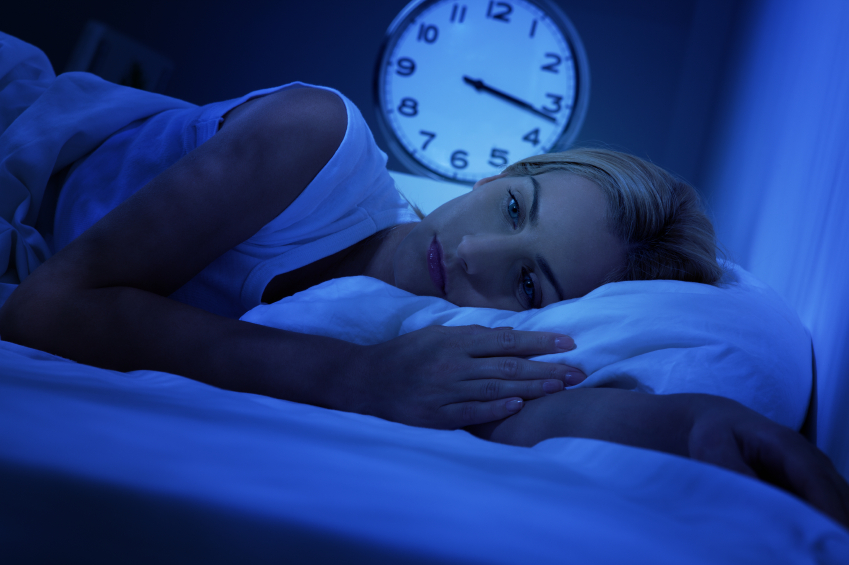
Sleep Deprivation Psychosis

Sleep Deprivation Psychosis

By Madison Gesualdo

Remember that episode of Law and Order: Special Victims Unit where Sarah Hyland gave us an Oscar-worthy performance as a genius prep school student, Jennifer Banks, who attacked her roommate because of their academic rivalry? During the trial, the defense was able to prove diminished capacity on Jennifer’s behalf, meaning that Jennifer’s impaired mental state at the time of the crime prevented her from fully controlling her violent actions. Jennifer, who had been taking a form of modafinil that allowed her to stay awake for six consecutive days before she committed her crime, was suffering from sleep deprivation psychosis. Because the defense was able to prove this, she was able to plead guilty to her crime on a lesser charge and was only sentenced to seven years in prison at the conclusion of the episode.

Let’s talk about sleep deprivation psychosis from a clinical standpoint. On the show, it is mentioned that being awake for 17 hours is similar to having a blood-alcohol content (BAC) of 0.05% – that’s legally impaired in the state of Utah, even though the federal limit is 0.08%. The National Institute for Occupational Safety and Health corroborates this finding, adding that being awake for 24 hours is the equivalent of having a BAC of 0.10%. Now, imagine Jennifer’s psychological state after being awake for 144 hours without a minute of sleep, running off of a stimulant drug designed to block dopamine receptors and consequently increase the body’s overall levels of dopamine. It’s no wonder that her memory of the encounter with her roommate was hazy at best.

According to a 2018 study published in Frontiers in Psychiatry, sleep-loss developments such as hallucinations and perceptual distortions can occur in individuals with no history whatsoever of psychiatric issues. This study essentially found that the more time a person spends awake, the more he or she will progress towards a state of psychosis. Symptoms such as anxiety, disorientation, and depersonalization began after 24 – 48 hours without sleep, evolving into disordered thinking and complex hallucinations after 48 – 90 hours without sleep. Once a person reached the 72 hour-mark without sleep, the study claimed, his or her psychological state resembled that of toxic delirium or acute psychosis.

If an individual is experiencing insomnia, anxiety, depression, or any other conditions that can lead to a deficiency in proper sleep, he or she should seek help immediately. A wide variety of intervention methods and medications are available to help gradually regulate an individual’s sleep-wake cycle and prevent cognitive impairment resulting from sleep deprivation. Make sure to speak with a mental health professional to see what options are available to you.

If you or someone you know is struggling with sleep, anxiety, or mental health, please contact our psychotherapy offices in New York or New Jersey to talk to one of our licensed professional psychologists, psychiatrists, psychiatric nurse practitioners, or psychotherapists at Arista Counseling & Psychotherapy. Contact our Paramus, NJ or Manhattan, NY offices respectively, at (201) 368-3700 or (212) 722-1920 to set up an appointment. For more information, please visit https://aristapsychiatrypsychotherapy.com/

References:

Davis, C. (Writer). (2009). Hothouse (Season 10, Episode 12). [TV series episode]. In D. Wolf (Executive producer), Law & order: Special victims unit. Hulu. https://hulu.com

National Institute for Occupational Safety and Health (2020, March 31). Impairments due to sleep deprivation are similar to impairments due to alcohol intoxication. U.S. Centers for Disease Control and Prevention. https://www.cdc.gov/niosh/work-hour-training-for-nurses/longhours/mod3/08.html#print

Waters, F., Chiu, V., Atkinson, A., & Blom, J.D. (2018). Severe sleep deprivation causes hallucinations and a gradual progression toward psychosis with increasing time awake. Frontiers in Psychiatry, 9, 303. https://doi.org/10.3389/fpsyt.2018.00303

Insomnia: Effect on Workplace Productivity

Insomnia: Effect on Workplace Productivity

By Madison Gesualdo

It’s barely 1 P.M. during the work day and you’re already dozing off at your desk, wondering how on Earth you’ll stay awake for the next few hours. To any observer, you might appear as yet another lazy employee “sleeping on the job.” However, no one knows about the preceding circumstances leading up to your lapse in energy, and no one except you knows about the tossing and turning you experienced the night before that, ultimately, led to yet another sleepless night.

Insomnia is a sleep disorder in which an individual has difficulty falling asleep or staying asleep. The disorder becomes chronic when these habits persist, becoming a regular pattern in the individual’s daily life. According to a 2024 survey conducted by the American Academy of Sleep Medicine, roughly 12% of adults in the United States self-reported being diagnosed with chronic insomnia. This statistic does not account for any currently undiagnosed cases of chronic insomnia in the United States, or for diagnosed cases that survey participants chose not to self-report. While one might speculate that a sleepless night resulting from insomnia may just cause general drowsiness and prompt a few yawns the following day, the effects of insomnia, specifically on workplace productivity, far exceed this assumption.

Insomnia can cause a severe deficit in workplace productivity, with sleep deprivation yielding a significant decline in job performance. Individuals who suffer from chronic insomnia report experiencing impaired thinking, emotional emptiness, and slowed physical reactions during their workday, as well as extreme fatigue that causes delays and errors in work assignments and tasks.

A wide range of resources are available to treat insomnia. Some of these include:

  • Cognitive behavioral therapy (CBT): Can help reduce anxiety about not being able to sleep
  • Relaxation/meditation therapy: Can help train you to relax your body and fall asleep more easily
  • Stimulus control therapy: Can help regulate your sleep-wake cycle and eliminate potential distractions encountered when falling asleep
  • Medication: Prescription medications, such as benzodiazepines, can help sedate the central nervous system and relax the body, making it easier to fall asleep

If you or someone you know is struggling with insomnia or trouble sleeping, please contact our psychotherapy offices in New York or New Jersey to talk to one of our licensed professional psychologists, psychiatrists, psychiatric nurse practitioners, or psychotherapists at Arista Counseling & Psychotherapy. Contact our Paramus, NJ or Manhattan, NY offices respectively, at (201) 368-3700 or (212) 722-1920 to set up an appointment. For more information, please visit http://www.counselingpsychotherapynjny.com/

References:

American Academy of Sleep Medicine. (n.d.) Survey shows 12% of Americans have been diagnosed with insomnia. American Academy of Sleep Medicine. https://aasm.org/survey-shows-12-of-americans-have-been-diagnosed-with-chronic-insomnia/#:~:text=Survey%20shows%2012%25%20of%20Americans%20have%20been%20diagnosed%20with%20chronic%20insomnia

National Heart, Lung, and Blood Institute. (n.d.) Insomnia: Treatment. National Institute of Health. https://www.nhlbi.nih.gov/health/insomnia/treatment

Newsom, R. & Wright, H. (2023, November 3). The link between sleep and job performance. Sleep Foundation. https://www.sleepfoundation.org/sleep-hygiene/good-sleep-and-job-performance

Insomnia & The Digital Age  

Insomnia & The Digital Age  By: Nicole Sanchez

Insomnia is a sleep disorder in which one may find it difficult to fall asleep, stay asleep, or both, even if one has ample time for restful sleep. With insomnia one may experience disruptions that impair the quality of one’s sleep which in turn may cause sleepiness during the day. Short term insomnia, may occur as a result of stress or may be due to certain changes in one’s schedule or environment. Short term insomnia can last for a few days or weeks. Chronic or long-term insomnia occurs at least 3 nights a week, persists longer than 3 months, and does not have another health issue that could be a root cause. Furthermore, due to technological advancements and the rise in media, there has been a particular increase in insomnia among individuals. Digital activity, especially increased screen time, disturbs a person’s sleep quality because screens emit blue light which suppress the production of melatonin, a hormone that induces sleepiness. Viewing overstimulating content before bedtime also makes it more difficult to fall asleep, thus, reducing the time that’s usually reserved for sleep.   

Chronic insomnia affects around 15 to 35 percent of adults, so it’s critical to focus on reducing the symptoms and allowing individuals to improve their sleep quality. Researchers believe cognitive behavioral therapy for insomnia (CBT-I) to be the most successful initial treatment for chronic insomnia. Through CBT-I individuals learn to reconstruct the feelings, thoughts and behaviors that are causing insomnia. Hypnotherapy is a method that can be used to help those suffering with insomnia as it helps to induce sleep and places individuals into a relaxed, trance-like state so they can let go of any anxiety.

If you or someone you know is having mental health difficulties and/ or insomnia, please contact our psychotherapy offices in New Jersey to talk to one of our licensed professional psychologists, psychiatrists, psychiatric nurse practitioners, or psychotherapists at Arista Counseling & Psychotherapy. Contact our offices at (201) 368-3700 or (212) 722-1920 to set up an appointment. For more information, please visit http://www.counselingpsychotherapynjny.com/

https://www.mayoclinic.org/diseases-conditions/insomnia/symptoms-causes/syc-20355167

https://www.webmd.com/sleep-disorders/insomnia-symptoms-and-causes

https://my.clevelandclinic.org/health/diseases/12119-insomnia

Insomnia

insomnia.jpgInsomnia

Sonya Cheema

A typical adult gets between 7 and 9 hours of sleep a night, but it varies from person to person. Those who struggle to get this amount of sleep may suffer from the sleep disorder, insomnia. Some people may experience acute insomnia, which lasts for a few days or weeks. Others may suffer from chronic insomnia, which can last a month or more. If you suspect you or a loved one has insomnia, look for these symptoms:

  • Difficulty falling asleep at night
  • Waking up during the night
  • Waking up too early
  • Not feeling rested after a night’s sleep
  • Daytime tiredness or sleepiness
  • Irritability, depression, or anxiety
  • Difficulty paying attention, focusing on tasks, or remembering
  • Increased errors or accidents
  • Ongoing worries about sleep

If you or a loved one experience many of these symptoms, it may be wise to seek professional help. If serious enough, insomnia can drastically affect your everyday life. In the meantime, some tips that may help alleviate your insomnia are:

  • Keeping your bed time and wake time consistent day to day
  • Avoid or limit naps
  • Avoid or limit caffeine, alcohol, and nicotine
  • Use your bed only for sleep and sex
  • Create a relaxing night time ritual, such as taking a bath, reading, listening to music, etc.

If you or a person you know is struggling with insomnia, it may be beneficial to contact a mental health professional and receive therapy. The psychologists, psychiatrists, and therapists at Arista Counseling and Psychiatric Services can help. Contact the Bergen County, NJ or Manhattan offices at (201) 368-3700 or (212) 722-1920. Visit http://www.acenterfortherapy.com for more information.


Source used:

https://www.mayoclinic.org/diseases-conditions/insomnia/symptoms-causes/syc-20355167