Avoidant/Restrictive Food Intake Disorder: Eating Disorders

Avoidant/Restrictive Food Intake Disorder: Eating Disorders

By: Isabella Favuzza

Many people are extremely critical of the person staring back at them in the mirror. We are our own toughest critics; however, harsh self-objectification may lead to a warped body image. Some may attempt to lose excess body fat or weight to adapt to a distorted self-image, but this obsession builds a negative relationship with food. Avoidant/restrictive food intake disorder (ARFID) causes one to limit their caloric intake and only consume a select few food groups. This disorder is associated with anxiety surrounding the consequences of eating, avoiding food with undesirable tastes, smells, or textures, and losing interest in eating. ARFID is a relatively newly labeled eating disorder, also known to many as selective eating disorder due to its symptoms. Those with ARFID choose a few foods they consider “fine” to consume and eat them sparingly.

Eating sparingly can cause physical symptoms such as constipation, abdominal pain, significant weight loss, and fatigue. ARFID can also lead to behavioral or mental issues like anxiety, depression, insomnia, etc. While the exact cause of this eating disorder is unknown, research suggests it may result from genetics, environmental influences (models or social media), and previous trauma. Psychological treatment can significantly support those with ARFID. Psychologists can identify trauma, anxiety, depression, etc. and help people cope with these grave issues. Psychologists can offer therapeutic techniques to eliminate one’s distorted body image and start the path to recovery. 

If you or someone you know is struggling with an eating disorder, please contact our psychotherapy offices in New York or New Jersey to talk to one of our licensed professional psychologists, psychiatrists, psychiatric nurse practitioners, or psychotherapists at Arista Counseling & Psychotherapy. Contact our Paramus, NJ or Manhattan, NY offices respectively, at (201) 368-3700 or (212) 722-1920 to set up an appointment. For more information, please visit http://www.counselingpsychotherapynjny.com/

Source:

https://my.clevelandclinic.org/health/diseases/24869-arfid-avoidant-restrictive-food-intake-disordern

Anorexia Nervosa: Eating Disorders

Anorexia Nervosa: Eating Disorders

By: Isabella Favuzza
People are typically their own worst critics when viewing their physical appearance. However, obsessive thoughts and actions regarding one’s appearance are mentally and physically harmful. Those with anorexia nervosa are hyper-focused on their “flaws” and live in a constant state of fear regarding weight gain. Anorexia nervosa is an eating disorder characterized by an intense fear of weight gain and extreme measures to rid the body of excess fat. To accomplish this weight loss goal, many restrict their caloric intake, exercise excessively, abuse laxatives or dieting aids, and induce vomiting. Those with anorexia live in fear and utilize these procedures, regardless of the amount of weight lost. Various factors induce anorexia. Western society idolizes thinness, especially within the young female demographic, while some associate self-worth with body weight.

Behavioral and mental symptoms include hunger denial, daily measurements, lying about the amount of food eaten, etc. While these symptoms harm the mind, anorexia also destroys the body due to low body weight, abnormal blood counts, fatigue, yellow skin, dehydration, etc. Anorexia is a detrimental disorder that can result in death due to organ failure and dehydration. Psychological therapy can be life-saving through negative thought reversal and promoting healthy eating patterns. Psychological intervention and cognitive-behavioral therapy support anorexics through mental health regulation and well-balanced nutrition training. Ultimately, proper intervention enables anorexics to regain control of their thoughts and prevent medical complications by maintaining a healthy weight.

If you or someone you know is struggling with an eating disorder, please contact our psychotherapy offices in New York or New Jersey to talk to one of our licensed professional psychologists, psychiatrists, psychiatric nurse practitioners, or psychotherapists at Arista Counseling & Psychotherapy. Contact our Paramus, NJ or Manhattan, NY offices respectively, at (201) 368-3700 or (212) 722-1920 to set up an appointment. For more information, please visit http://www.counselingpsychotherapynjny.com/

Source:

https://www.mayoclinic.org/diseases-conditions/anorexia-nervosa/symptoms-causes/syc-20353591

Addiction: Alcoholism

Addiction: Alcoholism

By Isabella Favuzza

American society deems alcoholic beverages such as cocktails a social normality, but many walk the fine line between social drinking and alcoholism. Whether you are drinking to socialize, conform, enhance, or cope you may find yourself unable to control the alcohol cravings. Loved ones may describe you as bad tempered or irritable and you may find yourself yearning for that next sip, regardless of the occasion. Many alcoholics are unaware when they cross that fine line; most don’t remember/feel the change.

Alcoholism is a burdensome journey that should never be traveled alone. Asking for help is the first and most challenging step for alcoholics due to guilt, shame, etc. Therapy provides the appropriate and essential tools to aid struggling alcoholics to cope with these anguishing feelings of resentment, anger, and sorrow. Throughout the course of therapy, a psychologist will help alcoholics identify drinking behavior/patterns, identify risk factors, set goals, think positively, provide intensive intervention/care, and routinely monitor the progress. Therapy is designed to construct a recovery plan that enables alcoholics to recover from drinking, regain control of their livelihood, thrive at work, and connect with loved ones. Ultimately, the alcoholic benefits from therapy by regaining control and reestablishing a healthy relationship with friends and family.

If you or someone you know is struggling with alcohol abuse or addiction please contact our psychotherapy offices in New York or New Jersey to talk to one of our licensed professional psychologists, psychiatrists, psychiatric nurse practitioners, or psychotherapists at Arista Counseling & Psychotherapy. Contact our Paramus, NJ or Manhattan, NY offices respectively, at (201) 368-3700 or (212) 722-1920 to set up an appointment. For more information, please visit http://www.counselingpsychotherapynjny.com/

Anxiety and Depression: Rumination

By: Lauren Zoneraich

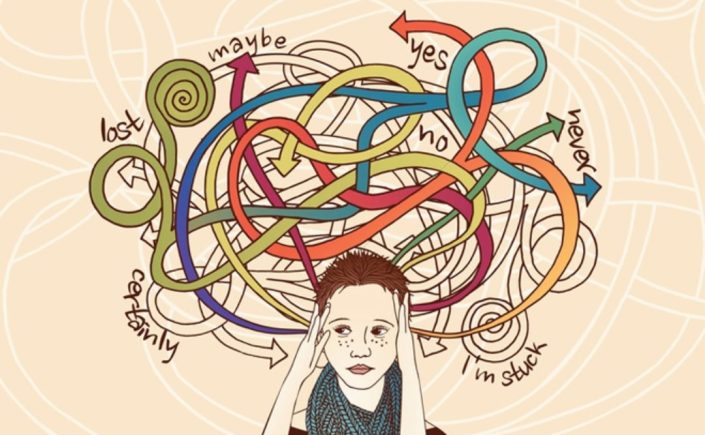
Rumination is the cognitive process of repeating negative thoughts without completion, much to one’s distress. In the mind, the thoughts play like a broken record. Rumination can involve negative thoughts about the past or present, and the self. This form of cognition plays a key role in many psychological conditions, such as depression, generalized anxiety disorder, social anxiety, alcohol abuse, OCD, PTSD, and eating disorders. Rumination is a passive process. One feels as if one cannot control repetitive, dominating thoughts. These distracting thought circles can last for long periods of time and disrupt work, school, and social life. Rumination is different than worry in that rumination involves negative thought content rather than thought content related to uncertainty. Worry usually is tied to the future, while ruminative thoughts are usually tied to the past or present. Rumination can impact physical health by increasing stress levels.In the context of depression, rumination usually involves negative self-assessments, such as feelings of inadequacy or worthlessness. These feelings can lead to anxious responses and further worsen one’s emotional state.

There are some intervention strategies to disrupt rumination. One way is to distract oneself with other activities, such as socializing or exercising. Cognitive Behavioral Therapy, or CBT, is a therapy approach that aims to change negative thought patterns. Patients learn to recognize their distortions, irrational thoughts, and negative thoughts. Once they recognize these thoughts, patients reframe negative thoughts and assess the irrationality of their thoughts. Patients also learn methods to calm their mind and body through breathing exercises and thinking of things they associate with feeling calm and peaceful. Patients are also encouraged to think of action plans to address their negative thoughts.

If you or someone you know is struggling with anxiety or depression, or is seeking Cognitive Behavioral Therapy for rumination, please contact our psychotherapy offices in New York or New Jersey to talk to one of our licensed professional psychologists, psychiatrists, psychiatric nurse practitioners, or psychotherapists at Arista Counseling & Psychotherapy. Contact our Paramus, NJ or Manhattan, NY offices respectively, at (201) 368-3700 or (212) 722-1920 to set up an appointment. For more information, please visit http://www.counselingpsychotherapynjny.com/

Sources:

Sansone, R. A., & Sansone, L. A. (2012). Rumination: relationships with physical health. Innovations in clinical neuroscience9(2), 29–34. https://www.ncbi.nlm.nih.gov/pmc/articles/PMC3312901/

https://www.psychologytoday.com/us/blog/depression-management-techniques/201604/rumination-problem-in-anxiety-and-depression

https://www.apa.org/ptsd-guideline/patients-and-families/cognitive-behavioral

Image Source:

https://blogs.kcl.ac.uk/editlab/2018/10/12/r-is-for-rumination/

Low Self-Esteem: Dating Apps Can Decrease One’s Self-Confidence

By: Lauren Zoneraich

With the advent and prolonged continuation of the COVID-19 pandemic, many young adults have turned to dating apps as a way to connect with potential romantic partners, speak to new people, and entertain themselves. The most popular dating apps among young adults are Tinder, Bumble, Hinge, and Grindr, which are visually-based dating apps. Instead of text-heavy profiles, like those seen on Match.com, users swiftly accept or reject others based on their profile photographs, which dominate the page display. How does the visually-based nature of dating apps affect the self-esteem of dating app users?

One’s physical appearance and self-esteem are strongly linked. Self-esteem is defined as the self-evaluation a person holds regarding their worth, success, and capabilities. In a survey-based study of young adults, researchers determined that the visual nature of Tinder could raise or lower the self-esteem of users. Users who matched with a lot of attractive users and received many messages experienced an ego boost. Contrarily, many participants reported that the visual nature of the Tinder made them feel more self-conscious about their appearance. Users felt a decrease in self-esteem when they did not match with a lot of people or when they only received messages from unattractive matches. Many participants reported “swiping left on” (rejecting) users who they anticipated would not “swipe right on” (accept) them, or swiping left on users they liked to avoid the possibility of being rejected and experiencing a decrease in self-confidence. These reports highlight how Tinder can trigger negative assessments of the self even before a user is rejected, and of course, decrease a user’s self-confidence after rejection.

Online dating apps are not meant for everyone. If you find that apps such as Tinder are lowering your self-esteem, it may be best to delete these apps and meet partners through other avenues.

If you or someone you know is struggling with low self-esteem, please contact our psychotherapy offices in New York or New Jersey to talk to one of our licensed professional psychologists, psychiatrists, psychiatric nurse practitioners, or psychotherapists at Arista Counseling & Psychotherapy. Contact our Paramus, NJ or Manhattan, NY offices respectively, at (201) 368-3700 or (212) 722-1920 to set up an appointment. For more information, please visit http://www.counselingpsychotherapynjny.com/

Reference:
Kallis, R. (2021). Creating a future relationship or destroying my self-esteem? An exploratory study on dating app experiences and well-being. Journal of Communication Technology, 4(1), 78-100. https://doi.org/10.51548/joctec-2021-005

Image Source:

https://www.theverge.com/2016/1/11/10749670/tinder-secretly-ranks-users-desirability

World Kindness Day: How to stay positive in dark times

World Kindness Day: How to stay positive in dark times

By: Zoe Alekel

As Friday November 13, 2020 is World Kindness Day, it only felt right to talk about the impact that positivity and kindness have on our mental health. Keeping a positive mindset and attitude is seemingly easy when life is smooth-sailing. However, when we hit the inevitable bumps in the road that life comes with, it is a lot easier said than done. Maintaining optimism in difficult times can often seem impossible—at the least, it seems like a lot of work. If you are struggling to stay positive during a difficult time, especially during a pandemic like COVID-19, you can try to focus on the following:

  • Focus on what you can control: Remember there are things in life we can’t control, but the things we can control like how we decide to seize the day and how we treat others.
  • Limit your media intake: Social media and news media can put us in a rut when we are already feeling negative about the world. Make sure you don’t spend too much time on media and give yourself a break from negative news stories.
  • Invest in uplifting others: Acts of kindness can not only uplift others and change someone’s day, but it can also help keep you in a more optimistic mindset.
  • Set personal schedules and goals: By setting small daily goals for yourself, such as making your bed and brushing your teeth in the morning. You can start the day off accomplishing something and setting a productive mindset for the rest of the day.

Keeping these pointers in mind is important when trying to stay optimistic during a difficult time. Some additional ideas of ways to cope with a difficult time are:

  • Find a therapist or mental health professional: This can become an outlet to help you process the difficult time you are having and to get professional recommendations for keeping a positive mindset.
  • Find a hobby or a group to join with people that have similar interests as yours.
  • Invest in self-care: Make sure you are taking care of you! Do things that bring you joy, even if it is as simple as taking a warm shower, eating a meal you enjoy, listening to music, or calling a loved one or friend.
  • Take a few minutes every day to write down the positive events that happened during that day, or things for which you are grateful.

If you or someone you know is struggling with keeping positive or with mental illness, please contact our psychotherapy offices in New York or New Jersey to talk to one of our licensed professional psychologists, psychiatrists, psychiatric nurse practitioners, or psychotherapists at Arista Counseling & Psychotherapy. Contact our Paramus, NJ or Manhattan, NY offices respectively, at (201) 368-3700 or (212) 722-1920 to set up an appointment. For more information, please visit http://www.counselingpsychotherapynjny.com/


Source: https://www.psychologytoday.com/us/blog/stronger-fear/202003/how-stay-positive-during-the-pandemic?collection=1151836

Image Source: https://i.pinimg.com/736x/bb/e7/2c/bbe72cda72203d29a2f24459962c6f7a.jpg

Anxiety, Depression, Eating Disorders, ADHD, Et al: How to Support a Friend with Mental Illness

By: Sarah Cohen

When helping a friend with a mental illness, the first step should be assessment of their symptoms. Sometimes they just might be going through a difficult time, but if certain common symptoms associated with mental health issues persist it is imperative to respond sensitively. Majority of the time, friends will just want to know they have your support and that you care about them. A good way to show your support is by talking to them. If you provide a non-judgmental space for them to speak about their issues it will help encourage them to be open with their problems. Let them lead the conversation and don’t pressure them to reveal information. It can be incredibly difficult and painful to speak about these issues and they might not be ready to share everything. If you aren’t their therapist do not diagnose them or make assumptions about how they are feeling, just listen and show you understand. If someone doesn’t want to speak with you, don’t take it personally, just continue to show them you care about their wellbeing and want to help as much as possible. Just knowing they have support can give them the strength they need to contact someone who can help them.

If a friend is having a crisis, such as a panic attack or suicidal thoughts, you must stay calm. Try not to overwhelm them by asking a lot of questions and confronting them in a public setting. Ask them gently what would be helpful to them right now or reassure them. If they hurt themselves, get first aid as soon as possible. If someone is suicidal, contact the suicide hotline at 800-237-8255 immediately.

The best way to help someone is by connecting them to professional help. By expressing your concern and support you can show them that they can get help and their mental health problems can be treated.

If you or someone you know needs support with their mental illness, please contact our psychotherapy offices in New York or New Jersey to talk to one of our licensed professional psychologists, psychiatrists, psychiatric nurse practitioners, or psychotherapists at Arista Counseling & Psychotherapy. Contact our Paramus, NJ or Manhattan, NY offices respectively, at (201) 368-3700 or (212) 722-1920 to set up an appointment. For more information, please visit http://www.counselingpsychotherapynjny.com/

https://www.mentalhealth.org.uk/publications/supporting-someone-mental-health-problem

https://www.mentalhealth.gov/talk/friends-family-members

Depression: How to Support a Spouse with Depression

Depression: How to Support a Spouse with Depression
By: Isabelle Siegel

Depression can cause immense pain and suffering for more than just the individual diagnosed. The partners/spouses of individuals with depression commonly report feeling hopeless and helpless, unsure how to provide necessary support to their partner/spouse. Attempts to help may be met with apathy or even anger, further complicating a seemingly simple question: How can I support my partner/spouse with depression?

Develop an understanding of depression and how it manifests in your partner/spouse. It can be helpful to research depression, taking note of its symptoms and causes. Understand that depression is an illness and not a choice. You may want to create a list of your partner’s/spouse’s particular symptoms and triggers for depressive episodes in order to better understand his/her experiences.

As simple as it sounds, just be there. Depression may have your partner/spouse doubting that you love him/her and may make him/her feel as though he/she is a burden to you. Assure your partner that you are there for him/her and that you love him/her despite his/her illness.

Encourage him/her to get help. Depressive symptoms can interfere with one’s motivation and ability to get help, so continuously encourage treatment. Help your partner/spouse find a therapist and/or psychiatrist, bring him/her to appointments, and cheer him/her on as they undergo treatment.

Do things you both enjoy. One important treatment step for depression is known as “opposite action,” in which individuals with depression act opposite to how they feel. If they feel like laying in bed all day, for example, they should get up and out of the house. As a partner/spouse, you can help by encouraging your partner/spouse to act opposite to their depressive urges by engaging in activities that you both enjoy.

Understand the warning signs of suicide. Individuals with depression are more vulnerable to suicide, so it may be important to know signs that your partner is considering taking his/her life. These may include talking about suicide, social withdrawal, giving away belongings, or obtaining means of attempting suicide. If you believe that your partner is at risk for suicide, seek immediate help.

Most importantly, take care of yourself and seek therapy. Research suggests that having a partner/spouse with depression increases one’s own risk of developing depressive symptoms. It is important to understand that your partner/spouse is not the only one who needs support. Never feel guilty for prioritizing your own needs, and consider seeking therapy or other support in order to take care of your own mental health.

If you or a loved one needs support, the licensed psychologists, psychiatrists, psychiatric nurse practitioners, and psychotherapists at Arista Counseling & Psychotherapy can assist you. Contact our Paramus, NJ or Manhattan, NY offices respectively, at (201) 368-3700 or (212) 722-1920 to set up an appointment. For more information, visit http://www.counselingpsychotherapynjny.com/

Sources:
https://www.mentalhealth.org.uk/blog/supporting-partner-depression
https://www.medicalnewstoday.com/articles/325523
https://www.psycom.net/help-partner-deal-with-depression/

Image Source: https://www.rewire.org/support-partner-depression/

Seasonal Affective Disorder

Seasonal Affective Disorder (S.A.D)

By Tatyana A. Reed

As the weather seems to slow down and we shift from bright sunny days to cold winter nights, some of us may notice a sudden change of mood that comes with this weather shift. This change of mood is called Seasonal Affective Disorder (S.A.D). According to National Institute of Mental Health (NIMH), “S.A.D is a type of depression that comes and goes with the seasons, typically starting in the late fall and early winter and going away during the spring and summer. Depressive episodes linked to the summer can occur, but are much less common than winter episodes of SAD.”

Signs & Symptoms

  • Feeling depressed most of the day, nearly every day
  • Feeling hopeless or worthless
  • Having low energy
  • Losing interest in activities you once enjoyed
  • Having problems with sleep
  • Experiencing changes in your appetite or weight
  • Feeling sluggish or agitated
  • Having difficulty concentrating
  • Having frequent thoughts of death or suicide.

Causes

  • People with SAD may have trouble regulating seratonin, which is one of the key neurotransmitters involved in mood.
  • People with SAD may overproduce the hormone melatonin.
  • People with SAD also may produce less Vitamin D.


Getting Treated

  • Medication: if someone suffers from S.A.D they can be helped by taking Selective Serotonin Reuptake Inhibitors (SSRIs). However, like all medication there are side effects, make sure to speak with your doctor about this first.
  • Light therapy: the feelings of S.A.D can be lessoned by sitting in front of a light box that emits 10,000 lux of cool- white- fluorescent light for 20-60 minutes. The light is said to replace the loss of light from daylight savings
  • Therapy: it is best to talk with a psychologist, counselor, or someone in the mental health field when feeling different types of emotions that may be negative such as sadness or anger. Seeking help is the first step to eliminating S.A.D.

If you or a person you know is struggling with S.A.D, it may be beneficial to contact a mental health professional and receive therapy. The psychologists, psychiatrists, and therapists at Arista Counseling and Psychiatric Services can help.  Contact the Bergen County, NJ or Manhattan offices at (201) 368-3700 or (212) 722-1920.  Visit http://www.acenterfortherapy.com for more information.

References:

Koblenz, Jessica. “11 Things About Seasonal Affective Disorder That Psychologists Wish You Knew.” Reader’s Digest, www.readersdigest.ca/health/conditions/seasonal-affective-disorder-facts/. (PHOTO)

National Mental Health Institute. “Seasonal Affective Disorder.” National Institute of Mental Health, U.S. Department of Health and Human Services, http://www.nimh.nih.gov/health/topics/seasonal-affective-disorder/index.shtml.


Shyness and Introversion

Shyness and Introversion

By Crystal Tsui

We all know someone who prefers to stay in rather than go out and party or someone who barely talk in a group setting. We may call them shy, quiet, or maybe socially awkward. But they may just be an introvert. Introversion and shyness are often times used together. However, shyness revolves around the fear of negative judgment while introversion is the preference for quiet, minimally stimulating environments. So it is possible for a person to be a shy extrovert, where the individual is afraid to speak up, fearing negative judgment, more so than exhausted in a certain social situation.

Despite the difference, there is also an overlap between shyness and introversion, e.i. many shy people are introverted. Some people are born with “high-reactive” temperaments that predispose them to both shyness and introversion. A shy person may become more introverted over time, motivated to discover the pleasures of solitude, other minimally stimulating social environments, and to move away from judgments. On the other hand, an introvert may become shy after continually receiving the message that there’s something wrong with them.

There’s a shared bias in our society against both shyness and introversion. Neither trait is welcomed in our society because studies have shown that we rank the fast and frequent talkers as more competent, likeable, and even smarter than slow and quiet talkers.

Here are 5 ways introverts can spend time that is deeply fulfilling and socially connected:

  1. Reading. Books transcend time and place. Studies have shown that reading fiction increases empathy and social skills.
  2. Enter a state of “flow” by doing work or a hobby that you love. Flow is the transcendent state of being, in which you feel totally engaged in an activity. People in flow don’t tend to wear the broad smiles of enthusiasm. When you watch them in action, the words “joy” and “excitement” don’t come to mind. But the words “engagement,” “absorption,” and “curiosity” do.
  3. Keep an informal quota system of how many times per week/month/year you plan to go out to social events and how often you get to stay home. This way you can plan which parties or get-togethers you can truly enjoy and which you don’t. So you are less likely to drive yourself mad thinking you should’ve stayed home.
  4. Have meaningful conversations.
  5. Spend time and show affection to the ones you love, whose company is so dear and comfortable that you feel neither over-stimulated nor anxious in their presence.

If you or someone you know is dealing with social anxiety or suffering from a disruption of their social life, please contact our psychotherapy offices in New York or New Jersey to talk to one of our licensed professional psychologists, psychiatrists, psychiatric nurse practitioners, or psychotherapists at Arista Counseling & Psychotherapy. Contact our Paramus, NJ or Manhattan, NY offices respectively, at (201) 368-3700 or (212) 722-1920 to set up an appointment. For more information, please visit http://www.counselingpsychotherapynjny.com/ .

Sources:

https://www.quietrev.com/wp-content/uploads/2015/05/QR_ebookMay8-2015.pdf

https://www.nytimes.com/2012/01/15/opinion/sunday/the-rise-of-the-new-groupthink.html?_r=0

https://live.staticflickr.com/627/21427437162_910d54e08e_b.jpg