Anxiety: First Day of College as a Freshman

Anxiety: First Day of College as a Freshman

By Colleen Susanto

Feeling anxious about college is a universal experience. Especially, when someone has just graduated from high school and is starting college. It’s a huge transition for everybody. College is the time where you find yourself and experience the adult life. So, what makes us so anxious about college and how can we overcome it?

Being in a new community can be really intimidating. Trying to fit in and making new friends. Not being able to be with your old friends from high school can make you feel separated. However, one way to avoid that feeling is to socialize. Many colleges offer programs and events and that way, you can meet new people and make friends!

The stress of keeping up with academic expectations can also be very overwhelming. College classes tend to be more work than high school and can feel overwhelming when you are not organized. What you could do is to write down the assignments, deadlines, and exams. Then, you’d feel more organized and plan ahead.

Last but not least, being away from home. First time in college is usually the first time a student is away from their family. They have to carry huge responsibilities, such as financial, independence, time management, and much more. These can be very overwhelming for first timers. You could always contact your family through texts and calls, and stay connected with them. Try talking out your problems with your family or people you know to take some of the burden off you.

If you or someone you know is struggling with mental health, please contact our psychotherapy offices in New York or New Jersey to talk to one of our licensed professional psychologists, psychiatrists, psychiatric nurse practitioners, or psychotherapists at Arista Counseling and Psychotherapy. Contact our Paramus, NJ, or Manhattan, NY offices respectively, at (201)-368-3700 or (212)-722-1920 to set up an appointment. For more information, please visit https://www.counselingpsychotherapynjny.com/

https://truetherapyaz.com/managing-stress-overwhelm-for-first-time-college-students/

Anxiety about starting College: Getting over Anxiety as a Freshman in College

Anxiety about starting College: Getting over Anxiety as a Freshman in College

By: Michelle Cocone

Every young adult pursuing a higher education will go through college. Starting college can be scary; you become a freshman all over again. Young adults tend to get anxious when thinking of the process. It’s very normal to experience this feeling. This anxiety stems from the uncertainty of college, not knowing what or who to expect. They will question whether they will be accepted, make friends, balance their workload, and hopefully not get lost. These are useful tips to help ease the adaptation of college.

Every College Student Was Once a freshman                                                                        

  • You aren’t alone in this experience as every freshman feels anxiety
  • Use the anxiety and fear to your advantage, this can be a topic of conversation to make friends
  • Embrace “I am a freshman who can start from zero”, a clean slate
  • It’s okay if you don’t have a best friend right away
  • Take the time to build connections, these can be important for networking after college

Have a Support System

  • Talk to friends or family about your college experience
  • They can share advice if they have gone to college

Use a Planner

  • Balancing schoolwork can be easier if you have a planner
  • When you get your course assignment schedule, jot it down in your planner to stay ahead of assignment due dates
  • Highlight exam and midterm dates to accommodate studying time

Utilize Your Resources

  • Colleges have many resources to help the transition from high school to college
  • Colleges have academic support, such as tutors and study centers
  • Colleges have well-being support and someone to talk to about your anxiety or anything else you want to share
  • Look up your campus map to find directions to your classes
  • Talk to your professors. They are there to help you succeed.

Remember college isn’t only about getting a higher education; it’s a place where you can prepare yourself for your career. Allow yourself to be independent and make your own choices. Everything you do will help you grow as a person, not just academically. It can absolutely be terrifying starting college if you feel anxious or scared; seeking counseling can be a good first step to feeling secure.

If you or someone you know is struggling with anxiety about starting college, please contact our psychotherapy offices in New York or New Jersey to talk to one of our licensed professional psychologists, psychiatrists, psychiatric nurse practitioners, or psychotherapists at Arista Counseling and Psychotherapy. Contact our Paramus, NJ, or Manhattan, NY offices respectively, at (201) – 368-3700 or (212)-722-1920 to set up an appointment. For more information, please visit https://www.counselingpsychotherapynjny.com/

References

University of Fear and anxiety: How to pass your freshman year of college. Anxiety and Depression Association of America, ADAA. (2018, July 6). https://adaa.org/learn-from-us/from-the-experts/blog-posts/consumer/university-fear-and-anxiety

Post-Grad Depression

Depression/Post-College

By: Ingrid Guevara

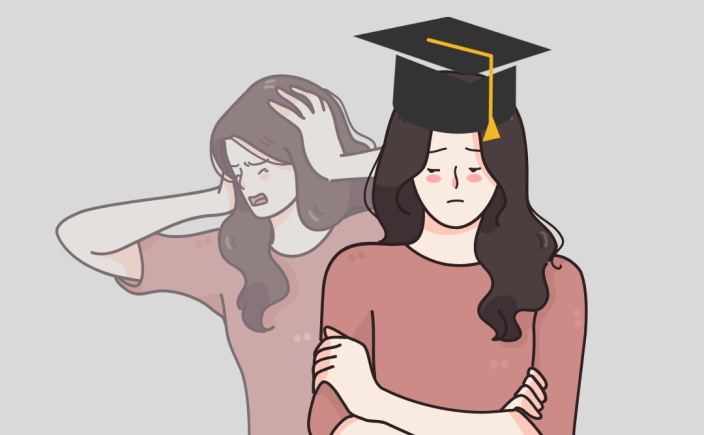
Everyone knows and acknowledges that depression during college occurs. Statistics show that twenty-seven percent of college students had been diagnosed with depression and twenty-three percent said that depression impacted their academic performance negatively.  When it comes to post-grad students research shows that around twenty percent of student graduating experience depression. Post-grad depression is seen as situational depression. Situational depression is depression caused by a stressful or traumatic event. Post-Grad depression is caused by; pressure of finding a job, moving back in with parents, feeling a failure to launch, changes in friendships (friends scattering, not seeing them), student debt, comparison with friends and being overwhelmed by next steps and changes. Signs of post-grad depression are; lack of motivation, feeling worthless or guilty, loneliness, overwhelm (especially related to the next steps), feeling sad or down, isolation or wanting to isolate oneself, not enjoying activities that were previously enjoyed, poor sleep, appetite change, lower than usual frustration tolerance, feeling sluggish or super jittery and intense fear or expectation things will not go well in the future. Post-grad depression like any depression can really hinder your life so seeking help is suggested in order to properly cope with it. It is also suggested; avoiding comparing yourself with others, practice self-kindness and self-love, reach out to friends,  get some exercise/movement, don’t be too hard on yourself, recognize that transitions are difficult, find a support group/networking group, take care of yourself and confide in trusted family and friends. Depression is common when life is stressful and one feels pressure therefore, it is okay because always remember you are not alone.

If you or someone you know is struggling with their mental health, please contact our psychotherapy offices in New York or New Jersey to talk to one of our licensed professional psychologists, psychiatrists, psychiatric nurse practitioners, or psychotherapists at Arista Counseling & Psychotherapy. Contact our Paramus, NJ or Manhattan, NY offices respectively, at (201) 368-3700 or (212) 722-1920 to set up an appointment. For more information, please visit http://www.counselingpsychotherapynjny.com/

References

https://www.ncbi.nlm.nih.gov/pmc/articles/PMC9091131/

Learning How to Face Rejection

rejection

By: Tamar Asayan

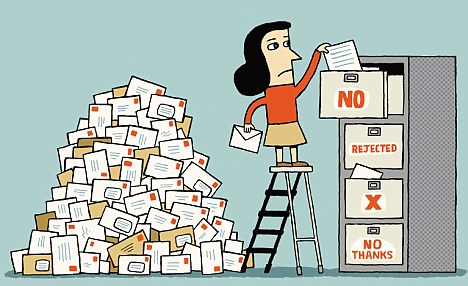
Everyone has experienced rejection whether it was not getting the job you wanted, your friends not inviting you somewhere and posting about it online, or even having someone not like you back. Rejection is the loss of something you may have once had or wanted. It is similar to abandonment because it leaves you feeling less than and unwanted. Unfortunately, rejection is something that cannot be avoided and it is a part of life that everyone will have to experience. No matter how small or big the rejection you experience is, it is always going to hurt you and leave an emotional wound. Not only does rejection cause emotional pain, but it also damages someone’s self-esteem and effects one’s mood resulting in frustration and anger. An article, “Why Rejection Hurts So Much-and What to do About it” states, “The same areas of our brain become activated when we experience rejection as when we experience physical pain. That’s why even small rejections hurt more than we think they should, because they elicit literal pain” (Winch). If you are feeling the pain of being rejected here are some ways to cope and overcome it in healthier ways.

  1. Acknowledge the pain and grief of loss
  • When you are rejected, you may feel embarrassed and don’t know how to exactly cope with it. You may repress your feelings and ignore the fact that you are in pain.
  • In order to accept rejection, you must accept the pain of what you are going through. Whether it is crying, going to therapy, exercising, or even journaling, it is important to relieve and express the emotions faced when being rejected.
  1. Don’t blame yourself
  • Most of the time you don’t understand why you have been rejected and naturally you place the blame on yourself.
  • The reason you believe you are at fault is because early in life you may have been taught to believe that you are not enough.
  • Do not take responsibility for what is out of your control.
  1. Put yourself out there
  • Rejection is part of the process which leads to success. Do not take it personally, it’s part of life.
  • Putting yourself out there can make you less sensitive to rejection; the more you are rejected the less it hurt us.
  1. Build your resiliency
  • To be resilient is to be able to recover or come back from a stressful or traumatizing event.
  • Resiliency can be learned by doing some of the following:
    • Having an open mind
    • Seeking solutions
    • Learning from an experience
    • Seeking support
    • Knowing your worth and strengths
    • Self-care

If you or someone you know is feeling rejected or dealing with rejection, call now to make an appointment to speak with one of our licensed professional psychologists, psychiatrists, psychiatric nurse practitioners, or psychotherapists. Contact us at our Paramus, NJ (201) 368-3700 or Manhattan, NY offices at or (212) 722-1920 to set up an appointment. For more information, visit http://www.counselingpsychotherapynjny.com/.

Sources: https://psychcentral.com/blog/how-to-overcome-rejection-like-a-champ/

https://ideas.ted.com/why-rejection-hurts-so-much-and-what-to-do-about-it/

https://blogs.psychcentral.com/imperfect/2019/02/4-strategies-to-cope-with-the-pain-of rejection/

Image: https://www.dailymail.co.uk/femail/article-1327598/Why-rejection-good-you.html

Listening: Three Ways to Become a Better Listener

listening

By: Tamar Asayan

All anyone ever wants is to be listened to when they are going through a difficult time in their life. An act as simple as listening can be the biggest help anyone can ask for. However, it can also be the hardest thing to do because listeners have a habit of relating issues back to themselves. The aim of listening is not to try to fix them or tell them what to do; instead it is to show them that you care and feel for them as they are struggling. Oftentimes, it is better to not relate issues back to yourself. People feel the need to be listened to because they want to make sure their thoughts are rational, and do not want to overthink. When we listen it reassures the person that we care and that they are not alone.

Three easy steps to becoming a better listener is to listen, understand, and respond appropriately.

  1. Listen
    • Pay attention to not only what the speaker is saying but body language as well.
    • Do not interrupt the speaker.
  2. Understand
    • This is the time to process everything the person has told you so you know how to respond appropriately.
    • Ask questions; the best types of questions to ask are open ended and reflective questions.
    • This allows the speaker to open up even more and explain what they are going through.
  3. Response
    • Address the speaker’s points.
    • Restate what they have told you.
    • Don’t complete the speaker’s sentences. This can come off rude, and interrupts your time to listen and for them to speak. Interrupting and assuming what the speaker is feeling will make them think you do not want to listen.

Sources:

https://blog.udemy.com/importance-of-listening/

https://psychcentral.com/blog/the-generosity-of-listening/

https://psychcentral.com/lib/become-a-better-listener-active-listening/

Image: http://throwthediceandplaynice.com/2017/12/listening-up-in-2018.html

If you or someone you know may be having trouble with communication speak with one of our licensed professional psychologists, psychiatrists, psychiatric nurse practitioners, and psychotherapists. Contact us at our Paramus, NJ or Manhattan, NY offices at (201) 368-3700 or (212) 722-1920 respectively to set up an appointment. For more information, visit http://www.counselingpsychotherapynjny.com/.