Anxiety and Depression: Rumination

By: Lauren Zoneraich

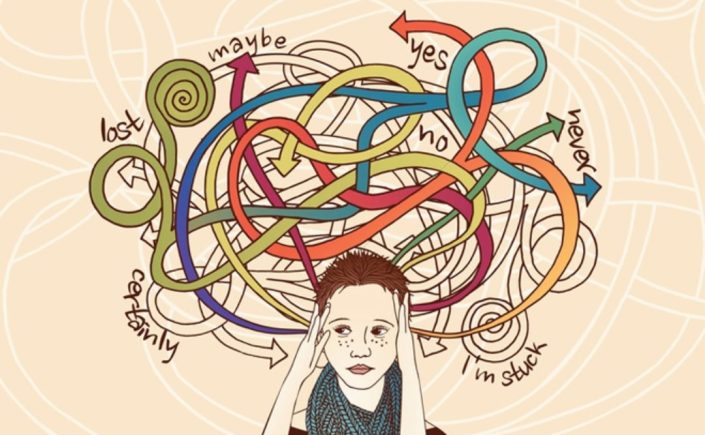
Rumination is the cognitive process of repeating negative thoughts without completion, much to one’s distress. In the mind, the thoughts play like a broken record. Rumination can involve negative thoughts about the past or present, and the self. This form of cognition plays a key role in many psychological conditions, such as depression, generalized anxiety disorder, social anxiety, alcohol abuse, OCD, PTSD, and eating disorders. Rumination is a passive process. One feels as if one cannot control repetitive, dominating thoughts. These distracting thought circles can last for long periods of time and disrupt work, school, and social life. Rumination is different than worry in that rumination involves negative thought content rather than thought content related to uncertainty. Worry usually is tied to the future, while ruminative thoughts are usually tied to the past or present. Rumination can impact physical health by increasing stress levels.In the context of depression, rumination usually involves negative self-assessments, such as feelings of inadequacy or worthlessness. These feelings can lead to anxious responses and further worsen one’s emotional state.

There are some intervention strategies to disrupt rumination. One way is to distract oneself with other activities, such as socializing or exercising. Cognitive Behavioral Therapy, or CBT, is a therapy approach that aims to change negative thought patterns. Patients learn to recognize their distortions, irrational thoughts, and negative thoughts. Once they recognize these thoughts, patients reframe negative thoughts and assess the irrationality of their thoughts. Patients also learn methods to calm their mind and body through breathing exercises and thinking of things they associate with feeling calm and peaceful. Patients are also encouraged to think of action plans to address their negative thoughts.

If you or someone you know is struggling with anxiety or depression, or is seeking Cognitive Behavioral Therapy for rumination, please contact our psychotherapy offices in New York or New Jersey to talk to one of our licensed professional psychologists, psychiatrists, psychiatric nurse practitioners, or psychotherapists at Arista Counseling & Psychotherapy. Contact our Paramus, NJ or Manhattan, NY offices respectively, at (201) 368-3700 or (212) 722-1920 to set up an appointment. For more information, please visit http://www.counselingpsychotherapynjny.com/

Sources:

Sansone, R. A., & Sansone, L. A. (2012). Rumination: relationships with physical health. Innovations in clinical neuroscience9(2), 29–34. https://www.ncbi.nlm.nih.gov/pmc/articles/PMC3312901/

https://www.psychologytoday.com/us/blog/depression-management-techniques/201604/rumination-problem-in-anxiety-and-depression

https://www.apa.org/ptsd-guideline/patients-and-families/cognitive-behavioral

Image Source:

https://blogs.kcl.ac.uk/editlab/2018/10/12/r-is-for-rumination/

Stress: Types of Stress and What it’s All About

Stress: Types of Stress and What it’s All About

By Crystal Tsui

In our everyday lives, we deal with all different kinds of stress, whether it’s from danger, work, family, financial, or education. Here are some of the different types of stress:

  • Acute
  • Chronic
  • Eustress
  • Distress

Acute stress is our fight-or flight response where we are on high alert on our surroundings, usually lasting only 90 mins. Chronic stress is our daily stress that we typically deal with, such as bills, kids, and work. This is the kind of daily stress we tend to ignore. Eustress is our daily positive stress that motivates us to be productive such as having a baby, graduation, or meeting new friends. But the complete opposite would be distress. Distress is the daily negative stress like financial problems, work difficulties, or divorce. Most of the time we can manage our stress by exercising, mediating, or even taking time to talk to family and friends.

However, if stress is not managed properly, stress can affect your body and your immune system. Some symptoms of prolonged stress include:

  • Headaches
  • Increase likelihood of depression (such as lack of motivation)
  • Insomnia
  • Anxiety
  • Irritability

Some biological symptoms of prolonged stress include:

  • Hypertension
  • Increased risk of Diabetes Mellitus Type II
  • Increased changes in acid reflux
  • Increases risk of contracting H. Pylori (bacterium that causes gastric ulcers)
  • Erectile Dysfunction or heavier, painful menses
  • Decrease body’s response to fight off viruses, infections, and the common cold

If you or someone you know is suffering from chronic stress and are seeking stress management, please contact our psychotherapy offices in New York or New Jersey to talk to one of our licensed professional psychologists, psychiatrists, psychiatric nurse practitioners, or psychotherapists at Arista Counseling & Psychotherapy. Contact our Paramus, NJ or Manhattan, NY offices respectively, at (201) 368-3700 or (212) 722-1920 to set up an appointment. For more information, please visit http://www.counselingpsychotherapynjny.com/ .

Citations:

https://imagesvc.timeincapp.com/v3/mm/image?url=https%3A%2F%2Ftimedotcom.files.wordpress.com%2F2018%2F11%2Fstress-benefits.jpg&w=663&c=sc&poi=face&q=85

https://thehealthedge.com/wp-content/uploads/2019/02/Managing-Work-Related-Stress.jpg

https://www.stress.org/daily-life

Hypochondria: Somatic Symptom Disorder

Alice Cordero

A condition once called Hypochondria now falls under the name Somatic Symptom Disorder. Somatic Symptom Disorder is characterized as extreme focus on physical symptoms. When one places extreme focus on physical symptoms – such as fatigue and pain- the individual usually experiences emotional distress and problems functioning in their daily lives.

Those diagnosed with somatic symptom or hypochondriasis disorder often consider the worst case scenarios about their symptoms, which often leads the individual to frequently seek medical care. The individual’s health concerns become such a crucial focus in their life that they in fact become disabled.

Symptoms of somatic symptom disorder may include:

  • Sensations in a specific area ( whether that be shortness of breath or pain) or more general sensations, like weakness and fatigue
  • Excessive thoughts, feelings, behaviors and worrying
  • Checking the body repeatedly for any sort of abnormalities

When one is diagnosed with somatic symptom disorder it is important to keep a positive outlook, because stress and negativity pave the way for the development of symptoms. Those with a history of substance abuse and high levels of sensitivity to pain are commonly seen with this condition.  Anxiety, depression, and OCD are conditions that are often diagnosed as accompanying somatic symptom disorder.

For somatic symptom disorder treatment normally involves cognitive behavioral therapy, mindfulness- based therapy, and medication such as antidepressants. With the proper treatment research has revealed that recovery is possible using the proper strategies to eliminate as much pain as possible.

If you or a loved one appears to be suffering from Somatic Symptom Disorder (Hypochondriasis), the licensed psychologists, psychiatrists, psychiatric nurse practitioners, and psychotherapists at Arista Counseling & Psychotherapy can assist you. Contact our Paramus, NJ or Manhattan, NY offices respectively, at (201) 368-3700 or (212) 722-1920 to set up an appointment. For more information, visit us at http://www.counselingpsychotherapynjny.com/