The lives of children and teenagers may appear stress-free, but unfortunately, this is not the case for all children and teenagers. Anxiety and depression among young adults is more common than society believes it to be. Children and teenagers do have their own stress factors in their lives such as school work, their appearances, relationships or friendships, and or extra curricular activities.
Some children and teenagers may come from a household where mental health is overlooked and not openly discussed. That is why it is extremely important that school systems and districts prioritize mental health and related services. Making sure every student within a school is heard and feels as though they belong is extremely vital in creating a safe space.
Other than school counselors, school systems and districts can participate in providing students with school-wide presentations that review mental health. These presentations should incorporate guest speakers as well.
Mental health should be mandatory in health classes. The depth of the curriculum and structure of the material will be dependent on the age and academic level of the students. Children and teenagers should be exposed to information that is appropriate for their age.
Various children and teenagers view their school as a safe place. It is crucial that we make it known to students that their feelings and emotions are normal and valid.
If you or someone you know is experiencing mental health difficulties, please contact our psychotherapy offices in New Jersey to talk to one of our licensed professional psychologists, psychiatrists, psychiatric nurse practitioners, or psychotherapists at Arista Counseling & Psychotherapy. Contact our offices at (201) 368-3700 or (212) 722-1920 to set up an appointment. For more information, please visit http://www.counselingpsychotherapynjny.com/
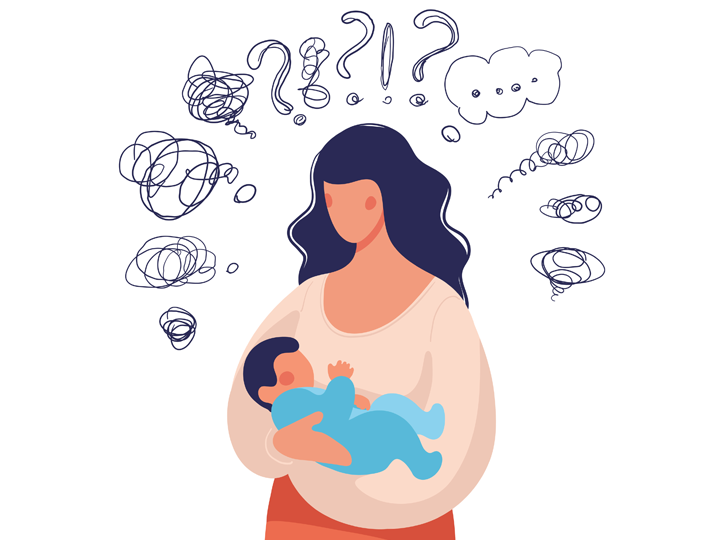
Postpartum depression is a vulnerable time for a woman’s health. Many women are experiencing mood changes and are expected to have an amazing transition into motherhood. However, many women struggle with mental health issues after giving birth. It’s important to spread awareness and show support to the women who are struggling with postpartum depression.
Postpartum depression symptoms start to occur four to six weeks after giving birth and can gradually decrease as time goes on. Nonetheless, depression can reoccur within three years after pregnancy or giving birth. Some common symptoms of postpartum depression can be intrusive, unwanted thoughts and postpartum rage.
Here are some ways to help someone you know or who is struggling with postpartum depression:
Seek help from a licensed mental health professional
Look for a community to help you in both emotional and practical ways
Practice mindfulness and relaxation therapy
Use positive affirmations and be more kind to yourself
Practice skin-to-skin care which can help with reducing the stress hormone cortisol
Avoid alcohol or recreational drug use
Eat healthy
Prioritize rest for yourself
Gaining more knowledge about postpartum depression
If you or someone you know is struggling with their mental health, please contact our psychotherapy offices in New York or New Jersey to talk to one of our licensed professional psychologists, psychiatrists, psychiatric nurse practitioners, or psychotherapists at Arista Counseling & Psychotherapy. Contact our Paramus, NJ, or Manhattan, NY offices at (201) 368-3700 or (212) 722-1920 to set up an appointment. For more information, please visit https://aristapsychiatrypsychotherapy.com/
Mental Health Services: The Significance of Geography
While numerous mental health services are available today, the abundance and equality of services and resources depend on the location. Some individuals reside in rural landscapes where the nearest healthcare professional, psychiatrist, psychologist, or clinical social worker can be miles and miles away. This can become an issue for individuals who need mental health treatment and assessment in a physical setting. Although telehealth is an alternative option for face-to-face appointments, many may not gravitate toward the technology option.
Depending on the diagnosis, receiving face-to-face treatment and therapy can be the most beneficial to managing the diagnosis. Unfortunately, due to the distance, some individuals would rather decide to not treat their mental illness and continue to live with it. If something is so far out of the way, it may feel like a chore or burden for individuals to attend to instead of viewing it as a resource to benefit their mental stability and mental balance.
Also, the stigma and awareness about mental health depend on where someone lives. Based on the area, the education focused on mental health can be very limited or ample. Therefore, if an individual happens to reside in an area with little to no education toward mental health, the treatment and the services may not normalized and accepted. This unfortunately may then lead to individuals not receiving the assistance they need.
If you or someone you know is having mental health difficulties and/ or experiencing symptoms of any form of inner conflicts, please contact our psychotherapy offices in New Jersey to talk to one of our licensed professional psychologists, psychiatrists, psychiatric nurse practitioners, or psychotherapists at Arista Counseling & Psychotherapy. Contact our offices at (201) 368-3700 or (212) 722-1920 to set up an appointment. For more information, please visit http://www.counselingpsychotherapynjny.com/
After hearing the tragic news of a death, there are three possible reactions the bereaving person could have to our response: feel even sadder, become angry, or feel reassured that things will be okay. We, as the reactor who is not directly experiencing their exact loss, want nothing more than to miraculously attain Merlin’s wand, and magically make their sadness, pain, confusion, and grief disappear. We just want to make it better. But for some reason, a completely inoffensive, caring response seems like it’s a fictional, fantastical possibility.
With a response that knocks us loving, caring people to our knees, Litsa Williams, licensed clinical social worker and creator of an online grief community called What’s Your Grief, says that none of our well-thought-out poignant phrases, earnest lamentations, or solemn sorrow at the beginning of the grieving process “can’t make it even a little bit better.” To prove her point, Williams brought some examples of common, pithy sayings that people say and the counterexamples of the griever’s possible thoughts in response:
Well-meaning person: “He/she is in a better place now.” Grieving person: I couldn’t care less! I want them here with me now!
What we learn: Closely following the death, a grieving person won’t find comfort in other people telling them that their loved one is “in a better place.” At that moment, they just want them back, and think there is no “better place” than being right here on Earth with them. It can also perpetuate confusing thoughts they are having about an afterworld, and it may induce guilt because they believed their whole lives that Heaven is a good place, but right now they don’t want that loved one to be in Heaven – they want them here.
Well-meaning person: “I know how you feel.” Grieving person: No losses are the same. Stop trying to compare your pain to my current pain. You can’t possibly feel exactly what I am feeling.
What we learn: Comparing grief doesn’t get anyone anywhere. Even if you might think that it’s rational that you lost your loving mother and so did your friend, your friend isn’t in the headspace to start having that conversation. They want to be comforted – not told that their grief is comparable to yours, or anyone else’s, for that matter.
Well-meaning person: “It will get easier.” Grieving person: It’s impossible for me to forget the person I love, and will never move on from this strong, intense grief! It would be wrong to do that to them and their memory!
What we learn: Williams points out, “Remember, this list is not about things that aren’t true. It is about things that aren’t helpful to say.” Rationally, we know that most people learn to live with the grief, and the pain doesn’t feel as strong or new over time, but when that bereaved person is still processing the death and feeling the fresh, raw sting of the loss, they want nothing other than for someone to recognize, accept, and hold their hand through their current reality. Additionally, they may feel like it’s unjust or cruel to start healing and “moving on” from the one they are grieving. They probably won’t want to even imagine the possibility of letting go of that pain to some extent. Giving them the space to feel their grief at the moment is crucial so that they know that your intentions are to be there if they ever need a shoulder to cry on, a hand to squeeze, or some more tissues delivered, and not to be imposing or offering what you think to be wisdom but they think to be insulting, hurtful, or condescending.
Well-meaning person: “God has a plan,” “It was God’s will,” or “Everything happens for a reason.” Grieving person: Why would God plan or will something so painful to someone? Why would God make us suffer and feel pain like this? I don’t care if this is God’s plan or not – it sucks.
What we learn: Many do find it comforting to think that there is a greater plan that God has for them. However, the grief and intense pain they feel now might cause them to doubt, or even hate, God, religion, or even their faith and beliefs as a whole. These troubling thoughts can even occur in the minds of very religious people. Williams says that it can even cause faith-based doubts in the minds of those who do not consider themselves religious. To sum up, Williams says, “Better safe than sorry – steer clear.”
Essentially, grieving people are uninterested in comparing or doubting anything. They just want to be listened to. Williams suggests doing things to remove stress and help them feel at ease during the process, whether that be sending over meals, arranging for childcare, or helping financially by collecting funds for the funeral costs, just to name a few. Frequently, those grieving don’t remember what you said, so don’t worry about possibly hurting a grieving friend or loved one in the past. Just focus on listening, being sympathetic, and loving.
While experiencing feelings of grief, some may have difficulties such as trouble sleeping, concentrating, eating, anger, extreme sadness, difficulty socializing, drinking alcohol, smoking, or using drugs, just to name a few. Some disorders related to grief or losing a loved one include acute stress disorder, depression, generalized anxiety disorder, panic disorder, post-traumatic stress disorder, prolonged grief disorder, and substance use disorder.
On July 13th of this year, a shot was witnessed around the world when a skinny, pale 20-year-old with an AR-15-style rifle climbed onto a roof facing former President Donald Trump’s rally and fired. After the crowd got up from the ground when police said it was safe, but before paramedics could arrive, millions of people already had photos and videos of the incident on their devices and were chasing the story for updates.
Research outlines how witnessing these events through such graphic and detailed media not only makes us afraid and panicked, but also leads us to doubt our society. We start to think that if we scoured the dark web enough, we’d be able to prevent shootings, or that our children’s classmates who are on the fringes of the social scene might just shoot them one day. We may even convince ourselves that we need a gun for our personal safety and survival.
Universally, we consider leaders to be among the most protected and secure people in our country. When we witness political violence firsthand or through videos and photos, we automatically begin to fear for our own safety and security. As psychologist Dr. Zachary Ginder points out, witnessing a violent attack on a government authority—whether in real-time or via video—leads us to question and doubt our “sense of social order, control, trust, safety, and security.”
One thing that the boom of social media has demonstrated, validated by numerous studies, is that we easily obtain extensive video and photo coverage of violent attacks, whether they involve shootings, terrorist attacks, assassination attempts, or others. The ability to see every single moment from every angle of a violent incident, due to continuous media coverage and the ease of sharing on social media, serves to sustain our trauma and panic, according to Roxanne Cohen Silver, a professor of psychological science, medicine, and public health at the University of California, Irvine.
Experts suggest several ways to relieve anxious feelings: avoid listening to and perpetuating conspiracy theories by ensuring that you’re getting your news from reliable sources; take time to establish and maintain regular habits that support your self-care; channel your energy into advocacy and “positive action,” which can help many feel more in control; focus on kindness and positivity; and seek help when needed to process trauma in a healthy way rather than remaining in a traumatic mindset.
If one’s reaction to trauma is intense, they may experience difficulties such as trouble sleeping, concentrating, irritability, anger, lashing out, or paranoia. Disorders related to traumatic reactions—whether the experience was direct or indirect—include acute stress disorder, depression, generalized anxiety disorder, panic disorder, post-traumatic stress disorder, and substance use disorder.
Major depressive disorder is a condition that affects many individuals. Major depressive disorder can range from being clinically mild and short-lasting to recurring over and over again, to being highly chronic and treatment-resistant. Depression is known to run in families indicating that there are genetic factors. It can be a combination of life experiences and environment. Genetics plays a mild role in depression. Also, families with certain genetic patterns lived eight years shorter than average. As depression may range from transient to debilitating it is expected that many different sets of genetic alterations are involved. Some genes are associated with weight and body, neuron development, and brain inflammation and another group is associated with proteins that tell the immune system which cells are friendly and which are not. This means that our genetics can not only influence our physical characteristics but also how our brain functions and our immune system interacts and identifies with different cells in the body. Your environment can modify the genetic factors that play a role in depression.
If you are concerned about a strong history of depression in the family and are scared about it affecting you or your future children a study suggests that even with a high tendency for depression, psychotherapy or behavioral activation therapy can reduce it. Individuals need to understand the life-changing impact their environment can have on their mental health. Our emotions are generated by our thinking which may serve as an influence on our behaviors. You may have had genetic roots of depression, a difficult upbringing, or a terrible tragedy that has currently occurred but if you change your thinking then your emotions will change as well.
If you or someone you know is struggling with their mental health, please contact our psychotherapy offices in New York or New Jersey to talk to one of our licensed professional psychologists, psychiatrists, psychiatric nurse practitioners, or psychotherapists at Arista Counseling & Psychotherapy. Contact our Paramus, NJ or Manhattan, NY offices respectively, at (201) 368-3700 or (212) 722-1920 to set up an appointment. For more information, please visit https://aristapsychiatrypsychotherapy.com/
It can be difficult for anyone to learn when their anxiety takes over. Anxiety can make it difficult to focus and pay attention. An individual’s anxiety takes over concentrating on other things other than learning. An example of this is if someone’s loved one is feeling sick they can be worried about them instead of focusing on what they are supposed to learn. When people feel stressed their body goes into “fight or flight” mode. Anxiety makes memory difficult since people tend to “freeze” when feeling anxious. When this happens it is tough for individuals to process new information. When people are in these “fight or flight” modes they tend to make bad decisions such as worrying about other things which can slow down their learning and memory. Anxiety can also hold back creativity. They might be worried about what others will think about their ideas which might result in their holding back and sticking with an ordinary idea.
Ways parents can help children
Get help as soon as possible. Parents can talk to their child’s teacher to learn ways to help their child. Consult a child psychologist who can recommend ways to help reduce their anxiety and improve their learning.
Parents can talk to their children about what causes their anxiety. They can teach them ways to calm down before going to school. This topic should be discussed daily with children so that each day it can become easier for them to control their anxiety.
Parents can do academic learning at home that way the child will be in a comfortable setting and will be able to improve. The parent can work on academic subjects with their child at home so that they can learn since their anxiety makes it difficult for them to learn in a school setting. The parent can get help from the teacher so they know what they have to learn.
If you or someone you know is struggling with anxiety or their mental health, please contact our psychotherapy offices in New York or New Jersey to talk to one of our licensed professional psychologists, psychiatrists, psychiatric nurse practitioners, or psychotherapists at Arista Counseling & Psychotherapy. Contact our Paramus, NJ, Manhattan, NY offices respectively, at (202) 368 3700 or (212) 722 1920 to set up an appointment. For more information, please visit https://aristapsychiatrypsychotherapy.com/
Depression is often times stereotyped through societal misconceptions and labels that portray individuals experiencing the condition as weak or even attention-seeking. But it is important to normalize depression, Having depression does not mean one is weak, a failure, or lazy, it simply means one needs mental health assistance. The stigma against mental health is a reason to why people battling with mental disorders such as depression, do not reach out for therapy or treatment.
Normalizing depression also allows individuals to become exposed to and educated on the mental disorder. Some people are genuinely not aware of what specific mental illnesses or disorders are so having an open discussion is very important.
Common symptoms of depression are constantly experiencing sadness or feeling the need to cry, feeling remorseful; life beginning to seem meaningless, having a negative attitude, decreasing activities you used to enjoy, changes in sleep, and experiencing irritability.
Life can get very busy and overwhelming; putting your mental health first is a priority. If you or any loved ones you know are experiencing symptoms of depression, it is vital to talk to someone.
If you or someone you know is having mental health difficulties and/ or experiencing symptoms of depression, please contact our psychotherapy offices in New Jersey to talk to one of our licensed professional psychologists, psychiatrists, psychiatric nurse practitioners, or psychotherapists at Arista Counseling & Psychotherapy. Contact our offices at (201) 368-3700 or (212) 722-1920 to set up an appointment. For more information, please visit http://www.counselingpsychotherapynjny.com/
Stress: Does Job Stress Contribute to Mental Illness
By Josette DeFranco
Work stress is not often addressed. We tend to take on many tasks, leading to feeling overwhelmed physically and mentally. For some, work is a routine and many find working under stress helps them concentrate. On the other hand, some people don’t work as much and try to maintain a slower pace. In either circumstance, work can cause severe stress. Stress in the workplace can lead to decreased productivity and burnout. It is important to note how our body feels so we can find signs earlier that our mental and physical health needs a break.
Some negative effects of stress in the workplace manifest in various ways such as a lack of motivation, reduced job satisfaction, physical and mental health problems, and interpersonal conflicts. If you notice you are feeling more fatigue, irritability, or apathy it may be best to give yourself a break. Job stress can lead to some mental illnesses like depression and anxiety. Stress prepares your body for a defensive action, like an alarm for the brain. It impacts your nervous system releasing hormones that help sharpen your senses and tense your muscles. You may have heard of something called the “flight or fight response.” This is important because it helps you defend against situations your body finds threatening. If stressful situations go without being addressed it will keep your body in a state of activation. Some ways to help alleviate job stress are to ensure that the workload is in line with workers’ capabilities and resources, allow yourself to take a break, create boundaries, provide opportunities for social interactions among workers, and establish work schedules that accommodate your responsibilities outside the job.
If you or someone you know is struggling with their mental health, please contact our psychotherapy offices in New York or New Jersey to talk to one of our licensed professional psychologists, psychiatrists, psychiatric nurse practitioners, or psychotherapists at Arista Counseling & Psychotherapy. Contact our Paramus, NJ or Manhattan, NY offices respectively, at (201) 368-3700 or (212) 722-1920 to set up an appointment. For more information, please visit https://aristapsychiatrypsychotherapy.com/
Tardive dyskinesia is a syndrome in which a person exhibits repetitive, involuntary muscle movements. This syndrome directly affects the central nervous system and is typically seen in patients who are prescribed antipsychotic drugs, usually for bipolar disorder and schizophrenia. Tardive dyskinesia is chronic, with the Diagnostic and Statistical Manual of Mental Disorders Fifth Edition mandating that symptoms must persist for at least a month after an individual discontinues his or her medication in order to be officially diagnosed.
Neuroleptic drugs, also known as antipsychotics, are the most common inducers of tardive dyskinesia. Antipsychotics are often prescribed to patients with bipolar disorder and schizophrenia in order to reduce symptoms such as hallucinations, delusions, and disorganized thinking. These drugs successfully work by blocking receptors in the nervous system – specifically D2 dopamine receptors in the midbrain and forebrain – and consequently lowering dopamine levels within an individual. This is crucial for individuals diagnosed with bipolar disorder or schizophrenia because overactivity of dopamine in the brain can alter brain chemistry, leading to many of the psychotic symptoms associated with these disorders. Thus, antipsychotic medications are able to help assuage some of these symptoms by regulating an individual’s dopamine levels.
Like most medications, neuroleptic drugs have the potential for negative side effects. A person who has been taking neuroleptic drugs for an extended period of time may start experiencing abnormal involuntary movements, contractions, tics, tremors, and restlessness. All of these actions, in the context of long-term antipsychotic use, encompass tardive dyskinesia. These symptoms occur as the result of dopamine receptors having been blocked for too long; blockade of these receptors prevents fluid communication between nerve cells, resulting in a lack of stable movements in an individual.
If an individual finds that he or she is experiencing medication-induced tardive dyskinesia, he or she should consider talking to a doctor about stopping or switching the current medication that is causing it. Additionally, deep brain stimulation can also be utilized as a solution. This procedure employs a neurostimulating device that sends electrical signals into the brain to stimulate the blocked dopamine receptors and encourage movement.
Tardive dyskinesia should not be disregarded, as there are plenty of methods of intervention that can help reduce symptoms within an individual and make the condition more manageable. Make sure to consult with a healthcare provider about a treatment plan if you or a loved one is experiencing this condition.
If you or someone you know is struggling with their mental health, please contact our psychotherapy offices in New York or New Jersey to talk to one of our licensed professional psychologists, psychiatrists, psychiatric nurse practitioners, or psychotherapists at Arista Counseling & Psychotherapy. Contact our Paramus, NJ or Manhattan, NY offices respectively, at (201) 368-3700 or (212) 722-1920 to set up an appointment. For more information, please visit https://aristapsychiatrypsychotherapy.com/




 CounselingRx