Nightmares: Normal or Disorder?

By: Sanjita Ekhelikar

We all know the horrible sensation of waking up in the middle of the night after a nightmare, a terrifying dream that occurs during the rapid eye movement (REM) stage of sleep. These dreams are a normal response to stressors in our life, and occur both during childhood and in adulthood. However, when nightmares occur regularly and lead to impairment of one’s cognitive and social functioning, they can develop into Nightmare disorder.

Nightmare disorder is characterized by frequent occurrences of fearful dreams which can interfere with development, functioning, and sleep. People with the disorder are constantly woken up with the detailed recall of dreams that feel like a threat to their survival or security. In addition, such individuals tend to awaken very easily, and have difficulty functioning throughout the day. They are not taking any substances which could lead to the increase in nightmares and, therefore, show signs of the disorder.

Many of the likely causes of Nightmare disorder include mental illnesses such as anxiety and depression, which cause people to stress throughout the day which can interfere with their sleep. In addition, any major life trauma can result in this growing distress. Finally, any sleeping disorder, such as narcolepsy, sleep apnea, or sleep terror, can cause increased nightmares.

If you are experiencing extreme, recurrent nightmares, do not hesitate to reach out for help and seek treatment. You can speak to a psychologist or take anti-depressant medication to address the issues behind these dreams and to better reduce the unpleasant symptoms. Aside from this, setting a routine during bedtime, making oneself comfortable, exercising during the day, doing meditation before bed, and sleeping until sunrise are ways to better relax and try to prevent nightmares. It is important to take care of yourself and your health, both when you are awake and alert AND when you are asleep.

If you or someone you know is suffering from nightmares, please contact our psychotherapy offices in New York or New Jersey to talk to one of our licensed professional psychologists, psychiatrists, psychiatric nurse practitioners, or psychotherapists at Arista Counseling & Psychotherapy. Contact our Paramus, NJ or Manhattan, NY offices respectively, at (201) 368-3700 or (212) 722-1920 to set up an appointment. For more information, please visit http://www.counselingpsychotherapynjny.com/.

Body Image: Body Dysmorphic Disorder Treatment

By Samantha Glosser

Body dysmorphic disorder, sometimes referred to as body dysmorphia or BDD, is a mental disorder characterized by preoccupation with imagined or markedly exaggerated imperfections or defects in one’s physical appearance. Those suffering from body dysmorphic disorder spend a significant amount of time every day obsessing over their appearance and engaging in repetitive compulsive behaviors in an attempt to avoid anxiety, distress, and hide their imperfections. Signs and symptoms include constantly checking one’s appearance, excessive grooming, over-exercising, picking skin, pulling hair, using makeup or clothing to camouflage one’s appearance, or even getting plastic surgery. Body dysmorphic disorder leads to significant impairment in daily functioning and quality of life. However, there are treatment options available.

Cognitive-behavioral therapy (CBT). CBT is short-term, goal-oriented therapy. In body dysmorphic disorder, CBT is used to decrease compulsive behaviors and the negative thoughts about one’s appearance. This is achieved through techniques such as cognitive restructuring and mind reading. Cognitive restructuring teaches the patient to challenge irrational thoughts about their bodies and replace them with more realistic and adaptive thoughts. In addition to their own negative thoughts, individuals diagnosed with body dysmorphic disorder also believe others hold the same negative thoughts about them. Mind reading allows patients to understand that other people do not share these thoughts about them and provides realistic alternatives. For example, that person staring at them at the mall was probably admiring their outfit. Another frequently used technique is exposure therapy. This requires patients to create a hierarchy of anxiety-provoking situations which they are then exposed to in order to overcome anxiety and distress.

Psychiatric medications. Research has also shown that antidepressant medications are an effective treatment for body dysmorphic disorder, specifically selective serotonin reuptake inhibitors (SSRI’s). SSRI’s that are commonly used for the treatment of body dysmorphic disorder include Lexapro, Prozac, Paxil, and Zoloft, among others. SSRI’s help to reduce obsessional thinking, compulsive behaviors, and depression, a common comorbid disorder among individuals diagnosed with body dysmorphic disorder.

If you or someone you know appears to be suffering from body dysmorphic disorder, or other problems associated with negative body image, the licensed psychologists, psychiatrists, psychiatric nurse practitioners, and psychotherapists at Arista Counseling & Psychotherapy can assist you. Contact our Paramus, NJ or Manhattan, NY offices respectively, at (201) 368-3700 or (212) 722-1920 to set up an appointment. For more information, visit http://www.counselingpsychotherapynjny.com/


Source: Tartakovsky, M. (2016, July 17). Demystifying treatment for body dysmorphic disorder. Retrieved from https://psychcentral.com/lib/demystifying-treatment-for-body-dysmorphic-disorder/

Self-esteem

By: Charleene Polanco

Have you ever experienced a time in your life when you felt that, “you weren’t good enough?” If you have, self-esteem is at the core of this feeling, because it involves perceptions one has of oneself. These perceptions eventually become beliefs about self-worth and value. That is why self-esteem is so important in a person’s life, because how people think of themselves, is what drives them towards or away from certain actions. High self-esteem is often associated with multiple accomplishments in life. This is because people with high self-esteem, believe that they are worthy of the opportunities they get, and, therefore, make the most out of them. One the other hand, those with low self-esteem, constantly believe that they are not good enough. When an opportunity presents itself to them, people with low self-esteem feel like they do not deserve it, and do not perform their best. This is why low self-esteem is associated with depression and anxiety. If you are suffering from low self-esteem, here are a couple of tips available to raise self-esteem:

  • Identify triggers of low self-esteem: if you are able to recognize the places or people that lower your self-esteem, you are able to avoid or prepare for them. This way, learning experiences come from each event.
  • Avoid negative self-talk: if you do not think negatively about yourself, you are able to feel better and attempt things you would normally avoid.
  • Connect with loved ones: family members and friends can be great emotional support because people who care about you, will also make you feel loved and wanted. Nurture these feelings so that eventually you are able to see yourself as they do, and will slowly learn how to love yourself a little more each day.

If you or someone you know is suffering from low self-esteem, please contact our psychotherapy offices in New York or New Jersey to talk to one of our licensed professional psychologists, psychiatrists, psychiatric nurse practitioners, or psychotherapists at Arista Counseling & Psychotherapy. Contact our Paramus, NJ or Manhattan, NY offices respectively, at (201) 368-3700 or (212) 722-1920 to set up an appointment. For more information, please visit http://www.counselingpsychotherapynjny.com/.

Sources:

Gross, S. J. (2016, July 17). How To Raise Your Self-Esteem. Retrieved October 8, 2018, from https://psychcentral.com/lib/how-to-raise-your-self-esteem/

Mind for Better Mental Health. (2013). How to increase your Self-esteem. Retrieved October 8, 2018, from https://www.mind.org.uk/information-support/types-of-mental-health-problems/self-esteem/#.W9cKgY2WyM8


Anxiety: Social Anxiety Disorder

By: Charleene Polanco

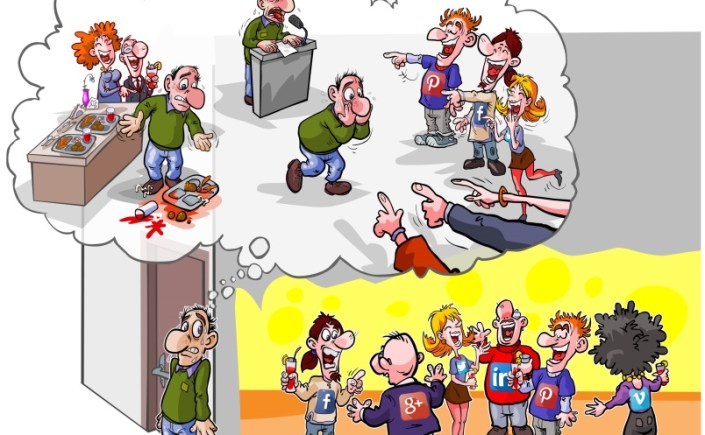
Social anxiety disorder is characterized by an intense fear of being rejected by people. Many people feel some level of anxiety when they are placed into unknown social situations. However, those suffering from social anxiety disorder may avoid socializing altogether, because they cannot handle being judged or seen in a negative way by others. A person with social anxiety disorder, can experience anxiety during many different situations like; going on a date, eating in front of people, making eye contact, public speaking, or going to parties. Some of the symptoms of social anxiety include:

  • Rapid heartbeat
  • Uneasy stomach/diarrhea
  • Muscle tension
  • Lightheadedness
  • Sweating

Social anxiety can cripple a person’s life, because normal everyday interactions are triggers of anxiety and discomfort. This is why many people who suffer from social anxiety disorder choose to isolate themselves from everyone. In order to reduce the fear of rejection, people with social anxiety disorder are encouraged to be exposed to social situations, not run away from them. Although being around others is what brings them distress, socializing is also what allows people with social anxiety to change the way they think about social engagements. Instead of having negative perceptions about the way people view them, the more they socialize and are accepted by others, the more socially anxious people see that those perceptions are not true.

If you or someone you know is suffering from social anxiety, please contact our psychotherapy offices in New York or New Jersey to talk to one of our licensed professional psychologists, psychiatrists, psychiatric nurse practitioners, or psychotherapists at Arista Counseling & Psychotherapy. Contact our Paramus, NJ or Manhattan, NY offices respectively, at (201) 368-3700 or (212) 722-1920 to set up an appointment. For more information, please visit http://www.counselingpsychotherapynjny.com/.

Sources:

Anxiety and Depression Association of America. (2018). Social Anxiety Disorder. Retrieved October 01, 2018, from https://adaa.org/understanding-anxiety/social-anxiety-disorder

Nordqvist, C. (2018, February 05). What’s to Know About Social Anxiety Disorder? Retrieved October 01, 2018, from https://www.medicalnewstoday.com/articles/176891.php

WebMD. (2018). What Is Social Anxiety Disorder? Retrieved October 01, 2018, from https://www.webmd.com/anxiety-panic/guide/mental-health-social-anxiety-disorder#1


What is Trichotillomania?

By Stephanie Osuba

Trichotillomania is a hair pulling disorder categorized in the Obsessive Compulsive and Related Disorders section in the DSM-5. It is one of the other Body Focused Repetitive Behaviors (BFRBs) – along with excoriation (skin picking) and onychophagia (nail biting) – in which the individual will pull, pick or bite at various parts of the body resulting in damage.  Symptoms include recurring hair pulling, hair loss, and related stress and impairment because of the behavior. The disorder is not considered self-mutilation like cutting or burning because the behavior is not intentional and research suggests that there is no connection between the disorder and unresolved trauma. Often people are ashamed of the behavior and their resulting appearance because of it and try their hardest to stop. Comorbidities include, tic disorders, mood disorders, and anxiety disorders, although, trichotillomania can also occur in the absence of any other psychopathology.  The regular age of onset is between the ages of 11 and 13, however, baby trichotillomania is a rare phenomenon that seems to go away as the child grows older. Research also suggests that the disorder is primarily genetic as it appears in the first relatives of people with trichotillomania than it does in the general population.

Available treatments include cognitive behavioral therapy (CBT) and habit reversal training (HRT) with adjunctive dialectal behavioral therapy (DBT) and acceptance and commitment therapy (ACT). These therapies help the person to be aware of the pattern of the behavior and helps to identify triggers to pulling. It also teaches methods to redirect that urge to pull into a new healthy pattern of behavior in order to reduce or eliminate the urge. While there is no FDA-approved medication specifically for BFRBs, research is being conducted. OCD medication such as selective serotonin reuptake inhibitors (SSRIs) and anafranil can help alleviate symptoms as well.

Sources: Deibler, M. W., Psy. D. (n.d.). Trichotillomania (TTM) and related Body-Focused Repetitive Behaviors (BFRBs). Retrieved from http://www.thecenterforemotionalhealth.com/trichotillomania-and-related-disorders

Zwolinski, R., LMHC. (2013, October 03). Cause And Treatment Of Trichotillomania. Retrieved from https://blogs.psychcentral.com/therapy-soup/2012/04/cause-and-treatment-of-trichotillomania/

If you or someone you know appears to be suffering from trichotillomania, the licensed psychologists, psychiatrists, psychiatric nurse practitioners, and psychotherapists at Arista Counseling & Psychotherapy can assist you. Contact our Paramus, NJ or Manhattan, NY offices respectively, at (201) 368-3700 or (212) 722-1920 to set up an appointment. For more information, visit http://www.counselingpsychotherapynjny.com/.

Anxiety: Test Anxiety

By: Charleene Polanco

Have you ever had a moment of extreme panic, right before the beginning of a test? How about feeling like you are about to faint, or excessive sweat during an exam? If these symptoms describe your test-taking experience, then you might be suffering from test anxiety.

Test anxiety is defined as a psychological condition where people experience severe distress and anxiety during exams. Some causes of test anxiety are fear of failure and lack of preparation. A fear of failure can result from wanting to perform well. One who associates their self-worth with a test’s outcome, can feel devastated when the grade is not what he or she expected. This creates a vicious cycle, where because the person is afraid of feeling worthless, when they fail, they become anxious while taking the exam.  As a result, their performance level on tests drops. Lack of preparation is another cause of test anxiety, which occurs when students do not study properly for an exam. For those who like to wait until the night before an exam, to cram five chapters worth of information into their brain, tests are a constant source of anxiety and stress.

Symptoms of test anxiety can be split up into three categories; physical, emotional, and behavioral/cognitive symptoms. Some physical symptoms include headaches, nausea, excessive sweating, and rapid heartbeat. Emotional symptoms can be expressed as feelings of anger, fear, helplessness, and disappointment.  Behavioral/cognitive symptoms are difficulty concentrating and negative thinking.

To help manage test anxiety, here are some tips;

  • Properly prepare for exams
  • Develop good test-taking skills
  • Engage in relaxation techniques, like taking deep slow breaths
  • Keep a positive mindset

If you or someone you know is suffering from test anxiety, please contact our psychotherapy offices in New York or New Jersey to talk to one of our licensed professional psychologists, psychiatrists, psychiatric nurse practitioners, or psychotherapists at Arista Counseling & Psychotherapy. Contact our Paramus, NJ or Manhattan, NY offices respectively, at (201) 368-3700 or (212) 722-1920 to set up an appointment. For more information, please visit http://www.counselingpsychotherapynjny.com/.

Source:

“Test Anxiety.” Anxiety and Depression Association of America, ADAA, Anxiety and Depression Association of America , 2018, adaa.org/living-with-anxiety/children/test-anxiety

Stress: The Detrimental Effects of Stress on the Body

By: Charleene Polanco

Stress is something that everyone experiences at some point in their lives. Stress is defined as a physical, mental, or emotional strain or tension, and whether it is about taking a final exam for class, going off to college for the first time, or work-related, stress can affect the way we perform. If gone unchecked, stress can lead to a variety of negative consequences on the body, which will be discussed. Stress has been linked to a number of physical and emotional disorders, like depression, anxiety, heart attacks and stroke. A constant high level of stress, can lead to immune system disturbances, which can cause an increase in your body’s susceptibility to infections. Stress can also have direct effects on the skin leading to rashes and hives.

Unlike rashes and hives, which are visible, stress can affect various systems, organs, and tissues within the body, signs that are not seen, and are, therefore, much harder to notice. Some parts of the body affected by stress are the nervous and cardiovascular systems. When stressed, the nervous system signals the body’s adrenal glands to secrete adrenalin and cortisol. Since both of these hormones cause high blood pressure, a person who is under constant stress, also has elevated blood pressure which can lead to heart problems in the future. Even if a stress episode is considered to be minor, repeated minor stress episodes can negatively impact a person’s cardiovascular system by causing inflammations in the coronary arteries. This can eventually cause heart attacks. In order to prevent the negative consequences of untreated high levels of stress, it is important to recognize the symptoms. There are multiple symptoms of stress, some of which include, frequent headaches, cold hands/feet, dry mouth, heartburn, depression, forgetfulness, and rapid or mumbled speech.

If you or someone you know is suffering from stress, please contact our psychotherapy offices in New York or New Jersey to talk to one of our licensed professional psychologists, psychiatrists, psychiatric nurse practitioners, or psychotherapists at Arista Counseling & Psychotherapy. Contact our Paramus, NJ or Manhattan, NY offices respectively, at (201) 368-3700 or (212) 722-1920 to set up an appointment. For more information, please visit http://www.counselingpsychotherapynjny.com/.
Source:

“Stress Effects.” Common Signs and Symptoms of Stress, The American Institute of Stress, 4 Jan. 2017.

Gambling Addiction

By: Heather Kaplan

Gambling is defined as playing games for a chance to either win or lose money. One who is a compulsive gambler is someone who is unable to resist their impulses to gamble. This leads to severe disturbances in their personal and social lives. The urge to gamble becomes so great that this tension can only be relieved by more gambling. One who exhibit such behavior can be classified to have a gambling addiction. Unfortunately, many gambling addicts are not aware that they have a problem. They only begin to realize the severity of the issue when they hit ‘rock bottom’.

There are various symptoms that indicate that someone is a compulsive gambler. One who has a gambling addiction usually progresses form occasional to habitual gambling. He begins to risk more and more money, which can lead to both financial and personal instability. Someone is said to have a gambling addiction if four (or more) of the following have been demonstrated in the last twelve months:

1. Needing to gamble progressively larger amounts of money to feel the same (or more) excitement

2. Having made many unsuccessful attempts to cut back or quit gambling

3. Feeling restless or irritable when trying to cut back or quit gambling

4. Preoccupation or excessive thoughts (planning next gambling venture, thinking of ways to get more money to gamble with)

5. If the person is using gambling to escape problems of distress, sadness or anxiety

6. Gambling larger amounts to try to recoup previous losses

7. Lying about the amount of time and money spent gambling

8. Relying on others to borrow money due to significant gambling losses

Gambling addiction is a significant problem in the United States, impacting 1-3% of adults, men more often than women. Various complications can arise from having a gambling addiction. Those with such gambling behavior often have problems with alcohol and other substances. These people also tend to have financial, social, and legal problems. Those with gambling addictions are also at higher risk for considering or attempting suicide.

If you or a loved one is exhibiting any of the eight behaviors listed above, you may be at risk for developing a gambling addiction. The licensed psychologists, psychiatric nurse practitioners and psychotherapists at Arista Counseling & Psychotherapy are here to help. Contact our Paramus, NJ or Manhattan, NY offices respectively at (201)-368-3700 or (212)-722-1920 to set up an appointment. For more information, visit http://www.counselingpsychotherapynjny.com/


Oppositional Defiant Disorder

Oppositional Defiant Disorder: DSM-5

By: Cassie Sieradzky

Oppositional defiant disorder is characterized by a pattern of angry/irritable mood swings, argumentative/defiant behavior, and vindictiveness. For a diagnosis to be warranted, symptoms must be present for at least 6 months and the individual must display at least 4 symptoms. The behaviors are associated with distress to the individual or those in their immediate circle, such as family or friends. The individual’s behavior may also negatively impact important areas of daily functioning, such as school or work.

A common symptom in individuals with oppositional defiant disorder is an angry/irritable mood. For example, they may often lose their temper, be touchy or easily annoyed, or are commonly angry and resentful. Argumentative/defiant behavior is also a core symptom of this disorder. Someone with oppositional defiant disorder may argue with authority figures or, for children and adolescents, with adults. They may often actively defy or refuse to comply with requests from authority figures or with rules. Additionally, they may deliberately annoy others and blame people for their mistakes or misbehavior. Vindictiveness or spitefulness at least twice within the past 6 months is also a symptom of oppositional defiant disorder.

The diagnosis must be developmentally appropriate. For children younger than 5, the behavior should occur on most days for a period of at least 6 months, while individuals 5 years or older should exhibit symptoms at least once per week for at least 6 months. The disorder varies by severity as to whether the condition is mild, moderate, or severe. Mild oppositional defiant disorder is diagnosed when symptoms are confined to only one setting, moderate severity is diagnosed when symptoms are present in at least two settings, and severe oppositional defiant disorder is diagnosed when symptoms are present in three or more settings.

If you or a loved one appears to be suffering from oppositional defiant disorder, licensed psychologists, psychiatrists, psychiatric nurse practitioners, and psychotherapists at Arista Counseling & Psychotherapy can assist you. Contact our Paramus, NJ or Manhattan, NY offices respectively, at (201) 368-3700 or (212) 722-1920 to set up an appointment. For more information, visit http://www.counselingpsychotherapynjny.com/

Oppositional Defiant Disorder DSM V – Pearson Clinical NA. (n.d.). Retrieved March 27, 2018, from http://www.bing.com/cr?IG=2282EE88A8B54A4EBBE6371B24777ECE&CID=16FD8C7C2F796F5D053A87C32ED66EB9&rd=1&h=V2GxYeJJUKwraVQBc2bMHklhpE-eVv00fBjh-V2nxkY&v=1&r=http://images.pearsonclinical.com/images/assets/basc-3/basc3resources/DSM5_DiagnosticCriteria_OppositionalDefiantDisorder.pdf&p=DevEx,5064.1

Post-Traumatic Stress Disorder

PTSD

By: Cassie Sieradzky

Post-Traumatic Stress Disorder (PTSD) is classified in the DSM-5 as a trauma and stress related disorder. PTSD is commonly triggered after a traumatic event, such as violent personal assaults, natural or unnatural disasters, accidents, or military combat. PTSD is frequently comorbid with depression, substance abuse, or anxiety disorders. For PTSD to be diagnosed, symptoms must be present for at least 1 month and they must create distress in the individual and impact daily functioning.

First, an individual must be exposed to death, threatened death, actual or threatened serious injury, or actual or threatened sexual violence, in the following way: direct exposure, witnessing the trauma, or learning that a relative or close friend was exposed to a trauma.

One intrusion symptom must also be present. The intrusion symptoms include unwanted upsetting memories, nightmares, flashbacks, emotional distress after exposure to traumatic reminders, and physical reactivity after exposure to traumatic reminders. Avoidance of trauma-related stimuli after the trauma occurred is also a symptom of PTSD. For example, an individual may avoid trauma-related thoughts or feelings or situations that remind them of the trauma. Two symptoms of negative changes in thought are also required for a diagnosis. An individual with PTSD may experience an inability to recall key features of the trauma, overly negative thoughts or assumptions about oneself or the world, exaggerated blame of self or others for causing the trauma, negative affect, decreased interest in activities, and/or feelings of isolation. Lastly, to be diagnosed with post-traumatic stress disorder, the individual must experience alterations in reactions and behaviors, such as irritability/aggression, risky or destructive behavior, hypervigilance, heightened startle reaction, difficulty concentrating, or difficulty sleeping.

If you or a loved one appears to be suffering from post-traumatic stress disorder, the licensed psychologists, psychiatrists, psychiatric nurse practitioners, and psychotherapists at Arista Counseling & Psychotherapy can assist you. Contact our Paramus, NJ or Manhattan, NY offices respectively, at (201) 368-3700 or (212) 722-1920 to set up an appointment. For more information, visit http://www.counselingpsychotherapynjny.com/

DSM-5 Criteria for PTSD. (2018, March 14). Retrieved April 02, 2018, from
https://www.brainline.org/article/dsm-5-criteria-ptsd

Post-Traumatic Stress Disorder. (n.d.). Retrieved April 02, 2018, from https://www.psychologytoday.com/us/conditions/post-traumatic-stress-disorder