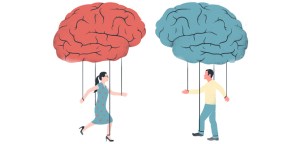
Listening: Three Ways to Become a Better Listener

listening

By: Tamar Asayan

All anyone ever wants is to be listened to when they are going through a difficult time in their life. An act as simple as listening can be the biggest help anyone can ask for. However, it can also be the hardest thing to do because listeners have a habit of relating issues back to themselves. The aim of listening is not to try to fix them or tell them what to do; instead it is to show them that you care and feel for them as they are struggling. Oftentimes, it is better to not relate issues back to yourself. People feel the need to be listened to because they want to make sure their thoughts are rational, and do not want to overthink. When we listen it reassures the person that we care and that they are not alone.

Three easy steps to becoming a better listener is to listen, understand, and respond appropriately.

  1. Listen
    • Pay attention to not only what the speaker is saying but body language as well.
    • Do not interrupt the speaker.
  2. Understand
    • This is the time to process everything the person has told you so you know how to respond appropriately.
    • Ask questions; the best types of questions to ask are open ended and reflective questions.
    • This allows the speaker to open up even more and explain what they are going through.
  3. Response
    • Address the speaker’s points.
    • Restate what they have told you.
    • Don’t complete the speaker’s sentences. This can come off rude, and interrupts your time to listen and for them to speak. Interrupting and assuming what the speaker is feeling will make them think you do not want to listen.

Sources:

https://blog.udemy.com/importance-of-listening/

https://psychcentral.com/blog/the-generosity-of-listening/

https://psychcentral.com/lib/become-a-better-listener-active-listening/

Image: http://throwthediceandplaynice.com/2017/12/listening-up-in-2018.html

If you or someone you know may be having trouble with communication speak with one of our licensed professional psychologists, psychiatrists, psychiatric nurse practitioners, and psychotherapists. Contact us at our Paramus, NJ or Manhattan, NY offices at (201) 368-3700 or (212) 722-1920 respectively to set up an appointment. For more information, visit http://www.counselingpsychotherapynjny.com/.


Relationship Building: The Michelangelo Effect

Michelangelo's_Pieta_5450_cut_out_black

Relationship Building: The Michelangelo Effect

By Jessica Burgess

When your partner or spouse is working towards a goal, you can either be a help or a hindrance which can have an effect on your relationship as a whole. So how can you be an effective and helpful partner without pushing him or her towards how you think he or she should go about goal attainment? Psychologists Caryl Rusbult, Eli J. Finkel, and Madoka Kumashiro came up with the idea of the Michelangelo Effect to answer this question. Famous sculptor Michelangelo, know for his works such as David, did not believe that he created his pieces, but rather showed their ideal form. Rusbult and her colleagues believe that the same goes for relationships. In an interpersonal relationship, a partner can help the other reveal their ideal self (and vice versa), but he or she does not create that partner. At the same time, he or she can limit the partner’s revelation. Some tips for aiding your partner in personal growth and goal achievement include:

Affirmation:

  • Both verbal and non-verbal
  • Help and encouragement
  • Ex: Helping out with the kids to allow your partner an extra half hour to work

Enhancement:

  • Perceiving the partner more positively than he or she views him or herself
  • This is most effective when the enhancement is related to the goal
  • Ex: “You are a hardworking writer so I am certain you will meet your deadline.”

Verification

  • Affirm the dream and the reality
  • What is realistically attainable?
  • Ex: “Would you be open to us reading some books on how to get started so we know how the process goes?”

If you or your partner is struggling with support within your relationship call the licensed psychologists, psychiatrists, psychiatric nurse practitioners, and psychotherapists at Arista Counseling & Psychotherapy so that they can assist you. Contact our Paramus, NJ or Manhattan, NY offices respectively, at (201) 368-3700 or (212) 722-1920 to set up an appointment. For more information, visit http://www.counselingpsychotherapynjny.com/          


Source: https://blogs.psychcentral.com/healing-together/2010/03/promoting-your-partner%e2%80%99s-ideal-self-the-michelangelo-phenomenon/

Image: https://upload.wikimedia.org/wikipedia/commons/6/6c/Michelangelo’s_Pieta_5450_cut_out_black.jpg


Relationships: Preventing Intensification of Arguments

By Zuzanna Myszko

It is not unusual to enter into arguments with one’s partner. In fact, even the most satisfied couples have an “unsolvable” problem and more than one “solvable” issue. In order to prevent arguments about these problems from escalating, the members of the couple must communicate effectively. Effective communication skills are especially important for people in romantic relationships because emotional escalation happens more rapidly in those relationships than in others. Also, once escalation begins, it is extremely difficult to regain control over one’s emotions.

Two skills that are worthwhile to develop in terms of relationship conflicts are:

  1. Use empathic responses.
  2. Use self-calming techniques.

Practicing empathic responses keeps heated emotions from intensifying. Empathic responses are important because they force the members of the couple to see the situation from the other’s perspective. This allows for more feelings of understanding and less defensive statements that might further hurt the other person.

Additionally, the development of self-calming skills allows for de-escalation. Self-calming techniques include taking time away from the discussion, “conscious breathing, positive self-talk, and self-compassion.” When one is able to keep anger at bay, he or she can approach the situation rationally. This results in the couple being able to focus on working toward a solution to the problem, rather than becoming defensive and angry.

In the end, when approaching an issue with a partner, it is important to remember that all people share the same emotional needs in romantic partnerships.

If you or someone you know is experiencing relationship troubles speak with one of our licensed professional psychologists, psychiatrists, psychiatric nurse practitioners, and psychotherapists. Contact us at our Paramus, NJ or Manhattan, NY offices at (201) 368-3700 or (212) 722-1920 respectively to set up an appointment. For more information, visit http://www.counselingpsychotherapynjny.com/.

Image: https://www.pexels.com/photo/woman-and-man-sitting-on-brown-wooden-bench-984949/

Source: https://www.psychologytoday.com/us/blog/in-it-together/201901/how-avoid-escalation-couple-conflicts


Sexual Assault: Why Survivors Don’t Come Forward Sooner

By Samantha Glosser

If you watch the news or are an avid social media consumer, you have probably heard about various claims of sexual assault against public and political figures, where the victim did not immediately come forward. We recently saw this with Dr. Christine Blasey Ford, who publicly accused U.S. Supreme Court nominee, Brett Kavanaugh, of sexually assaulting her as a teenager. Situations like Dr. Ford’s have opened up a discussion about one important question: why do survivors wait so long to report an assault? Research shows that it is a normal response for survivors of sexual assault to take time before reporting the assault, if they report at all. This may not make sense to you, as you are probably wondering why they wouldn’t want justice or revenge on their abuser. However, there are numerous reasons that compel survivors to prolong or withhold disclosing that they were sexually abused.

  1. Fear of being victimized a second time. Reporting a sexual assault often leads to new and added traumas from peers, family members, police officers, lawyers, etc. This feeling often comes from having to relive the experience or from people indicating that the victim caused the sexual assault by asking questions like, “What were you wearing at the time of the attack?”
  2. Lack of support. Lack of support is a multi-faceted issue. Survivors find it hard to report if they are not surrounded by loved ones who support them. However, even with this support, individuals still refrain from reporting because they know that our society has a tendency to blame the victim for the sexual assault. A lack of support can even come from other survivors of sexual assault. Typically, other survivors are seen as a source of comfort. However, some will dismiss another person’s assault with statements like, “What’s the big deal? It happens to all of us. Get over it.”
  3. Decline in functioning after the assault. Survivors of sexual assault experience intense feelings of shame, worthlessness, and self-loathing which can quickly bring on depression and anxiety. It is difficult for survivors to contemplate a course of action after the assault when they can barely figure out how to make it through the day. In the midst of these emotions, survivors want to forget and pretend that the assault did not occur.
  4. Vague memories of the attack. In some cases, victims of sexual assault were drugged by their abuser or previously inebriated. Both of these situations can lead to victims only having a vague memory of the attack. In addition, the trauma endured by some victims is so severe it causes them to dissociate, which also leads to vague memories. When individuals do not have a vivid recollection of the event, they may be scared to come forward because they fear others will not believe them, or in some cases because they do not believe their own memories.

If you or someone you know is a survivor of sexual assault, the licensed psychologists, psychiatrists, psychiatric nurse practitioners, and psychotherapists at Arista Counseling & Psychotherapy can assist you. Contact our Paramus, NJ or Manhattan, NY offices respectively, at (201) 368-3700 or (212) 722-1920 to set up an appointment. For more information, visit http://www.counselingpsychotherapynjny.com/.

Source: https://blogs.psychcentral.com/psychology-women/2018/10/6-big-reasons-women-dont-report-sexual-abuse-right-away/

Assertiveness and Anxiety: How Expressing Yourself Can Lead to a Happier Self

By: Sanjita Ekhelikar

“Communication is key” is a phrase we are all familiar with, yet many struggle with actually acting on it. The most effective form of communication is through assertiveness, which involves expressing one’s views in a straightforward manner, and in standing up for one’s needs while still being considerate of others. This differs from aggressiveness in that it does not involve being outwardly emotional or insulting to others, and differs from passivity in that the individual clearly states their feelings and desires. Being assertive involves open communication, which can be difficult to engage in, especially for people struggling with anxiety. However, through practicing and learning assertiveness, people with anxiety can actually feel less worry and more confident in themselves.

Anxiety describes the uncomfortable feelings of turmoil and dread that one might have in anticipation that results in physical sensations such as rapid heartbeat, sweating, and rumination. For many who struggle with anxiety, the thought of being assertive with others makes them anxious. They often worry that being assertive will come off as being mean, creating conflict, and being inconsiderate. Therefore, many choose passive communication, and never voice their views or feelings. This worsens their state of worry, as they are not properly understood by those around them and can easily be taken advantage of. They are often misunderstood which increases their worry. Others often take advantage of them because of their meek manner and visible anxiety.

Contrary to what those with anxiety believe, assertiveness can actually help them feel better. Often times, those with anxiety create situations in their mind about everything that will go wrong if they voice themselves to another person. However, such a form of open communication can create a better understanding between two people. It allows the person with anxiety to be properly understood, to dispel the fearful thoughts in their head, and become more confident in themselves and their views.

How can people with anxiety begin working towards being more assertive? By stating their views using “I,” individuals can avoid putting blame on others by expressing their own opinions. In addition, reminding themselves that their fears are not rational and that it is their anxiety talking to them can help them become increasingly comfortable with being assertive. Finally, practice makes perfect – keep trying and speak up!

If you or someone you know is suffering from anxiety, please contact our psychotherapy offices in New York or New Jersey to talk to one of our licensed professional psychologists, psychiatrists, psychiatric nurse practitioners, or psychotherapists at Arista Counseling & Psychotherapy. Contact our Paramus, NJ or Manhattan, NY offices respectively, at (201) 368-3700 or (212) 722-1920 to set up an appointment. For more information, please visit http://www.counselingpsychotherapynjny.com/.

Couples Counseling: The Benefits

By Stephanie Osuba

According to PsychCentral.com, there are many reasons why people chose to participate in couples therapy, as well as many reasons they don’t. The common reason couples usually don’t consider counseling is out of embarrassment or the stigma that surrounds the intimate details of one’s personal relationship. The stigma dictates that only people who are in a very broken state in their relationship can benefit from couples counseling. However, no relationship is perfect and sometimes even the most socially competent of us need the help of a professional. Psychologists can help couples identify key problems in the relationship in a structured way that acknowledges the feelings of both parties. Although it’s never easy to reopen past wounds, it is the only way to push through to a place of understanding with a partner. Sessions can also determine whether the relationship needs some fine-tuning, a complete rebuilding, or a separation of ways.

Here are some benefits of couples counseling:

  • Improved communication skills
  • Increase in emotional and physical connection
  • Life plan development
  • Resolving conflicts in a structured way
  • Building a healthy relationship ­– ultimately leading to individual growth as well

Common issues couples hope to resolve in therapy: infidelity, poor communication, financial issues, parenting or co-parenting, work and career, emotional and physical intimacy, separation or divorce, abuse, grief and loss, and life transitions.

If you or someone you know appears to be having marital problems, the licensed psychologists, psychiatrists, psychiatric nurse practitioners, and psychotherapists at Arista Counseling & Psychotherapy can assist you. Contact our Paramus, NJ or Manhattan, NY offices respectively, at (201) 368-3700 or (212) 722-1920 to set up an appointment. For more information, visit http://www.counselingpsychotherapynjny.com/

Lack of Intimacy – A Common Problem in Marriages

By: Gisela Serrano

One common problem that most marriages experience is a lack of intimacy. Couples tend to have different daily schedules – making it difficult to find time to dedicate to their partner. When children come into the picture, it becomes more complex as the children tend to become the priority and the focus of the parent’s attention. This means that the couples own needs and desires, including their sexual needs, are put on hold. Couples often become too tired or too accustomed to their daily routines and forget the importance of having a healthy sex life with their spouse. In cases like these, it is important for the married couple to communicate and talk about the issue at hand, as scary and uncomfortable as it may seem. You may even be surprised as to how well the conversation turns out, but you will never know until you take that next step. Having an open and honest conversation regarding your sex life can be the key to avoiding marital problems over the lack of intimacy. The bottom line is – sex is not the most important thing in a marriage and should not be expected to be the only thing to hold a marriage together – but it certainly is an important and healthy part of marriage.

If you and your spouse are having marital issues including, but not limited to, lack of intimacy contact Arista Counseling & Psychotherapy at our location in Paramus, NJ (201) 368-3700 or at our location in Manhattan (212) 722-1920. You can also visit our website https://www.counselingpsychotherapynjny.com/ for more information.

Source: Madsen, P. (May 29, 2012). Retrieved from: https://www.psychologytoday.com/us/blog/shameless-woman/201205/love-and-the-little-or-no-sex-marriage

Communication Differences Between Genders


By: Dianna Gomez

Where would the world be without communication? Whether it be conscious or unconscious, we communicate in one way or another with those around us every minute of every day. We communicate in the work place, in relationships, with our friends and family – sometimes even when passing by strangers walking down the street. You would think that with the amount of communicating we do as a human species on a daily basis, we would have it all down to a “ T ” by now but that is far from the truth. Every once in a while we experience miscommunication and other frustrations related to interacting with the people around us. In order to improve the quality of communication in one’s own life, it is important to begin by understanding the different methods of communication between each gender. There are so many fundamental differences regarding the way in which men and women behave and think when it comes to communication. On average, women tend to speak more than men and when each gender is communicating, they do so for different reasons and from different perspectives.

Here is a list of these differences:

  1. Reasons For Talking
  • Men believe that communication should always have a clear purpose. Whether there is a problem in need of a solution or a specific question needing an answer, men use communication to get to the bottom of any topic of conversation in the most efficient way possible. On the other hand, a woman views communication as a way to discover how she may feel about something. Women like to lay all the potential pros and cons out on the table and discuss each more thoroughly. When it comes to relationships, communication is a way in which women increase intimacy with their significant others. They share their thoughts to rid themselves of any negative feelings they may be having.

2. How Much Should Be Said

  • Similarly to the first point, men always put productivity and efficiency at the very top of their lists. When telling a story, men only share the details that are absolutely necessary to get to the point. Women tend to share as much detail as possible, even if it isn’t necessarily needed. This is often times why men may interrupt women half way through an explanation when they have already received the point that is ultimately trying to be made.

3. What Does It Mean To “Listen?

  • When a woman first initiates a conversation with a man, she assumes they are doing so to obtain some type of advice or assistance. They automatically think to themselves “what can we actually do about this?” From the woman’s perspective, having the conversation all on it’s own is a way of finding a solution to any problem. Women just want to feel like they are being heard and understood, and if they feel this is happening any problem will already feel partially solved.

Communication is so important in every aspect of our lives. Especially when it comes to having relationships with significant others, if these fundamental differences aren’t already understood, there will be many disagreements and arguments about things that there wouldn’t be otherwise. Regardless of what gender you are, the next time you find yourself feeling frustrated when communicating with the opposite sex, take a step back and try to see the situation from their point of view. If this is done over a long enough period of time, you will find that life will soon go a lot smoother in all areas of your life.


If you or anybody you know may be having trouble with communication or may be having relationship problems they can’t seem to resolve, the licensed psychologists, psychiatrists, psychiatric nurse practitioners, and psychotherapists at Arista Counseling & Psychotherapy can assist you. Contact our Paramus, NJ or Manhattan, NY offices respectively, at (201) 368-3700 or (212) 722-1920 to set up an appointment. For more information, visit us at http://www.counselingpsychotherapynjny.com/.

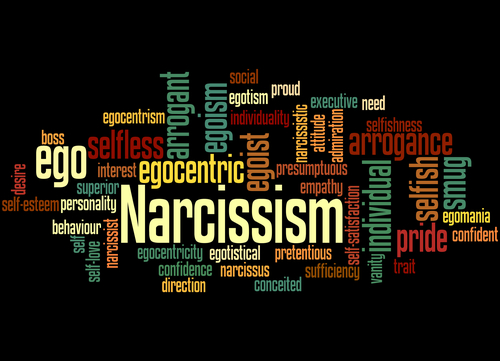
Narcissism: 5 Major Signs You’re Missing

By Stephanie Osuba

According to PsychCentral.com, there are a few trademark signs of a narcissist that are pretty hard to miss. They all think the world revolves around them and are very much preoccupied with themselves, their preferences, needs, success, and, most importantly, how they are viewed by other people. Even more important still, their aesthetics.

Narcissism usually stems from a major attachment dysfunction, whether from parents or primary caregiver, and that dysfunction is attributed to a major emotional trauma or a culmination of repeated trauma or neglect. This separation or attachment trauma stunts emotional capacity and maturity, usually from an age of adolescence. Because the emotional pain is too much to bare, the child than creates a false persona in order to cope and have the world perceive them to be better off than they actually are. On the other hand, narcissism can also be attributed to overindulgence from parents when their child does the bare minimum.

Here are 5 major signs a narcissist exhibits:

  1. False Humility: A narcissist may put him or herself down on purpose and bait you into complimenting them. They are attention-seeking and have a need for their ego to be stroked constantly.
  2. Lack of Empathy: Because they are only interested in fulfilling their own agendas, narcissists often see people as things to be used. Once you have given them what they wanted, emotionally or physically, they discard you and don’t feel guilty about it. Narcissists are selfish and their relationships are very much one-sided as they are expecting of others to constantly serve them and give nothing in return.
  3. Immature Responses: Narcissists are extremely reactive and highly sensitive people. The slightest criticism can be perceived as the highest of offenses. They blow perceived or actual threats out of proportion and often blame others for their reactivity. Narcissists will also often become passive-aggressive when dealing with a situation that angers them or engage in childish bullying.
  4. Simplification of Other’s Needs: In short, narcissists don’t care about your problems, only their own. They will find a way to minimize any situation that isn’t worth their time in order to brush it off as stupid or useless. Belittling emotions and deflecting in order to blame others is also a common tactic.
  5. Inability to Listen: Narcissists will often give generic advice if forced to speak and not ask questions during a conversation in order to keep dialogue to a minimum. They don’t care about your emotions or what you have to say unless it benefits them.

If either you or anybody you know may be suffering from narcissistic personality disorder, the licensed psychologists, psychiatrists, psychiatric nurse practitioners, and psychotherapists at Arista Counseling & Psychotherapy can help you. Contact our Paramus, NJ or Manhattan, NY offices respectively, at (201)-368-3700 or (212)-722-1920 to set up an appointment. For more information, visit us at https://www.counselingpsychotherapynjny.com/.

Source: Bogdanos, M. (2017, July 11). 5 Signs of Covert Narcissism. Retrieved from https://psychcentral.com/blog/5-signs-of-covert-narcissism/

Group Therapy

Alice Cordero

According to psychcentral.com, Group therapy is a form of psychotherapy treatment where several people meet together under the supervision of a therapist in a particular setting. Group therapy is a form of therapy that can be used in conjunction with individual therapy and medication.  The benefits of group therapy include:

  • Modeling
    • Patients are able to witness how others in the group cope with their problems in positive ways and apply it to their lives.
    • Patients learn from other group member’s mistakes.
  • Helps improve social skills
    • In group therapy, most of the time each individual has to share something about themselves and how they are doing; this helps improve the patient’s interpersonal relationships and understand that they are not alone in this particular process.
  • Increased feedback
    • Provides patients with different perspectives/ coping methods
    • Gives patients a view of how others handle their particular situation
    • Provides individuals with personal feedback through other patients perceptions of themselves
  • Support Network
    • Having multiple individuals who are going through the same gives each patients the opportunity to build a support system that they can use


Group therapy involves members expressing their feelings, problems, ideas, and reactions towards other members. Studies have shown that group therapy has been effective in addressing countless problems, including: anxiety, depression, addictive disorders, substance abuse, death, lifestyle issues, and relationship issues.

If you or someone you know is suffering from any of the conditions listed above or think you/ they could benefit from group therapy, please contact our psychotherapy offices in New York or New Jersey to talk to one of our licensed professional psychologists, psychiatrists, psychiatric nurse practitioners, or psychotherapists at Arista Counseling & Psychotherapy. Contact our Paramus, NJ or Manhattan, NY offices respectively, at (201) 368-3700 or (212) 722-1920 to set up an appointment. For more information, please visit http://www.counselingpsychotherapynjny.com/.