Burnout

Burnout

By Lauren Hernandez

                Recently, the World Health Organization (WHO) has identified “burnout” as a syndrome and has added it to the WHO’s International Classification of Diseases. This legitimization of burnout as a syndrome provides credibility to a person who is over working themselves emotionally, physically, and intellectually.

According to Dr. Suzanne Degges-White’s article on Psychology Today, the symptoms of burnout include:

“1.Feelings of energy depletion or exhaustion

2.Increased mental distance from your job or feelings of negativity or cynicism related to your job

3.Reduced professional efficacy—or, in laymen’s terms, doing a poor job on-the-job”

Dr. Degges-White explains that although most symptoms of burnout may resemble other disorders associated with depression and anxiety, burnout is focused on direct feelings towards your job.

Mindfulness practices may decrease feelings of burnout. Activities such as regular exercise, yoga, and mindfulness meditation may help to stabilize and encourage balance in your life. It is also important to try to sleep and rest as much as you can. Sleeping is a restorative process and helps to promote a healthy mind and body. Because burnout is due to chronic workplace stress, it will not go away by taking a vacation or escaping the workplace for a few days. Burnout is something to be taken seriously and if it is impairing your lifestyle, seek treatment from a psychiatric professional.

If you or someone you know is struggling with burnout, please contact our psychotherapy offices in New York or New Jersey to talk to one of our licensed professional psychologists, psychiatrists, psychiatric nurse practitioners, or psychotherapists at Arista Counseling & Psychotherapy. Contact our Paramus, NJ or Manhattan, NY offices respectively, at (201) 368-3700 or (212) 722-1920 to set up an appointment. For more information, please visit http://www.counselingpsychotherapynjny.com/ .


Sources: https://www.psychologytoday.com/us/blog/lifetime-connections/201905/burnout-is-officially-classifiedicd-11-syndrome

https://www.forbes.com/sites/bryanrobinson/2019/06/02/the-burnout-club-now-considered-a-disease-with-a-membership-price-you-dont-want-to-pay-for-success/#aa218ac37ab0

Image Source: https://www.bing.com/images/search?view=detailV2&id=D7EC303D1D17B543CE053AC8D020EBB7073F16DA&thid=OIP.4t79eaOz2pi-5BoBUxv_oQHaEK&mediaurl=https%3A%2F%2Fedge.alluremedia.com.au%2Fm%2Fl%2F2018%2F09%2Femployee-burnout.jpg&exph=900&expw=1600&q=Employee+Burnout&selectedindex=3&ajaxhist=0&vt=0&eim=1,2,6

Mindfulness: What is it, and does it really work?

Mindfulness: What is it, and does it really work?

By: Lauren Hernandez

In this busy, technology filled day and age, it is difficult for people to remove themselves from the stress of work and money, family and friends, and to disconnect from the 24/7 social frenzy that is social media. Now more than ever it is imperative that people begin to step back from their phones and computer screens to take care of their mental health and general wellbeing. One fairly new and unique way is mindfulness meditation.

What is mindfulness you may ask? Mindfulness is a process in which you have full and total awareness of the present moment. It has been proven that mindfulness reduces feelings of anxiety and depression and improves one’s mental health.

Here are some simple tips to begin practicing mindfulness on your own:

  • Bring your attention to your breathing. Feel your breath filling your lungs and the warm exhale of air leaving your body.
  • Notice changes in your posture and maintain awareness of current bodily sensations
  • Allow yourself to disconnect from all forms of technology
  • Take time to listen and to observe what is happening around you
  • If you get distracted bring your attention back to your natural breathing patterns

If you feel as though you may need help practicing mindfulness or have questions about the way you are feeling, contact a mental health professional such as a psychologist who can offer some guidance.


If you or someone you know is seeking guidance in practicing mindfulness, please contact our psychotherapy offices in New York or New Jersey to talk to one of our licensed professional psychologists, psychiatrists, psychiatric nurse practitioners, or psychotherapists at Arista Counseling & Psychotherapy. Contact our Paramus, NJ or Manhattan, NY offices respectively, at (201) 368-3700 or (212) 722-1920 to set up an appointment. For more information, please visit http://www.counselingpsychotherapynjny.com/ .


Source:

https://www.msn.com/en-gb/news/happiness/what-is-mindfulness-meditation-the-mental-health-trend-thats-changing-the-way-we-work-relax-and-sleep-%e2%80%93-explained-by-a-psychologist/ar-AABonMO

Image Source:

https://www.bing.com/images/search?view=detailV2&id=86FA9F7C4018FC36005A2032C1D57C2D863CAD85&thid=OIP.ixk5pGCmRgwvCQKIKoadJwHaFZ&mediaurl=http%3A%2F%2Fwww.wikihow.com%2Fimages%2F5%2F55%2FPractice-Mindfulness-of-Body-States-Step-7.jpg&exph=1807&expw=2479&q=mindfulness&selectedindex=60&ajaxhist=0&vt=0&eim=1,2,6


Advice for Dementia: Support for Caregivers

By Dara Kushnir

Caring for someone with dementia can be demanding and mentally exhausting, but it is also important to maintain and strengthen your relationship. Individuals with dementia experience memory problems, impaired judgment, difficulty communicating, and confused thinking more severe than normal aging. In the most severe stage, they are completely dependent on others for even their basic needs, such as hygiene and food. Therefore, finding ways to handle the challenges caregivers often face is essential so both you as a caregiver and the person who has dementia enjoy spending time together.

  1. Know your limits – As much as you want to be able to manage everything, you are only one person. Remember to focus on what’s important and don’t be too hard on yourself about things you can’t manage. Taking breaks allows you to reflect and relax.
  2. Coping with changes – It can be difficult to see the person you care for struggling with things they used to be able to do. It is important to focus on what they can do and support these things rather than what they can’t do.
  3. Address difficult emotions – you may feel isolated, angry, frustrated, or even guilty with your situation. These are very common reactions when caring for someone with dementia and should not make you feel shame. Figuring out how to deal with these feelings is vital though, because they can have a negative impact on your wellbeing as well as the wellbeing of the recipient of your care. Just being there and caring for your loved one helps them immensely.
  4. Be in the moment – Acceptance is a reoccurring, crucial part of caring for a person with dementia. Those with significant memory loss may not be able to discuss things they used to do or participate in certain activities. They can still enjoy things directly in front of them such as looking at photographs and playing simple games, and your company.
  5. Ask for help – Don’t be afraid to ask for help and support. Involving family and friends or voluntary organizations can provide you with support and reduce your stress. It may also help to talk about dementia to others to help them understand what you are doing and suggest ways others can help.

Source: https://www.alzheimers.org.uk/get-support/help-dementia-care/caring-for-person-dementia
https://www.psychologytoday.com/us/blog/managing-your-memory/201812/seek-joy-when-caring-those-dementia
https://www.psychologytoday.com/us/blog/managing-your-memory/201811/8-principles-communicating-people-dementia
(image) https://www.insights.uca.org.au/features/changing-the-way-we-talk-about-dementia

If you or someone you know needs help coping with the dementia of a family member, please contact our psychotherapy offices in New York or New Jersey to talk to one of our licensed professional psychologists, psychiatrists, psychiatric nurse practitioners, or psychotherapists at Arista Counseling & Psychotherapy. Contact our Paramus, NJ or Manhattan, NY offices respectively, at (201) 368-3700 or (212) 722-1920 to set up an appointment. For more information, please visit http://www.counselingpsychotherapynjny.com/.

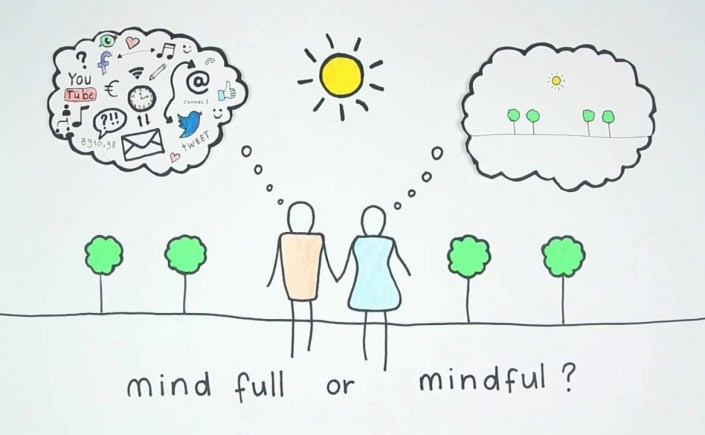
Mindfulness: Why We Should All Practice It

By: Sanjita Ekhelikar

We live in a time when everyone is either living in the past or future. Being in the moment, or living in the present, seems to be a concept foreign to so many of us. By not living in the current moment, we are simply ensuring a life filled of stresses and regrets. How can we better learn to focus on the present?

Mindfulness means being aware of our surroundings, our body, our feelings, and thoughts in the moment. It involves recognizing and accepting our thoughts or sensations for what they are in a given moment without any judgment or negative perceptions. The practice of mindfulness gives our minds the chance to tune into the present.

It is critical for all of us to learn to practice mindfulness and how to be in the present. This will help us to avoid living a stressful life. This technique helps us learn to relax, be calm, and appreciate the present. Learning to practice mindfulness does not involve any major changes we need to make to our lives – simply setting aside a few minutes to be aware of ourselves and surroundings can have long term benefits. Here are some examples of mindful exercises we can all strive to implement in our daily lives:

  1. Mindful Breathing: Stand or sit down in a comfortable position and focus your thoughts and energy on your breath. Breathe in through your nose and out of your mouth. Be aware of only your breathing, and let go of your thoughts, letting them come and go as they pass.
  2. Mindful Observing: Look at any object in your surroundings/environment and focus solely on the object for a few minutes. Take a moment to notice every possible aspect of the object, including its color, shape, movement, features, and how it changes. Your mind will be focused on this object and will enable you to relax.
  3. Mindful Listening: Close your eyes and take a moment to listen to all of the sounds in your surroundings. Try to identify as many sounds as you can possibly hear and describe them. This allows your mind to again focus on something in the current moment instead of the thoughts in your mind.

If you or someone you know is suffering from stress or anxiety and wants to learn how mindfulness can help you, please contact our psychotherapy offices in New York or New Jersey to talk to one of our licensed professional psychologists, psychiatrists, psychiatric nurse practitioners, or psychotherapists at Arista Counseling & Psychotherapy. Contact our Paramus, NJ or Manhattan, NY offices respectively, at (201) 368-3700 or (212) 722-1920 to set up an appointment. For more information, please visit http://www.counselingpsychotherapynjny.com/.