Depression: Can it be Effectively Treated in Adolescents without Medication?

By Samantha Glosser

Although antidepressant medications are typically seen as the first course of treatment for adolescents diagnosed with depression, many families do not want their kids to begin taking medication. This could be because of personal values and beliefs or because they cannot afford medication. In addition, almost half of all adolescents who begin treatment with medications eventually discontinue use due to the side effects or because they feel that it is not benefiting them enough. If you decide that medication isn’t right for your child, there are other options that are effective. One clinically proven method used to treat depression in adolescents is cognitive-behavioral therapy (CBT).

CBT is a short-term, goal-orientated therapy that focuses on changing patterns of thinking and behaviors that contribute to the patient’s issues. For example, your teenager may feel depressed because they are distorting the importance of certain events. This could start as simply getting a D on their final. However, their thoughts soon begin to spiral, and they begin to think that with this D on their transcript they will never be able to get into college or get a good job. CBT works by challenging this maladaptive thought pattern and teaches patients to replace these thoughts and consider alternative viewpoints. Recent studies have shown that CBT can be just as effective in treating depression as antidepressant medications and will lead to increased moods in adolescents. If you and your child have come to the decision that medication is not right for them, cognitive-behavioral therapy is an effective treatment plan that just might be the right fit for your needs.

If you or someone you know appears to be suffering from attention-deficit/hyperactivity disorder (ADHD), licensed psychologists, psychiatrists, psychiatric nurse practitioners, and psychotherapists at Arista Counseling & Psychotherapy can assist you. Contact our Paramus, NJ or Manhattan, NY offices respectively, at (201) 368-3700 or (212) 722-1920 to set up an appointment. For more information, please visit http://www.counselingpsychotherapynjny.com/.

Martin, B. (2018, April 04). In-Depth: Cognitive Behavioral Therapy. Retrieved from https://psychcentral.com/lib/in-depth-cognitive-behavioral-therapy/?li_source=LI&li_medium=popular17.

Wood, J. (2018, January 21). For Teens, CBT in Primary Care Can Be Cost-Effective Versus Meds. Retrieved from https://psychcentral.com/news/2018/01/20/cognitive-behavioral-therapy-cost-effective-for-teens-who-decline-antidepressants/131463.html.

Isolation vs. Loneliness: How They Both Affect Your Mental Health

By Stephanie Osuba

People are constantly throwing around the terms introvert or extrovert to describe their personalities. For example, a common thing for an introvert to do would be to cancel plans and spend the night alone, and chalk it up to being an introvert. Not that there is anything wrong with some people thriving without the company of others or needing some time to recharge alone. However, when does isolation become dangerous for your mental health? How often is it okay? And how is it related to feelings of loneliness?

The difference between isolation and loneliness is a physical one. To isolate yourself would be to physically separate yourself from the company of other people, intentionally or not. Loneliness is the internal feeling of being alone. That’s why when people are isolated, they don’t necessarily feel alone and in the same way, people who are constantly surrounded by others, like celebrities, can feel incredibly lonely. A recent study in the journal Health Psychology has found a relationship between isolation and loneliness: when one is more physically isolated, it produces more feelings of loneliness and vice versa. Both of these finding have been related to a higher risk of depression and mortality.

Tips on how to enjoy your “me time,” and also protect your mental health:

  • Set a Time Frame: How many times do you want to socialize a week? Or a month? Everyone’s answer to this is different, but try to stick to your number. It’s important to know what your social boundaries are, but also not to fall into a pattern of isolation.
  • Talk to Your Closest Friends: Your friends can often be the people who help you navigate social situations and hold you to social commitments. They are also the people that won’t overstep your social boundaries and to whom you can talk about anything with.
  • Volunteer or Join Clubs: Get out in the community and get to know the people in your neighborhood. Volunteer for a cause you believe in or join a local club that tailors to your interests. It’s a great way to meet new people and can help fill your “social quota” for the month.

If you or someone you know is experiencing mental health issues due to isolation or loneliness, please contact our psychotherapy offices in New York or New Jersey to talk to one of our licensed professional psychologists, psychiatrists, psychiatric nurse practitioners, or psychotherapists at Arista Counseling & Psychotherapy. Contact our Paramus, NJ or Manhattan, NY offices respectively, at (201) 368-3700 or (212) 722-1920 to set up an appointment. For more information, please visit http://www.counselingpsychotherapynjny.com/.

Source: Plata, M., Psy D. (2018, August 29). When Isolating Yourself Becomes Dangerous. Retrieved from https://www.psychologytoday.com/us/blog/the-gen-y-psy/201808/when-isolating-yourself-becomes-dangerous.

Stress: The Detrimental Effects of Stress on the Body

By: Charleene Polanco

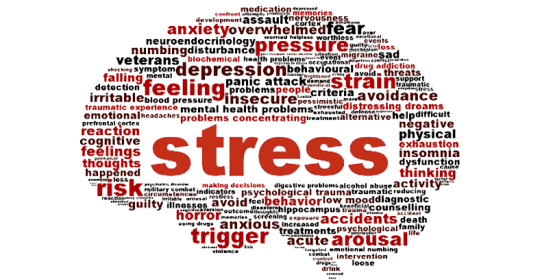
Stress is something that everyone experiences at some point in their lives. Stress is defined as a physical, mental, or emotional strain or tension, and whether it is about taking a final exam for class, going off to college for the first time, or work-related, stress can affect the way we perform. If gone unchecked, stress can lead to a variety of negative consequences on the body, which will be discussed. Stress has been linked to a number of physical and emotional disorders, like depression, anxiety, heart attacks and stroke. A constant high level of stress, can lead to immune system disturbances, which can cause an increase in your body’s susceptibility to infections. Stress can also have direct effects on the skin leading to rashes and hives.

Unlike rashes and hives, which are visible, stress can affect various systems, organs, and tissues within the body, signs that are not seen, and are, therefore, much harder to notice. Some parts of the body affected by stress are the nervous and cardiovascular systems. When stressed, the nervous system signals the body’s adrenal glands to secrete adrenalin and cortisol. Since both of these hormones cause high blood pressure, a person who is under constant stress, also has elevated blood pressure which can lead to heart problems in the future. Even if a stress episode is considered to be minor, repeated minor stress episodes can negatively impact a person’s cardiovascular system by causing inflammations in the coronary arteries. This can eventually cause heart attacks. In order to prevent the negative consequences of untreated high levels of stress, it is important to recognize the symptoms. There are multiple symptoms of stress, some of which include, frequent headaches, cold hands/feet, dry mouth, heartburn, depression, forgetfulness, and rapid or mumbled speech.

If you or someone you know is suffering from stress, please contact our psychotherapy offices in New York or New Jersey to talk to one of our licensed professional psychologists, psychiatrists, psychiatric nurse practitioners, or psychotherapists at Arista Counseling & Psychotherapy. Contact our Paramus, NJ or Manhattan, NY offices respectively, at (201) 368-3700 or (212) 722-1920 to set up an appointment. For more information, please visit http://www.counselingpsychotherapynjny.com/.

Source:

“Stress Effects.” Common Signs and Symptoms of Stress, The American Institute of Stress, 4 Jan. 2017.

Mindfulness: Why We Should All Practice It

By: Sanjita Ekhelikar

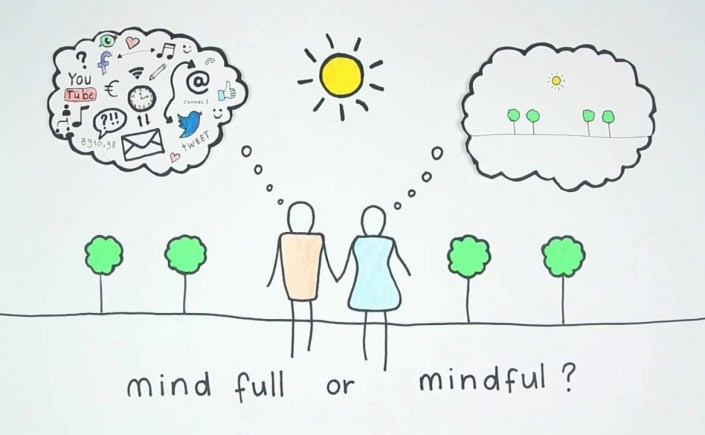
We live in a time when everyone is either living in the past or future. Being in the moment, or living in the present, seems to be a concept foreign to so many of us. By not living in the current moment, we are simply ensuring a life filled of stresses and regrets. How can we better learn to focus on the present?

Mindfulness means being aware of our surroundings, our body, our feelings, and thoughts in the moment. It involves recognizing and accepting our thoughts or sensations for what they are in a given moment without any judgment or negative perceptions. The practice of mindfulness gives our minds the chance to tune into the present.

It is critical for all of us to learn to practice mindfulness and how to be in the present. This will help us to avoid living a stressful life. This technique helps us learn to relax, be calm, and appreciate the present. Learning to practice mindfulness does not involve any major changes we need to make to our lives – simply setting aside a few minutes to be aware of ourselves and surroundings can have long term benefits. Here are some examples of mindful exercises we can all strive to implement in our daily lives:

  1. Mindful Breathing: Stand or sit down in a comfortable position and focus your thoughts and energy on your breath. Breathe in through your nose and out of your mouth. Be aware of only your breathing, and let go of your thoughts, letting them come and go as they pass.
  2. Mindful Observing: Look at any object in your surroundings/environment and focus solely on the object for a few minutes. Take a moment to notice every possible aspect of the object, including its color, shape, movement, features, and how it changes. Your mind will be focused on this object and will enable you to relax.
  3. Mindful Listening: Close your eyes and take a moment to listen to all of the sounds in your surroundings. Try to identify as many sounds as you can possibly hear and describe them. This allows your mind to again focus on something in the current moment instead of the thoughts in your mind.

If you or someone you know is suffering from stress or anxiety and wants to learn how mindfulness can help you, please contact our psychotherapy offices in New York or New Jersey to talk to one of our licensed professional psychologists, psychiatrists, psychiatric nurse practitioners, or psychotherapists at Arista Counseling & Psychotherapy. Contact our Paramus, NJ or Manhattan, NY offices respectively, at (201) 368-3700 or (212) 722-1920 to set up an appointment. For more information, please visit http://www.counselingpsychotherapynjny.com/.

Stress: The Endless Pressures on the Brain

By: Sanjita Ekhelikar

A common factor that unites all people is experiencing stress. Stress is the way that our bodies react to various situations including pressure, threats, challenges, or barriers. All individuals experience this in some form in their work, home, or school settings, some to a greater degree than others. We live in a world where we often encourage those around us to do more, work harder and longer, and essentially take on more stressors. This is a very dangerous situation, as stress can be very harmful to our brains.

There are numerous impacts that prolonged stress can have on our brains. When a stressor is present, the body has several physical reactions, including increased heart rate, sweating, raised levels of epinephrine, and constricted blood vessels. In our brains, a signaling pathway is activated involving the hippocampus and pituitary gland which results in the release of the hormone glucocorticoid, a stress hormone. This hormone is generally regulated by the body, released in fixed amounts when we wake up and is necessary for our body to operate. However, when stress is chronic and the brain pathway is activated excessively, glucocorticoids can inhibit growth, bone formation, and the immune response. They are linked to mental illnesses like depression and anxiety, destroying neurons, impairing memory, and slowing down cognitive function.

As stress is faced recurrently, the brain learns to acclimate to the body being in constant states of elevated tension and anxiety. The circuitry of neurons and connections of synapses changes to adapt to the higher levels of glucocorticoids. Additionally, people exposed to more stress noted to have a larger amygdala in the brain, which is the region responsible for processing threatening and emotional situations. A larger amygdala indicates that the individual is more susceptible to stressors and is unable to recover from them well. Finally, such individuals were also seen to have a smaller hippocampus and prefrontal cortex, both responsible for decision making and rational thinking.

It is evident that the stressful lifestyles that many of us live can have a severe adverse impact on our brains and health, most invisible to the eye but nevertheless perilous. Instead of endorsing demanding lives and tiring jobs, which can have negative consequences, we should be inspiring people to learn how to relax and take time for themselves. People should be urged to engage in activities such as meditation, pursue hobbies, spending time with loved ones, and give their brains a break from the stressors and anxiety that are continuously causing pressure.

If you or someone you know is suffering from excessive stress and/or mental illness, please contact our psychotherapy offices in New York or New Jersey to talk to one of our licensed professional psychologists, psychiatrists, psychiatric nurse practitioners, or psychotherapists at Arista Counseling & Psychotherapy. Contact our Paramus, NJ or Manhattan, NY offices respectively, at (201) 368-3700 or (212) 722-1920 to set up an appointment. For more information, please visit http://www.counselingpsychotherapynjny.com/.

Group Therapy

Alice Cordero

According to psychcentral.com, Group therapy is a form of psychotherapy treatment where several people meet together under the supervision of a therapist in a particular setting. Group therapy is a form of therapy that can be used in conjunction with individual therapy and medication.  The benefits of group therapy include:

  • Modeling
    • Patients are able to witness how others in the group cope with their problems in positive ways and apply it to their lives.
    • Patients learn from other group member’s mistakes.
  • Helps improve social skills
    • In group therapy, most of the time each individual has to share something about themselves and how they are doing; this helps improve the patient’s interpersonal relationships and understand that they are not alone in this particular process.
  • Increased feedback
    • Provides patients with different perspectives/ coping methods
    • Gives patients a view of how others handle their particular situation
    • Provides individuals with personal feedback through other patients perceptions of themselves
  • Support Network
    • Having multiple individuals who are going through the same gives each patients the opportunity to build a support system that they can use


Group therapy involves members expressing their feelings, problems, ideas, and reactions towards other members. Studies have shown that group therapy has been effective in addressing countless problems, including: anxiety, depression, addictive disorders, substance abuse, death, lifestyle issues, and relationship issues.

If you or someone you know is suffering from any of the conditions listed above or think you/ they could benefit from group therapy, please contact our psychotherapy offices in New York or New Jersey to talk to one of our licensed professional psychologists, psychiatrists, psychiatric nurse practitioners, or psychotherapists at Arista Counseling & Psychotherapy. Contact our Paramus, NJ or Manhattan, NY offices respectively, at (201) 368-3700 or (212) 722-1920 to set up an appointment. For more information, please visit http://www.counselingpsychotherapynjny.com/.

Hypochondria: Somatic Symptom Disorder

Alice Cordero

A condition once called Hypochondria now falls under the name Somatic Symptom Disorder. Somatic Symptom Disorder is characterized as extreme focus on physical symptoms. When one places extreme focus on physical symptoms – such as fatigue and pain- the individual usually experiences emotional distress and problems functioning in their daily lives.

Those diagnosed with somatic symptom or hypochondriasis disorder often consider the worst case scenarios about their symptoms, which often leads the individual to frequently seek medical care. The individual’s health concerns become such a crucial focus in their life that they in fact become disabled.

Symptoms of somatic symptom disorder may include:

  • Sensations in a specific area ( whether that be shortness of breath or pain) or more general sensations, like weakness and fatigue
  • Excessive thoughts, feelings, behaviors and worrying
  • Checking the body repeatedly for any sort of abnormalities

When one is diagnosed with somatic symptom disorder it is important to keep a positive outlook, because stress and negativity pave the way for the development of symptoms. Those with a history of substance abuse and high levels of sensitivity to pain are commonly seen with this condition.  Anxiety, depression, and OCD are conditions that are often diagnosed as accompanying somatic symptom disorder.

For somatic symptom disorder treatment normally involves cognitive behavioral therapy, mindfulness- based therapy, and medication such as antidepressants. With the proper treatment research has revealed that recovery is possible using the proper strategies to eliminate as much pain as possible.

If you or a loved one appears to be suffering from Somatic Symptom Disorder (Hypochondriasis), the licensed psychologists, psychiatrists, psychiatric nurse practitioners, and psychotherapists at Arista Counseling & Psychotherapy can assist you. Contact our Paramus, NJ or Manhattan, NY offices respectively, at (201) 368-3700 or (212) 722-1920 to set up an appointment. For more information, visit us at http://www.counselingpsychotherapynjny.com/