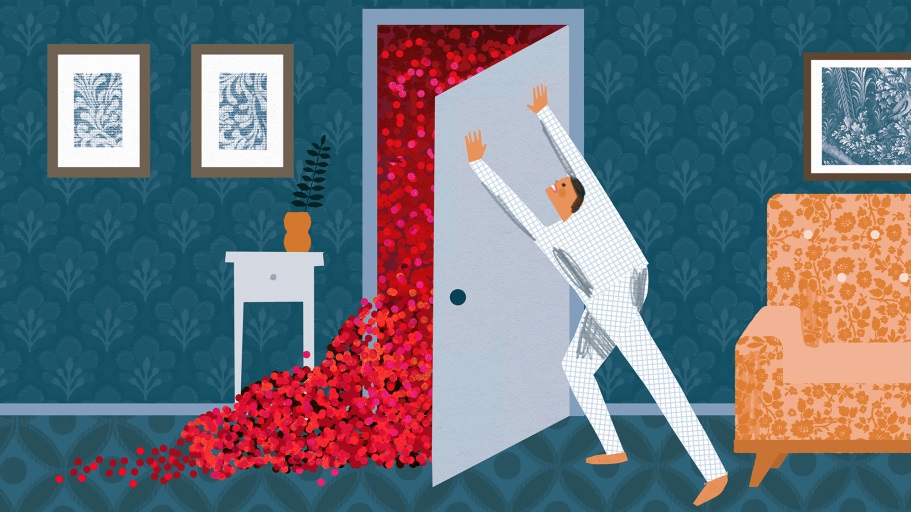
OCD & Obsessions

OCD & Obsessions by Nicole Sanchez

Obsessive compulsive disorder is comprised of a pattern of unwanted thoughts and or fears known as obsessions. These obsessions lead one to do repetitive behaviors, also called obsessions. These obsessions and compulsions interfere with much of one’s daily activities and can cause a lot of distress. Ultimately, one feels driven to carry out compulsive acts to reduce their stress. Examples of common content of obsessional thoughts include the fear of contamination, disturbing sexual thoughts or images, religious and blasphemous thoughts, or ritualized hand washing. Ordering things in a particular way, repeated cleaning of objects or repeatedly checking locks, appliances etc. Compulsions can even include the need to constantly seek approval or reassurance. Often there are peole with OCD that recognize or suspect their obsessional thoughts are not realistic though some may think they could be true.  Even if they are aware of their intrusive thoughts are not realistic, people struggling with OCS have difficulty disengaging from the obsessive thoughts or stopping the compulsive behaviors.

Cognitive behavioral therapy (CBT) is a type of psychotherapy that is effective for many of those that struggle with OCD. Exposure and response prevention (ERP) is a part of CBT therapy which involves exposing a person over time to the feared object or obsession, such as dirt. Then one learns ways not to do their compulsive rituals. ERP takes time and practice, but it has been proven to help those struggling with OCD improve their life quality once they learn to manage their symptoms. Patients with mild to moderate OCD symptoms are usually treated with either CBT or medication depending on their preference. It also depends on their cognitive abilities, level of insight and the presence or absence of associated psychiatric conditions, as well as treatment availability. Hypnosis has often also been used to successfully eliminate OCD symptoms. Hypnosis is a relatively short treatment of several sessions which helps the person rid themselves of harmful, repetitive behaviors.

If you or someone you know is having mental health difficulties and/ or experiencing symptoms of OCD, please contact our psychotherapy offices in New Jersey to talk to one of our licensed professional psychologists, psychiatrists, psychiatric nurse practitioners, or psychotherapists at Arista Counseling & Psychotherapy. Contact our offices at (201) 368-3700 or (212) 722-1920 to set up an appointment. For more information, please visit http://www.counselingpsychotherapynjny.com/

https://www.mayoclinic.org/diseases-conditions/obsessive-compulsive-disorder/symptoms-causes/syc-20354432

https://www.psychiatry.org/patients-families/obsessive-compulsive-disorder/what-is-obsessive-compulsive-disorder

https://www.webmd.com/mental-health/obsessive-compulsive-disorder

Mental Health: What can Family Members do to Promote Positive Mental Health?

Mental Health: What can Family Members do to Promote Positive Mental Health?

By: Julissa Acebo

People often look to their family to find comfort and security. Family members affect the habits we develop, who we are, and who we become. Often families do not realize how they significantly contribute to the mental wellness of a person struggling from a mental disorder.


Below are some tips family members can do which promote mental well-being:

  1. Extend a Listening Ear
    • Provide an environment where every member is free to share their worries, problems, and even good things that life offers.
    • This alone can dramatically improve a person’s well-being
  2. Celebrate Small Wins
    • Motivates and boosts a person’s confidence
    • Shows that family members are proud and makes the person feel good about their achievements
  3. Attend Psychotherapy Sessions (family and/or individual sessions)
    • Enables all members to learn effective communication
  4. Make Everyone Feel Valued
    • Avoid behaviors that will make members feel sidelined (i.e. being overly harsh with one person. Be fair in the distribution of roles within the household, etc.)
  5. Eat Dinner Together
    • Eating dinner together at least once a week is a prime opportunity to talk, listen, and enjoy time together.

If you or someone you know is struggling with Mental Health please contact our psychotherapy offices in New York or New Jersey to talk to one of our licensed professional psychologists, psychiatrists, psychiatric nurse practitioners, or psychotherapists at Arista Counseling & Psychotherapy. Contact our Paramus, NJ or Manhattan, NY offices respectively at (201) 368-3700 or (212) 722-1920 to set up an appointment. For more information, please visit https://www.counselingpsychotherapynjny.com

Sources:
https://www.mikeveny.com/blog/six-things-family-members-can-do-to-promote-mental-well-be.ing
https://www.mha-em.org/im-looking-for/mental-health-knowledge-base/wellness/86-improve-family-mental-health

Bipolar Disorder: What is Bipolar Disorder?

Bipolar Disorder: What is Bipolar Disorder?

By Lynette Rivas

Bipolar disorder is a psychiatric health disorder that causes changes to an individual’s mood, energy, and their ability to function. Bipolar disorder is accompanied by mood episodes that can last distinct periods of times, such as days or weeks. This disorder is common among families where 80% to 90% of individuals with bipolar disorder have a relative with the same diagnosis.

Mood episodes are categorized as manic, hypomanic, or depressive. A manic or hypomanic episode is when the individual is abnormally happy or in an irritable mood for an extended period of time, that is at least one week. These episodes can also include a decreased need for sleep, faster speech, uncontrollable racing thoughts, distractibility, and/or increased risky behavior. To be considered an episode, these behaviors must represent a change from the individual’s usual behavior and the symptoms must be severe enough to cause dysfunction at work or in social activities.

A hypomanic episode is less severe than a manic episode. The symptoms need to only last for at least four days and they do not cause dysfunction in daily life. A depressive episode must be at least two weeks long and include an intense feeling of sadness, loss of interest in activities, feelings of worthlessness, increased or decreased sleep, restlessness, and/or difficulty concentrating. These symptoms must also be a change from the individual’s usual behavior.

There are three types of bipolar disorders which include: bipolar I, bipolar II, and cyclothymic disorder. 

Bipolar I

Bipolar I disorder is when the individual has had at least one manic episode that may be followed by a hypomanic or a major depressive episode.

Bipolar II

Bipolar II disorder is when the individual has had at least one major depressive episode and one hypomanic episode, but has never experienced a manic episode.

Cyclothymic Disorder

Cyclothymic disorder is when the individual has had at least two years, in adolescence, where there have been many periods of hypomania and depressive symptoms.

Bipolar disorder is a serious mental health condition that is treatable with medications and psychotherapy, so it is important to seek treatment from a mental health professional if you experience any of these symptoms.

If you or someone you know is experiencing manic, hypomanic, and/or depressive episodes please contact our psychotherapy offices in New York or New Jersey to talk to one of our licensed professional psychologists, psychiatrists, psychiatric nurse practitioners, or psychotherapists at Arista Counseling & Psychotherapy. Contact our Paramus, NJ or Manhattan, NY offices respectively at (201) 368-3700 or (212) 722-1920 to set up an appointment. For more information, please visit https://www.counselingpsychotherapynjny.com

Sources:

https://www.mayoclinic.org/diseases-conditions/bipolar-disorder/symptoms-causes/syc-20355955

https://psychiatry.org/patients-families/bipolar-disorders/what-are-bipolar-disorders

https://www.istockphoto.com/illustrations/bipolar-disorder

Anxiety in Athletes

Anxiety in Athletes

By Fiona McDermut

            Anxiety disorders are quite common in recent times, and can interfere with completing simple daily tasks. One population in which anxiety disorders can be particularly concerning is student athletes. Student athletes experience a tremendous amount of pressure coming from multiple facets of life. This includes pressure to perform/compete well, pressure to attend athletic training daily, pressure to maintain a healthy/fit figure, and the pressure to keep up with academic assignments. Competition and a moderate level of stress have proven to be beneficial to performance in many circumstances, but the overwhelming stress that often results from being a student athlete can be debilitating and may impact success.

            Although athletes may be at an increased risk for anxiety disorders, they often find that their schedules are too busy to seek help. In order to perform physically to one’s fullest potential, mental health is just as important as physical health. Anxiety can cause both mental and physiological symptoms that can impact athletic performance.

These symptoms include:

  • Feeling powerless
  • Feeling weak or tired
  • Increased heart rate
  • Rapid breathing
  • Trembling

            While decreasing the level of competition and pressure for student athletes may be a lost cause, there are ways to help deal with the feelings of anxiety that accompany this. First and foremost, it is crucial to allow yourself to take a day off when the pressure becomes too overwhelming. Do something that makes you happy, or simply give your body and mind a day of relaxation. This is especially important if you are injured, or not feeling well mentally or physically.

            If feelings of anxiety persist, it can be helpful to seek therapy. Therapy sessions provide an outlet to share emotions, as well as a professional who can help to manage anxiety. Some of the main treatments for anxiety include Cognitive Behavioral Therapy, Psychotherapy, and medication (mainly SSRIs and antidepressants). A mental health professional will work with your personal needs to establish the most effective treatment plan.

If you or someone you know is struggling with anxiety, please contact our psychotherapy offices in New York or New Jersey to talk to one of our licensed professional psychologists, psychiatrists, psychiatric nurse practitioners, or psychotherapists at Arista Counseling & Psychotherapy. Contact our Paramus, NJ or Manhattan, NY offices respectively, at (201) 368-3700 or (212) 722-1920 to set up an appointment. For more information, please visit http://www.counselingpsychotherapynjny.com/

Sources:

https://www.ncaa.org/sports/2014/10/8/mind-body-and-sport-anxiety-disorders.aspx

Image Source:

https://www.cnbc.com/2021/09/13/heres-impact-of-ncaa-letting-college-athletes-profit-off-their-marketability.html

Psychotherapy: Benefits of Rational Emotive Behavior Therapy (REBT)

By: Jasmyn Cuate

Rational emotive behavior therapy (REBT) is a type of cognitive behavioral therapy (CBT) that focuses on helping people recognize and change negative thinking patterns into positive, healthier ones. This method is an action-oriented approach helping to overcome any psychological problems or mental distress. The goal of REBT is to help people respond rationally to situations that would cause stress, depression, or other negative feelings. How does it work?

The ABC model is one concept of REBT. The model suggests that we may blame external situations for our unhappiness and it is our interpretation of these situations that truly causes the psychological distress. ABC stands for:

  • A: Activating event, when something happens in your environment
  • B: Belief, describes your thoughts about the situation
  • C: Consequence, which is your emotional response to your belief

With REBT, your therapist will help you learn how to apply the ABC model in your daily life. Your therapist may help you identify the activating event before encouraging you to figure out which belief led you to your negative feelings. Once you’ve identify the underlying issue, your therapist will work with you to change those beliefs and your emotional response towards the issue. Before changing your belief, a process called disputation takes place where your therapist will challenge your irrational beliefs using direct methods such as asking questions which causes you to re-think or have you imagine another point of view that you may have not considered before. REBT can help with Anxiety, Social anxiety disorder, distress, Depression, Disruptive behavior in children, Obsessive-compulsive disorder (OCD) and Psychotic symptoms.

Benefits of REBT:

  • Reduce feelings of anger, depression, anxiety, and distress
  • Improves health and quality of life
  • Better social skills and school performance

REBT helps you understand that you are worthy of self-acceptance no matter what even if you or others are struggling; there is no need for shame or guilt because everyone makes mistakes and it’s normal to feel some discomfort. REBT gives insight that others are also worthy of acceptance even if their behavior involves something you don’t like. Overall, REBT helps you have a healthy emotional response on learning from a situation and moving on. This allows you to understand that negative things will sometimes happen in life therefore there is no rational reason to always expect it to be positive when faced with a situation.

If you or someone you know is seeking for cognitive behavioral therapy or rational emotive behavior therapy, please contact our psychotherapy offices in New York or New Jersey to talk to one of our licensed professional psychologists, psychiatrists, psychiatric nurse practitioners, or psychotherapists at Arista Counseling & Psychotherapy. Contact our Paramus, NJ or Manhattan, NY offices respectively, at (201) 368-3700 or (212) 722-1920 to set up an appointment. For more information, please visit http://www.counselingpsychotherapynjny.com/

Source: https://www.verywellmind.com/rational-emotive-behavior-therapy-2796000

OCD: Life During a Pandemic

By Charlotte Arehart

It seems logical to assume that those struggling with OCD are having a harder time during the COVID-19 pandemic. However, this is not necessarily true. While some people who suffer from OCD are having more troubles, not every person who has OCD is seeing a difference in their symptoms. For example, someone who’s OCD focuses on other infectious agents that are not COVID-19 will probably not see a lot of change in their symptoms. A study done in November of 2020 found that OCD symptoms increased in frequency significantly more in “washers,” or people who are afraid of contamination, than in non-washers with OCD.

Many individuals with OCD are expressing how the pandemic has made other people realize what it is like to obsess over contamination. For some people with OCD, this has been the way they have felt for their entire lives. For many of us, obsessively cleaning and sanitizing things has only become part of our habits because of the pandemic.

One benefit that doctors have been seeing during the pandemic, specifically for OCD treatment, is the fact that online therapy sessions allow the patient to have their session in any setting. Many people who are being treated for OCD use exposure therapy with their therapists to help reduce their symptoms. This involves patients exposing themselves to stimuli that may induce their symptoms in an attempt to reduce their anxiety about these symptoms. With sessions being held on telehealth, patients can move about their environment and even do their therapy in unusual locations that allow them to expose themselves, with professional direction, to their stressors. This would not always be possible in an office setting.

The bottom line is that one cannot assume that an individual with OCD is experiencing worse symptoms due to the pandemic. While this is true some people who are suffering from OCD, not every individual’s stressors include the virus. It is important that someone who is experiencing OCD seeks treatment as soon as possible, before symptoms worsen. OCD can be debilitating if it is extreme. Therapy is an excellent form of treatment for OCD.

If you or someone you know is struggling with OCD, please contact our psychotherapy offices in New York or New Jersey to talk to one of our licensed professional psychologists, psychiatrists, psychiatric nurse practitioners, or psychotherapists at Arista Counseling & Psychotherapy. Contact our Paramus, NJ or Manhattan, NY offices respectively, at (201) 368-3700 or (212) 722-1920 to set up an appointment. For more information, please visit http://www.counselingpsychotherapynjny.com/

Sources:

https://www.columbiapsychiatry.org/news/covid-q-obsessive-compulsive-disorder-ocd

https://www.ncbi.nlm.nih.gov/pmc/articles/PMC7644184/

Image Source: https://www.npr.org/sections/health-shots/2020/06/13/872466613/obsession-or-just-good-hygiene-keeping-the-coronavirus-and-ocd-at-bay

The Importance of Mental Health

By Charlotte Arehart

When thinking about their health, most people only consider the physical state of their bodies. However, it is important that we take our mental health into consideration as well. Not only are these two aspects equally important, but they are actually very closely related. People who have poor mental health are at greater risk of having poor physical health. For example, people who experience depression are at a 50% increased risk of dying from cancer and a 67% increase for heart disease. Stress and anxiety also have a huge impact on the body, affecting the respiratory system, the cardiovascular system, as well as the gastrointestinal system.

Since mental health is so important, why do people usually disregard it? Many people are afraid of the stigma that surrounds mental health. Since you cannot always “see” mental health problems, some people view them as “not real.” Many people fear that others will look at them differently if they seek mental help. They do not want to be seen as emotionally weak. People are especially worried that seeking mental help with affect their careers, however this is not true. In fact, taking proactive steps to help mental health will reduce possible repercussions for the future. It is better to address the issue sooner rather than later, since unchecked mental health symptoms usually worsen over time. If you are experiencing mental health troubles, by no means are you alone. Many mental health issues are actually more prevalent than one would expect. By realizing that there are tons people who are experiencing something similar to them, people may feel better about reaching out for mental health.

If you or someone you know needs mental health support, please contact our psychotherapy offices in New York or New Jersey to talk to one of our licensed professional psychologists, psychiatrists, psychiatric nurse practitioners, or psychotherapists at Arista Counseling & Psychotherapy. Contact our Paramus, NJ or Manhattan, NY offices respectively, at (201) 368-3700 or (212) 722-1920 to set up an appointment. For more information, please visit http://www.counselingpsychotherapynjny.com/

Sources: https://www.mentalhealth.org.uk/a-to-z/p/physical-health-and-mental-health

https://www.pdhealth.mil/news/blog/reducing-self-stigma-mental-health-important-physical-health

Image Source: https://www.hrcsb.org/may-mental-health-awareness-month/

What Parents Can Do to Help Their Special Needs Children during Virtual Learning

By Eleanor Kim

With the abrupt transition to online learning last March, teachers, students, and parents alike were left to quickly adjust and find new ways of making virtual learning feel “normal”. While this transition may have come more naturally to some, there are still many families who are struggling to ensure that their children are getting a quality education in their homes. One demographic of online learners who are finding it exceptionally difficult are those who have special needs and learning disabilities. It is hard to spend hours focusing on a Zoom session, especially when special needs learners no longer have direct access to the specialized teachers and aids that help them learn in a normal school setting. Unfortunately, this additional stress during an already unprecedented time has taken a toll on special needs parents and it is important that parents are self-compassionate to themselves as they journey through this uncharted online learning experience. That being said, there are still many new strategies that parents can try to implement to assist their child’s distanced learning.

  • Ask teachers to offer “asynchronous” work in conjunction with any Zoom activities to allow your child more hands-on learning opportunities or request more one-on-one learning through break out rooms or personal Zoom meetings
  • If you are unable to remain with your child during their school hours, reach out to your child’s teachers and aids for an update on how they are doing and how you can help after school hours
  • Offer your child “fidget toys” during Zoom calls to help them remain focused on class material
  • If your child has a hard time staying seated during Zoom meetings, offer Bluetooth earbuds or headphones to allow your child the ability to move around while still remaining attentive and participatory during class
  • Incorporate time within your child’s schedule to stretch and relieve any additional stress or energy by going outside or having a dance break!
  • Make sure to schedule check-in meetings with your child’s school team (teachers, aids, counselor, etc.) to help your child express any frustrations or emotions they are experiencing during this difficult time.

Let your child know that it is okay to be having a hard time right now and that you are there to help them through it. Also make sure that you, the parent, are receiving the support you need while helping your special needs child with online learning in addition to any other struggles you may be facing during these unusual and overwhelming times. We here at Arista Counseling have many therapists and support options available for you.

If you or someone you know is looking for support, please contact our psychotherapy offices in New York or New Jersey to talk to one of our licensed professional psychologists, psychiatrists, psychiatric nurse practitioners, or psychotherapists at Arista Counseling & Psychotherapy. Contact our Paramus, NJ or Manhattan, NY offices respectively, at (201) 368-3700 or (212) 722-1920 to set up an appointment. For more information, please visit http://www.counselingpsychotherapynjny.com/ .

Sources:

https://greatergood.berkeley.edu/article/item/how_parents_can_support_children_with_special_needs_during_distance_learning

Image Source:

https://dynaimage.cdn.cnn.com/cnn/c_fill,g_auto,w_1200,h_675,ar_16:9/https%3A%2F%2Fcdn.cnn.com%2Fcnnnext%2Fdam%2Fassets%2F200810224242-20200810-online-learning-main.jpg

World Kindness Day: How to stay positive in dark times

World Kindness Day: How to stay positive in dark times

By: Zoe Alekel

As Friday November 13, 2020 is World Kindness Day, it only felt right to talk about the impact that positivity and kindness have on our mental health. Keeping a positive mindset and attitude is seemingly easy when life is smooth-sailing. However, when we hit the inevitable bumps in the road that life comes with, it is a lot easier said than done. Maintaining optimism in difficult times can often seem impossible—at the least, it seems like a lot of work. If you are struggling to stay positive during a difficult time, especially during a pandemic like COVID-19, you can try to focus on the following:

  • Focus on what you can control: Remember there are things in life we can’t control, but the things we can control like how we decide to seize the day and how we treat others.
  • Limit your media intake: Social media and news media can put us in a rut when we are already feeling negative about the world. Make sure you don’t spend too much time on media and give yourself a break from negative news stories.
  • Invest in uplifting others: Acts of kindness can not only uplift others and change someone’s day, but it can also help keep you in a more optimistic mindset.
  • Set personal schedules and goals: By setting small daily goals for yourself, such as making your bed and brushing your teeth in the morning. You can start the day off accomplishing something and setting a productive mindset for the rest of the day.

Keeping these pointers in mind is important when trying to stay optimistic during a difficult time. Some additional ideas of ways to cope with a difficult time are:

  • Find a therapist or mental health professional: This can become an outlet to help you process the difficult time you are having and to get professional recommendations for keeping a positive mindset.
  • Find a hobby or a group to join with people that have similar interests as yours.
  • Invest in self-care: Make sure you are taking care of you! Do things that bring you joy, even if it is as simple as taking a warm shower, eating a meal you enjoy, listening to music, or calling a loved one or friend.
  • Take a few minutes every day to write down the positive events that happened during that day, or things for which you are grateful.

If you or someone you know is struggling with keeping positive or with mental illness, please contact our psychotherapy offices in New York or New Jersey to talk to one of our licensed professional psychologists, psychiatrists, psychiatric nurse practitioners, or psychotherapists at Arista Counseling & Psychotherapy. Contact our Paramus, NJ or Manhattan, NY offices respectively, at (201) 368-3700 or (212) 722-1920 to set up an appointment. For more information, please visit http://www.counselingpsychotherapynjny.com/


Source: https://www.psychologytoday.com/us/blog/stronger-fear/202003/how-stay-positive-during-the-pandemic?collection=1151836

Image Source: https://i.pinimg.com/736x/bb/e7/2c/bbe72cda72203d29a2f24459962c6f7a.jpg

Borderline Personality Disorder: Misdiagnosed

Borderline Personality Disorder: Misdiagnosed

By Zoe Alekel

When struggling with your mental health, the last thing you want to hear from a doctor or therapist is that they don’t think anything is wrong. It can leave you confused, lost, hopeless, and alone. Borderline Personality Disorder (BPD) often goes undiagnosed or misdiagnosed because of the disorder’s symptoms and stigma. According to the Mayo Clinic symptoms of borderline personality disorder include:

  • Intense fear of abandonment—including real or imagined separation/ rejection
  • Feelings of depression, anxiety, and hopelessness
  • Unstable relationships—idealizing someone one moment, then suddenly believing they don’t care or that they are cruel
  • Distorted view of self and self-image—including dissociation (feeling as if you don’t exist at all or if the moment in time isn’t real)
  • Impulsive and risky behavior—including rebellion, drug abuse, reckless driving, sudden decision making, unsafe sex and promiscuity, and sabotaging success or personal relationships
  • Suicidal thoughts, threats, or behavior or self-injury, often in response to fear of separation or rejection
  • Mood swings lasting from a few hours to a few days— including intense happiness, irritability, shame or anxiety
  • Inappropriate, intense anger—losing temper easily, acting out, intense irritability

The symptoms for BPD often look like other mental health conditions—contributing to misdiagnosis or lack of diagnosis. Sometimes BPD has similar patterns and symptoms as bipolar disorder, which can also include severe mood swings. One study shows that 40% of people, who only met the criteria for BPD, were still misdiagnosed with Bipolar Type 2; which is likely due to the overlapping and similar symptoms of each disorder.

Another reason why BPD can go undiagnosed or misdiagnosed is because of the myth that teens can’t have BPD. Many of the symptoms of BPD can be seen as “typical teenage behavior” as this is a crucial time in an adolescent’s life when they are developing personality and identity. Diagnosing younger adolescents with BPD is often avoided because of the stigma attached to the diagnosis. Some clinicians may fear that the client’s symptoms may only worsen with a BPD diagnosis. This can be very dangerous and harmful to the client who is not accurately being diagnosed, especially because it limits the resources they can receive for help.

BPD does not only appear in a specific age group or gender, and sometime can mirror other diagnoses or the experience of a typical adolescent. Health professionals and advocates must continue to educate and understand the reality of BPD, and know when to properly diagnose so their client can receive the help they need.

If you or someone you know is struggling with borderline personality disorder, please contact our psychotherapy offices in New York or New Jersey to talk to one of our licensed professional psychologists, psychiatrists, psychiatric nurse practitioners, or psychotherapists at Arista Counseling & Psychotherapy. Contact our Paramus, NJ or Manhattan, NY offices respectively, at (201) 368-3700 or (212) 722-1920 to set up an appointment. For more information, please visit http://www.counselingpsychotherapynjny.com/

Sources: https://nami.org/Blogs/NAMI-Blog/October-2017/Why-Borderline-Personality-Disorder-is-Misdiagnose

https://www.mayoclinic.org/diseases-conditions/borderline-personality-disorder/symptoms-causes/syc-20370237

Image source: https://wakeup-world.com/wp-content/uploads/2016/01/Genie-in-a-Bottle-The-Spiritual-Gift-of-Borderline-Personality-Disorder-1.jpg