Confrontation Vs. Feedback

Confrontation Vs. Feedback

By Toniann Seals

At some point in your life you will face a confrontational situation. A few scenarios include telling a friend about your feelings, letting a coworker know that their work is incorrect and explaining to a peer that a decision they made was not okay. How you approach these situations matter.

Confrontation (Negative):

  • Problem oriented
  • Unwelcoming
  • Assertive
  • Aggressive
  • Belittling

Feedback (Positive):

  • Solution oriented
  • Inviting
  • Understanding
  • Guiding
  • Uplifting

The way you handle a situation will affect both you and the one receiving the information. A great way to face a problem is by always having a solution readily available to suggest. It shows that you care and want to make the situation better.

If you or someone you know is having a difficult time dealing with confrontation speak with one of our licensed professional psychologists, psychiatrists, psychiatric nurse practitioners, and psychotherapists. Contact us at our Paramus, NJ or Manhattan, NY offices at (201) 368-3700 or (212) 722-1920 respectively to set up an appointment. For more information, visit http://www.counselingpsychotherapynjny.com/.

Image:

https://canada.businesschief.com/marketing/796/The-Dreaded-Social-Media-Confrontation

Assertiveness and Anxiety: How Expressing Yourself Can Lead to a Happier Self

By: Sanjita Ekhelikar

“Communication is key” is a phrase we are all familiar with, yet many struggle with actually acting on it. The most effective form of communication is through assertiveness, which involves expressing one’s views in a straightforward manner, and in standing up for one’s needs while still being considerate of others. This differs from aggressiveness in that it does not involve being outwardly emotional or insulting to others, and differs from passivity in that the individual clearly states their feelings and desires. Being assertive involves open communication, which can be difficult to engage in, especially for people struggling with anxiety. However, through practicing and learning assertiveness, people with anxiety can actually feel less worry and more confident in themselves.

Anxiety describes the uncomfortable feelings of turmoil and dread that one might have in anticipation that results in physical sensations such as rapid heartbeat, sweating, and rumination. For many who struggle with anxiety, the thought of being assertive with others makes them anxious. They often worry that being assertive will come off as being mean, creating conflict, and being inconsiderate. Therefore, many choose passive communication, and never voice their views or feelings. This worsens their state of worry, as they are not properly understood by those around them and can easily be taken advantage of. They are often misunderstood which increases their worry. Others often take advantage of them because of their meek manner and visible anxiety.

Contrary to what those with anxiety believe, assertiveness can actually help them feel better. Often times, those with anxiety create situations in their mind about everything that will go wrong if they voice themselves to another person. However, such a form of open communication can create a better understanding between two people. It allows the person with anxiety to be properly understood, to dispel the fearful thoughts in their head, and become more confident in themselves and their views.

How can people with anxiety begin working towards being more assertive? By stating their views using “I,” individuals can avoid putting blame on others by expressing their own opinions. In addition, reminding themselves that their fears are not rational and that it is their anxiety talking to them can help them become increasingly comfortable with being assertive. Finally, practice makes perfect – keep trying and speak up!

If you or someone you know is suffering from anxiety, please contact our psychotherapy offices in New York or New Jersey to talk to one of our licensed professional psychologists, psychiatrists, psychiatric nurse practitioners, or psychotherapists at Arista Counseling & Psychotherapy. Contact our Paramus, NJ or Manhattan, NY offices respectively, at (201) 368-3700 or (212) 722-1920 to set up an appointment. For more information, please visit http://www.counselingpsychotherapynjny.com/.

Neurofeedback

Leah Flanzman

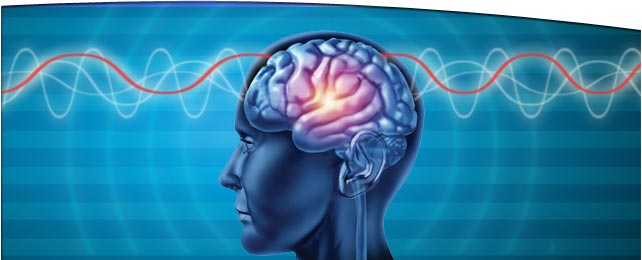
There has recently been a great deal of discussion on a psychological treatment called neurofeedback. Neurofeedback assists people in consciously controlling their brain waves by attaching subjects to an EEG machine that extracts various brain-activity components and feeds them back to the patient.  The most common protocols used in neurofeedback training are alpha, beta, theta, and alpha/theta protocols.  The way that you select the placement of electrodes on a patients head depends on their specific brain functions and specific symptoms.  The goal is to allow the subject to assess their progress and adjust their brain waves accordingly to achieve optimal performance.  However, the effectiveness and practicality of the treatment is under debate.

According to the Basic and Clinical Neuroscience journal, many studies conducted on neurofeedback therapy reveal methodological limitations that question its effectiveness. For example, with the alpha treatment protocols, it remains unknown exactly how many treatment sessions are necessary before patients can consciously possess the ability to control their alpha waves.  Once an optimal performance is achieved, it’s difficult to study the long-term effects of these treatments, in other words how long the effects last without feedback.

The pros of neurofeedback are that it’s a safe and non-invasive procedure that has been proven effective in treating certain disorders such as ADHD, anxiety, depression, epilepsy, insomnia, drug addictions, and learning disabilities. Despite this, more scientific evidence of its effectiveness must be conducted before we can consider it a valid treatment.  It’s also important to keep in mind that it’s a very expensive procedure that is not covered by many insurance companies, and is very time consuming to complete.

If you or someone you know thinks they have ADHD, anxiety, depression, or drug addictions, or learning disabilities, the psychologists, psychiatrists, and psychotherapists at Arista Counseling and Psychiatric Services can help.  Contact the Bergen County, NJ or Manhattan offices at (201) 368-3700 or (212) 722-1920.  Visit http://www.counselingpsychotherapynjny.com for more information.

Narcissistic Personality Disorder

Isabelle Kreydin

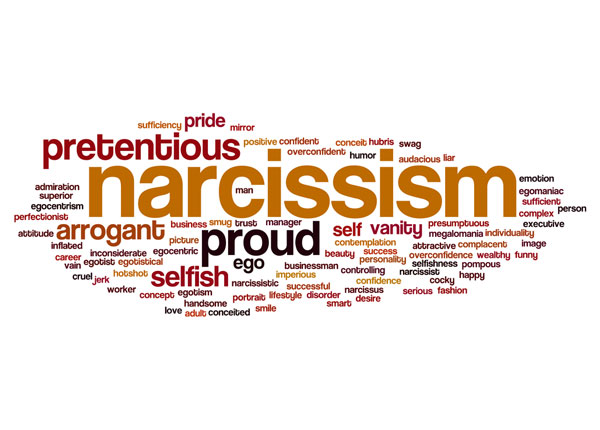
You’ve heard about bipolar personality obsessive-compulsive disorder, paranoia disorder, and probably a handful of other ones. One of the less uncommon and less discussed one is narcissistic personality disorder. This is a mental condition in which a person has an inflated sense of their own importance, a deep need for excessive attention and admiration, troubled relationships, and a lack of empathy for others.

What lies behind the disorder? Behind the mask of extreme confidence, arrogance and/or pompousness there is a fragile self-esteem that’s vulnerable to the slightest criticism, insult, or contempt. They may find their relationships unfulfilling, and others may not enjoy being around them when they feel the persons need for superiority which can lead to actions and words of disrespect.

Why does this disorder get diagnosed? Most believe that the causes are due to genetics as well as social factors, and the person’s early development such as family, personal temperament, school system, and learned coping skills to deal with stress.

What are some more possible symptoms? It’s their way or the highway, they won’t ever be wrong in situations, and if they admit to be wrong, they will put another down just in order to convince themselves that they are in the right, they can have ease lying; they can charm, falsely accuse, mooch, betray, mirror, compete, destroy, and manipulate easily. They are known also to commonly abuse drugs, alcohol or nicotine.

What problems does this disorder cause? It causes unstable and trouble in relationships, work, school or financial affairs. People with narcissistic personality disorder may be generally unhappy, and may take this out on another human and gain the personality trait that is sadistic.

How can we help the issue? After acceptance, treatment of this personality disorder typically involves long-term therapy, possible medication, and continuing to relate better with others in relationships, working towards empathy, understanding the cause of ones emotions and what drives one to compete and distrust, practicing tolerance, and trying to release ones desire for unattainable goals and ideal conditions.If you or a person you know is struggling with a narcissistic personality disorder, or any personality disorder, it may be beneficial to have them contact a mental health professional and receive therapy for their illnesses. The psychologists, psychiatrists, and therapists at Arista Counseling and Psychiatric Services can help.  Contact the Bergen County, NJ or Manhattan offices at (201) 368-3700 or (212) 722-1920.  Visit http://www.acenterfortherapy.com for more information.

To find out more information, visit: https://www.mayoclinic.org/diseases-conditions/narcissistic-personality-disorder/symptoms-causes/syc-20366662