Domestic Violence and Sports

Domestic Violence and Sports
By: Camillia Ghavami


When we watch sports games many of us feel passionate about whether our teams win or lose. Many find excitement in watching their favorite teams battle it out for the win, others may be terrified.


Tubi’s famous Super Bowl commercial in 2023, that made it seem like someone was changing the channel, is an example of the fear many women live in while watching sports games. Some may have laughed the prank off with their families, while those in more aggressive households were met with terrifying outbursts of violence. One woman described her experience with her boyfriend violently screaming at her to find the remote and then punching a hole in a wall. Another woman who worked at a sports bar described the whole bar screaming profanities at her.

The reaction to this commercial is bringing to light a relationship few know about between sports and domestic violence. More and more studies are showing that there is a relationship between domestic violence and the wins and losses of professional football teams. Empirical analyses show that in the US, there are more domestic violence arrests on Sundays when there are NFL games than on Sundays when there are no games played. This relationship is not just found in the US. In England, domestic violence reports rose by 38% when the national soccer team lost. Even when the team won, domestic violence still rose by 26%. The biggest cause of this rise in domestic violence might have to do with whether the team wins or loses. One study found upset losses (a team loses when it was predicted to win by 4 or more points) led to a 10% increase in domestic violence by men while the rise in violence after other types of losses (like when the games were expected to be close) were small. This rise in violence is even larger when the games are more important.

The problem of domestic abuse is an epidemic that runs rampant in this country. 1 in 3 women and 1 in 4 men have experienced any form of physical violence done by an intimate partner. Additionally, 1 in 7 women and 1 in 25 men have been injured by an intimate partner. While of course all these instances were not done in reaction to a sports game, imagine if during the next big sports game, famous athletes came together and denounced domestic violence. Maybe this would lead to a new turn in our culture, where the possibility of someone changing the channel during the Super Bowl is not met with violence.


If you or someone you know is suffering from domestic violence, please contact our psychotherapy offices in New York or New Jersey to talk to one of our licensed professional psychologists, psychiatrists, psychiatric nurse practitioners, or psychotherapists at Arista Counseling & Psychotherapy. Contact our Paramus, NJ or Manhattan, NY offices respectively, at (201) 368-3700 or (212) 722-1920 to set up an appointment. For more information, please visit http://www.counselingpsychotherapynjny.com/

References:
https://www.ncbi.nlm.nih.gov/pmc/articles/PMC3712874/
https://www.psychologytoday.com/us/blog/making-sense-chaos/202009/nfl-losses-are-associated-increased-domestic-violence
https://trinitonian.com/2023/03/02/how-sports-culture-is-connected-to-domestic-violence-and-abuse/#:~:text=According%20to%20a%20study%20conducted,when%20no%20games%20are%20played
https://ncadv.org/STATISTICS
https://www.themarysue.com/that-viral-tubi-superbowl-commercial-had-some-real-life-consequences-that-cant-be-ignored/


PTSD and Memory Loss

PTSD and Memory Loss

By: Diane Ulloa

PTSD causes feelings of intense, disturbing thoughts and feelings related to their experience that last long after the traumatic event has ended. People with PTSD may relive their traumatic event(s) through flashbacks or nightmares and they may feel sadness, fear, or anger. They may also feel detached or estranged from other people (American Psychiatric Association). PTSD also has the ability to cause memory loss whether it be short-term or long-term, both can be affected. Four steps to fix PTSD related memory loss would be:

  1. Get treatment, therapy and medication are two of the most common treatment options for PTSD. Medication and therapy such as Cognitive Behavioral Therapy [CBT] or prolonged exposure therapy have been shown to be effective in managing PTSD.
  2.  Stay Active. By staying physically active and mentally active through brain games or learning new skills, one can help keep their brain sharp and active.
  3. Prioritize Sleep, good sleep appears to be essential for memory consolidation and processing.
  4. Use Memory Aids, which are tools that are designed to help accommodate people who experience memory difficulties which could include calendars, notepads, and alarm clocks. (healthline.com)

The types of behavioral therapy that can aid in this memory loss and other symptoms caused by PTSD are:

  • Cognitive Therapy: A type of talk therapy that helps people with PTSD recognize the cognitive patterns that are keeping them stuck, this is often paired with exposure therapy.
  • Exposure Therapy: Helps people with PTSD safely face both situations and memories that they find frightening so they can learn to cope with them effectively. This kind of therapy can be particularly helpful for flashbacks and nightmares.
  • Eye Movement Desensitization and Reprocessing (EMDR): Combines exposure therapy with a series of guided eye movements that help you process traumatic memories and change how people with PTSD react to them. (Mayoclinic.org)

Primary treatment is psychotherapy, but medication could also be prescribed as needed. Medication may include antidepressants, anti-anxiety medications, and prazosin which has the ability to reduce or suppress nightmares in some people with PTSD.

If you or someone you know is struggling with their mental health and/or PTSD (memory loss) please contact our psychotherapy offices in New York or New Jersey to talk to one of our licensed professional psychologists, psychiatrists, psychiatric nurse practitioners, or psychotherapists at Arista Counseling & Psychotherapy. Contact our Paramus, NJ or Manhattan, NY offices respectively, at (201) 368-3700 or (212) 722-1920 to set up an appointment. For more information, please visit http://www.counselingpsychotherapynjny.com/

Sources:

https://www.psychiatry.org/patients-families/ptsd/what-is-ptsd#:~:text=People%20with%20PTSD%20have%20intense,or%20estranged%20from%20other%20people.

https://www.healthline.com/health/mental-health/memory-loss-and-ptsd#causation

https://www.mayoclinic.org/diseases-conditions/post-traumatic-stress-disorder/diagnosis-treatment/drc-20355973#:~:text=For%20PTSD%2C%20cognitive%20therapy%20often,helpful%20for%20flashbacks%20and%20nightmares.

Post-Grad Depression

Depression/Post-College

By: Ingrid Guevara

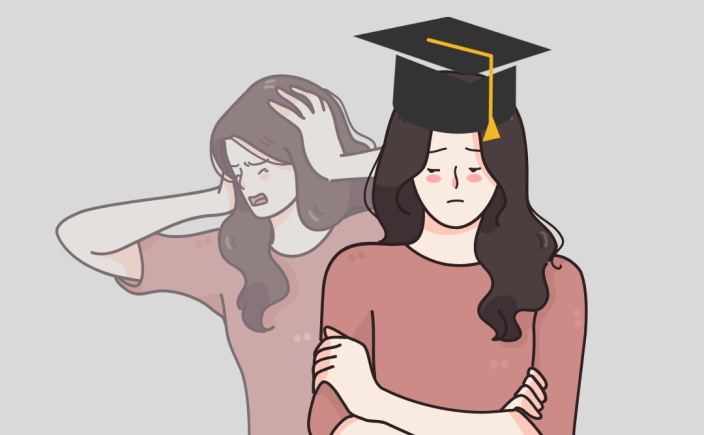
Everyone knows and acknowledges that depression during college occurs. Statistics show that twenty-seven percent of college students had been diagnosed with depression and twenty-three percent said that depression impacted their academic performance negatively.  When it comes to post-grad students research shows that around twenty percent of student graduating experience depression. Post-grad depression is seen as situational depression. Situational depression is depression caused by a stressful or traumatic event. Post-Grad depression is caused by; pressure of finding a job, moving back in with parents, feeling a failure to launch, changes in friendships (friends scattering, not seeing them), student debt, comparison with friends and being overwhelmed by next steps and changes. Signs of post-grad depression are; lack of motivation, feeling worthless or guilty, loneliness, overwhelm (especially related to the next steps), feeling sad or down, isolation or wanting to isolate oneself, not enjoying activities that were previously enjoyed, poor sleep, appetite change, lower than usual frustration tolerance, feeling sluggish or super jittery and intense fear or expectation things will not go well in the future. Post-grad depression like any depression can really hinder your life so seeking help is suggested in order to properly cope with it. It is also suggested; avoiding comparing yourself with others, practice self-kindness and self-love, reach out to friends,  get some exercise/movement, don’t be too hard on yourself, recognize that transitions are difficult, find a support group/networking group, take care of yourself and confide in trusted family and friends. Depression is common when life is stressful and one feels pressure therefore, it is okay because always remember you are not alone.

If you or someone you know is struggling with their mental health, please contact our psychotherapy offices in New York or New Jersey to talk to one of our licensed professional psychologists, psychiatrists, psychiatric nurse practitioners, or psychotherapists at Arista Counseling & Psychotherapy. Contact our Paramus, NJ or Manhattan, NY offices respectively, at (201) 368-3700 or (212) 722-1920 to set up an appointment. For more information, please visit http://www.counselingpsychotherapynjny.com/

References

https://www.ncbi.nlm.nih.gov/pmc/articles/PMC9091131/

Intergenerational Trauma: What is it?

Intergenerational Trauma: What is it?

By Erika Ortiz

            Intergenerational trauma is a term used to describe the difficulties or challenges a family has experienced for generations. Intergenerational trauma can inflict negative feelings and experiences through either an individual or the family as a whole. It usually starts with one family member who has had a traumatic experience. The family members then goes on to either repeat the action that traumatized them or project their feelings onto family members, continuing the cycle of trauma. Historical trauma can catalyze intergenerational trauma. For example, a great-grandmother survived the Holocaust; however, she now behaves in a very reserved and cold manner, so she struggles to express emotions such as love and compassion. Since she raised her children in such a manner, they may grow and have children and display that same type of avoidant relationship. Another example can be that a mother was sexually abused when she was younger, her daughter was also sexually abused, and her granddaughter suffered from that experience. The individual who suffers the trauma can pass down and then project the feelings that were felt at the time of the incident. Since they most likely did not receive the proper care and treatment to manage the mental health issues that they were experiencing, they relayed that same traumatic feeling to the next generation of their family. Hence, it is critical to seek professional help. Here are some ways to cope/deal with inter-generational trauma:

  • Break the cycle- interrupt and prevent the repetition of trauma
  • Hear each other out- although this can be difficult, listening is key to fixing
  • Get the professionals involved- the best way to cope with any mental health issue or fragmented relationship is to get a qualified professional’s help


Source:

https://www.choosingtherapy.com/intergenerational-trauma/

If you or someone you know is experiencing intergenerational trauma or other traumas, please contact our psychotherapy offices in New York or New Jersey to talk to one of our licensed professional psychologists, psychiatrists, psychiatric nurse practitioners, or psychotherapists at Arista Counseling & Psychotherapy. Contact our Paramus, NJ or Manhattan, NY offices respectively at (201) 368-3700 or (212) 722-1920 to set up an appointment. For more information, please visit https://www.counselingpsychotherapynjny.com

Borderline Personality Disorder: Helping Yourself and Your Family

By Argie Dabrowski

Borderline personality disorder (BPD) is a Cluster B personality disorder. Like other disorders in this category, including histrionic, narcissistic, and antisocial personality disorder, BPD is characterized by unpredictable, dramatic, and overly-emotional behavior and thoughts. Specific to borderline patients is a persistent fear of abandonment by others, which leads to unstable relationships, suicidal gestures, self-damaging behavior, anger and emptiness, and even dissociative symptoms. For those with this condition, their symptoms not only interfere with their daily functioning but can also strain their closest personal relationships. Having a family member that suffers from a personality disorder can be a difficult and distressing experience. When it comes to coping with borderline personality disorder in family members, steps can be taken to help both them and yourself.

First of all, it is important to remember that it is not your job to treat and constantly provide reassurance for a borderline family member. You can still show that you love and care about them, but not to the point that it affects your own mental health. It may be difficult, but you should not put your own life on hold for someone else or be their punching bag, verbally or physically. At that point, it is imperative to step away from the situation and allow the person to seek help on their own. Professional help is available to them in the form of medication and therapy.

Although there are no BPD-specific drugs, medications can be used if the patient is experiencing symptoms of other disorders with their BPD. For example, some people with borderline personality disorder experience depressive episodes so they may be prescribed antidepressants, such as escitalopram or fluoxetine. Mood-stabilizers can also be used and if a patient also has psychotic features, they may be treated with antipsychotics.

Besides medication, there are also multiple types of therapy that can be used to treat borderline personality disorder. Dialectical behavior therapy is a treatment that is available and is used to treat BPD specifically. Through this therapy, patients work on their ability to cope with their intense emotional responses and learn the skills needed to deal with crises and other distress in a healthy manner. It is easy to be overwhelmed when faced with borderline personality disorder in family members, but help is out there.

If you or someone you know is struggling with borderline personality disorder, please contact our psychotherapy offices in New York or New Jersey to talk to one of our licensed professional psychologists, psychiatrists, psychiatric nurse practitioners, or psychotherapists at Arista Counseling & Psychotherapy. Contact our Paramus, NJ or Manhattan, NY offices respectively, at (201) 368-3700 or (212) 722-1920 to set up an appointment. For more information, please visit http://www.counselingpsychotherapynjny.com/

Sources:
mayoclinic.org/diseases-conditions/personality-disorders/symptoms-causes/syc-20354463
psychologytoday.com/us/blog/matter-personality/201312/borderline-provocations-part-ii-how-not-respond
mayoclinic.org/diseases-conditions/borderline-personality-disorder/diagnosis-treatment/drc-20370242
psychcentral.com/lib/an-overview-of-dialectical-behavior-therapy/

Image Source:
pathwaysreallife.com/borderline-personality-disorder-treatment/

Anger in Children

By: Maryellen Van Atter

Children experience anger. This is an expected part of growing up and learning how to navigate life’s situations. However, when anger becomes overwhelming and distressing for your child and for your family it may be indicative of a greater issue. If your child has trouble controlling their tantrums or frequently experiences anger, you may consider addressing the emotion and helping your child control their anger.

Though every child is different, there are some warning signs that your child’s anger is out of control. These include the child displaying behavior that is dangerous to themselves or others, the child’s teachers reporting that the behavior is out of control, the behavior alienating the child from their peers at school and preventing social interaction (birthday party attendance, etc.), and the behavior disrupting home life. Additionally, parents should observe if their child feels badly about him or herself as a result of their inability to control their anger. This illustrates that the child is experiencing distress because of the lack of control over their emotions, and is a sign that their anger is beyond what is normal or expected for a child their age.

There are many different causes for this behavior. These causes may include anxiety, learning disabilities, trauma, sensory processing issues, or general distress. Triggers are also an important thing for parents to recognize if they are worried about their child’s anger. Identifying triggers or situations which result in anger can help discern the cause of the anger and ways in which it can be effectively managed. Psychotherapy and cognitive behavioral therapy are two treatment methods which professionals use to help a child manage their anger and teach the child coping mechanisms and emotional regulation.


If you or someone you know is struggling with a child’s anger expression, Arista Counseling and Psychotherapy can help. Please contact us in Paramus, NJ at 201-368-3700 or in Manhattan, NY at 212-996-3939 to arrange an appointment. For more information about our services, please visit http://www.counselingpsychotherapynjny.com/


Sources:

https://www.yalemedicine.org/conditions/anger-issues-in-children-and-teens/

https://www.psychologytoday.com/us/blog/growing-friendships/201806/children-s-anger-management-strategies-work

https://www.greatschools.org/gk/articles/anger-overload/

https://childmind.org/article/is-my-childs-anger-normal/

Abuse: Men in Abusive Relationships

By: Toni Wright

A relationship is supposed to be a union between two people where both parties feel safe and comfortable with one another. They are supposed to feel loved, accepted, and appreciated by one another. However, sometimes that is not the case. Oftentimes people talk about how the woman in the relationship is being abused by the man. However, we should not overlook the fact that men are often being abused in relationships. Though it may not be widely spoken about, the man can be and sometimes is the victim in the relationship.

Abuse is not always domestic; it can be verbal and/or emotional.

Your partner may show signs of:

Possessiveness:

  • They are constantly keeping track of your whereabouts i.e. wanting to know what you’re doing, where you are, and who you’re with most if not all of the time.
  • They try to control where you spend your time and who you spend it with and if you don’t listen to them, they get angry.

Jealousy:

  • They isolate you from your loved ones, family and friends
  • They accuse you of being disloyal to them or flirting with others.

Threats:

  • They threaten to leave you or threaten to hurt themselves if you leave.
  • They threaten to use violence against you or your loved ones.


Physical/Sexual Violence:

  • They hurt you or your loved ones.
  • They push, shove or punch you, or make you have sex with them or do something that you don’t want to do.

Humiliation:

  • They belittle you in front of family, friends, or even on social media by attacking your looks, intelligence, abilities, or mental health.
  • They blame you for the issues in your relationship and for their violent blowups.
  • They say hurtful things to you, such as, “No one else is ever going to love you.”

Men, it may be hard to leave an abusive relationship for numerous reasons such as you may feel as though they actually do love you despite their behavior, you feel ashamed, you want to protect your partner, have a lack of resources, the list goes on. However, help from your family, friends, and a therapist can aid you through this trying time. Being a battered partner is nothing to be embarrassed about. Please don’t ever be afraid to reach out to any/all of your resources for assistance.

If you or a male you know is suffering from any type of abuse in a relationship, please contact our psychotherapy offices in New York or New Jersey to talk to one of our licensed professional psychologists, psychiatrists, psychiatric nurse practitioners, or psychotherapists at Arista Counseling & Psychotherapy. Contact our Paramus, NJ or Manhattan, NY offices respectively, at (201) 368-3700 or (212) 722-1920 to set up an appointment. For more information, please visit https://www.counselingpsychotherapynjny.com/

Sources:

Help for Men Who are Being Abused

https://psychcentral.com/blog/21-warning-signs-of-an-emotionally-abusive-relationship/

https://au.reachout.com/articles/signs-of-an-abusive-relationship

Image Source:

Battered Men – The other side of Domestic Violence


Passive Aggressiveness: Origins and How to Respond

Passive Aggressiveness: Origins and How to Respond

By Crystal Tsui

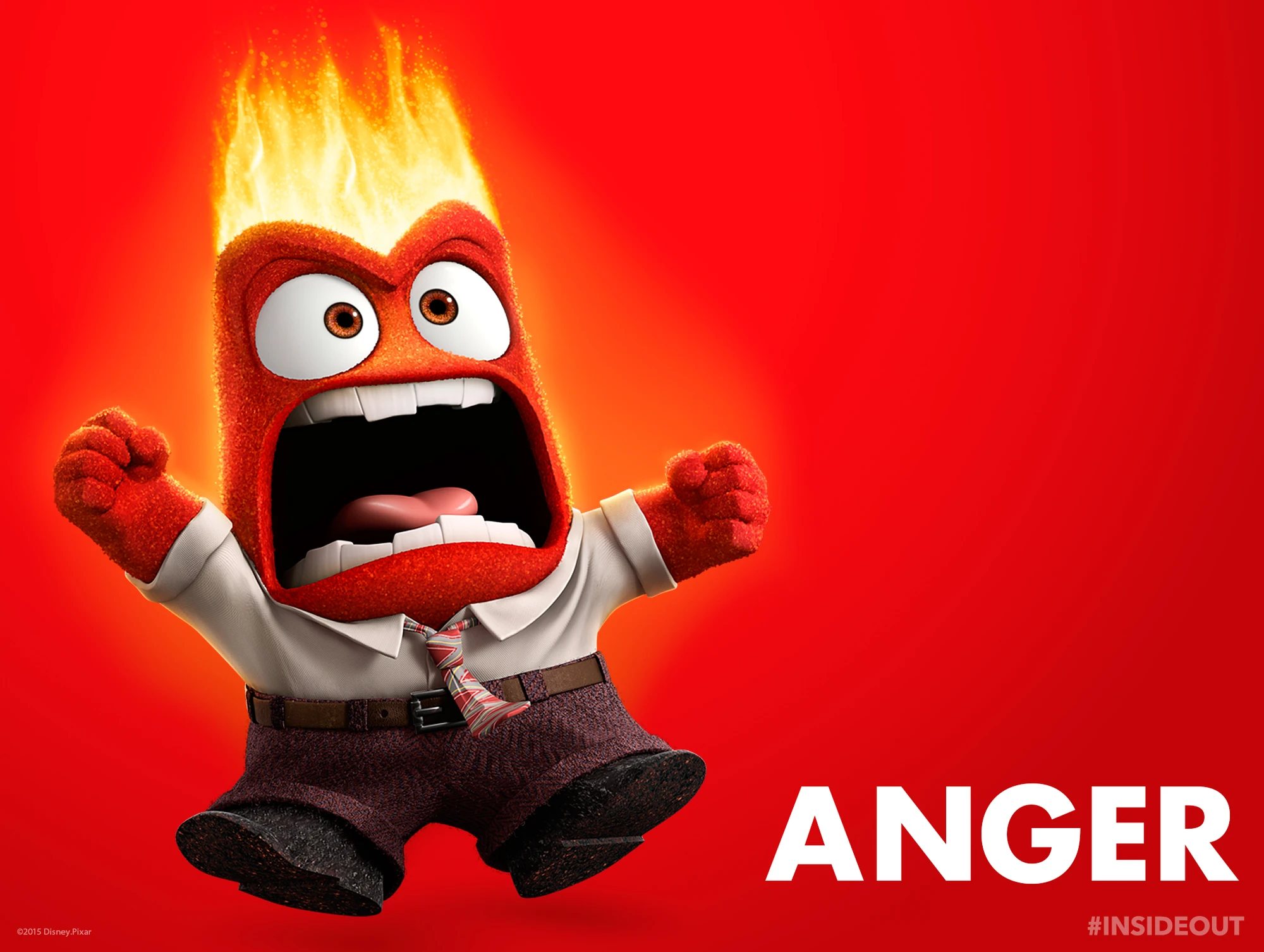
At one point or another, we have all seen or engaged in passive aggressive behaviors, whether it’s giving the silent treatment, making subtle insults, or sending one of those “as per my last email” emails. We do this because we are suppressing our anger or frustration from someone or something. Fear and anger are controlled by a region in the brain called the amygdala. Passive aggressiveness stems from that basic emotion of anger.

Anger is neither good nor bad. It is a basic, spontaneous, neurophysiological part of human emotion. As children, we were often scolded or punished for expressing anger. For example, throwing a temper tantrum is considered unacceptable. So at a young age, we started to perceive anger as taboo. As a result, we learned to suppress our feelings and engage in an indirect expression of hostility through subtle acts.

Children are most likely to act in a passive aggressive manner. Nonetheless, children are the most susceptible to change. Teaching our children that anger is just like every other emotion and directing their anger towards a positive, productive activity will help the child grow into an adult knowing how to manage their emotions properly. Some positive activities may include writing, exercising, drawing, meditating, and listening to music. These activities provide a form of distraction that can alleviate one’s mood, by stimulating another part of the brain that is not associated with the amygdala.

However, adults act this way as well because it’s easier to be passive than to be assertive and emotionally open. When children are taught to suppress their anger and they mature into an adult, it’s harder for them to stand up for themselves and to confront their source of anger.

It is best to avoid raising your voice, lecturing, or knee-jerk consequences that can exacerbate the situation. If an individual is trying to express their anger through communication, it is best to listen instead of reprimanding them for being angry.

When someone is passive-aggressive towards you, fight the urge to mirror their behavior. Instead confront the behavior because when passive-aggressive behavior is confronted directly and assertively, the hidden anger is weakened. Assertive communication and being emotionally open, no matter how hard it is, is the most effective way to acknowledge and accept anger. This builds a foundation for lifelong emotional intelligence and strong, secure relationships.

If you or someone you know has difficulty managing their anger, please contact our psychotherapy offices in New York or New Jersey to talk to one of our licensed professional psychologists, psychiatrists, psychiatric nurse practitioners, or psychotherapists at Arista Counseling & Psychotherapy. Contact our Paramus, NJ or Manhattan, NY offices respectively, at (201) 368-3700 or (212) 722-1920 to set up an appointment. For more information, please visit http://www.counselingpsychotherapynjny.com/ .

Sources:

https://www.psychologytoday.com/us/blog/passive-aggressive-diaries/201712/the-angry-smile-responding-passive-aggressive-behavior

https://www.psychologytoday.com/us/blog/passive-aggressive-diaries/201709/how-respond-effectively-young-persons-anger

https://www.verywellmind.com/what-is-passive-aggressive-behavior-2795481

https://vignette.wikia.nocookie.net/pixar/images/7/7a/Io_Anger_standard2.jpg/revision/latest/scale-to-width-down/2000?cb=20150425021210