Neurofeedback

Leah Flanzman

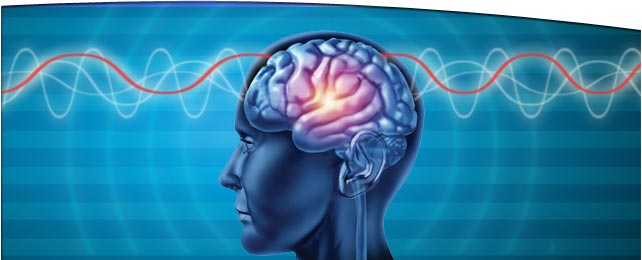
There has recently been a great deal of discussion on a psychological treatment called neurofeedback. Neurofeedback assists people in consciously controlling their brain waves by attaching subjects to an EEG machine that extracts various brain-activity components and feeds them back to the patient.  The most common protocols used in neurofeedback training are alpha, beta, theta, and alpha/theta protocols.  The way that you select the placement of electrodes on a patients head depends on their specific brain functions and specific symptoms.  The goal is to allow the subject to assess their progress and adjust their brain waves accordingly to achieve optimal performance.  However, the effectiveness and practicality of the treatment is under debate.

According to the Basic and Clinical Neuroscience journal, many studies conducted on neurofeedback therapy reveal methodological limitations that question its effectiveness. For example, with the alpha treatment protocols, it remains unknown exactly how many treatment sessions are necessary before patients can consciously possess the ability to control their alpha waves.  Once an optimal performance is achieved, it’s difficult to study the long-term effects of these treatments, in other words how long the effects last without feedback.

The pros of neurofeedback are that it’s a safe and non-invasive procedure that has been proven effective in treating certain disorders such as ADHD, anxiety, depression, epilepsy, insomnia, drug addictions, and learning disabilities. Despite this, more scientific evidence of its effectiveness must be conducted before we can consider it a valid treatment.  It’s also important to keep in mind that it’s a very expensive procedure that is not covered by many insurance companies, and is very time consuming to complete.

If you or someone you know thinks they have ADHD, anxiety, depression, or drug addictions, or learning disabilities, the psychologists, psychiatrists, and psychotherapists at Arista Counseling and Psychiatric Services can help.  Contact the Bergen County, NJ or Manhattan offices at (201) 368-3700 or (212) 722-1920.  Visit http://www.counselingpsychotherapynjny.com for more information.

FOMO: The Fear of Missing Out

Leah Flanzman

Every college student or young adult has spent a Saturday night curled up on the couch in sweatpants with a pint of ice cream; scrolling through Instagram when they see their friends having the time of their lives out on the town.  At that moment, they are hit with a pang of regret on deciding to spend the night in.  Their mind immediately starts forming a million possibilities of jokes being formed and memories being made without them, and they instantly assume they are missing the greatest night ever.  This common phenomenon is called FOMO, or the fear of missing out.

In modern times, Millenials are connected to each other’s lives through their social media presence on platforms such as Instagram, Snapchat, Twitter, and Facebook.  It has become seemingly impossible to remain in the dark about your friend’s whereabouts, which is why FOMO is such an emerging issue.  If you remained in ignorant bliss about what everybody in your phone was up to, there would be no fear of missing out, as the seed of wonder would never be planted.  FOMO triggers the thought that you’re the only person in the world not living their best life in that moment, and can be extremely damaging to your mental health.

FOMO can also be present in a situation where you have to choose between two options, as you cannot be two different places at once.  Let’s say you were invited to Sally’s party and Billy’s party on the same day.  You choose to go to Sally’s party but while you’re there, you see a friend who went to Billy’s party having the best time on their Snapchat story.  This causes a buildup of anxiety from the thought that you could be having more fun if you had made a different decision.  FOMO causes people to develop the attitude that something bigger and better is always around the corner, which is an unproductive, unhealthy mindset.

If you or someone you know is struggling with FOMO that is leading to anxiety, the psychologists, psychiatrists, and psychotherapists at Arista Counseling and Psychiatric Services can help.  Contact the Bergen County, NJ or Manhattan offices at (201) 368-3700 or (212) 722-1920.  Visit http://www.acenterfortherapy.com for more information.

The History of Hypnotherapy

By Jennifer Guzman

Have you ever “zoned out” while driving and found yourself driving from one location to another without realizing how you got there? This is like how hypnosis feels, and is actually something we call “highway hypnosis”, in which you are in a natural hypnotic state.

Hypnosis is a technique that is increasingly being sought-after and used in today’s clinical practices, but little do people know that hypnosis is a technique that has been used for centuries, dating to as far back as the 4th and 5th centuries B.C. in Ancient Egypt! However, much credit is given to 18th century German physician, Frank Mesmer, who coined the term, “mesmerism” in reference to what we now call “hypnosis” and is the first dated medical practitioner to practice hypnosis for therapy. Mesmer utilized suggestion for his patients in order to cure their illness. One of the first patients with whom Mesmer used hypnosis had consisted of placing a magnet on her head in order to revitalize blood flow in her brain, which was believed to be the cause of her tooth and headaches. The magnet, coupled with Mesmer’s theatrical hand gestures had allowed the patient to believe that the fluids in her brain were stabilizing, when truly, the magnet and hand gestures had done nothing. In reality, the suggestions he was giving her were easing her aches. This discovery opened up a wide array of questions about hypnosis and brought about a new treatment to the field of psychology.

Following Mesmer was James Braid, who is regarded as the “Father of Hypnosis”. Braid delved into why hypnosis was effective during therapy session. He also conducted intensive research to identify key methods that could put someone into a trance state through analysis of the physiological components of hypnosis. Braid was the figure who coined the term, “Hypnosis”.
Much credit to modern day hypnotherapy must be attributed to 20th century psychologist, Milton H. Erickson, who created a multitude of hypnotherapy methods that are currently being used in today’s clinical practices. Erickson places great emphasis on language in order to tap into the unconscious mind. He also emphasizes the importance of allowing the patient to feel positive feelings with his aid. The methods help the patient heal through their own willpower.

Even Sigmund Freud, founder of psychoanalysis, utilized hypnosis in his therapy, although he did not inherently acknowledge that what he sometimes performed on his patients was hypnotherapy. However, Freud discarded the use of hypnosis in his practice because his techniques did not work on his patients. In order to be properly hypnotized, the hypnotist should be a licensed mental health professional, such as the psychiatrists, psychologists, and social workers at Arista Counseling & Psychotherapy.

Contrary to the popular belief that when someone is under hypnosis, they are not in control of their own bodies—this is a myth. When under hypnosis, you are free to intervene and break out of your trance state if you feel uncomfortable or become distracted; however, doing so will decrease the effectiveness of the session. In order to go through successful hypnosis, one must be willing to be hypnotized, open to suggestion, and trust the hypnotherapist.

Hypnotherapy is typically used to successfully treat issues such as Depression, Anxiety, Attention Deficit Hyperactivity Disorder (ADHD), Obsessive Compulsive Disorder (OCD), weight gain or weight loss, Insomnia, smoking cessation, and more.

If you or someone you know is interested in hypnosis or psychotherapy, please contact our offices in New York or New Jersey to make an appointment with one of the licensed professional psychologists, psychiatrists, psychiatric nurse practitioners, or psychotherapists at Arista Counseling & Psychotherapy. For hypnotherapy, please ask to make an appointment with one of our hypnotherapists at Arista Counseling & Psychotherapy. Contact our Paramus, NJ or Manhattan, NY offices respectively, at (201) 368-3700 or (212) 722-1920 to set up an appointment. For more information on our services, please visit http://www.counselingpsychotherapynjny.com/ If you or someone you know is in a crisis, please call 1-800-273-8255.

References:

Retrieved March 23, 2018, from http://www.historyofhypnosis.org/
Hammer, G.A. Orne, M.T. Hypnosis. Retrieved March 32, 2018, from https://www.britannica.com/science/hypnosis