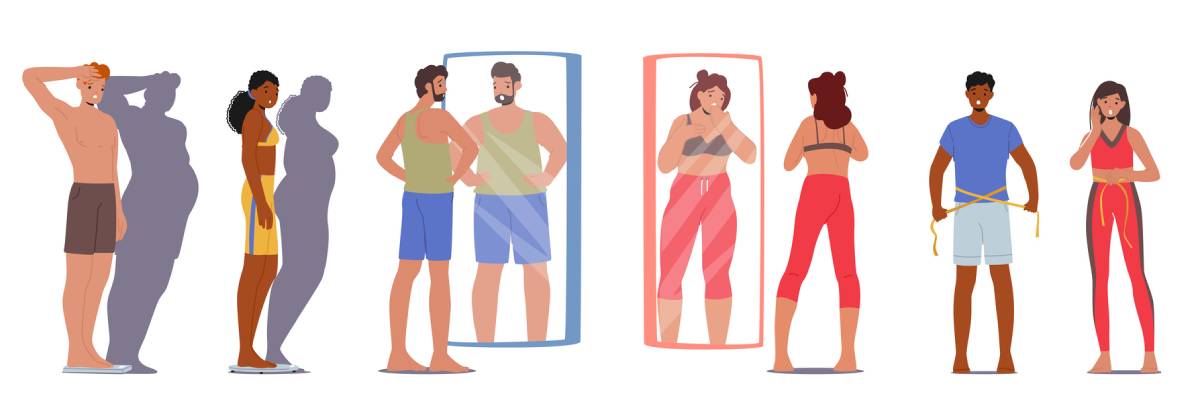
Body Dysmorphia; how has social media has affected it?  

Body Dysmorphia; how has social media has affected it?

By Manuela Gomez

Have you ever stared at yourself in the mirror and realized that your mind isn’t showing you the reality of what you look like? Body Dysmorphia is a mental state in which your mind is busy looking/making up imperfections of your body that no one else can notice.  Although, Body Dysmorphia has been around for a while social media has only made it worse in the recent years. Social media, the addiction in which you start to compare yourself with people you watch and follow. Then you put this expectation of yourself that you should look a certain way. We tend to forget that even social media isn’t portraying the whole truth. According to the article Frontiers, 29% of people with higher social media usage have Body Dysmorphia compared to, 19% of people that have a lower usage. Here are some ways that you can help improve your BD:

  • Replace your negative thoughts with the positive (Ex: I look ugly today- I look and feel amazing)
  • Start changing the habit of analyzing yourself in the mirror every day, stand in front of it and give yourself positive affirmations
  • If you want to change something about your body then do it, but in healthy way
  • Surround yourself with healthy people and habits
  • Less social media time

Body Dysmorphia is not uncommon. It is treatable with the right professional and the effort you put into it. Don’t let your reality get lost because you see what others don’t see.

Source(s): https://www.mayoclinic.org/diseases-conditions/body-dysmorphic-disorder/diagnosis-treatment/drc-20353944

https://www.frontiersin.org/journals/public-health/articles/10.3389/fpubh.2024.1324092/full

If you or someone you know is struggling with mental health, please contact our psychotherapy offices in New York or New Jersey to talk to one of our licensed professional psychologists, psychiatrists, psychiatric nurse practitioners, or psychotherapists at Arista Counseling and Psychotherapy. Contact our Paramus, NJ, or Manhattan, NY offices respectively, at (201) – 368-3700 or (212)-722-1920 to set up an appointment. For more information, please visit https://www.counselingpsychotherapynjny.com/

Self-Esteem: The Impact of Cyberbullying in Teenagers

Self-Esteem: The Impact of Cyberbullying in Teenagers

by: Mara Gonzalez

Now a days, it is common to see teenagers and young adults owning a cellular device. Teenagers are most likely to be on social media accounts in order to stay updated on the latest social news, and celebrity’s lives, watch funny videos, research informational findings, and chat with friends or strangers. Social media is commonly use to keep in contact with an old friend or partner, stay in touch with a friend living far away, and much more. But unfortunately, there is a down side of social media.

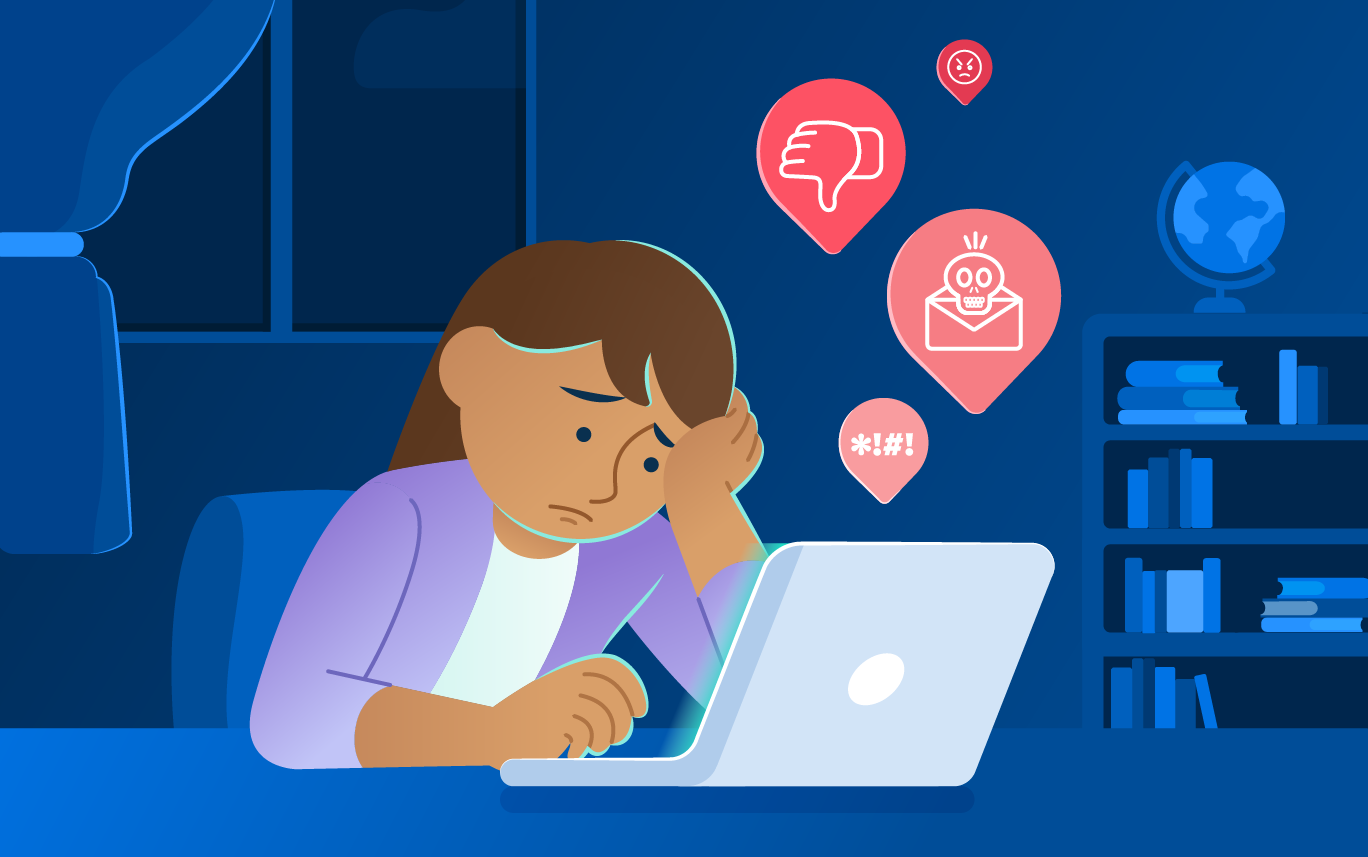
            Cyberbullying has been around since the beginning of messaging applications. Cyberbullying is a form of harassment done to an online user, appearing in different forms like aggressive behavior, blackmail, hateful messages/comments, or breach of privacy. This has been a huge problem in the United States for teenagers and young adult’s self-esteem as some comments can be directed at physical appearances and looks. This can lead to feeling self-conscious about one’s body and style of clothing. Due to hateful messages and comments, teenagers can struggle seeing themselves fit into society’s standards and they start to feel “not good enough”. There have been many cases when teenagers start developing mental disorders like depression, anxiety, suicidal intentions and psychological distress due to cyberbullying.

            Anybody can be a victim of cyberbullying. Cyberbullying can cause irreversible damage to younger online user’s self-esteem and confidence. When using social media, cyberbullies can choose to present their own identity or choose a fake identity, which is more frequently seen online. This means that around 44% of online users do not disclose their identity making it easier to target and cyberbully other online users without sharing who they really are. “Hiding a behind a screen” is an infamous phrase used to describe users that choose to cyberbully others online.

            In order to prevent cyberbullying from continuing to happen, there have been worldwide public campaigns, movements, online activism, victim support, school programs and social media hashtags. Spreading awareness is very important, in the online world, because it helps prevent cyberbullying from continuing causing harm others. Choose to support one another. “Courage is fire and bullying is smoke”- Benjamin Disraeli.

If you or someone you know is struggling with mental health, please contact our psychotherapy offices in New York or New Jersey to talk to one of our licensed professional psychologists, psychiatrists, psychiatric nurse practitioners, or psychotherapists at Arista Counseling and Psychotherapy. Contact our Paramus, NJ, or Manhattan, NY offices respectively, at (201)-368-3700 or (212)-722-1920 to set up an appointment. For more information, please visit https://www.counselingpsychotherapynjny.com/
Anxiety: First Day of College as a Freshman

Anxiety: First Day of College as a Freshman

By Colleen Susanto

Feeling anxious about college is a universal experience. Especially, when someone has just graduated from high school and is starting college. It’s a huge transition for everybody. College is the time where you find yourself and experience the adult life. So, what makes us so anxious about college and how can we overcome it?

Being in a new community can be really intimidating. Trying to fit in and making new friends. Not being able to be with your old friends from high school can make you feel separated. However, one way to avoid that feeling is to socialize. Many colleges offer programs and events and that way, you can meet new people and make friends!

The stress of keeping up with academic expectations can also be very overwhelming. College classes tend to be more work than high school and can feel overwhelming when you are not organized. What you could do is to write down the assignments, deadlines, and exams. Then, you’d feel more organized and plan ahead.

Last but not least, being away from home. First time in college is usually the first time a student is away from their family. They have to carry huge responsibilities, such as financial, independence, time management, and much more. These can be very overwhelming for first timers. You could always contact your family through texts and calls, and stay connected with them. Try talking out your problems with your family or people you know to take some of the burden off you.

If you or someone you know is struggling with mental health, please contact our psychotherapy offices in New York or New Jersey to talk to one of our licensed professional psychologists, psychiatrists, psychiatric nurse practitioners, or psychotherapists at Arista Counseling and Psychotherapy. Contact our Paramus, NJ, or Manhattan, NY offices respectively, at (201)-368-3700 or (212)-722-1920 to set up an appointment. For more information, please visit https://www.counselingpsychotherapynjny.com/

https://truetherapyaz.com/managing-stress-overwhelm-for-first-time-college-students/

Gun Violence: The Impact on Students Mental Health

Gun Violence: The Impact on Students Mental Health

By: Francesca Warner

As schools reopen their doors for the 2025-2026 school year, the looming fear of gun violence lingers in the back of students, teachers, and administrator’s minds. The fear is very rational, as only recently young students lost their lives in an environment where safety is prioritized. This tragedy took place on Wednesday, August 27th, at a Minnesota Catholic School during back-to-school mass. Due to the increase in the amount of gun violence threats to schools in the past several years, a major cause for concern lies in the question; what is this doing to students’ mental health and wellness?

Authors at kff.org state that “Exposure to gun violence is linked to post-traumatic stress disorder and anxiety in addition to other mental health concerns” (Panchal & Zitter, 2025, para. 16). The idea that school is a safe haven for learning, friendship, and personal growth is ripped away and replaced with trauma and the burden that comes with it. The severity of violence that automatic weapons can produce is too much for young minds to process, and that lack of processing can impact a healthy mind fiercely.

To support these students who are either dealing with gun violence trauma or fear of gun violence overall, loved ones/family members can:

  • Be a supportive and judgement free listener
  • Encourage those effected to reach out to professionals
  • Respect boundaries and personal healing processes

SOURCE: The Impact of Gun Violence on Children and Adolescents

If you or someone you know is struggling with mental health, please contact our psychotherapy offices in New York or New Jersey to talk to one of our licensed professional psychologists, psychiatrists, psychiatric nurse practitioners, or psychotherapists at Arista Counseling and Psychotherapy. Contact our Paramus, NJ, or Manhattan, NY offices respectively, at (201) – 368-3700 or (212)-722-1920 to set up an appointment. For more information, please visit https://aristapsychiatrypsychotherapy.com/

Stress; Are you dealing with generational trauma?

Stress; Are you dealing with generational trauma?

By Manuela Gomez

Generational or (integrational) trauma is a phrase that you might be hearing recently being thrown around but, do you truly know what it means. It is trauma that can be passed down through generations by epigenetics, when genes change how they work but the DNA sequence stays the same. It can be baggage brought from one generation onto the next. Coming from a family with this type of trauma can cause many negative outcomes which can include Stress. When dealing with your close loved ones, stress can become a common factor in your life. Trying to identify if your family has generational trauma look for these:

  • Emotional dysregulation/Inconsistent relationships
  • Emotional abuse
  • Depression
  • Shame or Guilt
  • Always on edge ( waiting for the other shoe to drop)

 The first big step you can take is recognizing that the trauma that you have can be inherited. After identifying the generational trauma you can then start to work on the stress that you have. Your body was in flight or fight mode constantly and now you know why and due to what trauma. According to the American Psychological Association we see how parents after experiencing a traumatic event, can pass on their fear and prevent future generations from finding new ways. Getting professional help can also apply to you; stress can become chronic if not addressed. Help the future generations by breaking this unhealthy cycle.

Source: https://www.apa.org/monitor/2019/02/legacy-trauma

If you or someone you know is struggling with mental health, please contact our psychotherapy offices in New York or New Jersey to talk to one of our licensed professional psychologists, psychiatrists, psychiatric nurse practitioners, or psychotherapists at Arista Counseling and Psychotherapy. Contact our Paramus, NJ, or Manhattan, NY offices respectively, at (201) – 368-3700 or (212)-722-1920 to set up an appointment. For more information, please visit https://www.counselingpsychotherapynjny.com/

Relationships: How to Maintain Long Distance Relationships

Relationships: How to Maintain Long Distance Relationships

By Colleen Susanto

Long distance relationships aren’t easy. We always want to be with the person we love, stay by their side, and spend time with them. Our emotional and mental well-being are very much important and relationships affect these.  A long distance relationship or LDR requires the proper attention for it to keep blooming. It’s easy to feel hopeless, but being in an LDR can bring out the best in partners.

As we all probably know, communication is the key. Whether in an LDR or not, it’s the backbone of a relationship and it becomes more crucial when miles apart. Set clear expectations on how to communicate with your partner. Another key is honesty. In an LDR, transparency matters even more. Talk about your feelings with your partner and open up about how you feel whether you feel sad, insecure, angry, or happy. Hiding emotions creates unnecessary tension between you and your partner.

Just because you are not next to each other, doesn’t mean you can’t share your world. Small gestures help create a sense of connection. You can talk about your daily experiences or send random pictures to make your partner included. Long distance relationships require patience, communication, and trust, but they can be deeply rewarding. When both partners put in the effort, distance can strengthen the bond rather than break it. Remember that it’s not the miles between you, but it’s the love between the two of you that does.

If you or someone you know is struggling with mental health or relationships, please contact our psychotherapy offices in New York or New Jersey to talk to one of our licensed professional psychologists, psychiatrists, psychiatric nurse practitioners, or psychotherapists at Arista Counseling and Psychotherapy. Contact our Paramus, NJ, or Manhattan, NY offices respectively, at (201)-368-3700 or (212)-722-1920 to set up an appointment. For more information, please visit https://www.counselingpsychotherapynjny.com/

https://wellbeing.jhu.edu/blog/2022/07/22/how-to-have-a-healthy-long-distance-relationship/

https://bumble.com/en/the-buzz/longdistancetips