By: Alina S. Ogoltsova
Emotional Attachment in Relationship
Healthy, secure relationships are sustained through open, respectful, and emotionally attuned communication. Yet many people grow up without consistent models of what such communication looks like in practice. When early relational environments lack emotional safety or clarity, individuals may enter adulthood without the skills needed to express needs, set boundaries, or navigate conflict effectively. When affection or relief is intermittently paired with relational toxicity, the nervous system can learn to associate stress with attachment. Over time, the body adapts to a cycle of heightened alertness followed by brief soothing, blending anticipation, relief, and bonding into one emotional experience. As a result, the relationship may feel intense or “alive” not because it is healthy, but because it repeatedly activates and calms the stress response. This conditioning can make similar unstable dynamics feel familiar or normal later on, leading someone to unconsciously seek them again. Emotional attachment in relationship is essential for pair bonding, trust, deep connection, and a sense of safety. However, relationships are not defined as ‘toxic’ by the presence of conflict, emotional intensity, or temporary distress, but by persistent patterns that undermine psychological safety, autonomy, and emotional well-being. A relationship becomes ‘toxic’ when connection is maintained through fear, instability, or emotional manipulation rather than mutual respect, consistency, and care. Then one or both partners rely on control, withdrawal, intermittent affection, or chronic invalidation to sustain attachment, the relationship shifts from being a source of support to a source of harm. Thus, ‘toxicity’ is defined not by how intensely partners feel for one another, but by whether the relationship consistently compromises emotional safety, identity, and agency. This often occurs when the relationship become the primary or sole source of validation, security, or meaning.
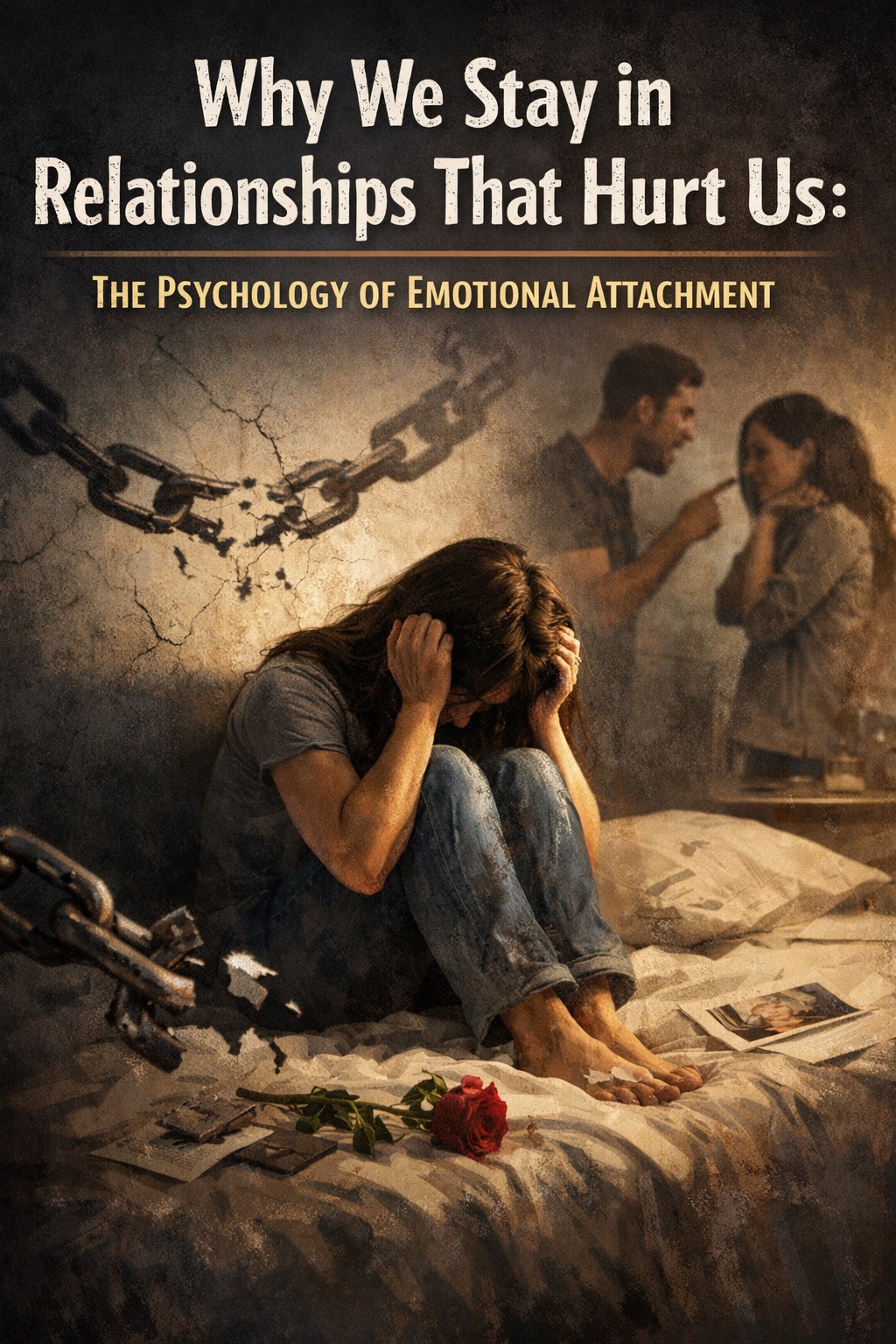
Why do people remain in unhealthy relationship despite recognizing the harm?
An individual may intellectually recognize that a relationship is “toxic”, yet still struggle to leave—or find themselves returning after the emotional intensity of separation. This difficulty is not a reflection of loving chaos, masochism, or personal dysfunction. Rather, some relationships fill a profound void by providing a sense of importance, belonging, or identity. Over time, the relationship can become intertwined with one`s sense of self, creating a feeling of wholeness through connection. In this context, leaving does not merely mean ending a relationship; it can feel like losing a newly formed identity—letting go of a part of oneself without knowing how to replace it with something equally meaningful. Furthermore, the absence of healthy parental models of a relationship can carry forward into adulthood, shaping insecurities, limited capacity for self-soothing, poor stress regulation, and a fragile sense of identity. These vulnerabilities increase the likelihood of forming unhealthy attachments, in which partner becomes the primary outlet for unmet emotional needs. When the partner resists, withdraws, or fails to meet these expectations, the individual may experience heightened anxiety, leading to increased clinging, control, or other maladaptive behaviors that perpetuate the cycle.
Over time, the partner`s autonomy may feel threatening or intolerable, as emotional stability becomes dependent on compliance and reassurance. This dynamic reinforces itself, not through genuine intimacy, but through emotional dependency that is misaligned with the demands of a healthy relationship and the realities of everyday life.
References
Bowlby, J. (1969/1982). Attachment and Loss: Vol. 1. Attachment. Basic Books.
Bowlby, J. (1988). A Secure Base: Parent-Child Attachment and Healthy Human Development. Basic Books.
Freyd, J. J. (1996). Betrayal Trauma: The Logic of Forgetting Childhood Abuse. Harvard University Press.
Gottman, J. M., & Silver, N. (2015). The Seven Principles for Making Marriage Work. Harmony Books.
Herman, J. L. (1992). Trauma and Recovery. Basic Books.
Siegel, D. J. (2012). The Developing Mind: How Relationships and the Brain Interact to Shape Who We Are. Guilford Press.
Van Der Kolk, B. A. (2014). The Body Keeps the Score: Brain, Mind, and Body in the Healing of Trauma. Viking.

 CounselingRx