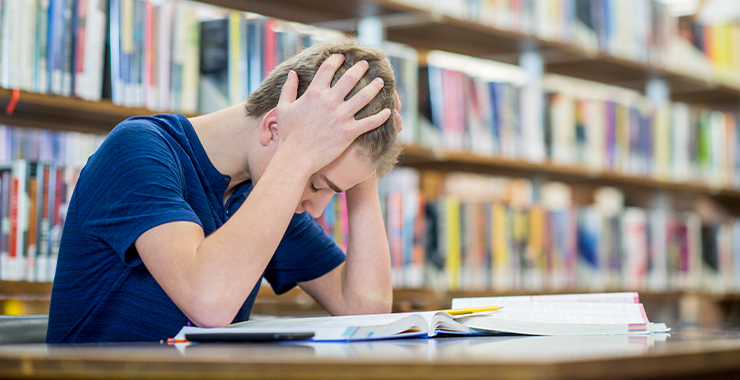
Stress and Academic Performance

How to help children and teens manage their stress

Stress: Stress and Academic Performance

By. Alexis Yennie

Stress affects all of us in various ways; whether it be students studying for an exam or adults and being overloaded with work. Stress can also affect various activities that we do on a daily basis. There are many underlying factors of stress with vary from person to person. In today’s society, children are becoming more stressed than ever. This is due to the constant pressure being put on them to receive the highest grade or even get into a good school. The pressure that is being put on them to balance school life and family/friend’s life can become a huge challenge for many.

There are multiple ways that stress can negatively affect a student’s performance. 1.) High levels of stress can decrease sleep quality; research has found that adolescents need at least eight hours of sleep a night to perform at their best. When they do not get the proper amount of sleep due to stress, this can cause them to have a lack of concentration and the inability to remember correctly. 2.) High levels of stress make students angrier; stress can also be the main reason for an increase in bullying due to irritability and the likelihood of angry outbursts. Directing their stress onto others can also increase bullying. And 3.) High levels of stress can worsen grades; when a student becomes stressed this can take over their ability to focus and can even lead to students dropping out of school.

It is very vital for parents, as well as educators and those supporting them, to become aware/educated about the significant impact stress has on adolescents and young adults. AS a whole, we should be creating a supportive and calm environment so that children succeed at their academic best. Some solutions to overcoming stress amongst adolescents are to conduct wellness checks; such as weekly one-on-one therapy sessions or even group therapy with other students. Also, making health programs available to students to them as needed.

If you or someone you know is struggling with high levels of stress and academic performance or family relationships pertaining to high levels of stress, please contact our psychotherapy offices in New York or New Jersey to talk to one of our licensed professional psychologists, psychiatrists, psychiatric nurse practitioner, or psychotherapist at Arista Counseling and Psychotherapy. Contact our Paramus, NJ or Manhattan, NY offices respectively, at (201)-368-3700 or (212)-722-1920 to set up an appointment. For more information, please visit https://www.counselingpsychotherapynjny.com/

Sources: https://partners.pennfoster.edu/blog/2016/september/3-ways-stress-negatively-affects-student-performance#:~:text=When%20a%20student%20is%20stressed,of%20school%20or%20drop%20classes.&text=As%20research%20shows%2C%20stress%20exhibited,students%20while%20in%20the%20classroom.

Image Source: https://www.apa.org/topics/child-development/stress


Separation Anxiety Disorder (SAD) in Children

By: Tamar Asayan

School Phobia is now referred to Separation Anxiety. It can also be known as school refusal or school avoidance because it makes going to school very difficult for children. Separation Anxiety Disorder is when someone has excessive fear or anxiety about leaving their home or an attachment figure. In children, their attachment figure is usually their parents because they see them as a figure of protection and do not want to leave their side. Humans require an attachment to parental figures because they provide love, protection, and care to us. Children attach their deepest fears to their parents because they believe they can make any fear go away.

Children who have separation anxiety have a difficult time sleeping alone, going to school, avoiding play dates, and do anything to stay at home with their parents. They also experience symptoms of dizziness, upset stomach, nausea, vomiting, headaches, and have difficulty sleeping. These symptoms can lead to children not wanting to leave their house even more because the thought of a parent leaving can give symptoms of panic and anxious thoughts.

Separation Anxiety Disorder is more common in children who suffer from parents separating or going through a divorce. Any detachment from a parent is experienced as a life threatening danger to the child. They fear they no longer will be protected and will be left alone by their parents. These feelings of anxiety are relieved when they are safe in the presence of their parents to reassure them that they are not going anywhere. In order for children to overcome their separation anxiety and their fear to attend school it is important to seek help as early as they can.

The best method in treating Separation Anxiety Disorder is by Cognitive Behavioral Therapy (CBT); it helps parents and children learn new coping skills when they are separated from each other. It is also important to make your child feel safe and protected in the environment they are living in and develop trust in their parents that they are not going to leave them.

If you are a parent and are concerned about your child having separation anxiety call the licensed psychologists, psychiatrists, psychiatric nurse practitioners, and psychotherapists at Arista Counseling & Psychotherapy can assist you. Contact our Paramus, NJ or Manhattan, NY offices respectively, at (201) 368-3700 or (212) 722-1920 to set up an appointment. For more information, visit http://www.counselingpsychotherapynjny.com/

Source: https://www.psychologytoday.com/us/blog/inside-out-outside-in/201505/what-is-separation-anxiety 

Image: http://childcarephysicans.com/wp-content/uploads/2013/08/blide.jpeg


Listening: Three Ways to Become a Better Listener

listening

By: Tamar Asayan

All anyone ever wants is to be listened to when they are going through a difficult time in their life. An act as simple as listening can be the biggest help anyone can ask for. However, it can also be the hardest thing to do because listeners have a habit of relating issues back to themselves. The aim of listening is not to try to fix them or tell them what to do; instead it is to show them that you care and feel for them as they are struggling. Oftentimes, it is better to not relate issues back to yourself. People feel the need to be listened to because they want to make sure their thoughts are rational, and do not want to overthink. When we listen it reassures the person that we care and that they are not alone.

Three easy steps to becoming a better listener is to listen, understand, and respond appropriately.

  1. Listen
    • Pay attention to not only what the speaker is saying but body language as well.
    • Do not interrupt the speaker.
  2. Understand
    • This is the time to process everything the person has told you so you know how to respond appropriately.
    • Ask questions; the best types of questions to ask are open ended and reflective questions.
    • This allows the speaker to open up even more and explain what they are going through.
  3. Response
    • Address the speaker’s points.
    • Restate what they have told you.
    • Don’t complete the speaker’s sentences. This can come off rude, and interrupts your time to listen and for them to speak. Interrupting and assuming what the speaker is feeling will make them think you do not want to listen.

Sources:

https://blog.udemy.com/importance-of-listening/

https://psychcentral.com/blog/the-generosity-of-listening/

https://psychcentral.com/lib/become-a-better-listener-active-listening/

Image: http://throwthediceandplaynice.com/2017/12/listening-up-in-2018.html

If you or someone you know may be having trouble with communication speak with one of our licensed professional psychologists, psychiatrists, psychiatric nurse practitioners, and psychotherapists. Contact us at our Paramus, NJ or Manhattan, NY offices at (201) 368-3700 or (212) 722-1920 respectively to set up an appointment. For more information, visit http://www.counselingpsychotherapynjny.com/.