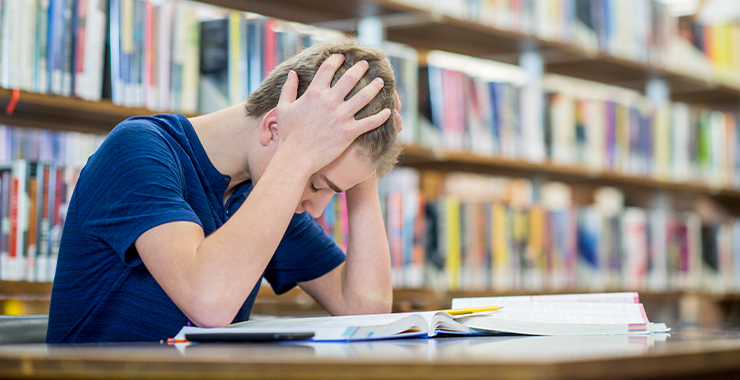
Stress and Academic Performance

How to help children and teens manage their stress

Stress: Stress and Academic Performance

By. Alexis Yennie

Stress affects all of us in various ways; whether it be students studying for an exam or adults and being overloaded with work. Stress can also affect various activities that we do on a daily basis. There are many underlying factors of stress with vary from person to person. In today’s society, children are becoming more stressed than ever. This is due to the constant pressure being put on them to receive the highest grade or even get into a good school. The pressure that is being put on them to balance school life and family/friend’s life can become a huge challenge for many.

There are multiple ways that stress can negatively affect a student’s performance. 1.) High levels of stress can decrease sleep quality; research has found that adolescents need at least eight hours of sleep a night to perform at their best. When they do not get the proper amount of sleep due to stress, this can cause them to have a lack of concentration and the inability to remember correctly. 2.) High levels of stress make students angrier; stress can also be the main reason for an increase in bullying due to irritability and the likelihood of angry outbursts. Directing their stress onto others can also increase bullying. And 3.) High levels of stress can worsen grades; when a student becomes stressed this can take over their ability to focus and can even lead to students dropping out of school.

It is very vital for parents, as well as educators and those supporting them, to become aware/educated about the significant impact stress has on adolescents and young adults. AS a whole, we should be creating a supportive and calm environment so that children succeed at their academic best. Some solutions to overcoming stress amongst adolescents are to conduct wellness checks; such as weekly one-on-one therapy sessions or even group therapy with other students. Also, making health programs available to students to them as needed.

If you or someone you know is struggling with high levels of stress and academic performance or family relationships pertaining to high levels of stress, please contact our psychotherapy offices in New York or New Jersey to talk to one of our licensed professional psychologists, psychiatrists, psychiatric nurse practitioner, or psychotherapist at Arista Counseling and Psychotherapy. Contact our Paramus, NJ or Manhattan, NY offices respectively, at (201)-368-3700 or (212)-722-1920 to set up an appointment. For more information, please visit https://www.counselingpsychotherapynjny.com/

Sources: https://partners.pennfoster.edu/blog/2016/september/3-ways-stress-negatively-affects-student-performance#:~:text=When%20a%20student%20is%20stressed,of%20school%20or%20drop%20classes.&text=As%20research%20shows%2C%20stress%20exhibited,students%20while%20in%20the%20classroom.

Image Source: https://www.apa.org/topics/child-development/stress


Burnout in College Students (Part 2)

Tatyana A. Reed

HOW TO AVOID/FIGHT BURNOUT

Being stressed out may seem like a normal human thing to do, and stress can be very positive for promoting work at some points. However, if it gets to the burnout stage its best you sit down, understand what’s causing your burnout, and deal with it. Here’s a few ways to help fight/avoid burnout from happening to you:

  1. Pay attention to the warning signs

Whenever you feel like your stress is getting extremely high and starting to take a toll on you mentally and physically, you should sit down and relax.

  1. Say “no”

Yes, it’s normal after studying for a whole week that you may want to go spend some time with your friends, but if you feel extremely tired, just say no, they’ll understand.

  1. Get your proper’s night of rest

It may seem like a good idea to study all night and not sleep, but your brain actually works better when it has a good amount of sleep. Just like you get physically tired, so does your brain after a long day, get some rest.

  1. Don’t put too much on your plate

It may seem like putting more on your plate will fill your appetite but really it will not end pretty. Things get out of hand and too much on your plate may cause you not to have any personal down time to unwind.

  1. Turn “down”

Take some time alone to do things that isn’t causing your brain to stress. If this means, just sleeping, watching shows all day, whatever you need to turn down, its best to set aside some time to do this

  1. Get help

Life can definitely get stressful at times and being in college doesn’t always help that out. Try to have someone on hand that you can talk to when things get a little out of hand, whether that be a friend, family member, or professional; most college campuses do offer psychological/counseling services that may be more convenient to you. It’s okay to sit back and say “I’m super stressed out, I need to relax” because the sooner you help yourself, the less help that will need to be done. Put the flame out before you burnout.

If you or someone you know is dealing with burnout, please contact our psychotherapy offices in New York or New Jersey to talk to one of our licensed professional psychologists, psychiatrists, psychiatric nurse practitioners, or psychotherapists at Arista Counseling & Psychotherapy. Contact our Paramus, NJ or Manhattan, NY offices respectively, at (201) 368-3700 or (212) 722-1920 to set up an appointment. For more information, please visit http://www.counselingpsychotherapynjny.com/.

References:

Harrison, Mike. “Avoid College Burnout.” Great Lakes Christian College, 22 Jan. 2018, http://www.glcc.edu/avoid-college-burnout/ (PHOTO)

Jerry, Lisa M. “10 Signs you’re Burning Out — And What To Do About It.” Forbes, Forbes Magazine, 3 Jan. 2018, http://www.forbes.com/sites/learnvest/2013/04/01/10-signs-youre-burning-out-and-what-to-do-about-it/.

Stephanie Cushman & Richard West (2006) Precursors to College Student Burnout: Developing a Typology of Understanding, Qualitative Research Reports in Communication, 7:1, 23-31, DOI: 10.1080/17459430600964638

Vaiana, Dominic. “Burnout in College: What Causes It and How to Avoid It.” College Info Geek, 5 Mar. 2019, collegeinfogeek.com/student-burnout