Social Anxiety: The Impact of Social Media on Social Anxiety

Social Anxiety: The Impact of Social Media on Social Anxiety

By: Josette DeFranco

Social anxiety is very common and can be a part of your everyday living whether it is online or offline. Social anxiety means you have persistent fears about being in social situations. Social media has become society’s major way of communicating. It has allowed users to create their own distinctive profiles and content to share with others. It has been found that social media use has caused unrealistic goals and expectations. This can create low self-esteem and a lack of in-person interactions. This may lead to anxiety because you may feel like you don’t live up to your social media image. Nonetheless, it may cause you to feel judged by your choices or appearance. It is important to pay attention to your emotions when logged onto social media and to remember that others experience similar thoughts.

Should you take a break from social media?

Social media can affect individuals differently. However, if you notice social media is causing damage to your mental health, self-esteem, social interactions, and making your moods worse then you may want to consider a social media break. Having a social media break even for a week or a month could enhance your mental state, allowing you to reflect and focus on your mental health needs. It has been noticed that individuals felt more grounded and less anxious, isolated, and depressed.

If you or someone you know is struggling with their mental health, please contact our psychotherapy offices in New York or New Jersey to talk to one of our licensed professional psychologists, psychiatrists, psychiatric nurse practitioners, or psychotherapists at Arista Counseling & Psychotherapy. Contact our Paramus, NJ or Manhattan, NY offices respectively, at (201) 368-3700 or (212) 722-1920 to set up an appointment. For more information, please visit https://aristapsychiatrypsychotherapy.com/

Sources:

https://www.sciencedirect.com/science/article/pii/S245195882100018X

https://www.psychologytoday.com/us/blog/thriving-with-the-challenges/202208/a-social-media-vacation-is-waiting-for-you

Anxiety: How to Cope with Back-to-school Anxiety

Anxiety: How to Cope with Back-to-school Anxiety

By: Josette DeFranco

The first few weeks before school is back in session have greatly affected children and college students. Believe it or not, back-to-school anxiety is common and a manageable issue. Anxiety can impact a student’s concentration, memory, and ability to be engaged in activities. Also, another area being affected by back-to-school anxiety is social development. School is a main scene for socialization allowing students to build relationships and develop effective communication skills. Managing back-to-school anxiety is great for academic performance. Dealing with anxiety can help prevent social isolation, low self-esteem, and difficulty in forming healthy peer relationships.

There are many ways to make the change much easier and less stressful. Below are a few tips to help manage back-to-school anxiety.

  • Practice self-care
  • Create a support system
  • Focus on the positive
  • Rehearse the drop-off
  • Visit the school
  • Take deep breaths

If you or someone you know is struggling with their mental health, please contact our psychotherapy offices in New York or New Jersey to talk to one of our licensed professional psychologists, psychiatrists, psychiatric nurse practitioners, or psychotherapists at Arista Counseling & Psychotherapy. Contact our Paramus, NJ or Manhattan, NY offices respectively, at (201) 368-3700 or (212) 722-1920 to set up an appointment. For more information, please visit https://aristapsychiatrypsychotherapy.com/

Sources:

https://adaa.org/learn-from-us/from-the-experts/blog-posts/consumer/7-tips-addressing-back-school-anxiety

Anxiety: Social Anxiety Disorder

By: Charleene Polanco

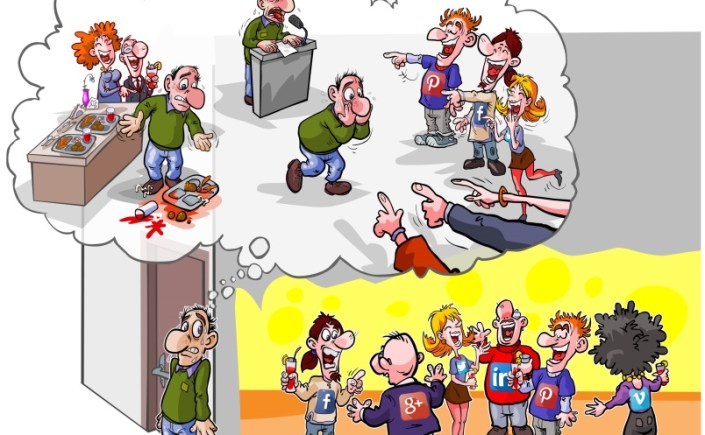
Social anxiety disorder is characterized by an intense fear of being rejected by people. Many people feel some level of anxiety when they are placed into unknown social situations. However, those suffering from social anxiety disorder may avoid socializing altogether, because they cannot handle being judged or seen in a negative way by others. A person with social anxiety disorder, can experience anxiety during many different situations like; going on a date, eating in front of people, making eye contact, public speaking, or going to parties. Some of the symptoms of social anxiety include:

  • Rapid heartbeat
  • Uneasy stomach/diarrhea
  • Muscle tension
  • Lightheadedness
  • Sweating

Social anxiety can cripple a person’s life, because normal everyday interactions are triggers of anxiety and discomfort. This is why many people who suffer from social anxiety disorder choose to isolate themselves from everyone. In order to reduce the fear of rejection, people with social anxiety disorder are encouraged to be exposed to social situations, not run away from them. Although being around others is what brings them distress, socializing is also what allows people with social anxiety to change the way they think about social engagements. Instead of having negative perceptions about the way people view them, the more they socialize and are accepted by others, the more socially anxious people see that those perceptions are not true.

If you or someone you know is suffering from social anxiety, please contact our psychotherapy offices in New York or New Jersey to talk to one of our licensed professional psychologists, psychiatrists, psychiatric nurse practitioners, or psychotherapists at Arista Counseling & Psychotherapy. Contact our Paramus, NJ or Manhattan, NY offices respectively, at (201) 368-3700 or (212) 722-1920 to set up an appointment. For more information, please visit http://www.counselingpsychotherapynjny.com/.

Sources:

Anxiety and Depression Association of America. (2018). Social Anxiety Disorder. Retrieved October 01, 2018, from https://adaa.org/understanding-anxiety/social-anxiety-disorder

Nordqvist, C. (2018, February 05). What’s to Know About Social Anxiety Disorder? Retrieved October 01, 2018, from https://www.medicalnewstoday.com/articles/176891.php

WebMD. (2018). What Is Social Anxiety Disorder? Retrieved October 01, 2018, from https://www.webmd.com/anxiety-panic/guide/mental-health-social-anxiety-disorder#1


Social Anxiety Disorder

Signs and Symptoms of Social Anxiety Disorder:

By: Cassie Sieradzky

Social anxiety disorder is characterized by severe anxiety and excessive self-consciousness in everyday social situations. An individual with social anxiety disorder may have a persistent, intense, and chronic fear of being watched and judged by others, which can interfere with their daily functioning. Social anxiety disorder can be limited to only one type of situation, such as a fear of speaking or performing in public, or whenever an individual is around other people. The feared situation is avoided or endured with extreme anxiety and distress. In addition, they often experience low self-esteem and depression and have a hard time making or keeping friends.

Physical symptoms such as blushing, profuse sweating, upset stomach, and trembling often accompany the intense stress of social anxiety disorder. These visible symptoms intensify the fear of disapproval and often become an additional focus of fear. As people with social anxiety disorder worry about experiencing the physical symptoms, the greater their chances are of developing them.

About seven percent of the U.S. population is estimated to have social anxiety disorder within a 12-month period. Social anxiety disorder occurs twice as often in women than men and typically begins in childhood or early adolescence. Social anxiety disorder often runs in families and may be comorbid with depression or other anxiety disorders, such as panic disorder or obsessive-compulsive disorder. It is not uncommon for individuals with social anxiety disorder to self-medicate with alcohol or other drugs, which can lead to addiction.

Cognitive-behavioral therapy is a form of psychotherapy that is very effective in treating social anxiety. CBT and behavioral therapy are used to reduce anxiety by managing negative beliefs or behaviors that help maintain the disorder. Medications, in conjunction with psychotherapy, can also play a role in treatment.

If you or a loved one appears to be suffering from social anxiety disorder, licensed psychologists, psychiatrists, psychiatric nurse practitioners, and psychotherapists at Arista Counseling & Psychotherapy can assist you. Contact our Paramus, NJ or Manhattan, NY offices respectively, at (201) 368-3700 or (212) 722-1920 to set up an appointment. For more information, visit http://www.counselingpsychotherapynjny.com/

Social Anxiety Disorder (Social Phobia). (n.d.). Retrieved March 26, 2018, from https://www.psychologytoday.com/us/conditions/social-anxiety-disorder-social-phobia