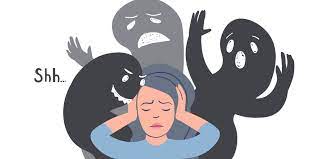
Schizophrenia: “The Collected Schizophrenias” – A Glimpse into the Mind of a High-Functioning Schizophrenic

Schizophrenia: “The Collected Schizophrenias” – A Glimpse into the Mind of a High-Functioning Schizophrenic

By: Rachel Wang

From the outset of Esme Weijun Wang’s writing, she held my attention and respect as a first-time reader of her work: Asian American, graduated from Stanford with a 3.99 GPA, highly accomplished author. As she described her struggle with various mental illnesses including schizoaffective disorder, Lyme disease, and Cotard’s syndrome, I was struck by how, in spite of all of these challenges, she was still able to lead a rich, successful, and relatively happy life. Having a mental illness does not take away from you as a person; rather, it stands as a testament to what you have undergone and the strength of your character.

At the beginning of her novel, Wang points to a 2013 Slate article titled “Schizophrenic Is the New Retarded” by neuroscientist Patrick House, in which House notes that schizophrenia is closely associated with qualities of being volatile and contradictory, characterizing a range of personas from a person with split personality disorder to a serial killer. Wang uses this article to convey a main theme that recurs throughout the novel: When it comes to “socially frowned upon” disorders like schizophrenia, being diagnosed is something of a death sentence in itself. All aspects revolve around this heavy medical label that you have become; even if you recover and lose the diagnosis, those who know you will feel like they don’t because of this cryptic illness, and you will forever be considered an outcast in society.

When it comes to dealing with high-risk mental disorders, a person must be judged on whether they pose not only a danger to themself, but to society as well. As someone who was sent to a mental facility against her will, Wang believes that forcing treatment onto someone under the guise of “doing what’s best for them” is a serious violation, stripping the individual of the basic right of autonomy. She quotes Plumadore, a renowned figure in the mental health community, on this subject: “We have the ultimate decision about what we’re going to allow into our bodies, what we’re not, and the decisions that we make about our own lives.” This view reappears later in the novel when Wang describes her experience with being 5150’d (involuntary psychiatric commitment), which she concludes with the final, depressing thought: “For those of us living with severe mental illness, the world is full of cages where we can be locked in” (110).

From lifelong societal disapproval to deterioration of health, schizophrenia is undoubtedly a plague to those who bear it, causing much suffering and threatening to overtake one’s whole life. The perpetual overshadowing of this type of illness leads less to the perspective “What will this affect?” and more to simply thinking “What won’t this affect?” or “What percent of my life can I realistically expect to keep for myself?” In spite of all her doubts, Wang was able to prove that she was larger than her disorders—not only achieving her dream of becoming an accomplished writer, but going further to create a powerful work of literature based on her personal struggles, offering inspiration to those struggling with mental illnesses everywhere.

If you or someone you know is struggling with mental health, please contact our psychotherapy offices in New York or New Jersey to talk to one of our licensed professional psychologists, psychiatrists, psychiatric nurse practitioners, or psychotherapists at Arista Counseling and Psychotherapy. Contact our Paramus, NJ, or Manhattan, NY offices respectively, at (201) – 368-3700 or (212)-722-1920 to set up an appointment. For more information, please visit https://www.counselingpsychotherapynjny.com/

Tardive Dyskinesia

Tardive Dyskinesia

By Madison Gesualdo

Tardive dyskinesia is a syndrome in which a person exhibits repetitive, involuntary muscle movements. This syndrome directly affects the central nervous system and is typically seen in patients who are prescribed antipsychotic drugs, usually for bipolar disorder and schizophrenia. Tardive dyskinesia is chronic, with the Diagnostic and Statistical Manual of Mental Disorders Fifth Edition mandating that symptoms must persist for at least a month after an individual discontinues his or her medication in order to be officially diagnosed.

Neuroleptic drugs, also known as antipsychotics, are the most common inducers of tardive dyskinesia. Antipsychotics are often prescribed to patients with bipolar disorder and schizophrenia in order to reduce symptoms such as hallucinations, delusions, and disorganized thinking. These drugs successfully work by blocking receptors in the nervous system – specifically D2 dopamine receptors in the midbrain and forebrain – and consequently lowering dopamine levels within an individual. This is crucial for individuals diagnosed with bipolar disorder or schizophrenia because overactivity of dopamine in the brain can alter brain chemistry, leading to many of the psychotic symptoms associated with these disorders. Thus, antipsychotic medications are able to help assuage some of these symptoms by regulating an individual’s dopamine levels.

Like most medications, neuroleptic drugs have the potential for negative side effects. A person who has been taking neuroleptic drugs for an extended period of time may start experiencing abnormal involuntary movements, contractions, tics, tremors, and restlessness. All of these actions, in the context of long-term antipsychotic use, encompass tardive dyskinesia. These symptoms occur as the result of dopamine receptors having been blocked for too long; blockade of these receptors prevents fluid communication between nerve cells, resulting in a lack of stable movements in an individual.

If an individual finds that he or she is experiencing medication-induced tardive dyskinesia, he or she should consider talking to a doctor about stopping or switching the current medication that is causing it. Additionally, deep brain stimulation can also be utilized as a solution. This procedure employs a neurostimulating device that sends electrical signals into the brain to stimulate the blocked dopamine receptors and encourage movement.

Tardive dyskinesia should not be disregarded, as there are plenty of methods of intervention that can help reduce symptoms within an individual and make the condition more manageable. Make sure to consult with a healthcare provider about a treatment plan if you or a loved one is experiencing this condition.

If you or someone you know is struggling with their mental health, please contact our psychotherapy offices in New York or New Jersey to talk to one of our licensed professional psychologists, psychiatrists, psychiatric nurse practitioners, or psychotherapists at Arista Counseling & Psychotherapy. Contact our Paramus, NJ or Manhattan, NY offices respectively, at (201) 368-3700 or (212) 722-1920 to set up an appointment. For more information, please visit https://aristapsychiatrypsychotherapy.com/

References:

Allarakha, S. (n.d.) Why do antipsychotics cause tardive dyskinesia? MedicineNet. www.medicinenet.com/why_do_antipsychotics_cause_tardive_dyskinesia/article.htm

Ameer, M.A., Patel, P., & Saadabadi, A. Neuroleptic Medications. [Updated 2024 Feb 21]. In: StatPearls [Internet]. Treasure Island (FL): StatPearls Publishing; 2024 Jan-. Available from: https://www.ncbi.nlm.nih.gov/books/NBK459150/

American Psychiatric Association. (2013). Diagnostic and statistical manual of mental disorders (5th ed.). https://doi.org/10.1176/appi.books.9780890425596

Bhandari, S. (2023, January 12). What is tardive dyskinesia? WebMD. https://www.webmd.com/mental-health/tardive-dyskinesia

Cornett, E.M., Novitch, M., Kaye, A.D., Kata, V., & Kaye, A.M. (2017) Medication-induced tardive dyskinesia: A review and update. The Ochsner Journal, 17(2), 162-174. https://www.ochsnerjournal.org/content/17/2/162/tab-article-info

The Centre for Addiction and Mental Health. (n.d.) Antipsychotic medication. CAMH. www.camh.ca/en/health-info/mental-illness-and-addiction-index/antipsychotic-medication#header.

Vasan, S., & Padhy, R.K. Tardive Dyskinesia. [Updated 2023 Apr 24]. In: StatPearls [Internet]. Treasure Island (FL): StatPearls Publishing; 2024 Jan-. Available from: https://www.ncbi.nlm.nih.gov/books/NBK448207/

Schizophrenia

Schizophrenia: What is it?

By: Anna Giammanco

Schizophrenia is a mental illness that is usually diagnosed in people between the ages of 16 and 30. The way a person thinks, feels, and behaves can be highly affected by Schizophrenia. Symptoms of this disorder can make functioning and performing everyday tasks very challenging. Symptoms of Schizophrenia can often differ between patients. Symptoms usually fall into three different categories (psychotic, negative, and cognitive).

Psychotic: Symptoms include changes in behavior and a person’s perception of the world. Symptoms vary on how often they occur. For some, symptoms can be less frequent or more frequent.

  • Hallucinations: Hallucinations can occur in several forms. One can experience hallucinations visually, aurally, and through perceived taste or smell. Despite feeling very real, these hallucinations aren’t actually happening.
  • Delusions: Delusions are powerful beliefs that a person with Schizophrenia has that are untrue and somewhat illogical.
  • Ex: believing, voices on TV and Radio are sending special messages.
  • Thought disorder: Unusual and nonsensical ways of thinking. Having trouble organizing thoughts and speech. Abnormal pauses in the middle of talking while concentrating on a thought.
  • Movement disorder: Abnormal body movements such as repeating movements over and over.

Negative:

  • Feeling a loss of motivation or lack of interest in daily activities, Isolating oneself and withdrawal from social life, having trouble functioning.
  • Symptoms include: trouble sticking to tasks, feeling pressure in everyday life, having low energy, avoiding social interaction.

Cognitive:

  • Having problems with memory and concentrating, having trouble processing information and using information after learning it.

If you or someone you know is struggling, please contact our psychotherapy offices in New York or New Jersey to talk to one of our licensed professional psychologists, psychiatrists, psychiatric nurse practitioners, or psychotherapists at Arista Psychotherapy & Psychiatric Services. Contact our Manhattan, NY or Paramus, NJ offices respectively at (201) 368-3700 or (212) 722-1920 to set up an appointment. For more information, please visit https://www.counselingpsychotherapynjny.com