Generational or (integrational) trauma is a phrase that you might be hearing recently being thrown around but, do you truly know what it means. It is trauma that can be passed down through generations by epigenetics, when genes change how they work but the DNA sequence stays the same. It can be baggage brought from one generation onto the next. Coming from a family with this type of trauma can cause many negative outcomes which can include Stress. When dealing with your close loved ones, stress can become a common factor in your life. Trying to identify if your family has generational trauma look for these:
Always on edge ( waiting for the other shoe to drop)
The first big step you can take is recognizing that the trauma that you have can be inherited. After identifying the generational trauma you can then start to work on the stress that you have. Your body was in flight or fight mode constantly and now you know why and due to what trauma. According to the American Psychological Association we see how parents after experiencing a traumatic event, can pass on their fear and prevent future generations from finding new ways. Getting professional help can also apply to you; stress can become chronic if not addressed. Help the future generations by breaking this unhealthy cycle.
If you or someone you know is struggling with mental health, please contact our psychotherapy offices in New York or New Jersey to talk to one of our licensed professional psychologists, psychiatrists, psychiatric nurse practitioners, or psychotherapists at Arista Counseling and Psychotherapy. Contact our Paramus, NJ, or Manhattan, NY offices respectively, at (201) – 368-3700 or (212)-722-1920 to set up an appointment. For more information, please visit https://www.counselingpsychotherapynjny.com/
On July 13th of this year, a shot was witnessed around the world when a skinny, pale 20-year-old with an AR-15-style rifle climbed onto a roof facing former President Donald Trump’s rally and fired. After the crowd got up from the ground when police said it was safe, but before paramedics could arrive, millions of people already had photos and videos of the incident on their devices and were chasing the story for updates.
Research outlines how witnessing these events through such graphic and detailed media not only makes us afraid and panicked, but also leads us to doubt our society. We start to think that if we scoured the dark web enough, we’d be able to prevent shootings, or that our children’s classmates who are on the fringes of the social scene might just shoot them one day. We may even convince ourselves that we need a gun for our personal safety and survival.
Universally, we consider leaders to be among the most protected and secure people in our country. When we witness political violence firsthand or through videos and photos, we automatically begin to fear for our own safety and security. As psychologist Dr. Zachary Ginder points out, witnessing a violent attack on a government authority—whether in real-time or via video—leads us to question and doubt our “sense of social order, control, trust, safety, and security.”
One thing that the boom of social media has demonstrated, validated by numerous studies, is that we easily obtain extensive video and photo coverage of violent attacks, whether they involve shootings, terrorist attacks, assassination attempts, or others. The ability to see every single moment from every angle of a violent incident, due to continuous media coverage and the ease of sharing on social media, serves to sustain our trauma and panic, according to Roxanne Cohen Silver, a professor of psychological science, medicine, and public health at the University of California, Irvine.
Experts suggest several ways to relieve anxious feelings: avoid listening to and perpetuating conspiracy theories by ensuring that you’re getting your news from reliable sources; take time to establish and maintain regular habits that support your self-care; channel your energy into advocacy and “positive action,” which can help many feel more in control; focus on kindness and positivity; and seek help when needed to process trauma in a healthy way rather than remaining in a traumatic mindset.
If one’s reaction to trauma is intense, they may experience difficulties such as trouble sleeping, concentrating, irritability, anger, lashing out, or paranoia. Disorders related to traumatic reactions—whether the experience was direct or indirect—include acute stress disorder, depression, generalized anxiety disorder, panic disorder, post-traumatic stress disorder, and substance use disorder.
The other day I was sitting in my college Renaissance History course, learning about the joy, beauty, and creative innovation of an era that spanned three centuries following roughly 1,000 years of life so bleak and horrible that it gained an additional name: the “Dark Ages.” At one point during the lecture, my professor made an off-the-cuff remark about how since every generation spans more or less 20 years, and within that generation, everything that happens in the world is considered “current events,” the 23rd anniversary of the tragic day that is 9/11 is now considered “history.” We all sat there a little shocked and confused because how could over twenty years have passed and how could something discussed so frequently in the United States be considered history?
On the morning of Tuesday, September 11, 2001, first responders flocked by the thousands to the only building complex in the 10048 zip code in Lower Manhattan upon hearing the devastation that was unfolding in New York City. Thousands of therapists (social workers, psychologists, other mental health professionals, and so on) rushed to Manhattan in what psychologist Ghislaine Boulanger described as a “feeding frenzy” of therapists hurrying to help, (some even walking to fire stations and simply standing outside in case someone wanted therapy) all without knowing what helping would entail, all to assist in the efforts taking place in the aftermath of such a traumatic event witnessed live by hundreds of thousands of people. Boulanger, along with psychoanalyst and interfaith chaplain Margaret Klenck, described how at first the mental health professionals on the scene at that time were diving right into “the nitty-gritty” of therapy or “overmedicating people with tranquilizers and antidepressants,” when in reality, Klenck said, they were not depressed. They were traumatized and grieving, so naturally they were crying.
Psychologist Donna Bassin, who was a therapist for victims and their family members following 9/11, noticed that she was “emotionally transformed” by being a therapist during that time. “I started becoming more aware of community trauma, realizing how much people needed each other, not just 45 minutes in the psychotherapy office.” Years of trauma research and research on effective therapeutic practices have proven that most clients do not respond positively to long, detailed, and intense therapy immediately following a traumatic event. Richard McNally, a psychologist at Harvard, remarked how one of the most impactful lessons that were learned due to 9/11 was that people are far more resilient than we, specifically therapists in this case, thought.
As we look back on the past 23 years following a day that caused a loss of life for nearly 3,000 people and injured over 6,000, one lesson is starkly clear: we, as a community and as a nation, are more resilient than we think. We have built a bronze memorial, and etched in its surface the names of every single victim. We have built a new building in its place, 1,792 feet in the air, looking down over not only the historical New York City but also the 70-foot-deep memorial for the buildings. Therapists, first responders, the government, and doctors alike have all discovered new and more effective ways to deal with a country wreaked by terror and tragedy, and have created and discovered new ways to help people, built on the ashes of terror of times past.
Just like the “rebirth” that the Renaissance was, in 2024 we, too, can usher in our own enlightenment.
Psychiatric disorders associated with trauma exposure: PTSD, major depressive disorder, generalized anxiety disorder, panic disorder, and substance abuse disorders.
If you or someone you know is struggling with trauma-related disorders or with mental health in general, please contact our psychotherapy offices in New York or New Jersey to talk to one of our licensed professional psychologists, psychiatrists, psychiatric nurse practitioners, or psychotherapists at Arista Counseling & Psychotherapy. Contact our Paramus, NJ or Manhattan, NY offices respectively, at (201) 368-3700 or (212) 722-1920 to set up an appointment. For more information, please visit http://www.counselingpsychotherapynjny.com/
When an individual goes through a traumatic experience, the trauma they experienced may often remain in their body. Somatic therapy is a rising form of therapy that allows individuals to engage in a mind-body connection in order to minimize any arousals of stress. The practice of somatic therapy involves acknowledging how stress and trauma are experienced in the body, then following with engaging in body techniques such as dancing, body scans, etc. The re-occurring feeling of trauma being stored in the body is the result of the nervous system remaining in survival mode, leading to high levels of cortisol being continually released. Cortisol is one of the leading hormones that increases stress levels in the body. Incorporating somatic therapy with CBT (Cognitive Behavioral Therapy) is a gentle approach to managing the body’s stored trauma. Somatic therapy can benefit individuals with PTSD, anxiety, depression, coping with grief, experiencing chronic illness or pain, sexual dysfunction, addiction, insecurities, abuse, and more.
Types of Somatic Therapies
Hakomi Method: Encouraging the growth of an individual by using mindfulness and experimental practices. It is a holistic approach that focuses on increasing our internal awareness
Grounding: Connecting the body to the earth. The individual will use sensory skills to feel energy from the ground to their feet. This is to embody and experience the present moment.
Titration & Pendulation: Slowing down and portioning the recollection of trauma to reduce immediate emotional and physiological responses. Pendulation, moving back and forth between feelings, is needed to achieve titration in order to make sensations of stress more manageable.
EMDR (Eye Movement Desensitization and Reprocessing): The process of moving your eyes in a specific direction while discussing or embodying traumatic memories. The goal of EMDR therapy is to encourage the brain to process any discomforting experiences and memories.
Resourcing: A therapist will have an individual recall a precious memory or resources that are attached to positive and calming feelings. An example of this could be reminding oneself of a location or person in which they find happiness.
Some benefits that may be a result of somatic therapy include self-regulation in the nervous system, increase in resilience and re-empowerment, developing bodily awareness, and releasing tension along with other positive results. It is important to remember that somatic therapy is not meant to be in replacement of CBT. When experiencing emotions stemming from anxiety, trauma, or depression, it is beneficial to attend talk therapy sessions as a primary source of mental health care, with somatic therapy being only an addition. The goal of somatic therapy is to find relief in your mind and body’s negative sensations to produce more calming and comforting feelings.
If you or someone you know is seeking therapy please contact our psychotherapy offices in New York or New Jersey to talk to one of our licensed professional psychologists, psychiatrists, psychiatric nurse practitioners, or psychotherapists at Arista Psychotherapy & Psychiatric Services. Contact our Manhattan, NY or Paramus, NJ offices respectively at (201) 368-3700 or (212) 722-1920 to set up an appointment. For more information, please visit https://www.counselingpsychotherapynjny.com
PTSD causes feelings of intense, disturbing thoughts and feelings related to their experience that last long after the traumatic event has ended. People with PTSD may relive their traumatic event(s) through flashbacks or nightmares and they may feel sadness, fear, or anger. They may also feel detached or estranged from other people (American Psychiatric Association). PTSD also has the ability to cause memory loss whether it be short-term or long-term, both can be affected. Four steps to fix PTSD related memory loss would be:
Get treatment, therapy and medication are two of the most common treatment options for PTSD. Medication and therapy such as Cognitive Behavioral Therapy [CBT] or prolonged exposure therapy have been shown to be effective in managing PTSD.
Stay Active. By staying physically active and mentally active through brain games or learning new skills, one can help keep their brain sharp and active.
Prioritize Sleep, good sleep appears to be essential for memory consolidation and processing.
Use Memory Aids, which are tools that are designed to help accommodate people who experience memory difficulties which could include calendars, notepads, and alarm clocks. (healthline.com)
The types of behavioral therapy that can aid in this memory loss and other symptoms caused by PTSD are:
Cognitive Therapy: A type of talk therapy that helps people with PTSD recognize the cognitive patterns that are keeping them stuck, this is often paired with exposure therapy.
Exposure Therapy: Helps people with PTSD safely face both situations and memories that they find frightening so they can learn to cope with them effectively. This kind of therapy can be particularly helpful for flashbacks and nightmares.
Eye Movement Desensitization and Reprocessing (EMDR): Combines exposure therapy with a series of guided eye movements that help you process traumatic memories and change how people with PTSD react to them. (Mayoclinic.org)
Primary treatment is psychotherapy, but medication could also be prescribed as needed. Medication may include antidepressants, anti-anxiety medications, and prazosin which has the ability to reduce or suppress nightmares in some people with PTSD.
If you or someone you know is struggling with their mental health and/or PTSD (memory loss) please contact our psychotherapy offices in New York or New Jersey to talk to one of our licensed professional psychologists, psychiatrists, psychiatric nurse practitioners, or psychotherapists at Arista Counseling & Psychotherapy. Contact our Paramus, NJ or Manhattan, NY offices respectively, at (201) 368-3700 or (212) 722-1920 to set up an appointment. For more information, please visit http://www.counselingpsychotherapynjny.com/
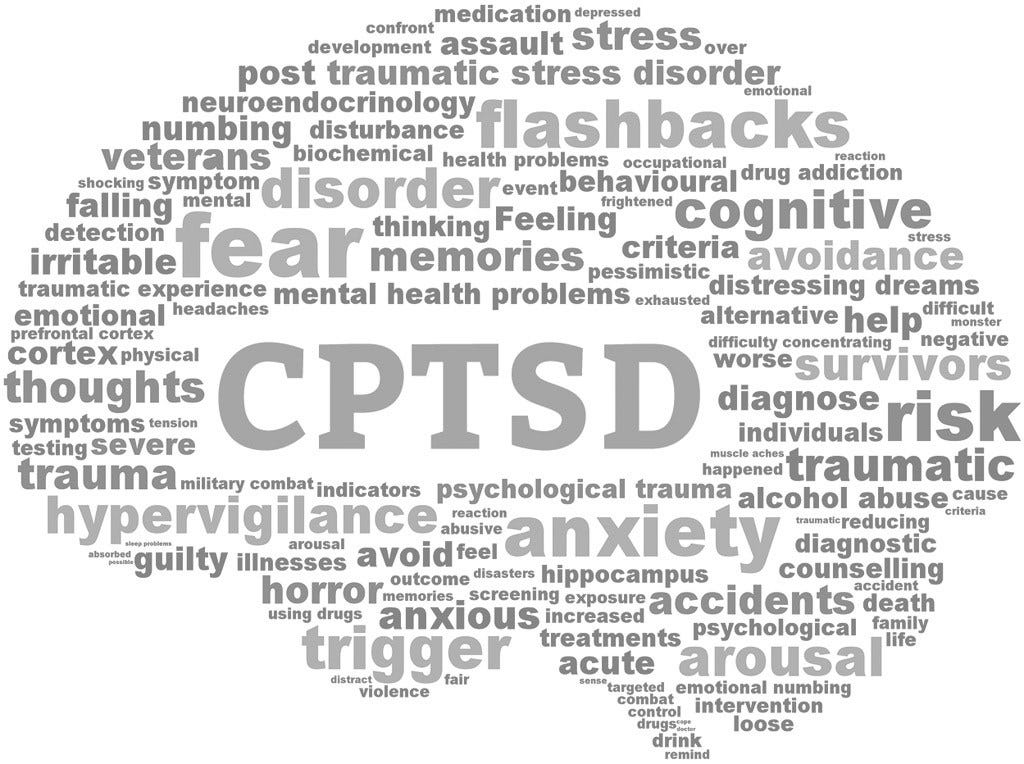
PTSD: Complex Post Traumatic Stress Disorder: What is C-PTSD? An overview of signs and symptoms of C-PTSD
By: Zoe Alekel
The Mayo Clinic defines Post-Traumatic Stress Disorder (PTSD) as, a mental health condition that’s triggered by a terrifying event — either experiencing it or witnessing it. Although overlapping with PTSD, Complex Post Traumatic Stress Disorder (C-PTSD) has additional symptoms and complications due to prolonged and repeated trauma over periods of time (i.e. domestic physical, emotional, or verbal abuse, childhood abuse, long-term torture, and long-term exposure to ongoing crisis conditions).
The US Department of Veterans Affairs defines C-PTSD as experienced chronic trauma that continues or repeats for months or years at a time. Some have suggested that the current PTSD diagnosis does not fully capture the severe psychological harm that occurs with prolonged, repeated trauma. Symptoms of C-PTSD can include: behavioral difficulties, emotional difficulties, cognitive difficulties, interpersonal difficulties, and somatization.
A person who has experienced a prolonged period (months to years) of chronic victimization and total control by another or other types of trauma, may also experience difficulties in the following areas:
Emotional regulation: Includes persistent sadness, suicidal thoughts, explosive anger, or inhibited anger.
Consciousness: Includes forgetting traumatic events, reliving traumatic events, or having episodes in which one feels detached from one’s mental processes or body (dissociation).
Self-perception: Includes helplessness, shame, guilt, stigma, and a sense of being completely different from other human beings.
Distorted perceptions of the perpetrator: Includes attributing total power to the perpetrator, becoming preoccupied with the relationship to the perpetrator, or preoccupied with revenge.
Relations with others: Includes isolation, distrust, or a repeated search for a rescuer.
One’s system of meanings: Includes a loss of sustaining faith or a sense of hopelessness and despair.
If you or someone you know needs support with C-PTSD, please contact our psychotherapy office in New York or New Jersey to talk to one of our licensed professional psychologists, psychiatrists, psychiatric nurse practitioners, or psychotherapists at Arista Counseling & Psychotherapy. Contact our Paramus, NJ or Manhattan, NY offices respectively at (201) 368-3700 or (212) 722 – 1920 to set up an appointment. For more information, please visit http://www.counselingps.ychotherapynjny.com/
Experiencing trauma is common and sometimes it may develop into PTSD, or post-traumatic stress disorder. While PTSD does affect men and women, women are significantly more likely to experience it than men. So, what is PTSD?
Post-traumatic stress disorder develops after someone experiences or witnesses a traumatic event, and the symptoms caused by this trauma continue for more than a month. While PTSD usually develops in the month following the event, it may develop months or even years after. Symptoms of PTSD include intrusive memories, avoidance of anything or anyone that reminds them of the trauma, changes in mood or thinking, and changed in behavior.
Females are twice as likely to experience PTSD as men. Why is that? While exposure to trauma is lower for women than men the type of trauma is significant in the development of PTSD. Men experience traumas that result in injuries or death, such as accidents, combats, and physical assaults. Women, however, experience childhood abuse, rape, and sexual assault. The effects of sexual assault are so detrimental that in the 2 weeks following an incident of sexual assault, 94% of women experienced symptoms of PTSD.
Another key reason for this difference is the difference in coping strategies. Everyone has heard of the “fight or flight” response to dangerous situations, but it is found that women often use the “tend and befriend” response following an event. “Tending” is taking care of those around you, while “befriending” is reaching out to others for support. Because of this reliance on others, women become more vulnerable to PTSD symptoms if their support system fails them.
If you or someone you know is struggling with Post Traumatic Stress Disorder, please contact our psychotherapy offices in New York or New Jersey to talk to one of our licensed professional psychologists, psychiatrists, psychiatric nurse practitioners, or psychotherapists at Arista Counseling & Psychotherapy. Contact our Paramus, NJ or Manhattan, NY offices respectively, at (201) 368-3700 or (212) 722-1920 to set up an appointment. For more information, please visit http://www.counselingpsychotherapynjny.com/
Music therapy is a relatively new form of therapy being used across the nation. According to the American Music Therapy Association, music therapy is described as “the clinical and evidence-based use of music interventions to accomplish individualized goals within a therapeutic relationship by a credentialed professional who has completed an approved music therapy program”. (AMTA) To be considered a qualified music therapist, an individual must attend a school that is currently accredited by the American Music Therapy Association (AMTA). Upon completion of a degree, an individual will then take the National Examination Certification Board for Music Therapists, which will then give them the title of Music Therapist – Board Certified (MT-BC). While there are other certifications that an individual can acquire, most states will only recognize individuals with the MT-BC certification.
Music therapy can be used for a wide array of interventions, some of those being: stress management, pain relief, promoting the expression of feelings, physical rehabilitation, memory enhancement, and enhancing cognitive functioning due to early delays. The integration of music therapy into schools, rehabilitation centers, assisted living centers, hospitals, and hospice care is growing rapidly throughout the nation.
The integration of music therapy in hospitals has been growing rapidly as well. Using music to sooth patients before medical procedures, as well as using singing, instrument playing, lyric discussion, and forms of song writing to “allow the patients to reconnect with the healthy parts of themselves”. What was recorded is that with the use of music therapy, patients were able to achieve acute pain relief which then allowed them to rest.
Studies have shown that the brain reacts to music in a very different way than it reacts to anything else. When music enters the brain the first mechanisms that are triggered are the release of dopamine in the pleasure centers. Moving past just making an individual feel good, research has shown that music is associated with an increase in immunity-boosting antibodies, which means that music is also improving an individual’s immune system. Doctors have recently studied the use of vibroacoustic therapy in the treatment of Parkinson’s disease, by using “low-frequency sound” to produce “vibrations that are applied directly through the body. The rhythmic pulses allow for stabilization of the disorientation.
If you or someone you know is experiencing these symptoms, please contact our psychotherapy offices in New York or New Jersey to talk to one of our licensed professional psychologists, psychiatrists, psychiatric nurse practitioners, or psychotherapists at Arista Counseling & Psychotherapy. Contact our Paramus, NJ or Manhattan, NY offices respectively, at (201) 368-3700 or (212) 722-1920 to set up an appointment. For more information, please visit http://www.counselingpsychotherapynjny.com/ .







 CounselingRx