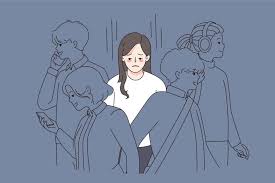
Relationship: Emotional Attachment

By: Alina S. Ogoltsova

Emotional Attachment in Relationship

Healthy, secure relationships are sustained through open, respectful, and emotionally attuned communication. Yet many people grow up without consistent models of what such communication looks like in practice. When early relational environments lack emotional safety or clarity, individuals may enter adulthood without the skills needed to express needs, set boundaries, or navigate conflict effectively. When affection or relief is intermittently paired with relational toxicity, the nervous system can learn to associate stress with attachment. Over time, the body adapts to a cycle of heightened alertness followed by brief soothing, blending anticipation, relief, and bonding into one emotional experience. As a result, the relationship may feel intense or “alive” not because it is healthy, but because it repeatedly activates and calms the stress response. This conditioning can make similar unstable dynamics feel familiar or normal later on, leading someone to unconsciously seek them again. Emotional attachment in relationship is essential for pair bonding, trust, deep connection, and a sense of safety. However, relationships are not defined as ‘toxic’ by the presence of conflict, emotional intensity, or temporary distress, but by persistent patterns that undermine psychological safety, autonomy, and emotional well-being. A relationship becomes ‘toxic’ when connection is maintained through fear, instability, or emotional manipulation rather than mutual respect, consistency, and care. Then one or both partners rely on control, withdrawal, intermittent affection, or chronic invalidation to sustain attachment, the relationship shifts from being a source of support to a source of harm. Thus, ‘toxicity’ is defined not by how intensely partners feel for one another, but by whether the relationship consistently compromises emotional safety, identity, and agency. This often occurs when the relationship become the primary or sole source of validation, security, or meaning.

Why do people remain in unhealthy relationship despite recognizing the harm?

An individual may intellectually recognize that a relationship is “toxic”, yet still struggle to leave—or find themselves returning after the emotional intensity of separation. This difficulty is not a reflection of loving chaos, masochism, or personal dysfunction. Rather, some relationships fill a profound void by providing a sense of importance, belonging, or identity. Over time, the relationship can become intertwined with one`s sense of self, creating a feeling of wholeness through connection. In this context, leaving does not merely mean ending a relationship; it can feel like losing a newly formed identity—letting go of a part of oneself without knowing how to replace it with something equally meaningful. Furthermore, the absence of healthy parental models of a relationship can carry forward into adulthood, shaping insecurities, limited capacity for self-soothing, poor stress regulation, and a fragile sense of identity. These vulnerabilities increase the likelihood of forming unhealthy attachments, in which partner becomes the primary outlet for unmet emotional needs. When the partner resists, withdraws, or fails to meet these expectations, the individual may experience heightened anxiety, leading to increased clinging, control, or other maladaptive behaviors that perpetuate the cycle.

Over time, the partner`s autonomy may feel threatening or intolerable, as emotional stability becomes dependent on compliance and reassurance. This dynamic reinforces itself, not through genuine intimacy, but through emotional dependency that is misaligned with the demands of a healthy relationship and the realities of everyday life.

References

  Bowlby, J. (1969/1982). Attachment and Loss: Vol. 1. Attachment. Basic Books.

  Bowlby, J. (1988). A Secure Base: Parent-Child Attachment and Healthy Human Development. Basic Books.

  Freyd, J. J. (1996). Betrayal Trauma: The Logic of Forgetting Childhood Abuse. Harvard University Press.

  Gottman, J. M., & Silver, N. (2015). The Seven Principles for Making Marriage Work. Harmony Books.

  Herman, J. L. (1992). Trauma and Recovery. Basic Books.

  Siegel, D. J. (2012). The Developing Mind: How Relationships and the Brain Interact to Shape Who We Are. Guilford Press.

  Van Der Kolk, B. A. (2014). The Body Keeps the Score: Brain, Mind, and Body in the Healing of Trauma. Viking.

Obsessive Compulsive Disorder: What is OCD?

By Danielle Mendler

        Obsessive-Compulsive Disorder is a disorder where obsessions lead to compulsive behavior. These obsessions take the form of intrusive thoughts that cause discomfort, anxiety, and stress. The compulsions that follow these thoughts are actions that people struggling with OCD take to relieve those intense unpleasant feelings.

A notorious OCD stereotype is washing hands. Someone with Obsessive Compulsive Disorder may get an intrusive thought into their head along the lines of “You haven’t been careful enough today. You have to wash your hands again because you didn’t do it right the first time. If you don’t you will get everyone you love sick because YOU weren’t careful.” These thoughts consume those with OCD and the victim will believe everything this voice is telling them. Therefore, to stop the anxiety and guilt, they will wash their hands over and over again until it feels right. This will repeat multiple times a day causing extreme stress on this person and getting in the way of their daily routine.

            However, OCD isn’t always about staying clean or being organized. These obsessions can take the form of anything. This disorder attacks what the victim cares about most. An example is Scrupulosity. Scrupulosity is when people have intense OCD attacks on their religion and morals. This will happen when a person is extremely invested in their faith. The disorder overtakes what they enjoy and causes stress and chaos to it, making them feel like they will never be kind enough or religious enough. Some OCD takes the form of more irrational thoughts and actions that don’t always make sense to everyone else except them. People will believe that if they don’t knock on the floor four times, somebody they love will get hurt, just because their brain is telling them that. This obsessive thought causes enough internal conflict to result in the victim committing the compulsion of hitting the floor. It may seem harmless but these thoughts and actions over take people lives.

            Obsessive Compulsive Disorder can create many obstacles in daily life. People with OCD have trouble showing up on time to school or work, because they compulsions made them late. They can be under a constant state of stress and can have panic attacks over triggering words/actions that may not have significance to anyone else. If their compulsive actions include any physical activity (scratching, washing, etc.) it can cause bodily harm.

            Obsessive Compulsive Disorder is a very serious mental health crisis that affects people daily. If you or someone you know is struggling with OCD or any other stress please contact Arista Counseling and Psychological Services at 201-368-3700.

Wild Introvert: Could You Be One?

Wild Introvert: Could you be one?

By Rachel Wang

Everyone knows what it means to be either introverted or extroverted: You either gain energy from being alone, or from being around others in social settings. However, not all introverts are the same, and not all extroverts are the same. Some people may fall under what’s known as a “wild introvert”, an unofficial term coined by Dr. Scott Barry Kaufman to describe someone who is both introverted and scores extremely high in openness to experience. 

Wild introverts have a strong inclination toward adventure, novelty, and sensory experiences, often needing time to recharge after engaging in these activities. This concept highlights that introversion is not necessarily synonymous with shyness or a lack of engagement with the world; rather, simply a preference for certain types of stimulation and social interaction. These stimuli are linked to dopamine which explains why research has found that extroverts get so energized and excited from positive social attention. Introverts, on the other hand, just don’t get as worked up about that. And in the case of the wild introvert, they might get energized or excited over other, non-social stimuli, such as those related to intellect, imagination, and new ideas.

So how does one tell if one is a wild introvert or not? If you agree with the following statements, you might just be a wild introvert:

  • I don’t tend to show enthusiasm in social situations, but I light up when the topic changes to one of my genuine interests.
  • On the outside, it may seem like I’m boring and vanilla, but inside my head, there lies a rich, imaginative world.
  • I have a ravenous desire to learn novel and complex things, but I can’t stand events where I am forced to network and meet lots of new people.
  • I generally prefer quiet and low stimulation, but when I feel comfortable/safe, I am a big sensation seeker.

Whether you’re an introvert, extrovert, or wild introvert, the key to being happy is self-acceptance. The best thing you can do for yourself is to live life on your own terms, whether that’s through quiet solitude, partying, or getting lost in a good book.

If you or someone you know is struggling with mental health, please contact our psychotherapy offices in New York or New Jersey to talk to one of our licensed professional psychologists, psychiatrists, psychiatric nurse practitioners, or psychotherapists at Arista Counseling and Psychotherapy. Contact our Paramus, NJ, or Manhattan, NY offices respectively, at (201) – 368-3700 or (212)-722-1920 to set up an appointment. For more information, please visit https://www.counselingpsychotherapynjny.com/

Source: Are You a Wild Introvert? | Psychology Today

Why Do People Join Cults?

By: Tehila Strulowitz

                On March 26th, 1997, police entered a mansion in the exclusive Rancho Santa Fe, a suburb of San Diego, California, where they found 39 bodies in matching dark clothes and Nike sneakers, all having died from mass suicide. These people were members of a religious cult called “Heaven’s Gate,” where the leaders taught that suicide would release them from their physical “bodily containers” and arrive on an alien spacecraft that was concealed behind the rare Hale-Bopp comet. The cult was led by Bonnie Lu “Ti” Nettles, who was the nurse of a man named Marshall “Do” Applewhite after he survived a nearly fatal experience. Together, Nettles and Applewhite convinced 20 people from Oregon to join their cult in 1975, coaxing them to leave their lives (family, money, possessions), and move to Colorado. In 1985 Nettles died, and the spacecraft still hadn’t appeared to take the cult followers to the “kingdom of heaven.” However, at the beginning of the 1990s, Applewhite restarted the cult, engaging new followers. After the comet Hale-Bopp was discovered in 1995, the members of Heaven’s Gate were confident that an extraterrestrial spacecraft was on its way, hidden from sight behind the comet. In October 1996, Applewhite began renting a mansion for the cult (telling the owner that they were all angels with Christian faith – Marshall Applewhite preached sexual abstinence, with some of the male members of the group copying him and having castration operations). In March of 1997, Hale-Bopp was the closest to Earth it could ever be, and so Applewhite and 38 cult members drank a mix of vodka and phenobarbital and laid down on beds to die, waiting for their bodies to leave Earth and enter the extraterrestrial spacecraft so they could go through Heaven’s Gate and experience a new, elevated existence.

                History is marked with a considerable amount of cults, with several receiving a celebrity level of notoriety and fame, like the Manson Family of hippie youth turned barbaric killers, Good News International Ministries who successfully convinced their followers that they must starve to death to meet Jesus, the Branch Davidians that had the infamous 51-day siege, NXIVM which convinced women to join their exclusive and abusive group hidden within a self-help organization, and sadly, many more. Steven A. Hassan PhD, a psychologist specializing in cults following his own cult experience, explains that the main motivations of cult leaders, which results in them successfully (or hopefully unsuccessfully) recruiting followers, are factors such as “due and undue influence,” narcissistic personalities that thrive on submissiveness, and “systematic social influence processes.” Hassan vitally points out that there are some cults that are okay, but this article focuses more on the dangerous, extreme cults. The main areas of potential followers that cult leaders exploit are the person’s weakness and susceptibility (Hassan), the theory of cognitive dissonance, and obedience (Discovery Magazine). The common thread is social influence, whether it be from the cult leaders themselves or claims of what society does and/or thinks.

                It is important to differentiate between cults and religions. While some cults are based on religions or consider themselves religions, they are vastly removed from the functions, definitions, and purposes of religion and what is required to be a part of one. Religions tend to be larger in size and more positively received and accepted, while cults tend to be smaller and shunned by society. Additionally, usually religions are based on faith in the existence of a god and have moral rules to prompt their followers to live a good life, while cults tend to be more focused on extreme loyalty towards the egocentric cult leader. Cult leaders will use devices such as manipulation, deception, and obedience to make their prospective followers and their pledged fundamentalists remain in their loop.

                Reactions and susceptibility to cults involve feelings of anxiety, identity confusion, depression, paranoia, and so on. Disorders related to cults include acute stress disorder, depression, generalized anxiety disorder, panic disorder, paranoia, post-traumatic stress disorder, and substance use disorder.

If you or someone you know is struggling with their mental health, please contact our psychotherapy offices in New York or New Jersey to talk to one of our licensed professional psychologists, psychiatrists, psychiatric nurse practitioners, or psychotherapists at Arista Counseling & Psychotherapy. Contact our Paramus, NJ or Manhattan, NY offices respectively, at (201) 368-3700 or (212) 722-1920 to set up an appointment. For more information, please visit https://aristapsychiatrypsychotherapy.com/

Seasonal Affective Disorder

By: Nicole Cutaia

Seasonal Affective Disorder

As the autumn leaves fall, everyone copes with the seasons changing differently. Some embrace the changes, while others may have difficulty with the adjustments. Seasonal Affective Disorder (SAD) is a type of depression that occurs during specific seasons. Typically, Seasonal Affective Disorder is most common in the fall and winter months when there is reduced sunlight. The lack of sunlight affects the body’s internal clock, hormone levels, and chemical messengers, Various symptoms of Seasonal Affective Disorder range from feelings of sadness, low energy, irritability, difficulty sleeping, and changes in appetite.

Multiple treatments are available for managing Seasonal Affective Disorder such as light therapy, counseling or psychotherapy, medication such as selective serotonin reuptake inhibitors (SSRIs), and cognitive behavioral therapy (CBT).

Additionally, there are coping methods individuals can try at home. The methods include going outside to get natural sunlight, eating vitamin D-enriched foods, taking vitamin D supplements, avoiding stressful situations, and consuming a healthy and balanced diet. Other methods one can try are getting plenty of outdoor and indoor exercise, talking to family and friends about Seasonal Affective Disorder, making your space as light and airy as possible, and sleeping for at least 7 to 8 hours every night.

It can be difficult to see a loved one struggle with Seasonal Affective Disorder. If you or a family member are struggling with mental health, please contact our psychotherapy offices in New York or New Jersey to talk to one of our licensed professional psychologists, psychiatrists, psychiatric nurse practitioners, or psychotherapists at Arista Counseling & Psychotherapy. Contact our Paramus, NJ, and Manhattan, NY offices respectively at (201) 368- 3700 or (212) 722- 1920 to set up an appointment. For more information, please visit http://www.counselingpsychotherapynjny.com/

Anxiety: Social Anxiety

Anxiety: Social Anxiety

By: Stefani Stojanoska

Social anxiety disorder is a persistent and intense fear of social settings. People who have social anxiety are afraid of being judged by others or humiliated. This disorder can affect an individual’s daily life such as work and school. Being able to do daily things such as eating or using the bathroom can cause an individual to have an intense amount of anxiety.

Here are some symptoms of Social Anxiety Disorder

  1. Avoiding eye contact and speaking in a soft voice
  2. Feeling self-conscious or feeling others are always judging you
  3. Sweating, trembling, shaky voice, and rapid heartbeat when in social settings
  4. Worrying about upcoming events or activities

Some treatments for Social Anxiety Disorder

  1. Cognitive behavioral therapy-This therapy helps individuals learn how to think, behave, and react to social situations to help reduce anxiety
  2. Medications are also helpful for social anxiety. The best types of medications for this disorder are SSRIs and SNRIs. SSRIs increase serotonin levels while SNRIs increase serotonin and norepinephrine levels.
  3. Hypnotherapy is a great way to help reduce anxiety. Individuals who choose hypnotherapy will learn how to get into a state of relaxation. This will allow them to learn how to relax their mind without feeling anxious.

If you or someone you know is struggling with anxiety or their mental health, please contact our psychotherapy offices in New York or New Jersey to talk to one of our licensed professional psychologists, psychiatrists, psychiatric nurse practitioners, or psychotherapists at Arista Counseling & Psychotherapy. Contact our Paramus, NJ, or Manhattan, NY offices respectively, at (201) 368-3700 or (212) 722-1920 to set up an appointment. For more information, please visit https://aristapsychiatrypsychotherapy.com/

Major Depressive Disorder: Depression

Major Depressive Disorder: Depression

By: Isabella Favuzza

Sadness is a common emotion expressed through tears or gloominess. This feeling arises for a variety of reasons, including the loss of a partner, job, house, friendship, etc. Sadness is an intense emotion that every individual feels throughout their life. However, persistent sadness may transform into depression, a mental illness. One may struggle with depression following two weeks of lasting unhappiness, constant exhaustion, and a lack of motivation. Major depressive disorder, also known as MDD, is a clinical term to describe symptoms of perpetual sadness and a loss of interest. MDD can cause numerous emotional and psychological symptoms and prevent individuals from performing daily activities.

Depression involves symptoms such as lethargy, angry outbursts, and feelings of emptiness, reduced appetite, and suicidal ideations. Those struggling with depression find it challenging to partake in normal day-to-day activities like work, school, or relationships. Some may feel unhappy or gloomy without knowing why. Psychological and psychiatric treatment can significantly support those with MDD. A psychologist can identify the root of depression and provide specific therapies like CBT, talk therapy, or hypnosis to reduce these feelings of unhappiness. Psychiatric medications or antidepressants like Lexapro or Sertraline can visibly reduce depressive symptoms through serotonin reuptake. Ultimately, proper treatment can offer those with MDD an opportunity to regain control and provide a better quality of life.

If you or someone you know is struggling with depression, please contact our psychotherapy offices in New York or New Jersey to talk to one of our licensed professional psychologists, psychiatrists, psychiatric nurse practitioners, or psychotherapists at Arista Counseling & Psychotherapy. Contact our Paramus, NJ or Manhattan, NY offices respectively, at (201) 368-3700 or (212) 722-1920 to set up an appointment. For more information, please visit http://www.counselingpsychotherapynjny.com/

Source:

https://www.mayoclinic.org/diseases-conditions/depression/symptoms-causes/syc-20356007#:~:text=Also%20called%20major%20depressive%20disorder,life%20isn’t%20worth%20living.

Somatic Therapy

Somatic Therapy

By: Amelia Amen

When an individual goes through a traumatic experience, the trauma they experienced may often remain in their body. Somatic therapy is a rising form of therapy that allows individuals to engage in a mind-body connection in order to minimize any arousals of stress. The practice of somatic therapy involves acknowledging how stress and trauma are experienced in the body, then following with engaging in body techniques such as dancing, body scans, etc. The re-occurring feeling of trauma being stored in the body is the result of the nervous system remaining in survival mode, leading to high levels of cortisol being continually released. Cortisol is one of the leading hormones that increases stress levels in the body. Incorporating somatic therapy with CBT (Cognitive Behavioral Therapy) is a gentle approach to managing the body’s stored trauma. Somatic therapy can benefit individuals with PTSD, anxiety, depression, coping with grief, experiencing chronic illness or pain, sexual dysfunction, addiction, insecurities, abuse, and more.

Types of Somatic Therapies

  • Hakomi Method: Encouraging the growth of an individual by using mindfulness and experimental practices. It is a holistic approach that focuses on increasing our internal awareness
  • Grounding: Connecting the body to the earth. The individual will use sensory skills to feel energy from the ground to their feet. This is to embody and experience the present moment.
  • Titration & Pendulation: Slowing down and portioning the recollection of trauma to reduce immediate emotional and physiological responses. Pendulation, moving back and forth between feelings, is needed to achieve titration in order to make sensations of stress more manageable.
  • EMDR (Eye Movement Desensitization and Reprocessing): The process of moving your eyes in a specific direction while discussing or embodying traumatic memories. The goal of EMDR therapy is to encourage the brain to process any discomforting experiences and memories. 
  • Resourcing: A therapist will have an individual recall a precious memory or resources that are attached to positive and calming feelings. An example of this could be reminding oneself of a location or person in which they find happiness.

Some benefits that may be a result of somatic therapy include self-regulation in the nervous system, increase in resilience and re-empowerment, developing bodily awareness, and releasing tension along with other positive results. It is important to remember that somatic therapy is not meant to be in replacement of CBT. When experiencing emotions stemming from anxiety, trauma, or depression, it is beneficial to attend talk therapy sessions as a primary source of mental health care, with somatic therapy being only an addition. The goal of somatic therapy is to find relief in your mind and body’s negative sensations to produce more calming and comforting feelings.

If you or someone you know is seeking therapy please contact our psychotherapy offices in New York or New Jersey to talk to one of our licensed professional psychologists, psychiatrists, psychiatric nurse practitioners, or psychotherapists at Arista Psychotherapy & Psychiatric Services. Contact our Manhattan, NY or Paramus, NJ offices respectively at (201) 368-3700 or (212) 722-1920 to set up an appointment. For more information, please visit https://www.counselingpsychotherapynjny.com

Sources: https://psychcentral.com/blo

Motivation: How to Complete your To-Do List in the Midst of a Depressive Episode

Motivation: How to Complete your To-Do List in the Midst of a Depressive Episode

By, Dyami Efroimson

A major symptom of depression that can make life difficult for those experiencing it is the loss of motivation. Activities one may have enjoyed in the past, no longer bring joy and everyday responsibilities feel impossible to accomplish.  

What Causes This?

With depression, there is a severe lack of dopamine which is responsible for the rewarding feeling we get when we complete at task. This chemical imbalance in conjunction with other factors like lifestyle choices, genetic predisposition, and medication causes a decrease in one’s motivation. The thought of doing any activity can feel overwhelming, causing those struggling with depression to be unable to push themselves to complete even simple tasks.

How does one deal with this lack of motivation?

The key thing is: be patient with yourself. Do not beat yourself up for not being able to do seemingly “easy” tasks. Break the task making you feel overwhelmed into smaller parts that seem a little more doable. For example, if you’re having trouble getting out of bed, start with just sitting up if you are lying down. Or if you need to clean your room, just focus on picking up one piece of clothing off the ground, then another, then another, until you have no clothes left to pick up. By breaking your projects down into simpler tasks, the larger items on your to-do list become a little more manageable. As you complete these bite-sized tasks, your motivation will slowly make its way back as you build healthy habits, and your to-do list will get smaller and smaller.

If you or someone you know is struggling with their mental health please contact our psychotherapy offices in New York or New Jersey to talk to one of our licensed professional psychologists, psychiatrist, psychiatric nurse practitioners, or psychotherapists at Arista Counseling and Psychotherapy. Contact our Paramus, NJ or Manhattan, NY offices respectively, at (201) 368-3700 or (212) 722-1920 to set up an appointment. For more information, please visit http://www.counselingpsychotherapynjny.com/

Dementia: What are the different dementia diagnoses?

Dementia: What are the different dementia diagnoses?

By: Keely Fell

Dementia is among one of the most prevalent conditions in individuals over 60. In 2019, a record 50 million individuals, worldwide, were living with a diagnosis of some form of dementia. Dementia is defined as a syndrome where there is major deterioration in memory, behavior, and thinking, which limits an individual’s ability to perform everyday tasks.

When diagnosing dementia, doctors will look at six areas of cognitive functioning. Those areas are:

  • Complex attention: Which is the area that refers to sustained focus and switching between tasks.
  • Learning and memory: This is the area that recalls recent and remote memory, as well as performing tasks.
  • Executive Function: This refers to skills such as prioritizing, paying attention, and planning.
  • Language: This refers to expression in written and spoken forms.
  • Perceptual-Motor Function: This understands shapes, directions, and locations.
  • And lastly, Social Cognition: Which refers to the ability to interact with others by recognizing facial expressions and body language.

Dementia is used as an umbrella term for many different sub-dementia disorders. The most common in the United States is, Alzheimer’s disease. Alzheimer’s disease is when the neurons in the brain are slowly decaying overtime causing cognitive deficits in memory, and over time total mental ability. After Alzheimer’s the next most common dementia diagnosis is Vascular Dementia. Vascular dementia develops when the brain is deprived of essential nutrients and oxygen. Over time an individual with Vascular Dementia may experience mental slowness, aphasia, and trouble with basic functions such as, walking or urinating. This is different from Alzheimer’s because with Vascular Dementia, an individual is experience problems in memory retrieval. Dementia with Lewy Bodies is a type of dementia that has a combination of features of both Parkinson’s disease, and Alzheimer’s disease. Generally, an individual diagnosed with Dementia with Lewy Bodies may experience muscle symptoms that are accompanied by cognitive deficits as well. Less common than most other dementias is Frontotemporal Lobar Dementia. This dementia appears with behavior and language changes.  Frontotemporal Lobar Dementia is caused by progressive nerve cell loss in the brain’s frontal and temporal lobes.

A dementia diagnosis can be hard, and understanding how it affects the brain can help with coping with a diagnosis.

If you or someone you know is experiencing these symptoms, please contact our psychotherapy offices in New York or New Jersey to talk to one of our licensed professional psychologists, psychiatrists, psychiatric nurse practitioners, or psychotherapists at Arista Counseling & Psychotherapy. Contact our Paramus, NJ or Manhattan, NY offices respectively, at (201) 368-3700 or (212) 722-1920 to set up an appointment. For more information, please visit http://www.counselingpsychotherapynjny.com/ .

Sources:

https://www.alz.org/alzheimers-dementia/what-is-dementia/types-of-dementia/frontotemporal-dementia                                                                                    https://www.asccare.com/5-interesting-facts-dementia/                                              https://www.who.int/news-room/fact-sheets/detail/dementia https://www.brightfocus.org/alzheimers/article/whatdementia?gclid=Cj0KCQiAkePyBRCEARIsAMy5Scsycdvh3p-rWx10ZmnEFZCbjdCY8f6JnSc4vJKHO9EO7qiuqshYqHMaAugEEALw_wcB

Image Source:

https://www.dfwsheridan.org/types-dementia