Couple’s Counseling: How to know When You and Your Partner Should Attend

Couple’s counseling is a form of psychotherapy that is focused on helping the couple better understand their relationship, overcome challenges in a healthy and effective way, and develop better ways of relating to and communicating with one another. Couple’s counseling is for any couple whether they are married, non-married, polyamorous, monogamous, long-distance, or in an open relationship. There are many areas that couple’s counseling can help with such as infidelity, challenges related to sex and intimacy, difficulty communicating with one another, and financial issues and concerns. An issue such as infidelity can be very difficult to overcome considering it causes there to be a lack of trust; however, many couples find that after attending couple’s counseling they come back stronger than before.

There are some key signs of when it is time to see a therapist as a couple. If you and your partner are considering splitting up, if you are feeling stuck on how to resolve a reoccurring conflict, or you and your partner are experiencing an extreme stressor which is affecting the relationship such as an affair or recently having a baby, then it may be time to seek help together. Couple’s counseling does not always have to be as a result of a failing relationship. Many couples go to counseling together in an effort to continue to strengthen and build their relationship. If your partner is not interested in seeking therapy together, individual services are also available and can be beneficial if you need support.

If you and your partner are seeking couple’s counseling, please contact our psychotherapy offices in New York or New Jersey to talk to one of our licensed professional psychologists, psychiatrists, psychiatric nurse practitioners, or psychotherapists at Arista Counseling & Psychotherapy. Contact our Paramus, NJ or Manhattan offices respectively, at (201) 368-3700 or (212) 722-1920 to set up an appointment. For more information, please visit http://www.counselingpsychotherapynjny.com/

Sources

https://www.mindbodygreen.com/articles/when-to-go-to-couples-therapy-and-how-long-it-takes-to-work

https://zencare.co/therapy-type/couples-counseling

Image Source

Depression: How Does it Affect Relationships

By: Jasmyn Cuate

Depression is one of the most common types of mental illness that Americans struggle with each day affecting approximately 1 in 6 Americans. Depression is characterized by feelings of sadness, emptiness, or hopelessness, irritability, angry outbursts, or low frustration tolerance, loss of interest in or ability to enjoy usual activities, sleep disturbance, fatigue and lack of energy, appetite disturbance, agitation, anxiety, feelings of worthlessness and guilt, difficulty concentrating, remembering things, making decisions, recurring thoughts of death, and thoughts of suicide.

Many individuals struggling with depression describe it as living in a heavy fog where you lose clarity about your life, start to have self-doubt, changing the way you view friends, family, and partners as well as how you think they view you.

Although many relationships experience problems, a partner dealing with depression or trying to help their partner overcome depression, may find themselves having more challenges to their relationship. Depression can cause overwhelming emotions such as detachment, distrust, and vulnerability. It can cause the partner to pay little attention to the other partner, be less involved, more irritable, start arguments, and have trouble enjoying time together. Factors such as high levels of conflict, lack of communication, difficulty resolving problems, and withdrawal can lead to depression.

Untreated depression can cause a cycle of self-destructive behaviors that can tear relationships apart. Research has shown that when one member of a couple has depression, there is an impact on the well-being of the other partner as well. In fact, BMC Public Health has found that partners of those with mental illnesses, show signs of anxiety and depression themselves.

If you or someone you know is seeking therapy for depression or experiencing relationship problems due to depression, please contact our psychotherapy offices in New York or New Jersey to talk to one of our licensed professional psychologists, psychiatrists, psychiatric nurse practitioners, or psychotherapists at Arista Counseling & Psychotherapy. Contact our Paramus, NJ or Manhattan, NY offices respectively, at (201) 368-3700 or (212) 722-1920 to set up an appointment. For more information, please visit http://www.counselingpsychotherapynjny.com/

Sources: https://www.psychologytoday.com/us/basics/depression/signs-depression

https://blogs.scientificamerican.com/mind-guest-blog/the-warning-signs-that-depression-is-affecting-your-relationship/

Anxiety: Generalized Anxiety Disorder (GAD): Signs, Symptoms, and Treatment

Anxiety: Generalized Anxiety Disorder (GAD): Signs, Symptoms, and Treatment

By Celine Bennion

Generalized Anxiety Disorder (GAD) is a common anxiety disorder in the United States, currently impacting 3.1% of the population; as many as 5.7% of U.S. adults report experiencing this disorder at some point in their lives. GAD is characterized by feelings of excessive worry which have no particular trigger. This anxiety can be felt about school, work, social interactions, or even common, everyday events. These behavior patterns and cognitive issues become disordered when they begin to disrupt normal functioning.

Symptoms of GAD include the following: restlessness, being wound-up or on-edge, fatigue, trouble concentrating, irritability, muscle tension, and sleeping problems including difficulty falling/staying asleep or unsatisfying sleep. At least three of these symptoms must be present for at least six months for a patient to be diagnosed with GAD.

Treatment:

Cognitive Behavior Therapy (CBT) is a type of therapy that is particularly helpful in treating anxiety disorders, including GAD. This therapy involves teaching patients different ways to approach anxiety inducing situations by changing how they think, behave, and react to them. It also helps to implement social skills in patients.

Medications are another form of treatment for GAD. It should be noted, however, that medications are used to help decrease symptoms of a disorder and do not cure it entirely. Anti-anxiety and anti-depressant medications are commonly used to treat GAD. Anti-depressants work for both depression and anxiety by altering chemicals in the brain, specifically serotonin and norepinephrine. They help to regulate mood and relieve symptoms associated with these disorders. Selective serotonin reuptake inhibitors (SSRIs) and serotonin norepinephrine reuptake inhibitors (SNRIs) are the most commonly used anti-depressants. Anti-anxiety medications, such as benzodiazepines, are effective in treating anxiety symptoms quickly. They are often used as a second option when anti-depressants are not enough to relieve symptoms.

If you or someone you know is seeking therapy for an anxiety disorder, please contact our psychotherapy offices in New York or New Jersey to talk to one of our licensed professional psychologists, psychiatrists, psychiatric nurse practitioners, or psychotherapists at Arista Counseling & Psychotherapy. Contact our Paramus, NJ or Manhattan, NY offices respectively, at (201) 368-3700 or (212) 722-1920 to set up an appointment. For more information, please visit http://www.counselingpsychotherapynjny.com/

Sources:

https://www.nimh.nih.gov/health/topics/anxiety-disorders

https://adaa.org/understanding-anxiety/generalized-anxiety-disorder-gad

https://adaa.org/blog/category/generalized-anxiety-disorder-gad (photo)

Night Terrors: Terror Filled Sleep for Children

Unlike nightmares, night terrors are consistent episodes of intense screaming, crying, trashing, or fear during sleep. These episodes are reoccurring and usually occur in children between the ages of 3-12. About 1 to 6 in 100 children have night terrors, which occur in both boys and girls and children of all races. Night terrors are very rare, occur 3-6% in children, and typically tend to run in families. About 80% of children have a family member who experiences the same thing.

How are night terrors different from nightmares?

  • Nightmares commonly occur during REM sleep, while night terrors do not and will occur during non-REM sleep. You might find that it is hard to wake your child during a night terror episode and they will most likely not remember what occurred the next morning.

Signs & Symptoms:

  • Fast heart rate
  • Fast breathing
  • Sweating
  • Dilated pupils
  • Flailing around in bed
  • Screaming
  • Looks awake but confused
  • Not talking
  • Non-responsive
  • Cannot recognize that a parent is there
  • Acts upset or scared

What causes Night Terrors?

Night terrors are caused by an over-arousal of the central nervous system during sleep. The following factors have been noted in children who have experienced night terrors:

  • Overtired, ill, or stressed
  • Taking new medicine
  • Sleeping in a new environment
  • Not getting enough sleep
  • Having too much caffeine

How can you help your child?

The best way to help your child is to wait it out and make sure they do not get hurt during the night terror episode. Also, it is important to note that it is best to not wake your child during the episode. Waking them during this episode can cause more disorientation and confusion. However, you can help prevent future night terrors by:

  • Reducing the child’s stress
  • Create a bedtime routine that is relaxing and simple
  • Make sure the child gets enough sleep
  • Do not let your child stay up too late

If night terrors occur repeatedly, talk to your child’s doctor to see if further evaluations and/or referrals are needed.

If you are someone you know appears to be suffering from issues linked to night terrors, please contact our psychotherapy offices in New York or New Jersey to talk to one of our licensed professional psychologists, psychiatrists, psychiatric nurse practitioners, or psychotherapists at Arista Counseling & Psychotherapy. Contact our Paramus, NJ or Manhattan, NY offices respectively, at (201)368-3700 or (212)722-1920 to set up an appointment. For more information, please visit http://www.counselingpsychotherapynjny.com/.

Sources: https://kidshealth.org/en/parents/terrors.html

https://www.webmd.com/sleep-disorders/night-terrors

Image: https://www.alaskasleep.com/blog/night-terrors-vs-nightmares-how-to-help-terrified-child

Self-Harm: What You Need To Know

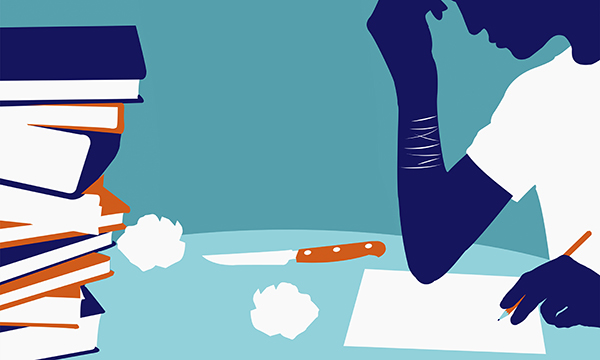
About 17% of all people will self-harm during their lifetime, however the actual rate is likely higher than this because of the shame and stigma that surrounds self-harm. Individuals self-harm as a way to deal with difficult feelings, or overwhelming situations and experiences, and can include cutting, burning, and scratching oneself. Self-harm can be difficult to understand, and can sometimes be confused with suicide attempts. Self-harm and suicide attempts are not the same thing, however, there is a strong association between the two. One common stereotype of self-harm is that it is “attention seeking”. The reality is that most self-harm is done in secrecy, and individuals often feel ashamed to ask for help.

There are several self-harm risk factors. These include struggling with mental health conditions, such as depression, anxiety, personality disorders, drug and alcohol use or addiction, and eating disorders. Self-harming can become physically addictive, as it is habit-forming, and individuals can come to rely on it as a coping mechanism for what they are going through.

Sharing your feelings with someone that you trust can help you self-harm less and feel less alone. If someone has disclosed to you that they engage in self-harm, it is important to be patient and educate yourself on why people self-harm and what you can do to help.

If you or someone you know is struggling with self-harm, please contact our psychotherapy/psychiatry offices in New York or New Jersey to talk to one of our licensed professional psychologists, psychiatrists, psychiatric nurse practitioners, or psychotherapists at Arista Counseling & Psychotherapy. Contact our Paramus, NJ or Manhattan, NY offices respectively, at (201) 368-3700 or (212) 722-1920 to set up an appointment. For more information, please visit http://www.counselingpsychotherapynjny.com/.

Sources

https://www.mind.org.uk/information-support/types-of-mental-health-problems/self-harm/about-self-harm/

Self-Harm Statistics

https://www.rethink.org/advice-and-information/about-mental-illness/learn-more-about-symptoms/self-harm/

Image Source

https://rcni.com/nursing-children-and-young-people/careers/research-and-commentary/improving-nursing-care-of-children-and-young-people-who-self-harm-81661

The Relationship between OCD and Eating Disorders

The Relationship between OCD and Eating Disorders

By: Suzanne Zaugg

Eating disorders are characterized as obsessive, repetitive thoughts, and ritualistic behaviors. Obsessive-compulsive disorder (OCD) is a common, chronic long lasting disorder that characterizes uncontrollable thoughts or behaviors that an individual may feel they need to repeat certain things over and over. Statistics show that people with eating disorders are more likely to show signs of OCD, due to the overlapping traits of both OCD and eating disorders.

Understanding the similarities and differences between eating disorders and OCD can help develop a more comprehensive understanding of a patient that presents both of these disorders. People with an eating disorder may experience intrusive thoughts about food and body image, and may develop ritualistic behaviors. Examples of ritualistic behavior pertaining to eating disorders include body checking for any changes in shape or size, frequent weight checking, and skipping meals. An important distinction between OCD and eating disorders lies in the relationship between the thought and action of the individual.  People with OCD are typically interested in ridding themselves of their thoughts and feelings whereas; people with eating disorders may feel more tied to the components of this disorder and feels as if it is a part of their identity.

Since both eating disorders and OCD share overlapping diagnostic characteristics, treatments will look similar. Both exposure therapy and cognitive behavior therapy are very helpful treatments for both eating disorders and OCD. Exposure therapy is a psychological treatment that involves exposing the patient to the anxiety source or its context without the intention to cause any danger. Also, cognitive-behavior therapy is a treatment approach that helps you recognize negative or unhelpful thought patters.

If you or someone you know is seeking therapy for an eating disorder, please contact our psychotherapy offices in New York or New Jersey to talk to one of our licensed professional psychologists, psychiatrists, psychiatric nurse practitioners, or psychotherapists at Arista Counseling & Psychotherapy. Contact our Paramus, NJ or Manhattan offices respectively, at (201) 368-3700 or (212) 722-1920 to set up an appointment. For more information, please visit http://www.counselingpsychotherapynjny.com/

Sources:

https://www.waldeneatingdisorders.com/blog/eating-disorders-and-ocd-a-complicated-mix/

Anxiety and Tests

Anxiety and Tests

 As universities are opening up and students are returning back to the classroom, students may feel increases in test anxiety as they return to an academic setting. While some anxiety may be a good motivator for studying, a crippling amount of anxiety can result in a decrease in grades and an increased risk of mental health issues. Here are some tips to conquer testing anxiety.

  • Study Smarter, Not Harder: Make sure you’re prepared for the test. Don’t cram and don’t spend too long stressing over the subject. Ask friends and family for help, and set goals to help you reach your potential in different subjects.
  • Focus on the positives: Negativity can be a self-fulfilling prophecy. If you tell yourself you’ll do poorly, you’ll end up not having the motivation to study and thus do poorly. Practice positive self-talk and set realistic goals for yourself.
  • Build Good Habits: Manage your time wisely. Make sure to get enough sleep the day before the test and eat something nutritious the morning of the test.
  • Do Relaxation Exercises: There are a number of ways to alleviate physical symptoms. Do breathing exercises, count backwards from one hundred, and meditate. Find out which relaxation technique works best for you.

            As everyone returns to the classroom there will be an adjustment period. Be proactive in helping your test anxiety and practice the methods that work best for you.

If you or someone you know is seeking therapy for an anxiety disorder, please contact our psychotherapy offices in New York or New Jersey to talk to one of our licensed professional psychologists, psychiatrists, psychiatric nurse practitioners, or psychotherapists at Arista Counseling & Psychotherapy. Contact our Paramus, NJ or Manhattan, NY offices respectively, at (201) 368-3700 or (212) 722-1920 to set up an appointment. For more information, please visit http://www.counselingpsychotherapynjny.com/

SOURCE: https://www.therapistaid.com/therapy-guide/treating-test-anxiety#references

Abuse: Signs of Gaslighting in an Emotionally Abusive Relationship

Abuse: Signs of Gaslighting in an Emotionally Abusive Relationship

By: Julia Taormina

An emotionally abusive relationship can sometimes go undetected, as there is no physical evidence of abuse. Thus, it is important to be aware of signs that can indicate you or someone you know is in an emotionally abusive relationship. One of the most unnoticed signs is gaslighting.

As defined by the National Domestic Violence Hotline, “gaslighting is an extremely effective form of emotional abuse that causes a victim to question their own feelings, instincts, and sanity, which gives the abusive partner a lot of power.” Gaslighting is typically gradual throughout the course of a relationship, making it easy to go unnoticed in the beginning stages. It can start out with small comments such as: “I don’t know what you’re talking about,” or “you’re too sensitive,” and leave you questioning yourself.
Listed below are multiple gaslighting techniques an abusive partner may use:

  • Withholding: pretends not to understand or refuse to listen
  • Countering: questions the victim’s memory of events
  • Blocking / Diverting: changes the subject or questions the victim’s thoughts
  • Trivializing: makes the victim’s feelings appear unimportant

Throughout the gaslighting techniques, there is a consistent theme of an abusive partner invalidating the victim as a whole. The victim may find they are constantly second-guessing themselves, feel as if they are going crazy, constantly make excuses for their partners’ behaviors, cannot do anything right, and overall feel that something is wrong in the relationship but cannot quite put it into words. If you feel any of these may apply to your relationship, you are not alone.

If you or someone you know is seeking therapy, please contact our psychotherapy offices in New York or New Jersey to talk to one of our licensed professional psychologists, psychiatrists, psychiatric nurse practitioners, or psychotherapists at Arista Counseling & Psychotherapy. Contact our Paramus, NJ or Manhattan, NY offices respectively, at (201) 368-3700 or (212) 722-1920 to set up an appointment. For more information, please visit http://www.counselingpsychotherapynjny.com/

Source:
https://www.thehotline.org/resources/types-of-abuse/

Image Source:
https://themighty.com/wp-content/uploads/2020/08/Untitled-design-2020-08-07T105137.107-1280×427.png?v=1597442092

Borderline Personality Disorder in Men

Borderline Personality Disorder in Men

By Jenn Peraza

Borderline Personality Disorder (also known as BPD) is a personality disorder that is categorized in the DSM-V by intense fears of abandonment, emotional instability in everyday life and relationships, and a distorted sense of self. Studies have found that while BPD is equally as prevalent in men as it is in woman, statistically speaking, seventy-five percent of people with BPD are female. So why are females most likely to get diagnosed with BPD?

While the criteria for men and women with BPD are the same, men and women are more likely to exhibit different maladaptive behaviors. Women will most likely self-harm through eating disorders and cutting while men will more likely self-harm using substances and head banging. Due to this, men are more likely to end up in prison for violent behavior while women are more likely to seek mental health resources to deal with their self-harm.

There’s also a societal stigma around men receiving mental health help. While women are seen as emotional creatures, men are seen as unemotional and are told to “suck it up” or “man up” when they’re upset. Another factor is that the maladaptive behaviors of BPD are discouraged in women and encouraged in men. Men who have tumultuous relationships, aggressive behavior, and exert violent behavior are more likely praised in society than women who express the same symptoms.
Despite this, it is necessary to clear one’s mind of what is seen as typical behavior for men and to encourage the men in your lives to seek mental health help. By overcoming stigmas, more men can receive the necessary help for BPD and live fulfilling lives.

If you or someone you know is seeking therapy for a personality disorder, please contact our psychotherapy offices in New York or New Jersey to talk to one of our licensed professional psychologists, psychiatrists, psychiatric nurse practitioners, or psychotherapists at Arista Counseling & Psychotherapy. Contact our Paramus, NJ or Manhattan, NY offices respectively, at (201) 368-3700 or (212) 722-1920 to set up an appointment. For more information, please visit http://www.counselingpsychotherapynjny.com/

SOURCE:  https://www.verywellhealth.com/borderline-personality-disorder-in-men-5096081

Managing Eating Disorders during the Holidays

By: Suzanne Zaugg

Holidays are a described as being, “the most wonderful time of year” filled with joy and love, it is a time when families to come together. Most, people are gathered around in the season of giving celebrating their holiday cheer, while, people with mental health issues, struggle more throughout the holiday season. According to the American Psychological Association, 38% of people tend to feel their stress increase during the holiday season, which can lead to physical and mental health disorders, such as eating disorders. Signs of an eating disorder include feeling stressed around food, fearful of weight gain, guilt after eating, and missing events that are food focused. These signs tend to increase through the holiday season, so it is important to keep an eye out if you or a loved one start to experience these or similar symptoms. Learning ways to manage relationships with food is a great way to feel better through the holidays, for those who have eating disorders.

Strategies to get through the holiday season:

  1. Show self-compassion. Give yourself compassion through the difficult holiday season.
  2. Ask for help. Find a family member or friend as a support person during meal times.
  3. Have a holiday coping plan. Plan out your “fear” foods (ones that make you feel stressed and anxious) and favorite foods, and then give yourself permission to eat them.
  4. Remind yourself that food provides nutrient value. Holiday foods connect us with culture, heritage, loved ones and traditions. Holiday foods are not considered “unhealthy”.
  5. Give yourself permission to feel satisfaction from eating.
  6. Set healthy boundaries. Choosing not to engage in diet talk or leaving a family function early are important ways to manage food anxiety.
  7. Practice self-care. Whether it is cuddling your pet, connecting with loved ones, or just taking time for yourself. Self-care is beneficial to your overall health.
  8. Take one day at a time. Make short term goals, which are easier to achieve and which will boost your overall mood, in order to make the most of gathering with loved ones.

By learning to understand and recognize the signs of an eating disorder, you can help the people in your life who are struggling.

If you or someone you know is seeking therapy for an eating disorder, please contact our psychotherapy offices in New York and New Jersey to talk to one of our licensed professional psychologists, psychiatrists, psychiatric nurse practitioners, or psychotherapists at Arista Counseling & Psychotherapy. Contact our Paramus, NJ or Manhattan, NY offices respectively, at (201) 368-3700 or (212) 722-1920 to set up an appointment. For more information, please visit http://www.counselingpsychotherapynjny.com/

Source:

https://news.llu.edu/health-wellness/tips-and-tools-for-handling-eating-disorders-around-holidays