Obsessive Compulsive Disorder: What is OCD?

By Danielle Mendler

        Obsessive-Compulsive Disorder is a disorder where obsessions lead to compulsive behavior. These obsessions take the form of intrusive thoughts that cause discomfort, anxiety, and stress. The compulsions that follow these thoughts are actions that people struggling with OCD take to relieve those intense unpleasant feelings.

A notorious OCD stereotype is washing hands. Someone with Obsessive Compulsive Disorder may get an intrusive thought into their head along the lines of “You haven’t been careful enough today. You have to wash your hands again because you didn’t do it right the first time. If you don’t you will get everyone you love sick because YOU weren’t careful.” These thoughts consume those with OCD and the victim will believe everything this voice is telling them. Therefore, to stop the anxiety and guilt, they will wash their hands over and over again until it feels right. This will repeat multiple times a day causing extreme stress on this person and getting in the way of their daily routine.

            However, OCD isn’t always about staying clean or being organized. These obsessions can take the form of anything. This disorder attacks what the victim cares about most. An example is Scrupulosity. Scrupulosity is when people have intense OCD attacks on their religion and morals. This will happen when a person is extremely invested in their faith. The disorder overtakes what they enjoy and causes stress and chaos to it, making them feel like they will never be kind enough or religious enough. Some OCD takes the form of more irrational thoughts and actions that don’t always make sense to everyone else except them. People will believe that if they don’t knock on the floor four times, somebody they love will get hurt, just because their brain is telling them that. This obsessive thought causes enough internal conflict to result in the victim committing the compulsion of hitting the floor. It may seem harmless but these thoughts and actions over take people lives.

            Obsessive Compulsive Disorder can create many obstacles in daily life. People with OCD have trouble showing up on time to school or work, because they compulsions made them late. They can be under a constant state of stress and can have panic attacks over triggering words/actions that may not have significance to anyone else. If their compulsive actions include any physical activity (scratching, washing, etc.) it can cause bodily harm.

            Obsessive Compulsive Disorder is a very serious mental health crisis that affects people daily. If you or someone you know is struggling with OCD or any other stress please contact Arista Counseling and Psychological Services at 201-368-3700.

Stigma Surrounding Therapy

Stigma Surrounding Therapy

By: Maria Koutsothanasis

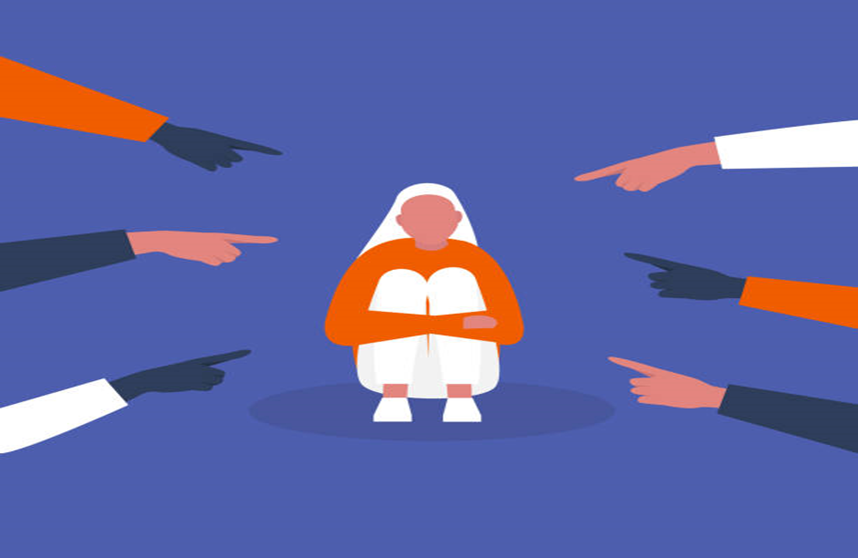
Therapy is a tool that supports individuals struggling with mental health and different aspects of their lives. Despite the growing conversations about mental health, there continues to be stigma surrounding it. Due to the stigma, individuals find it difficult to seek support through therapy due to fear of judgment, shame, or cultural expectations.

Common Misconceptions about Therapy

  1. Therapy is only for “crazy” people.
    Many people still associate therapy with severe mental illness and believe it’s only for those experiencing extreme mental health conditions. Therapy can benefit any individual, regardless of the severity of their situation. Therapy is about growth, coping with life’s challenges, and improving overall mental well-being.
  2. Therapy takes too long or is not effective.
    Some fear that therapy is a lengthy process that will not have results. While the length of therapy depends on the individual’s needs, many individuals find that even a few sessions can lead to meaningful improvements. Therapy is not a quick fix, but it is an investment in long-term mental health.
  3. Only “weak” people need therapy.
    A common misconception is that seeking therapy is a sign of personal weakness. On the contrary, therapy is a sign of strength and courage. Therapy helps individuals confront their emotions and commit to bettering themselves. Many individuals believe therapy to be an invaluable tool for growth; instead, it promotes emotional resilience.

Breaking the Stigma

Breaking the stigma surrounding therapy is essential for creating a more supportive and open environment for society. The idea of seeking therapy can still feel uncomfortable for many individuals due to the misconceptions that treatment is only for those facing serious mental health issues, with therapy often viewed as something reserved for those with severe problems. These misconceptions prevent many from seeking the help they need. By normalizing therapy and highlighting its benefits, an environment can be created where mental health care is as accessible and accepted as physical health care.

If you or someone you know is seeking support, please contact our psychotherapy offices in New York or New Jersey to talk to one of our licensed professional psychologists, psychiatrists, psychiatric nurse practitioners, or psychotherapists at Arista Counseling & Psychiatric Services. Contact our Paramus, NJ or Manhattan, NY offices respectively, at (201) 368-3700 or (212) 722-1920 to set up an appointment. For more information, please visit http://www.counselingpsychotherapynjny.com/

Mayo Foundation for Medical Education and Research. (2017, May 24). Mental health: Overcoming the stigma of mental illness. Mayo Clinic. https://www.mayoclinic.org/diseases-conditions/mental-illness/in-depth/mental-health/art-20046477

Saporito, J. M., Ryan, C., & Teachman, B. A. (2011). Reducing stigma toward seeking mental health treatment among adolescents. Stigma research and action. https://pmc.ncbi.nlm.nih.gov/articles/PMC3839682/

Stigma, prejudice and discrimination against people with mental illness. Psychiatry.org – Stigma, Prejudice and Discrimination Against People with Mental Illness. (n.d.). https://www.psychiatry.org/patients-families/stigma-and-discrimination

Seasonal Affective Disorder

By: Nicole Cutaia

Seasonal Affective Disorder

As the autumn leaves fall, everyone copes with the seasons changing differently. Some embrace the changes, while others may have difficulty with the adjustments. Seasonal Affective Disorder (SAD) is a type of depression that occurs during specific seasons. Typically, Seasonal Affective Disorder is most common in the fall and winter months when there is reduced sunlight. The lack of sunlight affects the body’s internal clock, hormone levels, and chemical messengers, Various symptoms of Seasonal Affective Disorder range from feelings of sadness, low energy, irritability, difficulty sleeping, and changes in appetite.

Multiple treatments are available for managing Seasonal Affective Disorder such as light therapy, counseling or psychotherapy, medication such as selective serotonin reuptake inhibitors (SSRIs), and cognitive behavioral therapy (CBT).

Additionally, there are coping methods individuals can try at home. The methods include going outside to get natural sunlight, eating vitamin D-enriched foods, taking vitamin D supplements, avoiding stressful situations, and consuming a healthy and balanced diet. Other methods one can try are getting plenty of outdoor and indoor exercise, talking to family and friends about Seasonal Affective Disorder, making your space as light and airy as possible, and sleeping for at least 7 to 8 hours every night.

It can be difficult to see a loved one struggle with Seasonal Affective Disorder. If you or a family member are struggling with mental health, please contact our psychotherapy offices in New York or New Jersey to talk to one of our licensed professional psychologists, psychiatrists, psychiatric nurse practitioners, or psychotherapists at Arista Counseling & Psychotherapy. Contact our Paramus, NJ, and Manhattan, NY offices respectively at (201) 368- 3700 or (212) 722- 1920 to set up an appointment. For more information, please visit http://www.counselingpsychotherapynjny.com/

Bulimia and Binge Eating Disorder: Similarities and Differences

Bulimia and Binge Eating Disorder: Similarities and Differences

By: Diane Ulloa
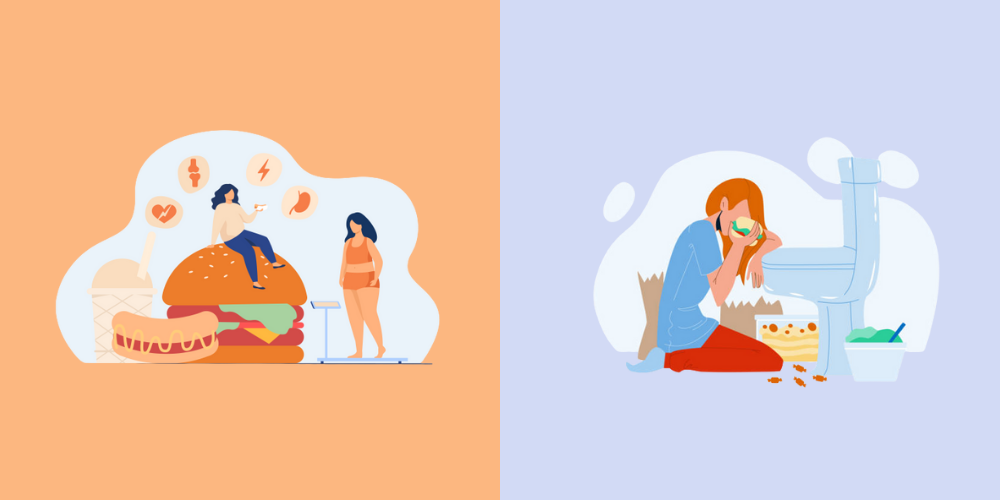
Bulimia as categorized by the DSM V under bulimia nervosa is a diagnosis assigned to individuals who recurrently overeat and use inappropriate measures to prevent weight gain afterwards, such as purging, fasting or exercising excessively. A criterion would include, “Recurrent inappropriate compensatory behaviors in order to prevent weight gain such as self-induced vomiting; misuse of laxatives, diuretics, or other medications; fasting or excessive exercise” (National Library of Medicine).
There are 5 criterion for binge eating disorder that include:

  1. Eating in a discrete period of time (within 2 hour periods), an amount of food that is larger than most people would eat in a similar period of time under similar circumstances. A feeling that one cannot stop eating or control what or how much one is eating. . Eating until feeling uncomfortably full, eating large amounts of food when not feeling physically hungry.
  2. Recurrent inappropriate compensatory behaviors in order to prevent weight gain such as self-induced vomiting; misuse of laxatives, diuretics, or other medications; fasting or excessive exercise
  3. The binge eating and inappropriate compensatory behaviors occur, on average, at least twice a week for 3 months.
  4. Self-evaluation is unjustifiably influenced by body shape and weight.
  5. The disturbance does not occur exclusively during episodes of anorexia nervosa.

Both have the shared behavior of binge eating food, but what is binge eating? When someone cannot control their eating and they eat much more food than they would normally eat in one sitting often to the point of major discomfort. Oftentimes binging happens when one is not hungry and many report binge eating home alone, or at night when no one is up or around to see them. People may binge eat as a coping mechanism when they are stressed, anxious, bored, or experiencing any other negative emotion. For those struggling with bulimia, binging and then purging can be a way of coping with those negative emotions. For someone who struggles with binge eating disorder, binging can also be a way to self-soothe or distract in the presence of very difficult emotions. Many people who engage in these behaviors have feelings of social isolation and anxiety, and many have reported feeling hopeless and helpless.
What’s the difference? The main difference is that bulimia nervosa is characterized by purging after binge eating. While everyone has very different reasons and experiences, often those who struggle with bulimia also struggle with gaining weight and often have a distorted body image. As opposed to those with binge eating disorders who may feel uncomfortable in their bodies, but do not have as strong preoccupation with their body image, or weight, as those with bulimia.  

If you or someone you know is struggling with their mental health, bulimia nervosa, or binge eating disorder please contact our psychotherapy offices in New York or New Jersey to talk to one of our licensed professional psychologists, psychiatrists, psychiatric nurse practitioners, or psychotherapists at Arista Counseling & Psychotherapy. Contact our Paramus, NJ or Manhattan, NY offices respectively, at (201) 368-3700 or (212) 722-1920 to set up an appointment. For more information, please visit http://www.counselingpsychotherapynjny.com/

Sources:

Substance Abuse and Mental Health Services Administration. DSM-5 Changes: Implications for Child Serious Emotional Disturbance [Internet]. Rockville (MD): Substance Abuse and Mental Health Services Administration (US); 2016 Jun. Table 20, DSM-IV to DSM-5 Bulimia Nervosa Comparison. Available from: https://www.ncbi.nlm.nih.gov/books/NBK519712/table/ch3.t16/
Berkman ND, Brownley KA, Peat CM, et al. Management and Outcomes of Binge-Eating Disorder [Internet]. Rockville (MD): Agency for Healthcare Research and Quality (US); 2015 Dec. (Comparative Effectiveness Reviews, No. 160.) Table 1, DSM-IV and DSM-5 diagnostic criteria for binge-eating disorder. Available from: https://www.ncbi.nlm.nih.gov/books/NBK338301/table/introduction.t1/

https://www.centralcoasttreatmentcenter.com/blog-1/bulimia-v-binge-eating-disorder