By: Tori Ling
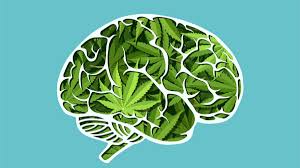
Today, Marijuana has grown tremendously in popularity, but as a relatively new drug, are we sure what it is doing to our brains? According to the CDC, short-term effects of cannabis (within 24 hours of usage) include immediate impact on thinking, attention, memory, coordination, movement, and time perception. Long-term effects of cannabis can affect memory, attention, and learning. Using Marijuana before the age of 18 is especially harmful for the developing brain and can lead to permanent deficits (as listed above).
In contrast, Harvard’s MIND investigated a longitudinal observational study of individuals using medical cannabis for various conditions and symptoms. Participants chose their own cannabis product, and were evaluated performing tasks at 3, 6, 12, 15, 18 and 24 months after their treatment begun. The results found that the patients using medical marijuana actually had better performance on cognitive tasks requiring executive function over time. Patients also described their improved mood, energy, sleep, and reduced use of conventional medications. Patients included in this study were generally above the average recreational use age. There has been preclinical data suggesting that cannabis may help boost the body’s aging endocannabinoid system. (The endocannabinoid system (ECS) is a crucial, complex cell-signaling network in mammals that maintains homeostasis by regulating mood, sleep, appetite, pain, and immune responses. When activated, it helps manage stress and physiological balance. )
The National Institute of Health (NIH) states: “Adult chronic cannabis users with healthy controls, neural activation was measured in paradigms including tests of attention, cognitive controls, memory, decision-making, motor performance, and affective processing. Most studies have found changes in brain function, often without notable performance deficits” the NIH found that Schizophrenia patients who reported abusing cannabis actually had a better memory than those who were not using cannabis from Marijuana potentially reducing negative symptoms.
Overall, Cannabis is not recommended for anyone under the age of 21, as it can cause permanent harm to your brain and its functions, but studies have found no evidence that adolescent cannabis use or dependence are associated with IQ decline or neurocognitive performance . However, Marijuana can be beneficial to those suffering from some chronic conditions. THC can “promote neurogenesis, restore memory and prevent neurodegenerative processes and decline in animal models of Alzheimer’s disease.” (National Institute of Health). THC can modulate memory and cognition in an age-and-dose dependent manner. Marijuana should be used on a case by case basis after being evaluated by a medical professional.
If you or someone you know is considering using Marijuana please contact your healthcare provider for more information.If you or someone you know may be struggling with loneliness, or their mental health, please contact our psychotherapy offices in New York or New Jersey to talk to one of our licensed professional psychologists, psychiatrists, psychiatric nurse practitioners, or psychotherapists at Arista Counseling & Psychotherapy. Contact our Paramus, NJ or Manhattan, NY offices respectively, at (201) 368-3700 or (212) 722-1920 to set up an appointment. For more information, please visit http://www.counselingpsychotherapynjny.com/


 CounselingRx