Self-Diagnosing: Why it’s bad to do it
By Erika Ortiz
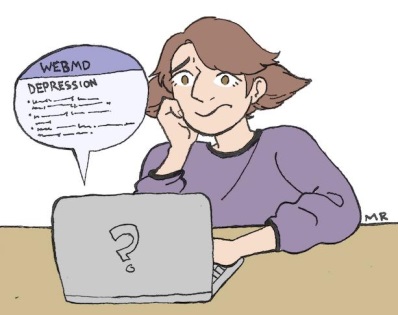
You feel an itchy throat, sneezing, coughing here and there, body feels a bit sore. You wonder what it can be so you look it up. Dr. Google says you’re dying and Dr. TikTok says you’re terminal! Now you’re stressing out thinking your cold turned out to be something fatal. We are all guilty of self-diagnosing. However, as innocent as it may seem, it can lead to a lot of serious issues down the road. Essentially, self-diagnosing is the process of giving yourself a medical condition based on what you know or searched, without any real credentials.
Recently, on the social media app called “TikTok”, many creators post videos claiming, “Signs that you have depression”, or, “You have OCD if you do these things”. Although this is a great way to normalize mental health and eliminate the negative stigma around it, people are naturally easily influenced beings that want to relate to others whether it is negative or positive. However, self-diagnosing based on what you see on the web is usually not the best course of action to take when searching for real help. One issue with self-diagnosing is that it is over-simplified. Diagnosing someone is an extremely complicated process that needs to be met with certain criteria and even the specifics of the diagnosis varies immensely based on specific symptoms. It really isn’t “cut and dry”, it is a much layered process. In addition, this can lead to getting improper and ineffective medical attention or a treatment plan you may not need which can delay any potential, real help you actually need. The information you may see online can be well-intentioned, however, it can still be misinformation which can be misread and misunderstood.
Self-diagnosing creates a feeling of validation and security for people who may feel uncertain or confused as to why they are feeling a certain way. It is perfectly fine to do your own research, in fact it is encouraged. Being self-aware is important; however, it is also important to understand the differences between the traits you may exhibit and actual symptoms you read or see online that can pertain to a certain disorder. Before you self-diagnose based on information on Google, ask questions such as, “Is this person a professional?”, “Is the creator posting this to get paid or is it well-intention?”, or, “Does this actually apply to me specifically or generally?” In conclusion, it’s better to try and avoid the self-diagnosis and to seek qualified professional help.
If you or someone you know wants diagnosis on mental health please contact our psychotherapy offices in New York or New Jersey to talk to one of our licensed professional psychologists, psychiatrists, psychiatric nurse practitioners, or psychotherapists at Arista Counseling & Psychotherapy. Contact our Paramus, NJ or Manhattan, NY offices respectively at (201) 368-3700 or (212) 722-1920 to set up an appointment. For more information, please visit https://www.counselingpsychotherapynjny.com
Sources:
https://news.harvard.edu/gazette/story/2015/07/self-diagnosis-on-internet-not-good-practice/
https://ct.counseling.org/2022/03/self-diagnosis-in-a-digital-world/#


 CounselingRx