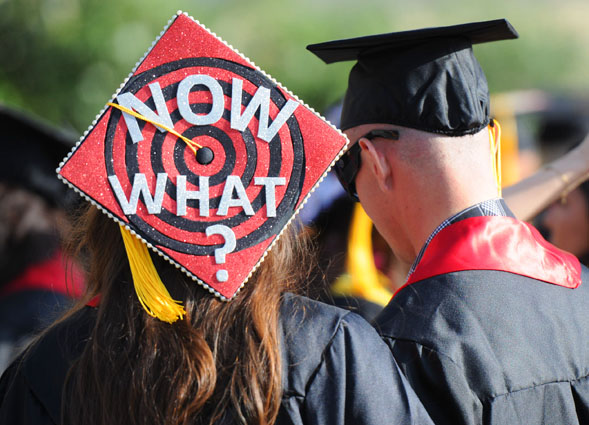
Post-College Anxiety
By: Julia Massa
Post-college anxiety, or Post Commencement Stress Disorder, though not an official medical diagnosis, is used to describe the uncertainty and anxiety college graduates often feel as a result of their achievement. With both internal and external expectations to “measure up,” graduates find themselves conflicted, depressed, and pressured. Graduates may fear failure due to not finding a job as well as feel pressured to pay back their student debt without having a secure job or realizing that career path just isn’t for them. Furthermore, they may feel alone due to moving back home and changing their social contexts. In fact, 53% of 18-to-24 year old graduates live with their parents after graduation. Homesickness is a cycle, perhaps.
From being a student at the mere age of five to an actual member of society can lead to an identity crisis. Additionally, college students may have trouble sleeping, concentrating, become less interested in socializing, experience shortness of breath or rapid heart rate, feel a lack of control of their life, or numb these feelings with alcohol, drugs, or binge-eating.
Feeling nervous about the future is a normal reaction to uncertainty, especially if you thrive on consistency and routine. Graduates can address feelings of uncertainty by practicing test runs for job interviews, “zooming in” and looking at each step, getting feedback from multiple resources like resume writers or networking events, and embracing the chaos. When life becomes complex, it is important to practice self-care and remind yourself that it is not a bad day- just a complex one. Moreover, if a graduate is stressed about finances, they can be financially proactive and learn banking, create an emergency fund, SAVE little by little, or create a realistic payment plan to pay off their loans.
Graduating is a bittersweet experience. Adjusting to change can be scary, but in the case of college grads, they are on the path to prosper. Though it is easier said than done, it is important to embrace each chapter and live day by day.
If you or someone you know is struggling with post-college anxiety, please contact our psychotherapy offices in New York or New Jersey to talk to one of our licensed professional psychologists, psychiatrists, psychiatric nurse practitioners, or psychotherapists at Arista Counseling & Psychotherapy. Contact our Paramus, NJ or Manhattan, NY offices respectively, at (201) 368-3700 or (212) 722-1920 to set up an appointment. For more information, please visit http://www.counselingpsychotherapynjny.com/
Sources:
https://www.careercontessa.com/advice/how-to-deal-post-grad-anxiety/
https://www.psycom.net/college-graduation-anxiety-expert-advice/
Image source:


 CounselingRx