Social Anxiety: The Impact of Social Media on Social Anxiety

Social Anxiety: The Impact of Social Media on Social Anxiety

By: Josette DeFranco

Social anxiety is very common and can be a part of your everyday living whether it is online or offline. Social anxiety means you have persistent fears about being in social situations. Social media has become society’s major way of communicating. It has allowed users to create their own distinctive profiles and content to share with others. It has been found that social media use has caused unrealistic goals and expectations. This can create low self-esteem and a lack of in-person interactions. This may lead to anxiety because you may feel like you don’t live up to your social media image. Nonetheless, it may cause you to feel judged by your choices or appearance. It is important to pay attention to your emotions when logged onto social media and to remember that others experience similar thoughts.

Should you take a break from social media?

Social media can affect individuals differently. However, if you notice social media is causing damage to your mental health, self-esteem, social interactions, and making your moods worse then you may want to consider a social media break. Having a social media break even for a week or a month could enhance your mental state, allowing you to reflect and focus on your mental health needs. It has been noticed that individuals felt more grounded and less anxious, isolated, and depressed.

If you or someone you know is struggling with their mental health, please contact our psychotherapy offices in New York or New Jersey to talk to one of our licensed professional psychologists, psychiatrists, psychiatric nurse practitioners, or psychotherapists at Arista Counseling & Psychotherapy. Contact our Paramus, NJ or Manhattan, NY offices respectively, at (201) 368-3700 or (212) 722-1920 to set up an appointment. For more information, please visit https://aristapsychiatrypsychotherapy.com/

Sources:

https://www.sciencedirect.com/science/article/pii/S245195882100018X

https://www.psychologytoday.com/us/blog/thriving-with-the-challenges/202208/a-social-media-vacation-is-waiting-for-you

Depression: Does Social Media Cause Depression?

Depression: Does Social Media Cause Depression?

By: Michelle Chinchilla

Around 4.62 billion of us are engaging on social media platforms. You can like someone’s post or share a picture or video- there is always a new update or post. After endless amounts of scrolling it can be pretty tiring. Social media as a whole can make a person feel so many different ways: meaningful, euphoric, isolated, and even depressed.

What type of depression can social media be caused by?

Social media isn’t inherently harmful to your mental health, especially if it doesn’t replace other forms of healthy social interaction. However, exposure to harmful behavior and rhetoric through social media can impact your mood and even cause depressive symptoms. Comparison, jealousy, addiction, and many more are reasons to feeling down.

Prevention

Do you notice you’re feeling more sad, lonely, isolated, or depressed when you spend time on social media? Or do you walk away feeling recharged, or like you have spent your time meaningfully? If you have an iPhone, consider using the “Screen Time” feature to track how you’re using your phone. When social media becomes too distracting, consider turning off notifications for a while or removing the app from your phone until you feel like you’re in a better place to log in again.

If you or someone you know is struggling with depression, contact our psychotherapy offices in New York or New Jersey to talk to one of our licensed professional psychologists, psychiatrists, psychiatric nurse practitioners, or psychotherapists at Arista Psychotherapy & Psychiatric Services. Contact our Manhattan, NY or Paramus, NJ offices respectively at (201)368-3700 or (212)722-1920 to set up an appointment. For more information, please visit https://counselingpsychotherapynjny.com

Reference: https://psychcentral.com/depression/does-social-media-cause-depression#tips

Self-Diagnosing: Why it’s bad to do it

Self-Diagnosing: Why it’s bad to do it

By Erika Ortiz

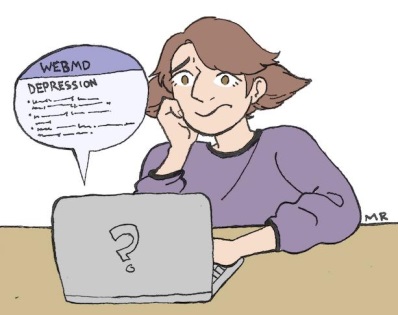
You feel an itchy throat, sneezing, coughing here and there, body feels a bit sore. You wonder what it can be so you look it up. Dr. Google says you’re dying and Dr. TikTok says you’re terminal! Now you’re stressing out thinking your cold turned out to be something fatal. We are all guilty of self-diagnosing. However, as innocent as it may seem, it can lead to a lot of serious issues down the road. Essentially, self-diagnosing is the process of giving yourself a medical condition based on what you know or searched, without any real credentials.

               Recently, on the social media app called “TikTok”, many creators post videos claiming, “Signs that you have depression”, or, “You have OCD if you do these things”. Although this is a great way to normalize mental health and eliminate the negative stigma around it, people are naturally easily influenced beings that want to relate to others whether it is negative or positive. However, self-diagnosing based on what you see on the web is usually not the best course of action to take when searching for real help. One issue with self-diagnosing is that it is over-simplified. Diagnosing someone is an extremely complicated process that needs to be met with certain criteria and even the specifics of the diagnosis varies immensely based on specific symptoms. It really isn’t “cut and dry”, it is a much layered process. In addition, this can lead to getting improper and ineffective medical attention or a treatment plan you may not need which can delay any potential, real help you  actually need. The information you may see online can be well-intentioned, however, it can still be misinformation which can be misread and misunderstood.

               Self-diagnosing creates a feeling of validation and security for people who may feel uncertain or confused as to why they are feeling a certain way. It is perfectly fine to do your own research, in fact it is encouraged. Being self-aware is important; however, it is also important to understand the differences between the traits you may exhibit and actual symptoms you read or see online that can pertain to a certain disorder. Before you self-diagnose based on information on Google, ask questions such as, “Is this person a professional?”, “Is the creator posting this to get paid or is it well-intention?”, or, “Does this actually apply to me specifically or generally?”  In conclusion, it’s better to try and avoid the self-diagnosis and to seek qualified professional help.

If you or someone you know wants diagnosis on mental health please contact our psychotherapy offices in New York or New Jersey to talk to one of our licensed professional psychologists, psychiatrists, psychiatric nurse practitioners, or psychotherapists at Arista Counseling & Psychotherapy. Contact our Paramus, NJ or Manhattan, NY offices respectively at (201) 368-3700 or (212) 722-1920 to set up an appointment. For more information, please visit https://www.counselingpsychotherapynjny.com

Sources:

https://www.everydayhealth.com/emotional-health/young-people-are-using-tiktok-to-diagnose-themselves-with-serious-mental-health-disorders/

https://news.harvard.edu/gazette/story/2015/07/self-diagnosis-on-internet-not-good-practice/

https://ct.counseling.org/2022/03/self-diagnosis-in-a-digital-world/#

The Effect of Social Media and Eating Disorders

By: Sarah Cohen

Eating disorders are extremely serious and often deadly illnesses that include severe disturbances in eating behaviors and related thoughts and emotions. There have been numerous studies in which mass media consumption of the “thin ideal body” has been linked to eating disorders among women. Pressure from media has led to women and men internalizing the “thin ideal body” and led to extreme body dissatisfaction which can then lead to eating disorders. While the effect is smaller among men, they are still being subjected to pressure.

Studies have shown “significant change in the weight and size of female and male models portrayed throughout the media in western society and the concept of the ‘perfect or ideal body’.” This explains “why many adolescents are preoccupied with their bodies and dissatisfied with their body image and are willing to try a variety of dangerous weight-loss practices in their quest for the perfect body.”

Most people are usually not aware the amount of manipulation and digital editing done in the fashion industry to create ‘ideal’ female and male bodies. These false images encourage unrealistic and unhealthy standards that are impossible to attain. One study focused on body concerns in girls 16 years old and tried to understand the underlying motivations to be skinny. The element that exerted the largest pressure to be smaller was the media. Another study measured indicators of eating disorders in a population of young Fijian girls after the addition of Western television to their routine. The indicators of eating disorders were exceptionally more prevalent after extended television viewing, demonstrating a negative impact of media. A large component of the data recorded was the theme of subjects describing a new interest in weight loss as a method of modelling themselves after the television characters they viewed.

In order to prevent the effect of social media on disordered eating, here are three tips: choose what media you view and participate in carefully, limit the amount of exposure you have, and test each media’s message for body positivity by asking critical questions about what information they are attempting to spread.

If you or someone you know needs support with their marriage, please contact our psychotherapy offices in New York or New Jersey to talk to one of our licensed professional psychologists, psychiatrists, psychiatric nurse practitioners, or psychotherapists at Arista Counseling & Psychotherapy. Contact our Paramus, NJ or Manhattan, NY offices respectively, at (201) 368-3700 or (212) 722-1920 to set up an appointment. For more information, please visit http://www.counselingpsychotherapynjny.com/ .

https://www.nimh.nih.gov/health/topics/eating-disorders/index.shtml

https://www.ncbi.nlm.nih.gov/pmc/articles/PMC2792687/

https://www.ncbi.nlm.nih.gov/pmc/articles/PMC2792687/

https://www.nationaleatingdisorders.org/media-eating-disorders

Tiggemann M, Gardiner M, Slater A. “I would rather be size 10 than have straight A’s”: A focus group study of adolescent girls’ wish to be thinner. J Adolesc. 2000;23:645–59.

Becker AE, Burwell RA, Gilman SE, Herzog DB, Hamburg P. Eating behaviours and attitudes following exposure to television among ethnic Fijian adolescent girls. Br J Psychiatry. 2002;180:509–14.