Body Dysmorphia: How TikTok Impacts Self Image

Body Dysmorphia: How TikTok Impacts Self Image

By Erika Ortiz

            A new social media app called TikTok emerged and swept generations because of its easy use, likability, and relatability created by other users or creators. TikTok is used like a break from stressors in life since it can have a variety of entertaining and funny videos. The TikTok algorithm determines your perception and how you choose to “respond” to each video or comment you see and scroll past. TikTok has tons of videos, from cute cat videos to funny skits, serious world news, and even tips or “how to” for your everyday life. Since TikTok has gained massive popularity, it can be strikingly influential.  TikTok can also instill some negativity in your life.  Many videos go viral for the wrong reasons and are taken to a dangerous extremity. One type of TikTok video that always goes viral is known as, “What I eat in a day”. The creator documents all their meals throughout the day and some even calculate their calorie intake. Some creators claim it is to promote a “healthy lifestyle”, while others say it is solely because these types of videos happen to go viral and do well with their audience. Regardless, these kinds of videos seem to inflict the idea of having body dysmorphia or, ironically enough, an unhealthy eating style. Body dysmorphia or body dysmorphic disorder is a mental health condition in which people hyper-focus on their flaws and appearances to the point where they will never be “good enough” in their own eyes. Some of these videos show the over consumption of food, too few nutrients in each meal, or sometimes, too much food, and too much sugar and/or greasy foods. These videos have an alarming comment section. Users will comment something to the degree of, “Wow I eat too much”, or, “Maybe I should skip a meal or two.” As you scroll through these TikToks and come across a “What I eat in a day” or a video that promotes an unhealthy body image that makes you feel uncomfortable and/or negative about yourself, press report for “harmful activities”, then press the “not interested” option at the bottom right. Even if you do not necessarily feel that way, others still might, so it is best to do your part in preventing the spread or glorification of unhealthy lifestyles.

If you or someone you know is experiencing body dysmorphia and/or signs of an eating disorder, please contact our psychotherapy offices in New York or New Jersey to talk to one of our licensed professional psychologists, psychiatrists, psychiatric nurse practitioners, or psychotherapists at Arista Counseling & Psychotherapy. Contact our Paramus, NJ or Manhattan, NY offices respectively at (201) 368-3700 or (212) 722-1920 to set up an appointment. For more information, please visit https://www.counselingpsychotherapynjny.com

Intergenerational Trauma: What is it?

Intergenerational Trauma: What is it?

By Erika Ortiz

            Intergenerational trauma is a term used to describe the difficulties or challenges a family has experienced for generations. Intergenerational trauma can inflict negative feelings and experiences through either an individual or the family as a whole. It usually starts with one family member who has had a traumatic experience. The family members then goes on to either repeat the action that traumatized them or project their feelings onto family members, continuing the cycle of trauma. Historical trauma can catalyze intergenerational trauma. For example, a great-grandmother survived the Holocaust; however, she now behaves in a very reserved and cold manner, so she struggles to express emotions such as love and compassion. Since she raised her children in such a manner, they may grow and have children and display that same type of avoidant relationship. Another example can be that a mother was sexually abused when she was younger, her daughter was also sexually abused, and her granddaughter suffered from that experience. The individual who suffers the trauma can pass down and then project the feelings that were felt at the time of the incident. Since they most likely did not receive the proper care and treatment to manage the mental health issues that they were experiencing, they relayed that same traumatic feeling to the next generation of their family. Hence, it is critical to seek professional help. Here are some ways to cope/deal with inter-generational trauma:

  • Break the cycle- interrupt and prevent the repetition of trauma
  • Hear each other out- although this can be difficult, listening is key to fixing
  • Get the professionals involved- the best way to cope with any mental health issue or fragmented relationship is to get a qualified professional’s help


Source:

https://www.choosingtherapy.com/intergenerational-trauma/

If you or someone you know is experiencing intergenerational trauma or other traumas, please contact our psychotherapy offices in New York or New Jersey to talk to one of our licensed professional psychologists, psychiatrists, psychiatric nurse practitioners, or psychotherapists at Arista Counseling & Psychotherapy. Contact our Paramus, NJ or Manhattan, NY offices respectively at (201) 368-3700 or (212) 722-1920 to set up an appointment. For more information, please visit https://www.counselingpsychotherapynjny.com

The Empty Nest Syndrome

The Empty Nest Syndrome

By Erika Ortiz

            There comes a time when parents reach the end of raising their kids to become young adults that have to venture off into the real world. As they prepare to face all of life’s trials and experiences that await them, what’s going on with the parents? Many some parents experience the empty bird’s nest syndrome. It is not a mental disorder or illness of some sort; however, it is a deep and perpetuating feeling of sadness parents temporarily experience when their child finally leaves to create a life of their own. Why does this happen? Parents spend the majority of their time raising their children and investing an immense amount of love and care towards them as well. Mom would wake you up for school; Dad would pick you up from practice; Mom made dinner for the family; Dad made you help him with fixing up something in the house every morning on the weekend. Parents’ entire lives revolve around essentially taking care and nurturing the development of their children. Once the realization the child is now “leaving the nest” parents are left with the question; “What now?”

           A great way to cope with this feeling is to start a hobby or activity. Try taking up running again; try cooking that one meal you saw on the Food Network you always wanted to or read that book you saw in the bookstore. It’s important to now refocus on yourself as parents. Parents sometimes suffer an identity crisis or “mid-life crisis” where they feel they lose themselves individually. Of course, your children will always be your children, and you will always be there for them. But realize that it is also necessary to now invest time in you as well. Another way to cope is to try and rekindle your relationship with your spouse or, for single parents, go out and date. Of course, if this feeling becomes severe or you feel helpless, please consider getting professional help. The empty nest syndrome can easily slip into something serious.

If you or someone you know is experiencing severe loneliness or sadness, please contact our psychotherapy offices in New York or New Jersey to talk to one of our licensed professional psychologists, psychiatrists, psychiatric nurse practitioners, or psychotherapists at Arista Counseling & Psychotherapy. Contact our Paramus, NJ or Manhattan, NY offices respectively at (201) 368-3700 or (212) 722-1920 to set up an appointment. For more information, please visit https://www.counselingpsychotherapynjny.com

Source

https://www.lifehack.org/809725/empty-nest-syndrome

Grief: Losing a Parent to Suicide

Grief: Losing a Parent to Suicide

By Emily Ferrer

Suicidal thoughts are one of the most dreadful experiences one can go through and it is even more dreadful when the act of suicide is carried out by someone you love. The impact of suicidal thoughts on an individual is grueling, painful, and terrifying. However, many people tend to forget about the terrifying and painful part that the individual’s family and friends go through as well. The attention around suicide is always so focused on the suicidal individual that many people forget about the impact it can have on their loved ones. In fact, have you ever thought about losing a parent to suicide? It may seem horrifying and extraordinary; but it is more common than you think. Individuals who are at most risk to die by suicide are adults over the age of 45. More specifically, women are most at risk between the ages of 45-54 and men are most at risk ages 85 and older[1]. Many people may find this shocking, as the media portrays suicide rates to be the most high in adolescents and teens, but this is just not the case. Older individuals usually have undiagnosed or untreated depression and anxiety, a lack of frequent social interactions, suffer from underlying illnesses that may increase their attempt to be more successful, and/or suffer from chronic illnesses that may increase their depression and anxiety[2].

As saddening as these statistics are, it is even worse to see that between 7,000 and 12,000 children lose a parent to suicide every year[3]. It is devastating for children to experience such a traumatic event in their lives, especially someone they loved, admired, and relied on unconditionally. Losing a parent to suicide is not like normal grief that you experience after losing someone to a physical illness or accident. Losing a parent to suicide is grieving on steroids. “Grief comes in waves and grief from suicide comes in tsunami waves”, is great quote that explains how dreadful suicide grief can feel. Children of parents who died by suicide can experience an enormous range of emotions that can cause them to feel very confused. These emotions include[4]:

  • Shock                              – Panic                                       – Despair
  • Confusion                       – Intense anger                          – Disgust
  • Denial                             – Intense sadness                      – Feelings of abandonment or rejection

It is important to know that losing a parent to suicide is extremely unfortunate and traumatic. The emotions tied to suicide grief are understandable and completely normal. Staying close to family and friends during such a difficult time is crucial and can enormously help with healing. It is also critical to feel the emotions you experience and to not turn them away as it is a part of the healing process. Seeking professional help if you are feeling overwhelmed with these emotions or experiencing them for a long time is also is a good way to heal in the healthiest way possible.

If you or someone you know is grieving a lost one due to suicide, please contact our psychotherapy offices in New York or New Jersey to talk to one of our licensed professional psychologists, psychiatrists, psychiatric nurse practitioners, or psychotherapists at Arista Counseling & Psychotherapy. Contact our Paramus, NJ or Manhattan, NY offices respectively at (201) 368-3700 or (212) 722-1920 to set up an appointment. For more information, please visit https://www.counselingpsychotherapynjny.com


Sources:

[1] https://www.samhsa.gov/suicide/at-risk#:~:text=Adults%20Over%20the%20Age%20of%2045&text=Eighty%20percent%20of%20all%20deaths,and%20access%20to%20lethal%20means.

[2] https://www.prb.org/resources/in-u-s-who-is-at-greatest-risk-for-suicides/

[3] https://www.hopkinsmedicine.org/news/media/releases/children_who_lose_a_parent_to_suicide_more_likely_to_die_the_same_way#:~:text=In%20the%20United%20States%2C%20each,to%20suicide%2C%20the%20researchers%20estimate.

[4] https://psychcentral.com/lib/an-open-letter-to-children-who-lose-a-parent-to-suicide#mental-health-effects

Deep Brain Stimulation and Electroconvulsive Therapy: What are they?

Deep Brain Stimulation and Electroconvulsive Therapy: What are they?

By Emily Ferrer

Deep Brain Stimulation (DBS) is a brain surgery involving the implantation of electrodes in certain areas of the brain to treat different movement disorders such as OCD, dystonia, Parkinson’s disease, and epilepsy as well as other disorders such as depression and drug addiction[1]. These electrodes produce electrical impulses to regulate certain brain functions[2] and are controlled by a pacemaker-like device. This pacemaker is placed in your chest with a wire that runs from the pacemaker to the electrodes that were inserted into your brain[3]. The parts of the brain that the electrodes are inserted into are specific to the patient and their specific symptoms. For example, for a patient who suffers from severe OCD the electrodes would be placed in an area of the brain called the ventral capsule/ventral striatum, which has been found to be very effective for patients suffering from treatment resistant OCD at about a 61.5% positive response rate[4].

Electroconvulsive Therapy (ECT) is a medical treatment usually preformed on patients who suffer from severe clinical depression and are treatment resistant to other options to help their condition[5]. The treatment involves small electric currents being passed externally through the patient’s skull between the voltage ranges of 180 to 460 volts. While there is still much controversy and incorrectly portrayed media about this procedure, it is significantly safer today than it was almost 100 years ago. The patient is put under general anesthesia at a hospital during the entire treatment and wakes up after not feeling anything from the procedure. The only thing patients feel after the completion of the treatment is an increase in positive mood. A study done in 2007 revealed that out of the patients who did and did not receive ECT for their treatment resistant depression, 71% of the participants in the experimental group, that received ECT,  found they had a positive response. This is significant when compared to the control group, who did not receive ECT, where only 28% of the participants found they had a positive response to just antidepressant medication[6].  ECT has gained a lot of popularity recently because of how quickly and effectively you feel the effects after a few treatments. The positive effects increase even more quickly when combined with psychotherapy in between the ECT treatments.

If you or someone you know is experiencing OCD or major depressive disorder and are interesting in pursuing these treatments, please contact our psychotherapy offices in New York or New Jersey to talk to one of our licensed professional psychologists, psychiatrists, psychiatric nurse practitioners, or psychotherapists at Arista Counseling & Psychotherapy. Contact our Paramus, NJ or Manhattan, NY offices respectively at (201) 368-3700 or (212) 722-1920 to set up an appointment. For more information, please visit https://www.counselingpsychotherapynjny.com


Sources:

[1] https://atm.amegroups.com/article/view/16268/html

[2] https://www.mayoclinic.org/tests-procedures/deep-brain-stimulation/about/pac-20384562

[3] https://www.mayoclinic.org/tests-procedures/deep-brain-stimulation/about/pac-20384562

[4] https://iocdf.org/expert-opinions/expert-opinion-dbs/#:~:text=Another%20important%20development%20for%20treatment,targeted%20areas%20of%20the%20brain.

[5] https://www.webmd.com/depression/electroconvulsive-therapy

[6] https://doi.org/10.1111/j.1600-0447.1997.tb09926.x

Retirement: The Pros and Cons of Early Retirement

Retirement: The Pros and Cons of Early Retirement

By Emily Ferrer

Retirement is thought to be one of the most admirable events that happen in one’s life. However, there is also a darker side to retirement that many people do not know about when making the big decision to take their 401K savings investment and leave their jobs. Retirement, although seemingly glamorous and freeing, can also be extremely lonely, unfulfilling, and cause major financial issues. The average age of retirement in the U.S. is 63 years[1] and the average lifespan of a person in the U.S. is 79.1 years[2].  This means that many people, on average, have 16 more years after retirement to accomplish everything they have always wanted to do. While 16 years may not seem like a very long time to some people, it can feel extremely long to many retired individuals who only make $1,620 a month through social security, become empty nesters in their homes, or have lost their spouse or friends to old age and illness. Therefore, it is important to be aware of the pros and cons before retiring from your job.

Pros:

  • May improve physical health by having more time to exercise, get outside, and eat healthier[3]
  • More time to travel
  • More time to pursue passions
  • More time for friend and family relationships

Cons:

  • May lead to decline in mental health (e.g. depression, suicidal ideation, anxiety, panic)
  • May lead to feelings of loneliness and boredom
  • Feelings of loss of purpose in life
  • Lack of daily structure
  • Social Security benefits will be smaller if retiring earlier than your “full retirement age”[4]
  • Losing employer-sponsored health benefits
  • Outliving your savings

It is important to be aware of the issues that retiring early may cause. After retirement, it is vital to keep an active life style, both mentally and physically. This includes keeping up with preventive care, exercising regularly, eating and drinking healthily, staying social with friends and family, and finding a new purpose in life[5]. However, if you are struggling mentally due to early retirement, it is vital to seek professional treatment to avoid any more serious symptoms.

If you or someone you know is struggling with retirement and/or depression, please contact our psychotherapy offices in New York or New Jersey to talk to one of our licensed professional psychologists, psychiatrists, psychiatric nurse practitioners, or psychotherapists at Arista Counseling & Psychotherapy. Contact our Paramus, NJ or Manhattan, NY offices respectively at (201) 368-3700 or (212) 722-1920 to set up an appointment. For more information, please visit https://www.counselingpsychotherapynjny.com


[1] https://www.forbes.com/advisor/retirement/average-retirement-age/#:~:text=While%20the%20average%20U.S.%20retirement,retirement%20benefit%20is%20roughly%20%241%2C620.

[2] https://www.cdc.gov/nchs/data/vsrr/vsrr023.pdf

[3] https://www.investopedia.com/articles/personal-finance/073114/pros-and-mostly-cons-early-retirement.asp#:~:text=Pros%20of%20retiring%20early%20include,depressing%20effect%20on%20mental%20health.

[4] https://www.investopedia.com/articles/personal-finance/073114/pros-and-mostly-cons-early-retirement.asp#:~:text=Pros%20of%20retiring%20early%20include,depressing%20effect%20on%20mental%20health.

[5] https://www.bankerslife.com/insights/healthy-aging/9-healthy-habits-for-healthy-retirement/

Self-Diagnosing: Why it’s bad to do it

Self-Diagnosing: Why it’s bad to do it

By Erika Ortiz

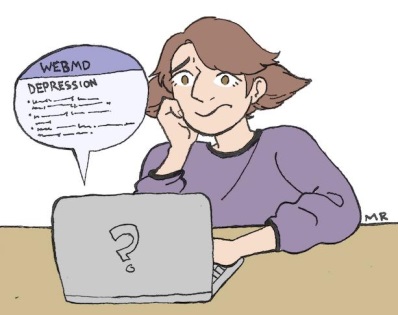
You feel an itchy throat, sneezing, coughing here and there, body feels a bit sore. You wonder what it can be so you look it up. Dr. Google says you’re dying and Dr. TikTok says you’re terminal! Now you’re stressing out thinking your cold turned out to be something fatal. We are all guilty of self-diagnosing. However, as innocent as it may seem, it can lead to a lot of serious issues down the road. Essentially, self-diagnosing is the process of giving yourself a medical condition based on what you know or searched, without any real credentials.

               Recently, on the social media app called “TikTok”, many creators post videos claiming, “Signs that you have depression”, or, “You have OCD if you do these things”. Although this is a great way to normalize mental health and eliminate the negative stigma around it, people are naturally easily influenced beings that want to relate to others whether it is negative or positive. However, self-diagnosing based on what you see on the web is usually not the best course of action to take when searching for real help. One issue with self-diagnosing is that it is over-simplified. Diagnosing someone is an extremely complicated process that needs to be met with certain criteria and even the specifics of the diagnosis varies immensely based on specific symptoms. It really isn’t “cut and dry”, it is a much layered process. In addition, this can lead to getting improper and ineffective medical attention or a treatment plan you may not need which can delay any potential, real help you  actually need. The information you may see online can be well-intentioned, however, it can still be misinformation which can be misread and misunderstood.

               Self-diagnosing creates a feeling of validation and security for people who may feel uncertain or confused as to why they are feeling a certain way. It is perfectly fine to do your own research, in fact it is encouraged. Being self-aware is important; however, it is also important to understand the differences between the traits you may exhibit and actual symptoms you read or see online that can pertain to a certain disorder. Before you self-diagnose based on information on Google, ask questions such as, “Is this person a professional?”, “Is the creator posting this to get paid or is it well-intention?”, or, “Does this actually apply to me specifically or generally?”  In conclusion, it’s better to try and avoid the self-diagnosis and to seek qualified professional help.

If you or someone you know wants diagnosis on mental health please contact our psychotherapy offices in New York or New Jersey to talk to one of our licensed professional psychologists, psychiatrists, psychiatric nurse practitioners, or psychotherapists at Arista Counseling & Psychotherapy. Contact our Paramus, NJ or Manhattan, NY offices respectively at (201) 368-3700 or (212) 722-1920 to set up an appointment. For more information, please visit https://www.counselingpsychotherapynjny.com

Sources:

https://www.everydayhealth.com/emotional-health/young-people-are-using-tiktok-to-diagnose-themselves-with-serious-mental-health-disorders/

https://news.harvard.edu/gazette/story/2015/07/self-diagnosis-on-internet-not-good-practice/

https://ct.counseling.org/2022/03/self-diagnosis-in-a-digital-world/#

Parasomnia: Nightmares in Adults

Parasomnia: Nightmares in Adults

By Lynette Rivas

Nightmares are supposed to diminish as you grow up, right? While this is true for most of the population, it is not the case for some individuals. Research shows that between 2% and 8% of the adult population experiences frequent and distressing nightmares, otherwise known as parasomnia.

Nightmares are realistic and vividly disturbing dreams that awaken you from sleep. They most often occur during rapid eye movement (REM) sleep, which is when most dreaming takes place, and occur closer to morning hours. Nightmares may include:

  • Vivid and upsetting dreams
  • Dreams involving threats to safety
  • Being awoken from the dream
  • Feeling anxious, scared, or sad as a result from the dream
  • Not being able to fall back to sleep due to the dream

For adults, nightmares are often spontaneous, but for some, there may be an underlying issue that can be used to explain these dreams. Nightmares can be triggered by stress, trauma, sleep deprivation, substance abuse, medications, or by simply watching a scary movie. Although nightmares occur occasionally compared to normal dreams, they are considered a disorder if they:

  • Occur frequently
  • Cause major distress throughout the day, such as anxiety or fear
  • Cause problems with concentration or memory
  • Cause daytime sleepiness

If these symptoms are occurring, then it is time to consult a doctor about possible treatments. The doctor will determine if the solution is through treatments and medication, or will give a referral to a psychologist or psychotherapist. Debilitating and frequent nightmares, or parasomnia, is a serious condition that can alter an individual’s life, so it is important to seek help if they occur.

If you or someone you know is experiencing debilitating/frequent nightmares please contact our psychotherapy offices in New York or New Jersey to talk to one of our licensed professional psychologists, psychiatrists, psychiatric nurse practitioners, or psychotherapists at Arista Counseling & Psychotherapy. Contact our Paramus, NJ or Manhattan, NY offices respectively at (201) 368-3700 or (212) 722-1920 to set up an appointment. For more information, please visit https://www.counselingpsychotherapynjny.com/

Sources:

https://www.mayoclinic.org/diseases-conditions/nightmare-disorder/symptoms-causes/syc-20353515

https://www.webmd.com/sleep-disorders/nightmares-in-adults#:~:text=Nightmares%20in%20adults%20can%20be,to%20have%20the%20condition%20themselves.

https://iconscout.com/illustration/nocturnal-panic-attack-5222908

Suicide: What is Suicide Grief?

Suicide: What is Suicide Grief

By Lynette Rivas

At some point in almost everyone’s life, they will experience losing a loved one, which can then be followed by grief. But what about losing your loved one to suicide? This type of grief is known as suicide grief, where an individual feels both despair and guilt after losing a loved one to suicide.

It is important to note that not everyone experiences grief in the same way or for the same amount of time. The intensity and the complexity of grief are determined by the relationship with the person that died, how the death occurred, any existing coping strategies, and if support is available. 

Suicide grief can be a period of intense emotions for some people. These include emotions such as shock, guilt, anger, confusion, and/or despair. These emotions can even be accompanied by nightmares, flashbacks, social withdrawal, difficulty concentrating, and/or loss of interest. Anyone that is experiencing grief should keep in mind that it is important to:

  • Keep in touch – reaching out to loved ones, friends, and spiritual leaders
  • Grieve in your own manner – everyone does not grieve in the same way
  • Do not rush yourself – grieving can be as short as a few days to as long as a couple of months

If the grief is too much to bear and becomes too intense, then it is time to turn to a mental health provider for help. Unresolved grief can become difficult over time to the point where the individual is no longer able to go back to their normal life. If the individual thinks that they might be unusually depressed, it is important that they seek professional mental health help.

If you or someone you know is struggling with grief please contact our psychotherapy offices in New York or New Jersey to talk to one of our licensed professional psychologists, psychiatrists, psychiatric nurse practitioners, or psychotherapists at Arista Counseling & Psychotherapy. Contact our Paramus, NJ or Manhattan, NY offices respectively at (201) 368-3700 or (212) 722-1920 to set up an appointment. For more information, please visit https://www.counselingpsychotherapynjny.com/

Sources:

https://www.mayoclinic.org/healthy-lifestyle/end-of-life/in-depth/suicide/art-20044900

https://www.beyondblue.org.au/the-facts/suicide-prevention/after-a-suicide-loss/suicide-and-grief#:~:text=Grief%20in%20response%20to%20suicide,the%20stigma%20associated%20with%20suicide.

Image Source:

https://time.com/6117708/grief-isolation/

The Evolution of Electroconvulsive Therapy

The Evolution of Electroconvulsive Therapy

By Lynette Rivas

Electroconvulsive Therapy (ECT) has been and remains as one of the most controversial, yet effective, forms of therapy. But how did this idea come along and how does it work? How has the procedure changed throughout the years?

The idea of inducing a seizure to aide a patient was first thought of in the late 1920s by a scientist named Meduna. The main purpose of ECT at the time was to treat patients with schizophrenia. After successfully treating over 100 patients through a chemically induced seizure, two other scientists with the names of Ugo Cerletti and Lucio Bini decided to conduct the first electrically induced seizure.

Almost a century later, ECT is still widely used throughout the world. ECT is mostly used when other treatments are found to be unsuccessful, such as therapy and medication.  It can treat severe depression, treatment-resistant depression, severe mania, catatonia, and agitation and aggression in people with dementia. Over the years, the ECT procedure has greatly changed in order to ensure the patient’s safety and to reduce side effects.

The general procedure of ECT includes:

  • General anesthesia – makes you unconscious and unaware of the procedure
  • A brief physical exam
  • An intravenous line (IV) inserted
  • Electrode pads placed on the head
  • Muscle relaxant – helps minimize the seizure and prevent injury
  • Monitoring the patient’s brain, heart, blood pressure, and oxygen
  • Mouth guard – helps to protect the teeth and tongue from injury

With all of these features in place, the patient can relax and be completely unaware of the procedure. After ECT, the patient is put into a recovery room where they will be monitored for any potential issues. It usually takes a total of 6-12 treatments for the patient to see results. Even after symptoms improve, the patient will have to continually visit their therapist in order to keep up with the progress that they have made.

If you or someone you know is struggling with depression and/or mania please contact our psychotherapy offices in New York or New Jersey to talk to one of our licensed professional psychologists, psychiatrists, psychiatric nurse practitioners, or psychotherapists at Arista Counseling & Psychotherapy. Contact our Paramus, NJ or Manhattan, NY offices respectively at (201) 368-3700 or (212) 722-1920 to set up an appointment. For more information, please visit https://www.counselingpsychotherapynjny.com/

Sources:

https://www.mayoclinic.org/tests-procedures/electroconvulsive-therapy/about/pac-20393894

https://www.ncbi.nlm.nih.gov/pmc/articles/PMC6323557/

https://www.shutterstock.com/search/electroconvulsive-therapy