How to Help Children Cope with Grief and Loss

How to Help Children Cope with Grief and Loss

By: Josette DeFranco

A question you don’t hear enough but should be asked more is “What is grief?” Grief is the terrible pain that accompanies loss. Since grief is a reflection of our love, it can feel suffocating. There is no time limit for healing the pain that comes along with loss. Many individuals try to suppress their pain and agony causing them to feel guilt and stagnant. Many individuals may experience grief in short passes where the feeling of distress and sadness comes and goes. Meanwhile, others may experience grief for a long period, such as months or years. It’s important to remind yourself and others that you can grieve at your own pace.

In addition, children experience grief and loss in many different ways. Children are like sponges; they take in information through observation and learned behavior. Although they are young they have deep feelings and can understand their own emotions more than it is perceived. When children grieve it can be a confusing time for them and parents. Do you tell the truth? Or do you rationalize and give simple answers such as “Grandpa is just sleeping.” Being present with them allows you to grieve as well. When children see that their parents can be vulnerable and compassionate it allows them to express themselves and be who they really are.

Here are a couple of ways to help children cope with grief:

  • You can tell children the truth, even though you might not include all the specific information. Mentioning to them that Grandpa is sleeping may cause them to feel afraid to go to sleep or telling them he is in heaven may make them pack their belongings and find heaven. Be clear, honest, and simple.
  • Allow them to ask questions. You can’t protect them from the truth but you can give them your empathetic support and love.
  • Attending the funeral or keeping children home. Ask your child and allow them to decide. If they say yes, have someone who will be present with them and can keep them occupied in case being around sad adults gets overwhelming. If they say no, you can offer another way to remember or honor the person such as showing pictures or lighting a candle.
  • Give reassurance.

If you or someone you know is struggling with their mental health, please contact our psychotherapy offices in New York or New Jersey to talk to one of our licensed professional psychologists, psychiatrists, psychiatric nurse practitioners, or psychotherapists at Arista Counseling & Psychotherapy. Contact our Paramus, NJ, or Manhattan, NY offices respectively, at (201) 368-3700 or (212) 722-1920 to set up an appointment. For more information, please visit https://aristapsychiatrypsychotherapy.com/

Sources:

https://www.psychologytoday.com/us/blog/playful-parenting/202301/how-to-help-children-cope-with-death-and-grief

https://www.psychologytoday.com/us/blog/tales-of-grief/201903/when-children-grieve

https://www.psychologytoday.com/us/basics/grief

Child Therapy: Behavioral Issues

Child Therapy: Behavioral Issues

By: Isabella Favuzza

Many assume that children are naïve; however, they are quite receptive to social cues and environmental issues. Children typically sense unpleasant emotions from surrounding adults and internalize these feelings due to an inability to discuss complex situations. Children who experience these larger-than-life moments for their age may resort to behavioral defiance. There are numerous environmental stressors that lead to behavioral outbursts, such as divorce, separation, lack of friends, etc. These stressors may cause aggression, lack of empathy, refusal to adjust behavior, school disruptions, lack of social opportunities, or self-injury. A psychologist assists children challenged with complex obstacles and channels these undesirable emotions into positive, constructive thoughts.

Behavioral therapy identifies unwanted behaviors and enables children to understand said behaviors and their root causes. Children can understand complex issues in latent terms and cope with or adjust their actions to make healthy choices. There are various types of therapeutic techniques to communicate these feelings and provide greater insight. Play therapy involves toys that engage the child while acting out distressing situations. During exposure therapy, the psychologist discusses troublesome triggers and explores solutions if or when a child encounters them. Clinical reconstruction enables children to transform negative, destructive thoughts into positive emotions through therapeutic exercises. Ultimately, behavioral therapy utilizes reinforcement of pleasant actions, trigger identification, and therapeutic techniques to prevent outbursts while modeling proper behavior.

If you or your child is struggling with behavioral issues or mental health please contact our psychotherapy offices in New York or New Jersey to talk to one of our licensed professional psychologists, psychiatrists, psychiatric nurse practitioners, or psychotherapists at Arista Counseling & Psychotherapy. Contact our Paramus, NJ or Manhattan, NY offices respectively, at (201) 368-3700 or (212) 722-1920 to set up an appointment. For more information, please visit http://www.counselingpsychotherapynjny.com/

Source:

https://www.lumierechild.com/blog/does-your-child-need-behavioral-therapy

Co-Parenting During COVID-19

Co-Parenting During COVID-19

By: Alexa Greenbaum

Co-parenting is challenging even during normal times. The crisis of COVID-19 can add to the stress of co-parenting. There are many aspects that make co-parenting even more difficult now than before. Some parents may have to work longer hours during the pandemic, whereas others may have reduced hours and are therefore struggling with finances; these are just a few extra stressors that parents are facing during this pandemic. Adding to the difficulty, different states handle custody arrangements differently, which adds confusion to the process.

Regarding custody, parents have to work together to ensure the safety of their children. Unlike before the pandemic, if they do not see eye to eye, they now have limited means of settling the matter in the justice system. State Supreme Courts such as in California, Maryland, and Texas, have issued that parents should follow their court-ordered processioning schedule during COVID-19. However, there are some exceptions including the event of a “lockdown” or a “shelter in place.” In other states, such as New York, the administrative judge has ordered to “act reasonably.” This uncertainty can spark conflict between co-parents as well.

To accommodate in this challenging time, the American Academy of Matrimonial Lawyers and The Association of Family and Conciliation Courts released a joint statement of guidelines on March 19 to help separated parents create a plan during the health crisis. The statement says, “Family law judges expect reasonable accommodations when they can be made and will take serious concerns raised in later filings about parents who are inflexible in highly unusual circumstances.” Nonetheless, the major issue that co-parents are facing, concerning their children, is that many parents are losing the ability to have daily or normal interactions with their kids.

Healthy co-parenting through COVID-19 requires parents to put aside their differences and put their children first. Parents need to know that although this time is confusing for children, kids are generally resilient. Both parents should talk to their kids, whether it be in-person, from 6-feet apart, or virtually about the pandemic. Communication during this time is the best way for a child to have a sense of normality. Thus, this is a time for parents to embrace technology and do their best to work together as co-parents.

Kids are feeling overwhelmed too. Therefore, as a co-parent, focus on doing everything they can do to emotionally support their kids. Reassuring their child that we will get through this, that some changes are only temporary, and most importantly, they are loved is the best way to be there for their child during this time.

If you or someone you know is looking for support, please contact our psychotherapy offices in New York or New Jersey to talk to one of our licensed professional psychologists, psychiatrists, psychiatric nurse practitioners, or psychotherapists at Arista Counseling & Psychotherapy. Contact our Paramus, NJ or Manhattan, NY offices respectively, at (201) 368-3700 or (212) 722-1920 to set up an appointment. For more information, please visit http://www.counselingpsychotherapynjny.com/ .

Sources:

https://www.usnews.com/news/best-states/articles/2020-04-27/americans-struggle-with-co-parenting-during-covid-19

https://www.paleyrothman.com/legal-blog/co-parenting-during-covid-a-practical-guide

https://www.healthychildren.org/English/healthy-living/emotional-wellness/Building-Resilience/Pages/Co-Parenting-through-COVID-19.aspx

https://www.thecenterforfamilylaw.com/afcc-aaml

Image Source:

https://nyulangone.org/news/divorce-co-parenting-covid-19-challenges-opportunities

What it Means to be on the Spectrum

By: Estephani Diaz

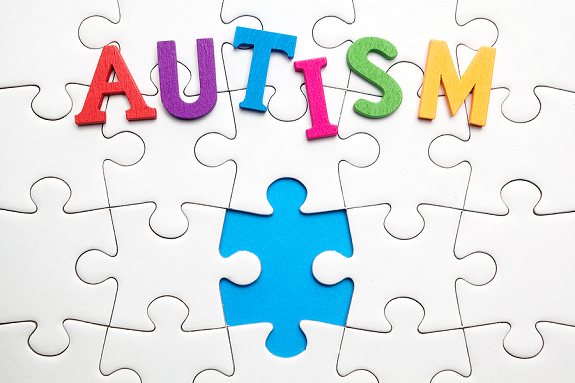
Did you know that about one out of sixty eight children are considered to be on the spectrum? Being on the spectrum indicates a person has a set of behavioral and developmental challenges related to autism. Some of the challenges they may face are: difficulties with social interactions, poor motor coordination, repetitive behaviors, and many more. They may also have a hard time in school when it comes to playing with other kids or simply trying to learn in class.

Autism, also known as Autism Spectrum Disorder (ASD), is a developmental disorder affecting communication and social skills in more than 100,000 children across the U.S. It is a brain developmental disorder seen in early childhood and carried out through adulthood. Every child diagnosed with autism has completely different symptoms than another child with the same diagnoses. Some symptoms may be severe, while others are mild. Some signs that might indicate a child suffers from autism are:

  • Delayed speech
  • Repetitive behaviors
  • Little to no eye contact
  • Not responsive to their name
  • Obsessive interests

If you believe your child might have ASD, visit your doctor for a developmental screening and comprehensive diagnostic evaluation. Since ASD cannot be predicted by genes or blood tests, a doctor needs to observe the behaviors of the child to properly make a diagnoses.

If you or someone you know is suffering from Autism Spectrum Disorder, please contact our psychotherapy offices in New York or New Jersey to talk to one of our licensed professional psychologists, psychiatrists, psychiatric nurse practitioners, or psychotherapists at Arista Counseling & Psychotherapy. Contact our Paramus, NJ or Manhattan, NY offices respectively, at (201) 368-3700 or (212) 722-1920 to set up an appointment. For more information, please visit  http://www.counselingpsychotherapynjny.com/.