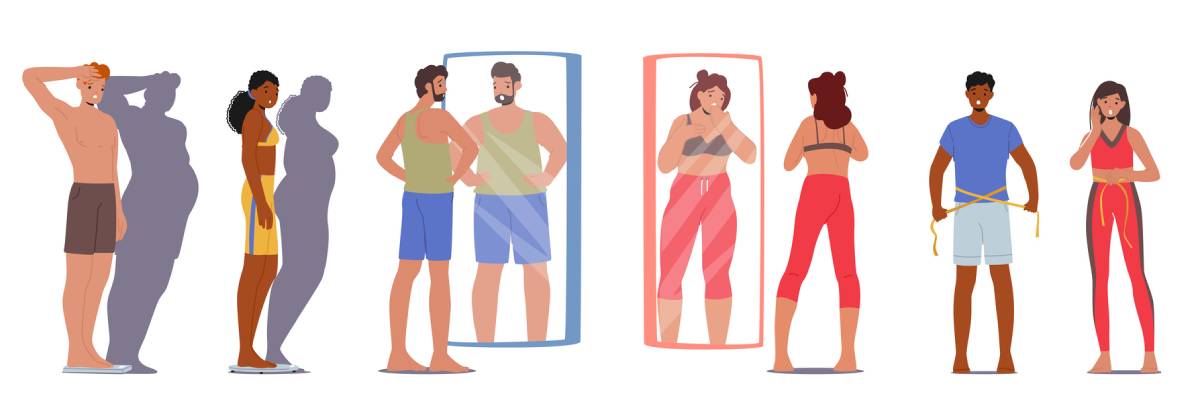
Body Dysmorphia; how has social media has affected it?  

Body Dysmorphia; how has social media has affected it?

By Manuela Gomez

Have you ever stared at yourself in the mirror and realized that your mind isn’t showing you the reality of what you look like? Body Dysmorphia is a mental state in which your mind is busy looking/making up imperfections of your body that no one else can notice.  Although, Body Dysmorphia has been around for a while social media has only made it worse in the recent years. Social media, the addiction in which you start to compare yourself with people you watch and follow. Then you put this expectation of yourself that you should look a certain way. We tend to forget that even social media isn’t portraying the whole truth. According to the article Frontiers, 29% of people with higher social media usage have Body Dysmorphia compared to, 19% of people that have a lower usage. Here are some ways that you can help improve your BD:

  • Replace your negative thoughts with the positive (Ex: I look ugly today- I look and feel amazing)
  • Start changing the habit of analyzing yourself in the mirror every day, stand in front of it and give yourself positive affirmations
  • If you want to change something about your body then do it, but in healthy way
  • Surround yourself with healthy people and habits
  • Less social media time

Body Dysmorphia is not uncommon. It is treatable with the right professional and the effort you put into it. Don’t let your reality get lost because you see what others don’t see.

Source(s): https://www.mayoclinic.org/diseases-conditions/body-dysmorphic-disorder/diagnosis-treatment/drc-20353944

https://www.frontiersin.org/journals/public-health/articles/10.3389/fpubh.2024.1324092/full

If you or someone you know is struggling with mental health, please contact our psychotherapy offices in New York or New Jersey to talk to one of our licensed professional psychologists, psychiatrists, psychiatric nurse practitioners, or psychotherapists at Arista Counseling and Psychotherapy. Contact our Paramus, NJ, or Manhattan, NY offices respectively, at (201) – 368-3700 or (212)-722-1920 to set up an appointment. For more information, please visit https://www.counselingpsychotherapynjny.com/

Body Dysmorphic Disorder

Body Dysmorphic Disorder

Amelia Amen

Body Dysmorphic Disorder (BDD) is a mental health condition characterized by preoccupied negative ideations of physical appearance. A person diagnosed with BDD tends to obsess over perceived “defects” in their body image, thus interfering with their daily functioning and heightening their stress levels. Areas of concern include skin, hair, body parts, facial features, wrinkles, teeth, etc. People may not notice the perceived physical flaws that an individual claims to be negative. The severity of the disorder differs from each individual and could produce other mental health concerns such as anxiety, depression, substance abuse, self-harm, and suicidal thoughts. BDD commonly develops during a boy and girl’s adolescence. The development of BDD can derive from various factors between genetics, environment, and trauma. It can stem from experiencing bullying and abuse, having a chemical imbalance in the brain, beauty standards on social media, and more. Repetitive and compulsive routines are carried out every day in order to cope with preoccupied thoughts. Common repetitive behaviors that are exhibited include:

  • Avoiding mirrors or constantly looking in the mirror
  • Skin picking, excessive grooming, and body checking
  • Over-Exercising and weighing yourself
  • Masking perceived flaws with heavy clothing and/or makeup
  • Seeking cosmetic surgery with little satisfaction
  • Comparing yourself to others

            Living with BDD can cause individuals to be reluctant to participating in social gatherings, work, school, and curricular activities. As a result, this can lead to self-isolation. One of the most effective sources of treatment for coping with BDD is Cognitive Behavioral Therapy (CBT). Attending therapy can help address concerns regarding the symptoms that come with BDD, process perceived negative thoughts, increase self-esteem and confidence, and encourage an individual to have a more positive outlook on their appearance. With proper treatment, BDD can become more manageable to live with.

If you or someone you know is seeking therapy for body dysmorphic disorder or other body-image struggles, please contact our psychotherapy offices in New York or New Jersey to talk to one of our licensed professional psychologists, psychiatrists, psychiatric nurse practitioners, or psychotherapists at Arista Psychotherapy & Psychiatric Services. Contact our Manhattan, NY or Paramus, NJ offices respectively at (201) 368-3700 or (212) 722-1920 to set up an appointment. For more information, please visit https://www.counselingpsychotherapynjny.com

Sources: https://www.mayoclinic.org/diseases-conditions/body-dysmorphic-disorder/symptoms-causes/syc-20353938