The Fear of Commitment

The Fear of Commitment

By Erika Ortiz

Commitment can occur in any aspect of your life. It is only natural to experience anxiety when there are milestones such as signing a new lease, accepting a job offer, getting engaged or married, etc. However, sometimes the anxiety can revert into something much more severe such as gamophobia which is the fear of commitment. It can prevent or inhibit any opportunity to move forward in life or create a stalemate scenario in a relationship where you love someone. However, it seems as though staying single is becoming the “safe bet” for most people. According to the U.S. Census Bureau of 2022, nearly 50% of Americans are single. Many people are struggling to settle down or find a partner. A lot of people recognize that they do have commitment issues; however, a lot of people do not understand why others have these issues with commitment. Recently, people have been struggling with mental health issues and they often carry that struggle into a relationship which can leave their partner or significant other feeling confused as to why the relationship is the way it is. Some reasons why people nowadays have a fear of commitment are emotional uncertainty, issues with anxiety, past trauma, insecurities, and self-esteem. On the other end of the spectrum, some other reasons can be an underlying or undiagnosed disorder that has gone undetected for which they need to seek professional help. If your significant other is the one who fears commitment, understand that they do not feel this way because they don’t love, value, or care about you. They are dealing with many emotions inside that may be hard to handle. In the meantime, you can respect their boundaries, talk to them, and hear them out. On the other hand, it may be best to accept it and move on. It is also strongly advised to seek professional help and try couples therapy or individual therapy as this can help move things forward.

If you or someone you know is struggling with Mental Health please contact our psychotherapy offices in New York or New Jersey to talk to one of our licensed professional psychologists, psychiatrists, psychiatric nurse practitioners, or psychotherapists at Arista Counseling & Psychotherapy. Contact our Paramus, NJ or Manhattan, NY offices respectively at (201) 368-3700 or (212) 722-1920 to set up an appointment. For more information, please visit https://www.counselingpsychotherapynjny.com

Sources

https://psychcentral.com/blog/fear-of-commitment-or-phobia#what-to-do

https://www.census.gov/newsroom/stories/unmarried-single-americans-week.html

Emotionally Abusive Relationship: How to Spot the Signs

Emotionally Abusive Relationship: How to Spot the Signs

By Erika Ortiz

Abuse of any kind must never be tolerated. Whether it is from your boss, spouse, family member, or friend, it should not be taken lightly and must be acted upon quickly before it can escalate to serious issues. However, some forms of abuse are difficult to distinguish and can be especially hard to come to terms with when the abuser is a significant other such as a spouse or boyfriend/girlfriend. Physical abuse is a well-known form of abuse; however, emotional abuse has a subtle component, making it very tricky to catch. Here are some signs that you are in an emotionally abusive relationship:

Controlling and manipulative- Your partner may make you feel bad for going out or give you a curfew when you’re out with friends.

Gaslighting- Your partner can make you believe points in their arguments or things you have “said” that never happened.

Humiliation and embarrassment- They may insult you, make fun, and make you feel bad about yourself in front of others.

Silent treatment/Stonewalling- After an argument, they may “shut down” to make you feel abandoned and cut communication.

Threats- They may flat-out threaten you in any way, shape, or form possible.

There is quite a lengthy list of signs of emotional abuse. However, it is crucial to be proactive and seek help. These issues can cause or result in depression, anxiety, suicide, and PTSD. It can even lead to physical abuse if it hasn’t already occurred. Please seek professional help immediately if you see any signs of abuse or feel unsafe or unwell.

If you or someone you know is experiencing an emotionally abusive relationship or signs of it, please contact our psychotherapy offices in New York or New Jersey to talk to one of our licensed professional psychologists, psychiatrists, psychiatric nurse practitioners, or psychotherapists at Arista Counseling & Psychotherapy. Contact our Paramus, NJ or Manhattan, NY offices respectively at (201) 368-3700 or (212) 722-1920 to set up an appointment. For more information, please visit https://www.counselingpsychotherapynjny.com

 Sources

https://www.webmd.com/sex-relationships/signs-emotionally-abusive-relationship

https://www.healthline.com/health/signs-of-mental-abuse#control-and-shame

Hypnotherapy: What is it?

Hypnotherapy: What is it?

By Emily Ferrer

Hypnotherapy helps clients gain control over unfavorable behaviors, cope with anxiety or pain, or alter their ideas about a certain idea or image. Hypnosis involves a trained psychologist and entails placing the patient into a trance-like state that can make you feel extremely calm, focused, and open to suggestions[1]. Over many years, hypnosis has been found to help many people with issues such as pain control, chemotherapy, hot flashes, behavioral changes, anxiety, depression, sleep disturbances, Irritable Bowel Syndrome (IBS), addiction, weight loss, and more[2]! In fact, a study done in 1970 found that hypnotherapy has a 93% success rate in less sessions compared to other forms of therapy[3]. The average amount of hypnotherapy sessions needed to see results can be as little as 4 and as much as 15[4]. This is much less than the average number of sessions needed for other forms of therapy, which are usually around 20 or more until you start to see results[5].

You are probably curious what exactly to expect in a hypnotherapy session and how to prepare. There is no preparation needed on your end before your first hypnotherapy session other than an open mind and a willingness to change your behaviors or ideas. The first session will usually not involve any hypnotism, however, the therapist may use this session as an opportunity to get to know you, the problems you are facing, and what you want to change. The second session is usually when your hypnotherapy begins. Your therapist will always explain the process to you and begin by talking in a soothing and gentle voice. The therapist may also start to describe very vivid images to you to create a sense of relaxation and security. Once you are in a relaxed state, your therapist may begin suggesting ways to work towards your goal that you wanted to work on, such as fear, pain, addiction, anxiety, sleep disturbances, etc. This will help you visualize your path to success and believe in your ability to accomplish your goals[6]. Eventually, your therapist will guide you out of your state of relaxation and the hypnosis session will end. Hypnosis can be extremely helpful to those it does work for but suicide/suicidal thoughts is not guaranteed.

If you or someone you know is interested in trying hypnotherapy, please contact our psychotherapy offices in New York or New Jersey to talk to one of our licensed professional psychologists, psychiatrists, psychiatric nurse practitioners, or psychotherapists certified in hypnotherapy at Arista Counseling & Psychotherapy. Contact our Paramus, NJ or Manhattan, NY offices respectively, at (201) 368-3700 or (212) 722-1920 to set up an appointment. For more information, please visit http://www.counselingpsychotherapynjny.com/ .


Sources:

[1] https://www.mayoclinic.org/tests-procedures/hypnosis/about/pac-20394405#:~:text=Hypnosis%2C%20also%20referred%20to%20as,verbal%20repetition%20and%20mental%20images.

[2] https://www.pennmedicine.org/updates/blogs/health-and-wellness/2019/january/hypnosis

[3] Barrios, A. A. (1970). Hypnotherapy: A reappraisal. Psychotherapy: Theory, Research & Practice, 7(1), 2–7. https://doi.org/10.1037/h0086544

[4] https://thehypnosisclinic.com/blog/how-many-sessions-do-i-need/

https://www.mayoclinic.org/tests-procedures/cognitive-behavioral-therapy/about/pac-20384610#:~:text=Length%20of%20therapy,Type%20of%20disorder%20or%20situation

[6] https://www.mayoclinic.org/tests-procedures/hypnosis/about/pac-20394405#:~:text=Hypnosis%2C%20also%20referred%20to%20as,verbal%20repetition%20and%20mental%20images.

Eating Disorders: How To Catch Them in Your Loved Ones

Eating Disorders: How To Catch Them in Your Loved Ones

By Emily Ferrer

Eating disorders are characterized by severe and persistent troubles related to eating behaviors, food, and weight[1]. There are many different types of eating disorders; however, the most common are anorexia nervosa, bulimia nervosa, and binge eating disorder. Nine percent of the entire population suffers from an eating disorder and 10,200 deaths are recorded each year due to an eating disorder[2]. After reading about how common they are, I am sure you are wondering, “How do I know if I or someone I know has an eating disorder?” There are many signs and symptoms associated with eating disorders[3]:

Anorexia Nervosa:

  • Extreme weight loss
  • Muscle weakness
  • Bone weakness
  • Amenorrhea
  • Brittle hair/nails
  • Always feeling cold
  • Obsession with food
  • Depression

Bulimia Nervosa:

  • Frequent trips to the bathroom after a meal
  • Chronic sore throat
  • Dental decay
  • Laxative/diuretic misuse
  • Large amounts of food disappearing
  • Fainting from excessive purging

Binge-Eating Disorder:

  • Weight gain
  • Eating very rapidly
  • Eating until very full
  • Eating even when not hungry
  • Hiding large amounts of food
  • Eating alone on purpose
  • Feeling guilty after eating large amounts of food

Eating disorders can be extremely serious if not treated. It is important to stay informed about the signs and symptoms of different eating disorders so you can find help for you or someone you know as soon as possible. Other general signs of eating disorders to look out for are a sudden obsession with food (cooking it, eating it, watching cooking shows/videos), social withdrawal, drastic changes in mood, new attitudes towards food, new dieting habits, self-harm, excessive exercise, obsession with calorie and step count, repeatedly weighing themselves, and body dysmorphia[4]

If you or someone you know is struggling with an eating disorder, please contact our psychotherapy offices in New York or New Jersey to talk to one of our licensed professional psychologists, psychiatrists, psychiatric nurse practitioners, or psychotherapists at Arista Counseling & Psychotherapy. Contact our Paramus, NJ or Manhattan, NY offices respectively, at (201) 368-3700 or (212) 722-1920 to set up an appointment. For more information, please visit http://www.counselingpsychotherapynjny.com


Sources:

[1] https://psychiatry.org/patients-families/eating-disorders/what-are-eating-disorders

[2] https://anad.org/eating-disorders-statistics/

[3] https://psychiatry.org/patients-families/eating-disorders/what-are-eating-disorders

[4] https://www.lifeworkscommunity.com/eating-disorders-treatment/how-to-recognise-the-early-signs-of-an-eating-disorder

Body Dysmorphia: How TikTok Impacts Self Image

Body Dysmorphia: How TikTok Impacts Self Image

By Erika Ortiz

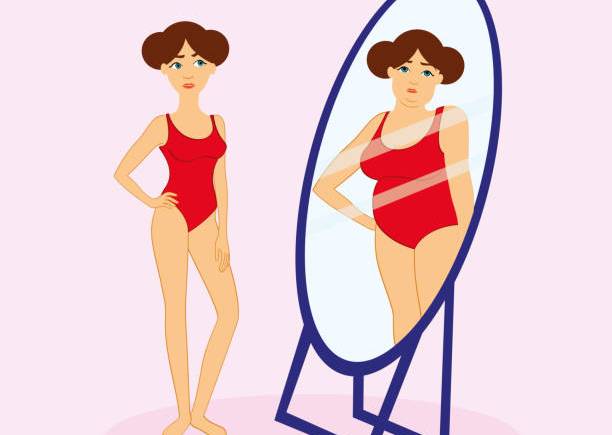
            A new social media app called TikTok emerged and swept generations because of its easy use, likability, and relatability created by other users or creators. TikTok is used like a break from stressors in life since it can have a variety of entertaining and funny videos. The TikTok algorithm determines your perception and how you choose to “respond” to each video or comment you see and scroll past. TikTok has tons of videos, from cute cat videos to funny skits, serious world news, and even tips or “how to” for your everyday life. Since TikTok has gained massive popularity, it can be strikingly influential.  TikTok can also instill some negativity in your life.  Many videos go viral for the wrong reasons and are taken to a dangerous extremity. One type of TikTok video that always goes viral is known as, “What I eat in a day”. The creator documents all their meals throughout the day and some even calculate their calorie intake. Some creators claim it is to promote a “healthy lifestyle”, while others say it is solely because these types of videos happen to go viral and do well with their audience. Regardless, these kinds of videos seem to inflict the idea of having body dysmorphia or, ironically enough, an unhealthy eating style. Body dysmorphia or body dysmorphic disorder is a mental health condition in which people hyper-focus on their flaws and appearances to the point where they will never be “good enough” in their own eyes. Some of these videos show the over consumption of food, too few nutrients in each meal, or sometimes, too much food, and too much sugar and/or greasy foods. These videos have an alarming comment section. Users will comment something to the degree of, “Wow I eat too much”, or, “Maybe I should skip a meal or two.” As you scroll through these TikToks and come across a “What I eat in a day” or a video that promotes an unhealthy body image that makes you feel uncomfortable and/or negative about yourself, press report for “harmful activities”, then press the “not interested” option at the bottom right. Even if you do not necessarily feel that way, others still might, so it is best to do your part in preventing the spread or glorification of unhealthy lifestyles.

If you or someone you know is experiencing body dysmorphia and/or signs of an eating disorder, please contact our psychotherapy offices in New York or New Jersey to talk to one of our licensed professional psychologists, psychiatrists, psychiatric nurse practitioners, or psychotherapists at Arista Counseling & Psychotherapy. Contact our Paramus, NJ or Manhattan, NY offices respectively at (201) 368-3700 or (212) 722-1920 to set up an appointment. For more information, please visit https://www.counselingpsychotherapynjny.com

Intergenerational Trauma: What is it?

Intergenerational Trauma: What is it?

By Erika Ortiz

            Intergenerational trauma is a term used to describe the difficulties or challenges a family has experienced for generations. Intergenerational trauma can inflict negative feelings and experiences through either an individual or the family as a whole. It usually starts with one family member who has had a traumatic experience. The family members then goes on to either repeat the action that traumatized them or project their feelings onto family members, continuing the cycle of trauma. Historical trauma can catalyze intergenerational trauma. For example, a great-grandmother survived the Holocaust; however, she now behaves in a very reserved and cold manner, so she struggles to express emotions such as love and compassion. Since she raised her children in such a manner, they may grow and have children and display that same type of avoidant relationship. Another example can be that a mother was sexually abused when she was younger, her daughter was also sexually abused, and her granddaughter suffered from that experience. The individual who suffers the trauma can pass down and then project the feelings that were felt at the time of the incident. Since they most likely did not receive the proper care and treatment to manage the mental health issues that they were experiencing, they relayed that same traumatic feeling to the next generation of their family. Hence, it is critical to seek professional help. Here are some ways to cope/deal with inter-generational trauma:

  • Break the cycle- interrupt and prevent the repetition of trauma
  • Hear each other out- although this can be difficult, listening is key to fixing
  • Get the professionals involved- the best way to cope with any mental health issue or fragmented relationship is to get a qualified professional’s help


Source:

https://www.choosingtherapy.com/intergenerational-trauma/

If you or someone you know is experiencing intergenerational trauma or other traumas, please contact our psychotherapy offices in New York or New Jersey to talk to one of our licensed professional psychologists, psychiatrists, psychiatric nurse practitioners, or psychotherapists at Arista Counseling & Psychotherapy. Contact our Paramus, NJ or Manhattan, NY offices respectively at (201) 368-3700 or (212) 722-1920 to set up an appointment. For more information, please visit https://www.counselingpsychotherapynjny.com

The Empty Nest Syndrome

The Empty Nest Syndrome

By Erika Ortiz

            There comes a time when parents reach the end of raising their kids to become young adults that have to venture off into the real world. As they prepare to face all of life’s trials and experiences that await them, what’s going on with the parents? Many some parents experience the empty bird’s nest syndrome. It is not a mental disorder or illness of some sort; however, it is a deep and perpetuating feeling of sadness parents temporarily experience when their child finally leaves to create a life of their own. Why does this happen? Parents spend the majority of their time raising their children and investing an immense amount of love and care towards them as well. Mom would wake you up for school; Dad would pick you up from practice; Mom made dinner for the family; Dad made you help him with fixing up something in the house every morning on the weekend. Parents’ entire lives revolve around essentially taking care and nurturing the development of their children. Once the realization the child is now “leaving the nest” parents are left with the question; “What now?”

           A great way to cope with this feeling is to start a hobby or activity. Try taking up running again; try cooking that one meal you saw on the Food Network you always wanted to or read that book you saw in the bookstore. It’s important to now refocus on yourself as parents. Parents sometimes suffer an identity crisis or “mid-life crisis” where they feel they lose themselves individually. Of course, your children will always be your children, and you will always be there for them. But realize that it is also necessary to now invest time in you as well. Another way to cope is to try and rekindle your relationship with your spouse or, for single parents, go out and date. Of course, if this feeling becomes severe or you feel helpless, please consider getting professional help. The empty nest syndrome can easily slip into something serious.

If you or someone you know is experiencing severe loneliness or sadness, please contact our psychotherapy offices in New York or New Jersey to talk to one of our licensed professional psychologists, psychiatrists, psychiatric nurse practitioners, or psychotherapists at Arista Counseling & Psychotherapy. Contact our Paramus, NJ or Manhattan, NY offices respectively at (201) 368-3700 or (212) 722-1920 to set up an appointment. For more information, please visit https://www.counselingpsychotherapynjny.com

Source

https://www.lifehack.org/809725/empty-nest-syndrome

Anxiety: Test Taking Anxiety. What is it & How to overcome it?

Anxiety: Test Taking Anxiety. What is it & How to overcome it?

By: Julissa Acebo
Do you ever experience a feeling of agitation and distress while taking an important test or exam? Followed by rapid heartbeat, muscle tension, or struggle to catch your breath? These are all symptoms of test taking anxiety which is common among many people. Some anxiety is natural and helps to keep you prepared for an exam, or mentally and physically alert, but too much can cause physical distress and/or concentration difficulties.

Test taking anxiety can:
• Impact your ability to study or perform well on a test
• Derail weeks and months of hard work
• Cause poor understanding and association of content, which inhibits your ability to recall information

Test taking anxiety tips:

  1. Be prepared
    • Talk to teacher, professor, or boss to get an idea of what to expect on the test
    • Leave ample time to study for the test. Do not wait for the night before
  2. Let go of perfectionism
    • It is impossible to learn every detail of the material that was taught
    • Focus on the most important concepts and learn them well enough to teach them
    • When you know that you have done your best and worked hard it is the only thing that matters, not the perfection.
  3. Make sure to get enough sleep the night before
    • At least 7-9 hours of a good night’s sleep will help concentration and memory
  4. Control negative thoughts
    • Counter any negative thoughts with other, more valid thoughts
    • For example, replace “I’m not good enough,” “I didn’t study hard enough,” or “I can’t do this” with “I CAN do this,” “I know the material,” and “I studied hard.”
    If all else fails, seek professional help to help you overcome your test taking anxiety.

If you or someone you know is experiencing Test Taking Anxiety, please contact our psychotherapy offices in New York or New Jersey to talk to one of our licensed professional psychologists, psychiatrists, psychiatric nurse practitioners, or psychotherapists at Arista Counseling & Psychotherapy. Contact our Paramus, NJ or Manhattan, NY offices respectively at (201) 368-3700 or (212) 722-1920 to set up an appointment. For more information, please visit https://www.counselingpsychotherapynjny.com

Sources:
https://shcs.ucdavis.edu/health-topic/test-taking-and-anxiety#:~:text=Test%20anxiety%20is%20a%20feeling,emotional%20upset%2C%20and%20concentration%20difficulties.
https://www.brown.edu/campus-life/support/counseling-and-psychological-services/managing-test-anxiety
https://northhowler.com/2291/news/test-anxiety-affecting-students/

Grief: Losing a Parent to Suicide

Grief: Losing a Parent to Suicide

By Emily Ferrer

Suicidal thoughts are one of the most dreadful experiences one can go through and it is even more dreadful when the act of suicide is carried out by someone you love. The impact of suicidal thoughts on an individual is grueling, painful, and terrifying. However, many people tend to forget about the terrifying and painful part that the individual’s family and friends go through as well. The attention around suicide is always so focused on the suicidal individual that many people forget about the impact it can have on their loved ones. In fact, have you ever thought about losing a parent to suicide? It may seem horrifying and extraordinary; but it is more common than you think. Individuals who are at most risk to die by suicide are adults over the age of 45. More specifically, women are most at risk between the ages of 45-54 and men are most at risk ages 85 and older[1]. Many people may find this shocking, as the media portrays suicide rates to be the most high in adolescents and teens, but this is just not the case. Older individuals usually have undiagnosed or untreated depression and anxiety, a lack of frequent social interactions, suffer from underlying illnesses that may increase their attempt to be more successful, and/or suffer from chronic illnesses that may increase their depression and anxiety[2].

As saddening as these statistics are, it is even worse to see that between 7,000 and 12,000 children lose a parent to suicide every year[3]. It is devastating for children to experience such a traumatic event in their lives, especially someone they loved, admired, and relied on unconditionally. Losing a parent to suicide is not like normal grief that you experience after losing someone to a physical illness or accident. Losing a parent to suicide is grieving on steroids. “Grief comes in waves and grief from suicide comes in tsunami waves”, is great quote that explains how dreadful suicide grief can feel. Children of parents who died by suicide can experience an enormous range of emotions that can cause them to feel very confused. These emotions include[4]:

  • Shock                              – Panic                                       – Despair
  • Confusion                       – Intense anger                          – Disgust
  • Denial                             – Intense sadness                      – Feelings of abandonment or rejection

It is important to know that losing a parent to suicide is extremely unfortunate and traumatic. The emotions tied to suicide grief are understandable and completely normal. Staying close to family and friends during such a difficult time is crucial and can enormously help with healing. It is also critical to feel the emotions you experience and to not turn them away as it is a part of the healing process. Seeking professional help if you are feeling overwhelmed with these emotions or experiencing them for a long time is also is a good way to heal in the healthiest way possible.

If you or someone you know is grieving a lost one due to suicide, please contact our psychotherapy offices in New York or New Jersey to talk to one of our licensed professional psychologists, psychiatrists, psychiatric nurse practitioners, or psychotherapists at Arista Counseling & Psychotherapy. Contact our Paramus, NJ or Manhattan, NY offices respectively at (201) 368-3700 or (212) 722-1920 to set up an appointment. For more information, please visit https://www.counselingpsychotherapynjny.com


Sources:

[1] https://www.samhsa.gov/suicide/at-risk#:~:text=Adults%20Over%20the%20Age%20of%2045&text=Eighty%20percent%20of%20all%20deaths,and%20access%20to%20lethal%20means.

[2] https://www.prb.org/resources/in-u-s-who-is-at-greatest-risk-for-suicides/

[3] https://www.hopkinsmedicine.org/news/media/releases/children_who_lose_a_parent_to_suicide_more_likely_to_die_the_same_way#:~:text=In%20the%20United%20States%2C%20each,to%20suicide%2C%20the%20researchers%20estimate.

[4] https://psychcentral.com/lib/an-open-letter-to-children-who-lose-a-parent-to-suicide#mental-health-effects

Deep Brain Stimulation and Electroconvulsive Therapy: What are they?

Deep Brain Stimulation and Electroconvulsive Therapy: What are they?

By Emily Ferrer

Deep Brain Stimulation (DBS) is a brain surgery involving the implantation of electrodes in certain areas of the brain to treat different movement disorders such as OCD, dystonia, Parkinson’s disease, and epilepsy as well as other disorders such as depression and drug addiction[1]. These electrodes produce electrical impulses to regulate certain brain functions[2] and are controlled by a pacemaker-like device. This pacemaker is placed in your chest with a wire that runs from the pacemaker to the electrodes that were inserted into your brain[3]. The parts of the brain that the electrodes are inserted into are specific to the patient and their specific symptoms. For example, for a patient who suffers from severe OCD the electrodes would be placed in an area of the brain called the ventral capsule/ventral striatum, which has been found to be very effective for patients suffering from treatment resistant OCD at about a 61.5% positive response rate[4].

Electroconvulsive Therapy (ECT) is a medical treatment usually preformed on patients who suffer from severe clinical depression and are treatment resistant to other options to help their condition[5]. The treatment involves small electric currents being passed externally through the patient’s skull between the voltage ranges of 180 to 460 volts. While there is still much controversy and incorrectly portrayed media about this procedure, it is significantly safer today than it was almost 100 years ago. The patient is put under general anesthesia at a hospital during the entire treatment and wakes up after not feeling anything from the procedure. The only thing patients feel after the completion of the treatment is an increase in positive mood. A study done in 2007 revealed that out of the patients who did and did not receive ECT for their treatment resistant depression, 71% of the participants in the experimental group, that received ECT,  found they had a positive response. This is significant when compared to the control group, who did not receive ECT, where only 28% of the participants found they had a positive response to just antidepressant medication[6].  ECT has gained a lot of popularity recently because of how quickly and effectively you feel the effects after a few treatments. The positive effects increase even more quickly when combined with psychotherapy in between the ECT treatments.

If you or someone you know is experiencing OCD or major depressive disorder and are interesting in pursuing these treatments, please contact our psychotherapy offices in New York or New Jersey to talk to one of our licensed professional psychologists, psychiatrists, psychiatric nurse practitioners, or psychotherapists at Arista Counseling & Psychotherapy. Contact our Paramus, NJ or Manhattan, NY offices respectively at (201) 368-3700 or (212) 722-1920 to set up an appointment. For more information, please visit https://www.counselingpsychotherapynjny.com


Sources:

[1] https://atm.amegroups.com/article/view/16268/html

[2] https://www.mayoclinic.org/tests-procedures/deep-brain-stimulation/about/pac-20384562

[3] https://www.mayoclinic.org/tests-procedures/deep-brain-stimulation/about/pac-20384562

[4] https://iocdf.org/expert-opinions/expert-opinion-dbs/#:~:text=Another%20important%20development%20for%20treatment,targeted%20areas%20of%20the%20brain.

[5] https://www.webmd.com/depression/electroconvulsive-therapy

[6] https://doi.org/10.1111/j.1600-0447.1997.tb09926.x