Procrastinating before bed? This might be why

By Katie Weinstein

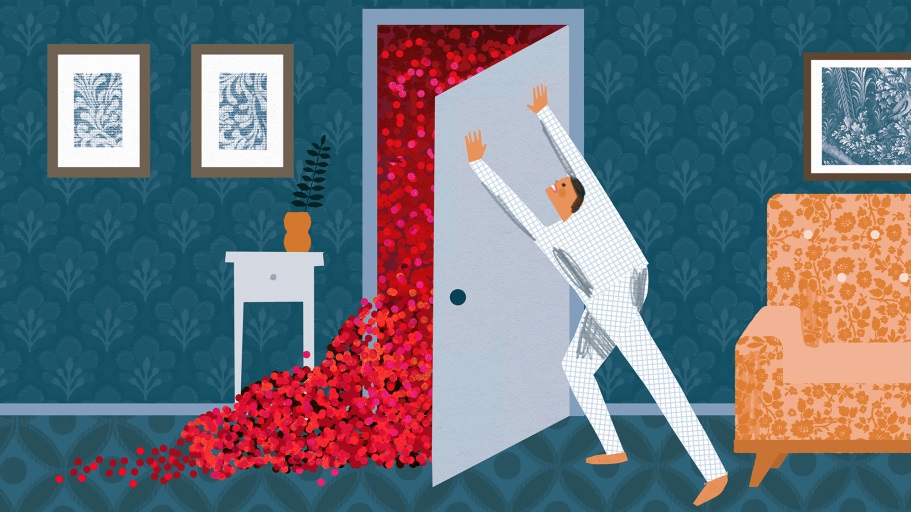
Revenge bedtime procrastination is defined as the decision to sacrifice sleep for leisure activities. The reason it is called “revenge” bedtime procrastination is to get back at the day time hours for stealing away free time. Many people are tired when going to bed and intend to go to sleep, but chose to binge shows on Netflix or scroll through hours of Tik Toks without an external reason to stay awake, meaning there is an intention-behavior gap. 

Since revenge bedtime procrastination is still a relatively new idea in sleep science, the underlying psychology explaining this phenomenon is still being debated. One explanation is that daytime workload depletes our capacity for self-control, so we can’t fight our urge to stay awake to participate in leisure activities even though it means we will be better rested for the next day. Another explanation might be that some people are naturally “night owls” and are forced to adapt to an early schedule, so this is their way of finding time to recover from stress. A third explanation might be that, during the pandemic, domestic and work lives are blurred as people work overtime hours and do not divide work time from leisure time. 

The reason that it is important to be aware of revenge bedtime procrastination is because sleep is essential for our physical and mental health. Sleep deprivation can cause daytime sleepiness, which harms productivity, thinking, and memory as well causing physical effects such as insufficient immune function and increased susceptibility to cardiovascular disease and diabetes. 

In order to prevent revenge bedtime procrastination, try putting away technology 30 minutes before bed, create a regular bedtime routine, avoid caffeine late in the afternoon, and find time for leisure activities during the day. It is also important to recognize when you need help managing your procrastination and your sleep problems.

If you or someone you know is struggling with revenge bedtime procrastination or other types of sleep problems, please contact our psychotherapy offices in New York or New Jersey to talk to one of our licensed professional psychologists, psychiatrists, psychiatric nurse practitioners, or psychotherapists at Arista Counseling & Psychotherapy. Contact our Paramus, NJ or Manhattan, NY offices respectively, at (201) 368-3700 or (212) 722-1920 to set up an appointment. For more information, please visit http://www.counselingpsychotherapynjny.com/

What Is “Revenge Bedtime Procrastination”?

https://www.medicalnewstoday.com/articles/revenge-bedtime-procrastination-a-plight-of-our-times#Tips-for-better-sleep

Neurotic Perfectionism and Dance

By Katie Weinstein

Dancing is proven to lower rates of anxiety and depression as well as increase self-confidence and provide opportunities for social interaction. However, the competitive dance field creates an environment that promotes neurotic perfectionism, causing dancers to lose their love for dance. While perfectionism is what enables dancers to strive towards meeting their goals and working hard, neurotic perfectionism is when people set unreasonable expectations for themselves and feel shame when they do not achieve their goal. Neurotic perfectionism can lead to disordered eating, anxiety, substance abuse and depression.

Dancers feel that there is no excuse for not landing the part or not getting attention from their teacher besides lack of effort, so dancers spend hours perfecting their mistakes and comparing themselves to others in the mirror, fostering an incredibly competitive environment and causing dancers to become overly critical of their bodies and skills. Instead of focusing on the positive and creating opportunities from mistakes, dancers expect every movement to be perfect and are overly self-critical when this isn’t the case. Additionally, dancers compete with other people for their next paycheck, so they end up setting super high expectations that are nearly impossible to achieve, wishing they could get their leg up higher or look thinner than everyone else in the room. They often think that if they are not casted, they might not be able to afford to pay rent or buy groceries. Dancers end up pushing themselves too far, and often end up with insomnia from nervousness and injured because of burnout. This can even lead dancers to self-medicate so that their injuries are off the record, leading to substance abuse.

Some signs of neurotic perfectionism include setting unrealistic expectations, feeling shame or guilt and overemphasizing the final product, but underemphasizing the process. It is important to change your thought patterns so that you are not overly critical and can set realistic goals for yourself.

If you or someone you know is experiencing neurotic perfectionism, please contact our psychotherapy offices in New York or New Jersey to talk to one of our licensed professional psychologists, psychiatrists, psychiatric nurse practitioners, or psychotherapists at Arista Counseling & Psychotherapy. Contact our Paramus, NJ or Manhattan, NY offices respectively, at (201) 368-3700 or (212) 722-1920 to set up an appointment. For more information, please visit http://www.counselingpsychotherapynjny.com/

https://www.psychologytoday.com/us/blog/talking-about-trauma/202101/competitive-dancers-risk-neurotic-perfectionism

https://www.dancespirit.com/perfectionism_101-2326036484.html

Stop Nagging and Build Better Communication Skills

By Katie Weinstein

Nagging is a type of interpersonal communication defined as persistent, repetitive behavior to try to get an individual to complete or stop a task. Naggers are associated with a passive aggressive, obsessional and negative personality types. There is a common misconception that naggers enjoy nagging, but often times; the nagger’s mood is dysregulated and they feel anxious and frustrated. They obsess over a particular thing and cannot tolerate these feelings, so they off load their problems onto the nearest person available, which is why nagging is commonly associated with a partner. Additionally, naggers may have a high need structure for their immediate environment and have a deep fear that their world could spiral if things are not kept entirely in order.

Often times the nagger thinks that continuously asking for something will get the other person to complete the task that they need. In reality, the other person most likely responds in non-compliance, meaning they say yes to the nagger’s request, but do not follow through, ignore the nagger, or say no. This is because the person being nagged tunes out the nagger. The nagger then might become increasingly aggressive, which decreases the likelihood of compliance.

In order to get people to comply with a task it is important to practice better communication. One thing that might help is to give a person a to-do list either via text or on paper with an agreed upon, realistic deadline so that the person won’t forget the task and can complete it on their time. Another thing you can do is be straight forward. Instead of complaining that your partner never does the dishes, ask them to do the dishes. It is also important to know when you need help to stop nagging and begin working on better communication skills.

If you, you and your partner, or you and your family are looking for therapy please contact our psychotherapy offices in New York or New Jersey to talk to one of our licensed professional psychologists, psychiatrists, psychiatric nurse practitioners, or psychotherapists at Arista Counseling & Psychotherapy. Contact our Paramus, NJ or Manhattan, NY offices respectively, at (201) 368-3700 or (212) 722-1920 to set up an appointment. For more information, please visit http://www.counselingpsychotherapynjny.com/

https://www.psychologytoday.com/us/blog/insight-is-2020/202106/two-motivations-the-nagging-personality-type

http://self.gutenberg.org/articles/eng/Nagging

https://www.webmd.com/women/features/stop-nagging

Burnout; what it is and how to prevent it

By Katie Weinstein

When push comes to shove, stress becomes burnout. This can lead to detrimental effects on our physical and mental health, so it is important to recognize when burnout is beginning to occur. Burnout is a gradual process that is defined as an extended period of stress and exhaustion that feels like it isn’t improving. Some signs of burnout are losing interest and motivation to a point in which you become disengaged, which can cause a cynical and resentful attitude. Burnout also affects physical health, causing changes in appetite and sleep and frequent headaches.

The causes of burnout include work, lifestyle, and personality traits. Lack of recognition in a chaotic or high pressure environment can make someone more susceptible to burnout. Some ways to improve work related burnout are to outsource or share responsibilities and to set boundaries for off times such as not checking email. Another cause of burnout can be caregiver burnout, since it can be very tiring to care for a child. It’s important to remember that it does not make you a bad parent or friend to ask for help when you need it. Everyone needs a break. Additionally, a perfectionist attitude and pessimistic view on things may lead to burnout, it is important to recognize when burnout is beginning so that you can practice stress managing techniques and find time to do things that you enjoy to prevent burnout. 

Knowing the difference between a burnout and being overly stressed is essential for mental health. It is important to limit contact with negative people and reach out to supportive friends and family in order to shape a more positive attitude and prevent burnout.

If you or someone you know is experiencing burnout or high levels of stress, please contact our psychotherapy offices in New York or New Jersey to talk to one of our licensed professional psychologists, psychiatrists, psychiatric nurse practitioners, or psychotherapists at Arista Counseling & Psychotherapy. Contact our Paramus, NJ or Manhattan, NY offices respectively, at (201) 368-3700 or (212) 722-1920 to set up an appointment. For more information, please visit 

https://www.psychologytoday.com/us/basics/burnout

Anxiety and Depression: Rumination

By: Lauren Zoneraich

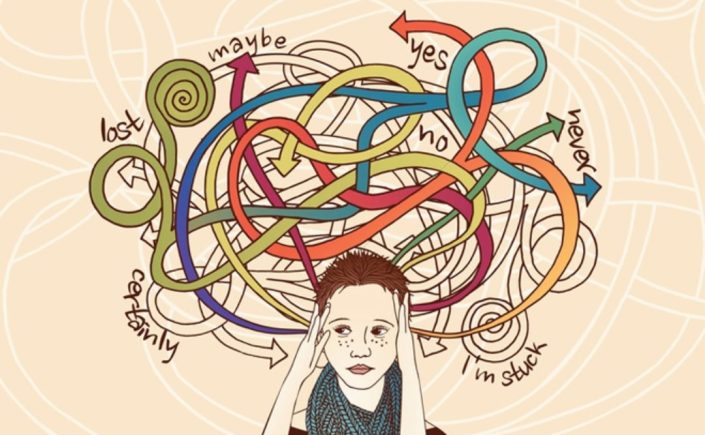
Rumination is the cognitive process of repeating negative thoughts without completion, much to one’s distress. In the mind, the thoughts play like a broken record. Rumination can involve negative thoughts about the past or present, and the self. This form of cognition plays a key role in many psychological conditions, such as depression, generalized anxiety disorder, social anxiety, alcohol abuse, OCD, PTSD, and eating disorders. Rumination is a passive process. One feels as if one cannot control repetitive, dominating thoughts. These distracting thought circles can last for long periods of time and disrupt work, school, and social life. Rumination is different than worry in that rumination involves negative thought content rather than thought content related to uncertainty. Worry usually is tied to the future, while ruminative thoughts are usually tied to the past or present. Rumination can impact physical health by increasing stress levels.In the context of depression, rumination usually involves negative self-assessments, such as feelings of inadequacy or worthlessness. These feelings can lead to anxious responses and further worsen one’s emotional state.

There are some intervention strategies to disrupt rumination. One way is to distract oneself with other activities, such as socializing or exercising. Cognitive Behavioral Therapy, or CBT, is a therapy approach that aims to change negative thought patterns. Patients learn to recognize their distortions, irrational thoughts, and negative thoughts. Once they recognize these thoughts, patients reframe negative thoughts and assess the irrationality of their thoughts. Patients also learn methods to calm their mind and body through breathing exercises and thinking of things they associate with feeling calm and peaceful. Patients are also encouraged to think of action plans to address their negative thoughts.

If you or someone you know is struggling with anxiety or depression, or is seeking Cognitive Behavioral Therapy for rumination, please contact our psychotherapy offices in New York or New Jersey to talk to one of our licensed professional psychologists, psychiatrists, psychiatric nurse practitioners, or psychotherapists at Arista Counseling & Psychotherapy. Contact our Paramus, NJ or Manhattan, NY offices respectively, at (201) 368-3700 or (212) 722-1920 to set up an appointment. For more information, please visit http://www.counselingpsychotherapynjny.com/

Sources:

Sansone, R. A., & Sansone, L. A. (2012). Rumination: relationships with physical health. Innovations in clinical neuroscience9(2), 29–34. https://www.ncbi.nlm.nih.gov/pmc/articles/PMC3312901/

https://www.psychologytoday.com/us/blog/depression-management-techniques/201604/rumination-problem-in-anxiety-and-depression

https://www.apa.org/ptsd-guideline/patients-and-families/cognitive-behavioral

Image Source:

https://blogs.kcl.ac.uk/editlab/2018/10/12/r-is-for-rumination/

OCD: Life During a Pandemic

By Charlotte Arehart

It seems logical to assume that those struggling with OCD are having a harder time during the COVID-19 pandemic. However, this is not necessarily true. While some people who suffer from OCD are having more troubles, not every person who has OCD is seeing a difference in their symptoms. For example, someone who’s OCD focuses on other infectious agents that are not COVID-19 will probably not see a lot of change in their symptoms. A study done in November of 2020 found that OCD symptoms increased in frequency significantly more in “washers,” or people who are afraid of contamination, than in non-washers with OCD.

Many individuals with OCD are expressing how the pandemic has made other people realize what it is like to obsess over contamination. For some people with OCD, this has been the way they have felt for their entire lives. For many of us, obsessively cleaning and sanitizing things has only become part of our habits because of the pandemic.

One benefit that doctors have been seeing during the pandemic, specifically for OCD treatment, is the fact that online therapy sessions allow the patient to have their session in any setting. Many people who are being treated for OCD use exposure therapy with their therapists to help reduce their symptoms. This involves patients exposing themselves to stimuli that may induce their symptoms in an attempt to reduce their anxiety about these symptoms. With sessions being held on telehealth, patients can move about their environment and even do their therapy in unusual locations that allow them to expose themselves, with professional direction, to their stressors. This would not always be possible in an office setting.

The bottom line is that one cannot assume that an individual with OCD is experiencing worse symptoms due to the pandemic. While this is true some people who are suffering from OCD, not every individual’s stressors include the virus. It is important that someone who is experiencing OCD seeks treatment as soon as possible, before symptoms worsen. OCD can be debilitating if it is extreme. Therapy is an excellent form of treatment for OCD.

If you or someone you know is struggling with OCD, please contact our psychotherapy offices in New York or New Jersey to talk to one of our licensed professional psychologists, psychiatrists, psychiatric nurse practitioners, or psychotherapists at Arista Counseling & Psychotherapy. Contact our Paramus, NJ or Manhattan, NY offices respectively, at (201) 368-3700 or (212) 722-1920 to set up an appointment. For more information, please visit http://www.counselingpsychotherapynjny.com/

Sources:

https://www.columbiapsychiatry.org/news/covid-q-obsessive-compulsive-disorder-ocd

https://www.ncbi.nlm.nih.gov/pmc/articles/PMC7644184/

Image Source: https://www.npr.org/sections/health-shots/2020/06/13/872466613/obsession-or-just-good-hygiene-keeping-the-coronavirus-and-ocd-at-bay

Kratom Craze

By Charlotte Arehart

If something is legal, that must mean that it’s safe, right? While this would be great to believe, unfortunately it is not true.  An example of something that is not illegal yet but is still unsafe is the drug kratom. Although banned in 6 states, kratom is still legal in the United States. It can easily be purchased at drug stores and even online. Kratom, a psychoactive plant, comes from the leaves of kratom trees that grow in Southeast Asia, where it has traditionally been used for teas and medicines. Only recently has kratom been used frequently in Western societies. Many people praise kratom for alleviating their pain from headaches or even bad knees. However, kratom comes with some not-so-great side effects, and some that are quite aversive.

Low doses of kratom seem very beneficial. Users may experience increased energy, lower pain levels, and feelings of relaxation. However, continued consistent use of kratom or large doses of kratom pose some serious side effects. And since kratom is so addictive, it is easy for users to work their way up to this point. Users may begin to hallucinate, become depressed, have seizures, enter comas, or even die when mixing kratom with other substances. There have been many deaths recorded because of kratom usage with other substances like alcohol. One user on WebMD begs others to be wary of kratom, stating that their family member died from a third seizure caused by the drug. Another user warned of the addictive effects of the drug, saying that kratom advocates downplay the withdrawal symptoms to be similar to caffeine withdrawal when in reality it is more like “full on opioid withdrawal” symptoms. Since kratom has a very similar chemical reaction in the body as opioid drugs, it makes sense that the withdrawal symptoms would be very similar. Other users have stated that while the drug may be efficient in alleviating pain, the dependency that comes with the drug is not worth it.

Even though kratom is not illegal, there is no such thing as a “good” addiction. If you or someone you know is facing a kratom addiction, there are ways to get help. It is important that anyone who is facing a kratom addiction seeks therapy as soon as possible, before it is too late.

If you or someone you know needs substance abuse support, please contact our psychotherapy offices in New York or New Jersey to talk to one of our licensed professional psychologists, psychiatrists, psychiatric nurse practitioners, or psychotherapists at Arista Counseling & Psychotherapy. Contact our Paramus, NJ or Manhattan, NY offices respectively, at (201) 368-3700 or (212) 722-1920 to set up an appointment. For more information, please visit http://www.counselingpsychotherapynjny.com/

Sources:

https://www.mayoclinic.org/healthy-lifestyle/consumer-health/in-depth/kratom/art-20402171

https://www.healthline.com/health/kratom-and-alcohol#effects

https://www.ncbi.nlm.nih.gov/pmc/articles/PMC4657101/

Image Source: https://www.healthline.com/health/kratom-and-alcohol

Trichotillomania: A Body-Focused Repetitive Behavior

By: Lauren Zoneraich

Trichotillomania, also known hair-pulling disorder, is a chronic psychological condition in which one feels the urge to pull out pieces of hair from the scalp, eyebrows, eyelashes, and other body areas.  Hair pulling can be an intentional or an unconscious behavior. Some people purposely pull their hair because it produces a pleasurable feeling. Hair pulling relieves stress, anxiety, sadness, and tension for people with trichotillomania. A motivation for pulling hair may simply be to relieve the urge to pull hair. Others may unconsciously pull their hair when they are relaxed or distracted. Hair-pulling causes the formation of bald spots and the thinning of hair, which induces anxiety and distress in people with trichotillomania. People with trichotillomania may feel ashamed and embarrassed about their appearance, which may lead to low self-esteem and the avoidance of certain social activities in which they must expose their head.

About 2% of people experience trichotillomania in their lifetime. Trichotillomania is categorized under “Obsessive-Compulsive and Related Disorders.” Symptoms and signs of trichotillomania include:

  • Repeatedly pulling out hair
  • Tension before pulling or when resisting the urge to pull
  • Pleasure or relief after pulling out hair
  • Hair loss, hair thinning, balding
  • Rituals for hair-pulling, such as a preferred spot to pull from
  • Biting, chewing, or eating pulled out hair
  • Inability to stop pulling out hair
  • Social distress related to hair-pulling

A possible pharmacological treatment for trichotillomania is N-acetylcysteine (NAC), an amino acid which targets glutamate levels in the nucleus accumbens, which is the reward center of the brain. The nucleus accumbens also houses neural circuits involved in aversion. Glutamate is an excitatory neurotransmitter, which means that it activates these pathways in nucleus accumbens. Altering glutamate levels may alter the strength of reward responses to certain behaviors, which may allow patients to decrease unwanted behaviors. In a study, researchers found that 56% of subjects reported improvement to their trichotillomania after 9 weeks of taking NAC. NAC can be bought at nutrition and health stores. This was a relatively small study, so more research must be done to determine the clinical effectiveness of NAC.

If you or someone you know is struggling with trichotillomania or skin-picking, please contact our psychotherapy offices in New York or New Jersey to talk to one of our licensed professional psychologists, psychiatrists, psychiatric nurse practitioners, or psychotherapists at Arista Counseling & Psychotherapy. Contact our Paramus, NJ or Manhattan, NY offices respectively, at (201) 368-3700 or (212) 722-1920 to set up an appointment. For more information, please visit http://www.counselingpsychotherapynjny.com/

Sources:

https://www.bfrb.org/learn-about-bfrbs/treatment/self-help/123-n-acetylcysteine-for-trichotillomania-skin-picking-and-nail-biting

https://www.bfrb.org/learn-about-bfrbs/trichotillomania

https://www.mayoclinic.org/diseases-conditions/trichotillomania/symptoms-causes/syc-20355188

Image Source:

https://youngwomenshealth.org/2019/02/06/trichotillomania-hair-pulling/

Mental Health during Pride Month

By Charlotte Arehart

With June finally starting, this means that it is officially Pride Month! Pride Month is celebrated in June in the USA and many other countries. During Pride Month, we celebrate and recognize the impact that  lesbian, gay, bisexual, transgender, queer LGBTQ+ individuals have on their communities. We celebrate their history, whether it be locally, nationally, or internationally. Unfortunately, there is a stigma surrounding the LGBTQ+ community regarding mental health. There are a plethora of statistics about LGBTQ+ individuals and mental health, including the fact that members of the community are less likely to seek treatment for mental health, substance abuse, and eating disorders. This is largely due to fear of being discriminated against because of their sexuality. Pride Month is the perfect opportunity to prioritize and learn more about mental health for LGBTQ+ individuals.

There are many barriers that LGBTQ+ individuals face when it comes to finding mental health treatment. Many mental health centers lack culturally-competent or diverse staff and/or treatment. It was not very long ago that homosexuality and bisexuality were themselves considered mental illnesses. This was thought to be true until the 1960’s. Gay men and lesbian women were frequently forced to undergo “treatment” for their sexuality against their will, such as aversion, conversion, and even shock therapies. Also damaging to mental health, LGBTQ+ individuals are at a higher risk for bullying, and sometimes even hateful violent crimes. The best way to help the LGBTQ+ community regarding mental health efforts is to support the community not only through words but through actions. By reducing the stigma around mental health and making LGBTQ+ individuals feel as comfortable as possible, hopefully we can make mental health treatment more accessible for everyone. Luckily, the vast majority of mental health professionals today are accepting and positive towards the LGBTQ+ community. Everyone deserves to have efficient, effective, and professional mental health no matter how they identify as individuals.

If you or someone you know needs mental health support, please contact our psychotherapy offices in New York or New Jersey to talk to one of our licensed professional psychologists, psychiatrists, psychiatric nurse practitioners, or psychotherapists at Arista Counseling & Psychotherapy. Contact our Paramus, NJ or Manhattan, NY offices respectively, at (201) 368-3700 or (212) 722-1920 to set up an appointment. For more information, please visit http://www.counselingpsychotherapynjny.com/

Sources:

Image Source: https://lgbt-speakers.com/news/top-10-lists/10-lgbt-speakers-for-pride-month-2021

Social Media: Self-Diagnosing

By Charlotte Arehart

For many people, it has become a habit to turn to the internet with any questions that one might have. While it is great to have the answers to the world at our fingertips, we have to keep in mind that just because we find an answer on the internet does not mean it is the correct one. Googling the answers to everything can be particularly harmful when it comes to physical and mental health. Searching a simple symptom such as a stomach ache may lead to answers that suggest the individual has appendicitis, when in reality they may only be having indigestion. With the internet becoming more powerful than ever, more people have been self-diagnosing with physical and mental health issues without seeking help from a professional.

Social media has played a huge role in the increase of self-diagnosing. Many influential social media users with a large platform use their platform to speak and educate viewers about mental illnesses. While this is great in terms of normalizing and reducing the stigma around mental health issues, it becomes harmful when viewers use this information to self-diagnose. I personally have seen many videos on platforms such as Instagram and Tiktok where the creator lists several widely general and common “symptoms,” such as sleeping in too much or having a short attention span, then follow up with something along the lines of “if you are experiencing these symptoms, you may have ADHD!” In the comments section, I see floods of viewers who are now concerned that they may have a mental disorder simply because they experience a few of the general symptoms listed. It seems that these videos create a lot of stress in people who do not actually need to be worried, since the symptoms listed are often so generalized. However, I do think that it is very beneficial for those who are struggling with mental health issues to receive support and a sense of community through social media. It can be very comforting to know that you are not alone going through something. If creators wish to speak about mental health issues on social media, it should be done in a very careful way. Addressing mental health on social media does present a wide variety of benefits, however it becomes an issue when people are self-diagnosing and becoming worried without speaking to a professional.

If you or someone you know needs mental health support, please contact our psychotherapy offices in New York or New Jersey to talk to one of our licensed professional psychologists, psychiatrists, psychiatric nurse practitioners, or psychotherapists at Arista Counseling & Psychotherapy. Contact our Paramus, NJ or Manhattan, NY offices respectively, at (201) 368-3700 or (212) 722-1920 to set up an appointment. For more information, please visit http://www.counselingpsychotherapynjny.com/

Sources:

https://etactics.com/blog/problems-with-self-diagnosis

Image Source: https://dailytitan.com/opinion/column-self-diagnosing-mental-health-disorders-is-hazardous/article_d953ca7f-0eae-57d2-81fb-d0d339734788.html