Self-Harm: What You Need To Know

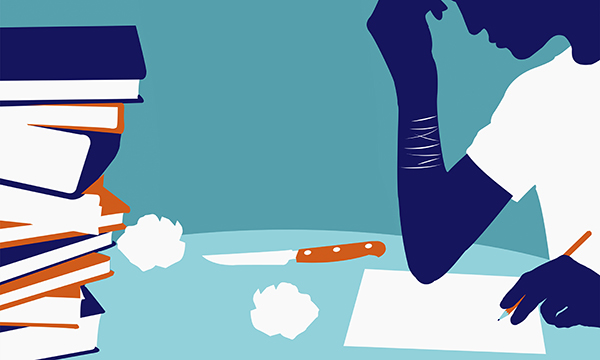
About 17% of all people will self-harm during their lifetime, however the actual rate is likely higher than this because of the shame and stigma that surrounds self-harm. Individuals self-harm as a way to deal with difficult feelings, or overwhelming situations and experiences, and can include cutting, burning, and scratching oneself. Self-harm can be difficult to understand, and can sometimes be confused with suicide attempts. Self-harm and suicide attempts are not the same thing, however, there is a strong association between the two. One common stereotype of self-harm is that it is “attention seeking”. The reality is that most self-harm is done in secrecy, and individuals often feel ashamed to ask for help.

There are several self-harm risk factors. These include struggling with mental health conditions, such as depression, anxiety, personality disorders, drug and alcohol use or addiction, and eating disorders. Self-harming can become physically addictive, as it is habit-forming, and individuals can come to rely on it as a coping mechanism for what they are going through.

Sharing your feelings with someone that you trust can help you self-harm less and feel less alone. If someone has disclosed to you that they engage in self-harm, it is important to be patient and educate yourself on why people self-harm and what you can do to help.

If you or someone you know is struggling with self-harm, please contact our psychotherapy/psychiatry offices in New York or New Jersey to talk to one of our licensed professional psychologists, psychiatrists, psychiatric nurse practitioners, or psychotherapists at Arista Counseling & Psychotherapy. Contact our Paramus, NJ or Manhattan, NY offices respectively, at (201) 368-3700 or (212) 722-1920 to set up an appointment. For more information, please visit http://www.counselingpsychotherapynjny.com/.

Sources

https://www.mind.org.uk/information-support/types-of-mental-health-problems/self-harm/about-self-harm/

Self-Harm Statistics

https://www.rethink.org/advice-and-information/about-mental-illness/learn-more-about-symptoms/self-harm/

Image Source

https://rcni.com/nursing-children-and-young-people/careers/research-and-commentary/improving-nursing-care-of-children-and-young-people-who-self-harm-81661

The Relationship between OCD and Eating Disorders

The Relationship between OCD and Eating Disorders

By: Suzanne Zaugg

Eating disorders are characterized as obsessive, repetitive thoughts, and ritualistic behaviors. Obsessive-compulsive disorder (OCD) is a common, chronic long lasting disorder that characterizes uncontrollable thoughts or behaviors that an individual may feel they need to repeat certain things over and over. Statistics show that people with eating disorders are more likely to show signs of OCD, due to the overlapping traits of both OCD and eating disorders.

Understanding the similarities and differences between eating disorders and OCD can help develop a more comprehensive understanding of a patient that presents both of these disorders. People with an eating disorder may experience intrusive thoughts about food and body image, and may develop ritualistic behaviors. Examples of ritualistic behavior pertaining to eating disorders include body checking for any changes in shape or size, frequent weight checking, and skipping meals. An important distinction between OCD and eating disorders lies in the relationship between the thought and action of the individual.  People with OCD are typically interested in ridding themselves of their thoughts and feelings whereas; people with eating disorders may feel more tied to the components of this disorder and feels as if it is a part of their identity.

Since both eating disorders and OCD share overlapping diagnostic characteristics, treatments will look similar. Both exposure therapy and cognitive behavior therapy are very helpful treatments for both eating disorders and OCD. Exposure therapy is a psychological treatment that involves exposing the patient to the anxiety source or its context without the intention to cause any danger. Also, cognitive-behavior therapy is a treatment approach that helps you recognize negative or unhelpful thought patters.

If you or someone you know is seeking therapy for an eating disorder, please contact our psychotherapy offices in New York or New Jersey to talk to one of our licensed professional psychologists, psychiatrists, psychiatric nurse practitioners, or psychotherapists at Arista Counseling & Psychotherapy. Contact our Paramus, NJ or Manhattan offices respectively, at (201) 368-3700 or (212) 722-1920 to set up an appointment. For more information, please visit http://www.counselingpsychotherapynjny.com/

Sources:

https://www.waldeneatingdisorders.com/blog/eating-disorders-and-ocd-a-complicated-mix/

Anxiety and Tests

Anxiety and Tests

 As universities are opening up and students are returning back to the classroom, students may feel increases in test anxiety as they return to an academic setting. While some anxiety may be a good motivator for studying, a crippling amount of anxiety can result in a decrease in grades and an increased risk of mental health issues. Here are some tips to conquer testing anxiety.

  • Study Smarter, Not Harder: Make sure you’re prepared for the test. Don’t cram and don’t spend too long stressing over the subject. Ask friends and family for help, and set goals to help you reach your potential in different subjects.
  • Focus on the positives: Negativity can be a self-fulfilling prophecy. If you tell yourself you’ll do poorly, you’ll end up not having the motivation to study and thus do poorly. Practice positive self-talk and set realistic goals for yourself.
  • Build Good Habits: Manage your time wisely. Make sure to get enough sleep the day before the test and eat something nutritious the morning of the test.
  • Do Relaxation Exercises: There are a number of ways to alleviate physical symptoms. Do breathing exercises, count backwards from one hundred, and meditate. Find out which relaxation technique works best for you.

            As everyone returns to the classroom there will be an adjustment period. Be proactive in helping your test anxiety and practice the methods that work best for you.

If you or someone you know is seeking therapy for an anxiety disorder, please contact our psychotherapy offices in New York or New Jersey to talk to one of our licensed professional psychologists, psychiatrists, psychiatric nurse practitioners, or psychotherapists at Arista Counseling & Psychotherapy. Contact our Paramus, NJ or Manhattan, NY offices respectively, at (201) 368-3700 or (212) 722-1920 to set up an appointment. For more information, please visit http://www.counselingpsychotherapynjny.com/

SOURCE: https://www.therapistaid.com/therapy-guide/treating-test-anxiety#references

Managing Eating Disorders during the Holidays

By: Suzanne Zaugg

Holidays are a described as being, “the most wonderful time of year” filled with joy and love, it is a time when families to come together. Most, people are gathered around in the season of giving celebrating their holiday cheer, while, people with mental health issues, struggle more throughout the holiday season. According to the American Psychological Association, 38% of people tend to feel their stress increase during the holiday season, which can lead to physical and mental health disorders, such as eating disorders. Signs of an eating disorder include feeling stressed around food, fearful of weight gain, guilt after eating, and missing events that are food focused. These signs tend to increase through the holiday season, so it is important to keep an eye out if you or a loved one start to experience these or similar symptoms. Learning ways to manage relationships with food is a great way to feel better through the holidays, for those who have eating disorders.

Strategies to get through the holiday season:

  1. Show self-compassion. Give yourself compassion through the difficult holiday season.
  2. Ask for help. Find a family member or friend as a support person during meal times.
  3. Have a holiday coping plan. Plan out your “fear” foods (ones that make you feel stressed and anxious) and favorite foods, and then give yourself permission to eat them.
  4. Remind yourself that food provides nutrient value. Holiday foods connect us with culture, heritage, loved ones and traditions. Holiday foods are not considered “unhealthy”.
  5. Give yourself permission to feel satisfaction from eating.
  6. Set healthy boundaries. Choosing not to engage in diet talk or leaving a family function early are important ways to manage food anxiety.
  7. Practice self-care. Whether it is cuddling your pet, connecting with loved ones, or just taking time for yourself. Self-care is beneficial to your overall health.
  8. Take one day at a time. Make short term goals, which are easier to achieve and which will boost your overall mood, in order to make the most of gathering with loved ones.

By learning to understand and recognize the signs of an eating disorder, you can help the people in your life who are struggling.

If you or someone you know is seeking therapy for an eating disorder, please contact our psychotherapy offices in New York and New Jersey to talk to one of our licensed professional psychologists, psychiatrists, psychiatric nurse practitioners, or psychotherapists at Arista Counseling & Psychotherapy. Contact our Paramus, NJ or Manhattan, NY offices respectively, at (201) 368-3700 or (212) 722-1920 to set up an appointment. For more information, please visit http://www.counselingpsychotherapynjny.com/

Source:

https://news.llu.edu/health-wellness/tips-and-tools-for-handling-eating-disorders-around-holidays

Eating Disorders Part 5: Eating Disorders among Latina Women

By: Abby Erasmus

Latina women are caught between two cultures and are therefore at risk of experiencing acculturative stress (a term discussed in “Eating Disorders: Part 4”). As mentioned previously, increased acculturative stress is linked to an increase in eating- related pathology, thus disordered eating patterns are not uncommon among Latina women. The rate of occurrence of eating disorders among Latina women is equivalent to the rate of the general population of U.S. females; however, anorexia nervosa (AN) is rarely noted in Eating Disorder (ED) studies in regard to Latina women. This does not mean AN does not exist among Latina Women, AN is just thought to be the least prevalent in the community. Researchers have found that bulimia nervosa (BN) and binge eating disorder (BED) are the most common, with lifetime prevalence rates of 2% to 2.3-2.7% respectively. Further, researchers have identified key differences in the presentation of both dietary restriction and drive for thinness in comparison to European- American white women. Latina women are less likely to engage in dietary restriction, and if they do, it is often followed by a binge- eating episode. Latina women also find themselves caught between the thin ideal belonging to Western culture and the curvy but flat- stomached ideal belonging to the Latinx community, and these conflicting body image ideals can result in disordered eating behaviors. Additionally, and quite similarly to Asian American culture, food is the love language of the Latinx community, yet, similarly to Asian American women, these women will be scrutinized for gaining weight. Latina women also experience the paradox, and providers should keep this paradox in mind to understand root causes of EDs within the Latinx community.

Binge eating within the Latinx community is associated with significant levels of distress as well as psychopathology, and is often accompanied by obesity. Despite reporting significant levels of distress, the majority of Latina women do not seek treatment, and when they do, they often refer to primary care doctors in which obesity is the only thing that gets identified. Their ED goes unnoticed. In order to correctly diagnose EDs among Latina women, providers must understand the high prevalence rates of BED, BN, and binge- eating behaviors within the population which, in turn, can result in obesity. Once the ED is addressed, obesity can be addressed. Again, with cultural competency added into the equation of treatment, Latina women’s EDs will be correctly diagnosed and they will receive proper treatment.

If you or someone you know is seeking therapy for an eating disorder, please contact our psychotherapy offices in New York or New Jersey to talk to one of our licensed professional psychologists, psychiatrists, psychiatric nurse practitioners, or psychotherapists at Arista Counseling & Psychotherapy. Contact our Paramus, NJ or Manhattan, NY offices respectively, at (201) 368-3700 or (212) 722-1920 to set up an appointment. For more information, please visit http://www.counselingpsychotherapynjny.com/

Sources:

https://yourlatinanutritionist.com/blog/eating-disorders-among-latinas

https://www.ncbi.nlm.nih.gov/pmc/articles/PMC2680162/

https://www.ncbi.nlm.nih.gov/pmc/articles/PMC4078895/

How Social Media Affects Mental Health

By Jillian Hoff

In a world where most individuals are obsessively using social media, it can be detrimental to a person’s mental health.  Some of the most common symptoms that come from excessive use of social media include an increase in anxiety, depression, isolation, and fear of missing out (FOMO). Humans need social interaction, which can be given through social media but only to an extent. Humans need an in person social interaction with the people around them to feel connected. There is a reliance on social media to be able to connect with others now, especially during the pandemic. The convenience that comes from using social media may seem like it is beneficial but it the overuse of it can be the reason for your decline in mental health.

How to know when social media is affecting your mental health:

  • You start spending more time on social media than with your friends in person.
  • You compare yourself to others on social media.
  • You find yourself being distracted while you are at work or school.
  • Using social media is disrupting you sleep.

Ways to improve on mental health after a social media addiction:

  • Turn off your phone at certain times of the day.
  • Keep your phone or tablet in a different room when you are completing a task or going to bed.
  • Use social media in an active way instead of passively. This means you are using social media for a purpose.
  • Take on a new hobby or adventure to new places as a means of meeting new people and getting off of your phone.
  • Interact with others when you go somewhere instead of sitting on your phone.

Know when to put down your phone, it will make all the difference in your mental health!

If you or someone you know is seeking therapy, please contact our psychotherapy offices in New York or New Jersey to talk to one of our licensed professional psychologists, psychiatrists, psychiatric nurse practitioners, or psychotherapists at Arista Counseling & Psychotherapy. Contact our Paramus, NJ or Manhattan, NY offices respectively, at (201) 368-3700 or (212) 722-1920 to set up an appointment. For more information, please visit http://www.counselingpsychotherapynjny.com/

Sources

https://www.riseservices.org/the-impact-of-social-media-on-mental-health/

https://www.helpguide.org/articles/mental-health/social-media-and-mental-health.htm

ADHD in Girls: Suffering in Silence

ADHD in Girls: Suffering in Silence

By: Stacey Rodriguez

Generally thought to be a disorder specific to school-aged boys, attention deficit disorder (ADHD) has shown to be relatively prevalent in girls as well. The disorder includes 3 subtypes: hyperactive and impulsive  (HI), inattentive, and combination. ADHD is commonly associated with the HI subtype, which is most commonly exhibited by boys. Contrastingly, girls tend to exhibit the inattentive subtype. By nature, inattentive features are not as overtly obstructive as that of hyperactivity and impulsivity, often causing them to go unnoticed. In fact, studies estimate that 75% of girls with attention deficit disorder never get diagnosed. Additionally, it is theorized that societal norms, such as gender roles, might also be a factor in this disparity; since many overt characteristics of ADHD do not align with female gender norms, such as the tendency to be disorganized or interrupt others speaking, girls with the disorder tend to suppress the tell tale signs. 

The result of undiagnosed attention deficit disorder can be detrimental, as it can lead to mental health consequences in adulthood. This is largely due to the fact that girls tend to internalize mistakes. This internalization leads to negative internal dialogues, which puts girls with ADHD at higher risk for eating disorders, anxiety disorders, and depression. It is imperative to be aware of the ways in which the disorder manifests differently in girls. For example,

A girl with ADHD might:

-be more more easily irritated, or sensitive to certain sounds/feelings

-talk significantly more than her peers and often interrupt others

-struggle to commit to completing tasks or activities

-often make “careless” errors

-seem to be especially disorganized

-tend to be forgetful

If you or someone you know is seeking therapy for attention deficit disorder, please contact our psychotherapy offices in New York or New Jersey to talk to one of our licensed professional psychologists, psychiatrists, psychiatric nurse practitioners, or psychotherapists at Arista Counseling & Psychotherapy. Contact our Paramus, NJ or Manhattan, NY offices respectively, at (201) 368-3700 or (212) 722-1920 to set up an appointment. For more information, please visit http://www.counselingpsychotherapynjny.com/

Source: https://www.cfpsych.org/blog/what-parents-need-to-know-about-adhd-in-girls/

Image Source: https://psychbc.com/blog/adhd-is-different-for-girls-what-families-need-to-know

Laziness: The Harmful Effects of the Term “Lazy” on Mental Health

By: Rebecca Fernandez

               “Lazy” is a common uncomplimentary term in modern vocabulary for when someone is unproductive. Think back to a time a group member failed to pull their weight in a group project, or a time someone procrastinated severely, leaving everything for the last minute and creating a poor final product. Consider even a time where you witnessed someone who, by early afternoon, was seemingly unable to bring themselves to get out of bed to start the day.

Whether it was yourself or someone else that you imagined, it’s easy to write off everyone in those examples as lazy. However, there’s a major issue with doing that – “laziness” is often not the cause of these situations. Rather, many mental health conditions can create issues that simulate behaviors identical to laziness.

Take, for example, disorders such as attention deficit hyperactivity disorder (ADHD), depression and other mood disorders, insomnia and other sleep disorders, and anxiety disorders including obsessive compulsive disorder (OCD) and generalized anxiety disorder (GAD). Each of these conditions can negatively impact a person’s ability to be productive, making them appear lazy. People with ADHD can often find themselves imagining all of the tasks they could be engaging in at once and becoming so overwhelmed they feel almost paralyzed. People with depression and other mood disorders often lack the mental energy to accomplish anything. Similarly, people with insomnia and other sleep disorders often lack the physical energy to accomplish anything. People with GAD may have a crippling fear that they won’t be good enough at something, preventing them from attempting to do the task in question. People with OCD may have a crippling (rational or irrational) fear that something bad will happen if they do specific things, preventing them from doing those things.

               All of these explanations are generalized and therefore may not apply to everyone with each listed disorder, or be the only applicable factor for each disorder’s effect on laziness. However, if you or someone you know has been consistently labeled as lazy, remember that “laziness” is often more than how it appears on the surface, and that actively struggling with mental health does not make a person a failure.

If you or someone you know is exhibiting signs of “laziness” as described above that are getting in the way of day-to-day life, please contact our psychotherapy offices in New York or New Jersey to talk to one of our licensed professional psychologists, psychiatrists, psychiatric nurse practitioners, or psychotherapists at Arista Counseling & Psychotherapy. Contact our Paramus, NJ or Manhattan, NY offices respectively, at (201) 368-3700 or (212) 722-1920 to set up an appointment. For more information, please visit http://www.counselingpsychotherapynjny.com/

https://www.psychologytoday.com/us/blog/hide-and-seek/201410/the-psychology-laziness

Eating Disorders Part 1: More than Just One Narrative

Eating Disorders Part 1: More than Just One Narrative

By: Abby Erasmus

Eating disorders don’t discriminate; about 1 in 7 male individuals and 1 in 5 female individuals experience an eating disorder by age 40. Girls as young as 8 or 9 are walking into the doctor’s office with cases of anorexia nervosa, bulimia nervosa, and other types of eating disorders. Individuals regardless of race, class, gender, religion, and sexual orientation can suffer from an eating disorder (ED). EDs are an extremely serious matter; they have the highest mortality rate of all mental illnesses. Keeping all of this information in mind, it is extremely important to understand and acknowledge that EDs affect all demographic groups and can manifest differently within these groups. Different demographics have complex histories with different cultural backgrounds that can affect how one displays an ED, and why a group develops one. Because people are unaware that different demographic groups experience EDs, stigma often surrounds their diagnosis by both people within their community as well as outside the community. Knowing that EDs have the highest mortality rate, it is our responsibility to reduce the stigma by disseminating information about how EDs affect a wide variety of populations.

The typical narrative of an ED tells the struggle of a white, straight, cis- gender woman. This population does experience EDs, and it’s extremely important to provide them with appropriate help and support; however, this typical narrative leaves out the experience of many other groups of people with EDs and why different demographics might development them. In reality, the rates of EDs are about the same across demographic groups in the United States, but because one narrative is told, other groups are significantly less likely to receive treatment. In a series of blog posts, I will discuss how EDs affect different populations: Black women, the LGBTQ community, Asian American women, Latina Women, and men in general.

If you or someone you know is seeking therapy for an eating disorder, please contact our psychotherapy offices in New York or New Jersey to talk to one of our licensed professional psychologists, psychiatrists, psychiatric nurse practitioners, or psychotherapists at Arista Counseling & Psychotherapy. Contact our Paramus, NJ or Manhattan, NY offices respectively, at (201) 368-3700 or (212) 722-1920 to set up an appointment. For more information, please visit http://www.counselingpsychotherapynjny.com/

Sources:

https://www.state.sc.us/dmh/anorexia/statistics.htm

https://jamanetwork.com/journals/jamanetworkopen/article-abstract/2752577

https://www.webmd.com/mental-health/eating-disorders/anorexia-nervosa/features/changing-face-anorexia

https://www.nationaleatingdisorders.org/people-color-and-eating-disorders#:~:text=Eating%20disorders%20have%20historically%20been,help%20for%20their%20eating%20issues.

Social Anxiety; Going Back to Normalcy After the Pandemic 

By Jillian Hoff

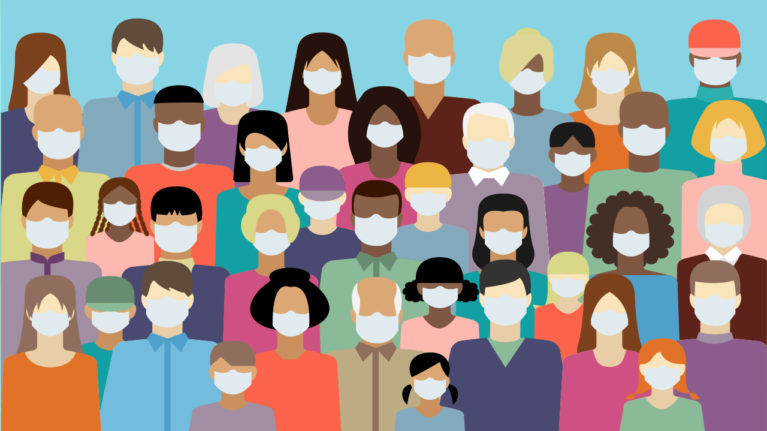
As everyone starts to go back to their lives before the pandemic it is important to recognize that some individuals will feel uncomfortable after being in quarantine for so long. Some people will most likely feel some amount of social anxiety when going back out. It is important to recognize that most people are going to feel anxious when returning back to normalcy. Most people will just feel these emotions a different degree. Social anxiety is more than just feeling nervous. It could occur when a person feels as though they are being judged or being put down by the people around them when that isn’t the case. This will be normal as people go back to socializing in any type of setting. One major issue society might have would be to relearn social behaviors. Some things that we previously would not have thought about doing became common actions for us during the pandemic. Things like making facial expressions under our masks or talking during a meeting because that is what we got used to doing, is not going to be acceptable behavior when one’s in person.

It is important not to rush into socializing in person. Start by having in-person meetings or work once or twice a week and slowly add more days after you are comfortable. If you have an event that you need to go to, try planning a solution in advance that will make you most comfortable to be there. You can also practice mindfulness and deep breathing exercises as a way to gain some control over your anxiety. However, what is most important is to realize that everyone is getting back to normalcy and that others will feel the same way as you do.

If you or someone you know is seeking therapy for social anxiety, please contact our psychotherapy offices in New York or New Jersey to talk to one of our licensed professional psychologists, psychiatrists, psychiatric nurse practitioners, or psychotherapists at Arista Counseling & Psychotherapy. Contact our Paramus, NJ or Manhattan, NY offices respectively, at (201) 368-3700 or (212) 722-1920 to set up an appointment. For more information, please visit http://www.counselingpsychotherapynjny.com/

Sources:

https://www.mprnews.org/story/2021/06/21/the-19th-explains-how-to-manage-postpandemic-social-anxiety

https://www.cedars-sinai.org/newsroom/managing-post-pandemic-social-anxiety/

https://tulsaworld.com/opinion/columnists/cartoon-post-pandemic-anxiety/article_453797b8-8804-11eb-a763-3371541a6ae8.html