BED: Symptoms, Statistics, and Risks

By: Cassie Sieradzky

Binge eating disorder is characterized by episodes of ingesting large quantities of food to the point of feeling sick, feeling a loss of control during the episodes, guilt and or shame following the binge, and a lack of compensatory behaviors, like purging. Binge eating disorder is the most common eating disorder in America. The recurrent episodes of binging are done within a discrete period of time and can be associated with eating faster than usual, eating until uncomfortably full, eating when not hungry, eating in private due to shame, and feeling guilty and depressed following the binge. To merit a diagnosis, binging episodes must occur at least one a week for 3 months.

Binge eating disorder is 3x more common than anorexia and bulimia combined, with a lifetime prevalence of 3.5% for women and 2% for men. BED is most prevalent in the late teens or early 20s; however it is also reported in young children and adults. About 40% of individuals diagnosed with BED are male and 3 out of 10 individuals seeking weight loss treatments show signs of this disorder.

Psychotherapy is an important part of the treatment. Psychotherapy helps the individual address and work through the emotional problems associated with BED. Individuals with this disorder are at an increased risk of developing another psychiatric disorder such as substance abuse, bulimia, or anorexia. People with BED are also at risk of engaging in self-injurious behavior, suicidal thoughts, and suicidal actions. Along with the emotional problems associated with BED, individuals with this disorder are at an increased risk for developing diabetes, abnormal cholesterol, and high blood pressure.

If you or a loved one appears to be suffering from binge-eating disorder, licensed psychologists, psychiatrists, psychiatric nurse practitioners, and psychotherapists at Arista Counseling & Psychotherapy can assist you. Contact our Paramus, NJ or Manhattan, NY offices respectively, at (201) 368-3700 or (212) 722-1920 to set up an appointment. For more information, visit http://www.counselingpsychotherapynjny.com/

Dryden-Edwards, M. R. (n.d.). Binge Eating Disorder Treatment, Symptoms & Causes. Retrieved January
23, 2018, from https://www.medicinenet.com/binge_eating_disorder/article.htm
Overview and Statistics. (n.d.). Retrieved January 23, 2018, from

Binge Eating Disorder (BED)

Borderline Personality Disorder

By Jennifer Guzman

Border-What-personality?

Borderline Personality Disorder (BPD) is a common disorder categorized under “mood disorders” in the DSM. Although it is common, many individuals who have it are often misdiagnosed with Bipolar Disorder, as they share a few commonalities and may be easily confused. Very frequently, this may be the case, as studies have shown that a plethora of individuals who were diagnosed with Borderline Personality Disorder were previously diagnosed with Bipolar Disorder until they were properly diagnosed (Ruggero, Zimmerman, Chelminski, & Young, 2010). However, a key distinguisher between the two is that with Borderline Personality Disorder, mood shifts occur as a result of a situation, whereas mood shifts in a person with Bipolar Disorder may occur sporadically.

A few key symptoms for Borderline Personality Disorder are impulsive behavior, feeling as though you are unsure of your identity, frequent mood shifts, feeling bouts of extreme idealization or repulsion towards a person, place, or thing, extreme fear of abandonment, or difficulty/apprehension towards trusting in others.

Treatment procedures for Borderline Personality Disorder usually entail Dialectic Behavioral Therapy (DBT), which focuses on practicing mindfulness and the rewiring of harmful behaviors. Medication is provided as needed and varies from person to person. If you experience any of the above symptoms, please visit our psychologists, psychiatrists, psychiatric nurse practitioner, or psychotherapists. If you are in a crisis, please call 1-800-273-8255. For therapy, you can give Arista Counseling a call at (201) 368-3700, for our Paramus location, or (212) 722-1920 to set up an appointment.

Ruggero, C.J., Zimmerman, M., Chelminski, I., Young, D. (2010). Borderline Personality Disorder and the Misdiagnosis of Bipolar Disorder. Journal of Psychiatric Research. 44(6), 405-408.

Skin-Picking/Excoriation Disorder: An Obsessive Compulsive Disorder

OCD: Skin-Picking/Excoriation

Written by: Jinal Kapadia

Obsessive Compulsive Disorder (OCD) is a common, long-lasting disorder in which a person has uncontrollable, reoccurring thoughts (obsessions) and behaviors (compulsions) that he or she feels the urge to repeat over and over. There are many different types of OCD disorders, but one disorder in particular deals with skin picking; it is called Excoriation.

Excoriation disorder affects around 1.4% of the general population, and its symptoms appear most commonly during adolescence, around the onset of puberty. This disorder, sometimes referred to as chronic skin-picking or dermatillomania, is characterized by repeated picking at one’s own skin resulting in skin lesions and sometimes significant disruption in one’s life.

In order to be diagnosed with Excoriation disorder, a person must exhibit the behavior of picking one’s skin that results in skin lesions and repeated attempt to stop this behavior. These symptoms must cause clinically significant distress or impairment, can not be caused by a medical or dermatological condition or substance, and can not be better explained by another psychiatric disorder.

The treatment for Excoriation disorder is similar to the treatment for general Obsessive Compulsive Disorder in the sense that both suggest the use of medication, specifically selective serotonin reuptake inhibitors (SSRIs), and cognitive-behavioral therapy (CBT) to reduce the obsessive thoughts and compulsive behaviors of the person suffering from the disorder.

If you or someone you know has Excoriation disorder or seems to have the symptoms of Excoriation disorder, and needs help, please contact our psychotherapy offices in New York or New Jersey to talk to one of our licensed professional psychologists, psychiatrists, psychiatric nurse practitioners, or psychotherapists at Arista Counseling & Psychotherapy. Contact our Paramus, NJ or Manhattan, NY offices respectively, at (201) 368-3700 or (212) 722-1920 to set up an appointment. For more information, please visit http://www.counselingpsychotherapynjny.com/.

Sources:

Mentalhealthamerica.com. (2018). Excoriation Disorder (Skin Picking or Dermatillomania). [online] Available at: http://www.mentalhealthamerica.net/conditions/excoriation-disorder-skin-picking-or-dermatillomania [Accessed 10 Jan. 2018].

Mghocd.org. (2015). Excoriation. [online] Available at: https://mghocd.org/clinical-services/excoriation/ [Accessed 10 Jan. 2018].

Nimh.nih.gov. (2016). NIMH » Obsessive-Compulsive Disorder. [online] Available at: https://www.nimh.nih.gov/health/topics/obsessive-compulsive-disorder-ocd/index.shtml [Accessed 10 Jan. 2018].

GAD: Symptoms and Treatment

Generalized Anxiety Disorder

Written by: Cassie Sieradzky

General Anxiety Disorder is a psychological disorder that is characterized by extreme worry over every day experiences that is hard to control and interferes with daily functioning. The excessive worry happens more days than not for at least 6 months. The disorder often starts in the teen years or young adulthood, but can be seen from childhood throughout adulthood. Individuals with GAD may have trouble concentrating, they struggle to control their worries, feel easily tired, and may be irritable or on edge. These are some commonalities of the disorder, however children and adults diagnosed with GAD do have some differences regarding their worries.

Children with GAD tend to worry excessively about their performance in school or sports and catastrophes like war and hurricanes. Adults with GAD tend to have anxiety over health, finances, job security, being late, and everyday responsibilities. Children and adults may also suffer from physical symptoms like headaches and other unexplained pains. About 2.7% of adults have had GAD in the past year and about 5.7% of all U.S adults will experience GAD at some point in their lives.

GAD can be treated with psychotherapy, medication, or both. Cognitive behavioral therapy is particularly successful in treating GAD. CBT teaches the patient how to think, behave, and react differently in situations that result in anxiety or worried. The goal is to curve the maladaptive thinking patterns associated with the disorder. Medications such as SSRIs and other medications that regulate serotonin help alleviate the symptoms of GAD.

If you or a loved one appears to be suffering from GAD, the licensed psychologists, psychiatrists, psychiatric nurse practitioners, and psychotherapists at Arista Counseling & Psychotherapy can assist you. Contact our Paramus, NJ or Manhattan, NY offices respectively, at (201) 368-3700 or (212) 722-1920 to set up an appointment. For more information, visit http://www.counselingpsychotherapynjny.com/

Sources:

Generalized Anxiety Disorder: When Worry Gets Out of Control. (n.d.). Retrieved January  29, 2018, from https://www.nimh.nih.gov/health/publications/generalized-anxiety-disorder-gad/index.shtml

Generalized Anxiety Disorder. (n.d.). Retrieved January 29, 2018, from https://www.nimh.nih.gov/health/statistics/generalized-anxiety-disorder.shtml


Seasonal Affective Disorder: What is it?

Seasonal Affective Disorder

Written by: Jinal Kapadia

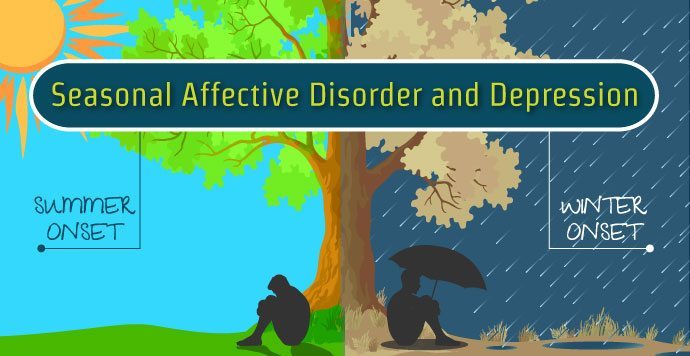
Seasonal Affective Disorder (SAD) is a peculiar disorder. In fact in is not a disorder at all. It is actually a type of depression displayed in a recurring seasonal pattern. In order to be diagnosed with Seasonal Affective Disorder, the patient must meet the full criteria for major depression coinciding with specific seasons (appearing in the winter or summer months) for at least 2 years.

Some general symptoms include feeling depressed most of the day nearly every day, feeling hopeless or worthless, losing interest in activities that were once enjoyed, having difficulty concentrating, and/or having thoughts of death or suicide. There are also specific symptoms that vary based on either the winter or summer seasons. In the winter, a person with Seasonal Affective Disorder may experience low energy, hypersomnia, overeating, weight gain, cravings for carbohydrates, and social withdrawal (feel like “hibernating”). Although, summer seasonal affective disorder is less frequent, the specific symptoms for this season include poor appetite, weight loss, insomnia, agitation, restlessness, anxiety, and episodes of violent behavior. Forms of treatment for Seasonal Affective Disorder include medication, Psychotherapy (cognitive behavioral therapy and behavioral activation), and Vitamin D supplementation.

If you or someone you know has Seasonal Affective Disorder or seems to have the symptoms of SAD, and needs help, please contact our psychotherapy offices in New York or New Jersey to talk to one of our licensed professional psychologists, psychiatrists, psychiatric nurse practitioners, or psychotherapists at Arista Counseling & Psychotherapy. Contact our Paramus, NJ or Manhattan, NY offices respectively, at (201) 368-3700 or (212) 722-1920 to set up an appointment. For more information, please visit http://www.counselingpsychotherapynjny.com/.

Source: Seasonal Affective Disorder. (2016, March). Retrieved January 09, 2018, from https://www.nimh.nih.gov/health/topics/seasonal-affective-disorder/index.shtml