Mindfulness: Why We Should All Practice It

By: Sanjita Ekhelikar

We live in a time when everyone is either living in the past or future. Being in the moment, or living in the present, seems to be a concept foreign to so many of us. By not living in the current moment, we are simply ensuring a life filled of stresses and regrets. How can we better learn to focus on the present?

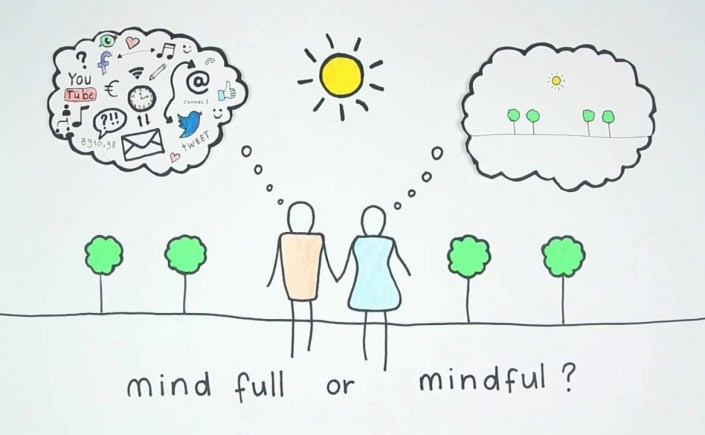
Mindfulness means being aware of our surroundings, our body, our feelings, and thoughts in the moment. It involves recognizing and accepting our thoughts or sensations for what they are in a given moment without any judgment or negative perceptions. The practice of mindfulness gives our minds the chance to tune into the present.

It is critical for all of us to learn to practice mindfulness and how to be in the present. This will help us to avoid living a stressful life. This technique helps us learn to relax, be calm, and appreciate the present. Learning to practice mindfulness does not involve any major changes we need to make to our lives – simply setting aside a few minutes to be aware of ourselves and surroundings can have long term benefits. Here are some examples of mindful exercises we can all strive to implement in our daily lives:

  1. Mindful Breathing: Stand or sit down in a comfortable position and focus your thoughts and energy on your breath. Breathe in through your nose and out of your mouth. Be aware of only your breathing, and let go of your thoughts, letting them come and go as they pass.
  2. Mindful Observing: Look at any object in your surroundings/environment and focus solely on the object for a few minutes. Take a moment to notice every possible aspect of the object, including its color, shape, movement, features, and how it changes. Your mind will be focused on this object and will enable you to relax.
  3. Mindful Listening: Close your eyes and take a moment to listen to all of the sounds in your surroundings. Try to identify as many sounds as you can possibly hear and describe them. This allows your mind to again focus on something in the current moment instead of the thoughts in your mind.

If you or someone you know is suffering from stress or anxiety and wants to learn how mindfulness can help you, please contact our psychotherapy offices in New York or New Jersey to talk to one of our licensed professional psychologists, psychiatrists, psychiatric nurse practitioners, or psychotherapists at Arista Counseling & Psychotherapy. Contact our Paramus, NJ or Manhattan, NY offices respectively, at (201) 368-3700 or (212) 722-1920 to set up an appointment. For more information, please visit http://www.counselingpsychotherapynjny.com/.


Perfectionism: How Striving to be the Best can Leave us at our Worst

By: Sanjita Ekhelikar

We are commonly told that no one in the world is “perfect”, and that there is no such thing as “perfection”. Or so they say. Then why do so many people around the world still try to aim for this standard of “perfect” in what they do in life?

Perfectionists are individuals who strive for flawlessness. They set very high standards and expectations for themselves, have a set way of wanting to do things, and take time to be truly satisfied with their work. Aiming for perfectionism definitely has benefits. We all know that one person from school or work who would be the “perfectionist”: they would be the most successful, put out high quality work, and constantly keep pushing boundaries so that their final products are amazing.

However, being a perfectionist has its disadvantages and dangers. Individuals who seek to be “perfect” set extremely high standards for themselves, which results in their being very critical of themselves. Perfectionists tend to notice and fixate on all of their flaws, as they wish to not only produce “perfect” work but also to be “perfect” people. Whenever a perfectionist make mistakes, as does everyone in the world, he or she is unable to look past the “failure” and thus feel extreme guilt, shame, and sadness.

Perfectionistic thinking underlies several mental illnesses, such as depression, anxiety, OCD, and eating disorders. It can even lead to suicidal thoughts. Perfectionists’ inability to accept failure, constant self-criticism, and desire to act, be, and look perfect, drives them towards unhealthy behaviors and thinking. They are constantly hard on themselves for not achieving “perfect,” which is inevitable because there is no such thing as perfect! These patterns of thinking and negative behaviors need to be monitored for the risks they present in causing mental illness.

Instead of striving for “perfection,” we should be encouraging others and ourselves to be the best versions of who we are. Remind people that there is in fact a beauty in accepting yourself and your positive attributes, and in being kind to yourself. Encourage people to accept themselves, make mistakes, and to strive to not look perfect. We should truly appreciate ourselves and accept BOTH the good and the imperfect. By addressing and changing the perfectionist way of thinking, we can better prevent, understand, and heal many mental illnesses.

If you or someone you know is suffering from any of the aforementioned symptoms, please contact our psychotherapy offices in New York or New Jersey to talk to one of our licensed professional psychologists, psychiatrists, psychiatric nurse practitioners, or psychotherapists at Arista Counseling & Psychotherapy. Contact our Paramus, NJ or Manhattan, NY offices respectively, at (201) 368-3700 or (212) 722-1920 to set up an appointment. For more information, please visit http://www.counselingpsychotherapynjny.com/.

Stress: The Endless Pressures on the Brain

By: Sanjita Ekhelikar

A common factor that unites all people is experiencing stress. Stress is the way that our bodies react to various situations including pressure, threats, challenges, or barriers. All individuals experience this in some form in their work, home, or school settings, some to a greater degree than others. We live in a world where we often encourage those around us to do more, work harder and longer, and essentially take on more stressors. This is a very dangerous situation, as stress can be very harmful to our brains.

There are numerous impacts that prolonged stress can have on our brains. When a stressor is present, the body has several physical reactions, including increased heart rate, sweating, raised levels of epinephrine, and constricted blood vessels. In our brains, a signaling pathway is activated involving the hippocampus and pituitary gland which results in the release of the hormone glucocorticoid, a stress hormone. This hormone is generally regulated by the body, released in fixed amounts when we wake up and is necessary for our body to operate. However, when stress is chronic and the brain pathway is activated excessively, glucocorticoids can inhibit growth, bone formation, and the immune response. They are linked to mental illnesses like depression and anxiety, destroying neurons, impairing memory, and slowing down cognitive function.

As stress is faced recurrently, the brain learns to acclimate to the body being in constant states of elevated tension and anxiety. The circuitry of neurons and connections of synapses changes to adapt to the higher levels of glucocorticoids. Additionally, people exposed to more stress noted to have a larger amygdala in the brain, which is the region responsible for processing threatening and emotional situations. A larger amygdala indicates that the individual is more susceptible to stressors and is unable to recover from them well. Finally, such individuals were also seen to have a smaller hippocampus and prefrontal cortex, both responsible for decision making and rational thinking.

It is evident that the stressful lifestyles that many of us live can have a severe adverse impact on our brains and health, most invisible to the eye but nevertheless perilous. Instead of endorsing demanding lives and tiring jobs, which can have negative consequences, we should be inspiring people to learn how to relax and take time for themselves. People should be urged to engage in activities such as meditation, pursue hobbies, spending time with loved ones, and give their brains a break from the stressors and anxiety that are continuously causing pressure.

If you or someone you know is suffering from excessive stress and/or mental illness, please contact our psychotherapy offices in New York or New Jersey to talk to one of our licensed professional psychologists, psychiatrists, psychiatric nurse practitioners, or psychotherapists at Arista Counseling & Psychotherapy. Contact our Paramus, NJ or Manhattan, NY offices respectively, at (201) 368-3700 or (212) 722-1920 to set up an appointment. For more information, please visit http://www.counselingpsychotherapynjny.com/.

Coping With Stress

By: Dianna Gomez


Whether you are a prestigious lawyer or currently unemployed, one thing that all people have in common is that, at one point or another, we have all felt what it’s like to be stressed. The stress may be caused by totally different situations, but at the end of the day those feelings have been felt by us all. You may be asking yourself, “So what simple steps can I take to help myself next time I do feel overwhelmed with stress?” Whether you are a busy college student with 4 exams to study for, an overworked single mom with 2 jobs trying to put food on the table, or a very successful business person with tons of responsibilities, stress can be an issue in anyone’s life.

Here are 5 things you can do to decrease the amount of stress in your life:

#1. Determine Where the Stress is Coming From

  • Is your stress work-related? Is it constantly being caused by the same people in your life? Finding the root of the problem gives you better direction when aiming to correct it.

#2. Eat Healthy

  • For some people, a typical reaction to stress is to “eat your feelings” and turn to comfort foods that are more often than not foods that are processed and high in fat, sugar, or carbs. Although doing this may help you feel better for the short term, it definitely doesn’t help you in the long term which is more important. In fact, it can create problems in the long term that not only don’t help your stress, but add to it as well.

#3. Exercise

  • Go for a walk in the park, take a kick-boxing class, do a few laps in the pool. Get those endorphins flowing!

#4. Make Time for Yourself

  • We all have busy lives – places to be, people to see but nothing is more important than how you feel mentally. Whether it is 10 short minutes or an hour each day, take the time you have to do something you love and to be away from the chaos.

#5. You Can’t Fix What You Can’t Control

  • While you can’t control how your boss acts, what your mother-in-law says, or the current state of the economy, you can control things that you do. If you can’t control it, don’t let it control you!


If either you or anybody you know may be suffering from excessive amount of stress, the licensed psychologists, psychiatrists, psychiatric nurse practitioners, and psychotherapists at Arista Counseling & Psychotherapy can help you. Contact our Paramus, NJ or Manhattan, NY offices respectively, at (201)-368-3700 or (212)-722-1920 to set up an appointment. For more information, visit us at https://www.counselingpsychotherapynjny.com/.


Neurofeedback

Leah Flanzman

There has recently been a great deal of discussion on a psychological treatment called neurofeedback. Neurofeedback assists people in consciously controlling their brain waves by attaching subjects to an EEG machine that extracts various brain-activity components and feeds them back to the patient.  The most common protocols used in neurofeedback training are alpha, beta, theta, and alpha/theta protocols.  The way that you select the placement of electrodes on a patients head depends on their specific brain functions and specific symptoms.  The goal is to allow the subject to assess their progress and adjust their brain waves accordingly to achieve optimal performance.  However, the effectiveness and practicality of the treatment is under debate.

According to the Basic and Clinical Neuroscience journal, many studies conducted on neurofeedback therapy reveal methodological limitations that question its effectiveness. For example, with the alpha treatment protocols, it remains unknown exactly how many treatment sessions are necessary before patients can consciously possess the ability to control their alpha waves.  Once an optimal performance is achieved, it’s difficult to study the long-term effects of these treatments, in other words how long the effects last without feedback.

The pros of neurofeedback are that it’s a safe and non-invasive procedure that has been proven effective in treating certain disorders such as ADHD, anxiety, depression, epilepsy, insomnia, drug addictions, and learning disabilities. Despite this, more scientific evidence of its effectiveness must be conducted before we can consider it a valid treatment.  It’s also important to keep in mind that it’s a very expensive procedure that is not covered by many insurance companies, and is very time consuming to complete.

If you or someone you know thinks they have ADHD, anxiety, depression, or drug addictions, or learning disabilities, the psychologists, psychiatrists, and psychotherapists at Arista Counseling and Psychiatric Services can help.  Contact the Bergen County, NJ or Manhattan offices at (201) 368-3700 or (212) 722-1920.  Visit http://www.counselingpsychotherapynjny.com for more information.

Neuroplasticity

Neuroplasticity

By: Leah Flanzman

The human brain has the power to grow, mold, and adapt to the course of your life in order to best cater to your overall happiness and well-being. This concept is known as neuroplasticity, and occurs when the brain alters its physical structure and changes its circuits so we can better imagine, remember, feel, experience pain, dream, and learn.  Neuroplasticity is similar to the popular expression “it’s like riding a bike.”  Once you acquire a skill, your neurons kick into gear and remember their specific pathways so that each time this skill is performed, they are pre-programmed on what to do.  These pathways strengthen over time as new synapses form maximizing these skills.

Neuroplasticity can be a valuable tool for rewiring how your mind thinks and reacts to certain situations. It can foster increased happiness by retraining your brain to strengthen pathways that promote happiness as an alternative to worry or stress in light of certain situations.  The activities that you choose to do can alter the structure of your brain.  For example, if you are stuck in a funk, doing something positively stimulating for the brain will train it to associate the negative feelings with happier ones.  Your moldable brain will remember the pathways it took to achieve happiness and the next time you experience sadness, it will automatically kick into positivity gear.   Additionally, you can trick your brain into happiness pathways by imagining yourself in your desired mood.  Your brain lacks the capability to distinguish between imagination and reality so if you visualize a desired image of happiness long enough, your brain will believe it to be true and trigger the emotion.

When your brain fills up with neural connections that are relevant to your life, the ones that are unnecessary will begin to deteriorate. Your clever mind can form creative ways to suppress depressive thoughts and shine light on positive thoughts so your unproductive nature fades into the background.  Options that can help you in your quest to mold your brain towards greater happiness include:

  • Cognitive behavioral therapy
  • Mindfulness based cognitive therapy
  • Visualization
  • Relaxation
  • Hypnosis
  • Nurturance
  • Stimulation

If you or someone you know thinks they could benefit from therapy that aids in restructuring their brain to think positively, please contact our psychotherapy offices in New York or New Jersey to talk to one of our licensed professional psychologists, psychiatrists, psychiatric nurse practitioners, or psychotherapists at Arista Counseling & Psychotherapy. Contact our Paramus, NJ or Manhattan, NY offices respectively, at (201) 368-3700 or (212) 722-1920 to set up an appointment. For more information, please visit http://www.counselingpsychotherapynjny.com/.


The Power of Optimism

Isabelle Kreydin

When you go through a traumatic experience, the time it takes to recover is immeasurable and flooded with uncertainty. It could be anything between a breakup, abuse, a car accident, a loved one’s death, or even your entire childhood. When you acquire a mental illness, or know someone who has, it truly does affect every aspect of your life. Even stress, can alter brain chemistry and one’s way of life. But brokenness is not beautiful because of the way you are, but the way you will be when you are finally free.

You might feel alone. But you are alone because you feel as though are burdening others with your pain, and now are trying to reassemble yourself on your own and trying to fight the mental illnesses from becoming you. You’re trying but right now you are physically and mentally exhausted. It’s a tiring work of progress, but the only way out of the tunnel is through, and we know better than to turn around or take steps backwards.

It is easy for the brain to resort to the cloud that a trauma or illness might have installed in you, falling into despair or numbness, and there is truly nothing worse. Isolation is not the key, though it is most commonly a side effect of any of these negative experiences. Despite contrary belief, this leads you to an opportunity to get help. To find help within friends, family, and professionals. They can only help you understand that although you may not always be able to feel it, there is so much love and beauty to this world. There will ALWAYS be people there for your support. If you don’t feel this way, go out and make new friends, talk to your therapist, reach out to adults you may trust, or even kind strangers. The world has more love to offer than it seems.

Optimism is tough. You can be fighting for your body and thoughts to be positive, and have an outlook on life that shows light. However, your brain and body may be inflicting darkness, or feelings of nothingness, completely out of your control.

Optimism is also a savior. The more you put this fight into your brain, the more you convince yourself that you are going to make it, that everything will be okay, the more likely it is for your body to start behaving this way. Get up and force yourself to make plans, to do anything you once enjoyed or might find joy in.

The world may be falling a part in many aspects, and so are some humans that occupy it. However, everybody is still on this earth giving their full efforts to find the ultimate goal, happiness. It should not be overthought; it should not become the only purpose one strives for. It should be a feeling that comes through every day activities, thoughts, conversations. Positivity can help motivate the brain to feel that happiness, to appreciate the times it is felt, to hope for more positive outcomes and experiences. These can come from setting goals, making friends, loving, giving, being active, showing compassion, pursuing passions, treating oneself, or even physically seeing the beauty this world has to offer.
Life is too short to not love with everything you are. Giving with little return is tough, but you are tougher and have years to be given what you give.

Together, with optimism, have those around you help you rewrite your story and your future, and remember that it is okay to not be okay. There are billions that have struggled, there are millions that are fighting to overcome, and there are millions that have overcome and become a light and inspiration to us all.

You are never alone, and it will be worth it when you reach the end of that tunnel or even when you begin to see the light.

If you are struggling with substance abuse or any other kind of addiction, the psychologists, psychiatrists, and therapists at Arista Counseling and Psychiatric Services can help.  Contact the Bergen County, NJ or Manhattan offices at (201) 368-3700 or (212) 722-1920.  Visit http://www.acenterfortherapy.com for more information.


Nicotine Addictions

Isabelle Kreydin

People living with mental illness have a high rate of tobacco addiction. In America, 44.3% of all cigarettes are consumed by individuals who live with mental illness and substance abuse disorders. What’s it mean to be addicted? You might have problems paying attention, trouble sleeping, appetite change, and/or powerful cravings for tobacco at least once a day.

The nicotine in any tobacco product absorbs into ones blood when a person uses it. Upon entering the blood, nicotine stimulates the adrenal glands to release the hormone epinephrine, otherwise known as adrenaline. Nicotine increases levels of the chemical dopamine, which affects parts of the brain that control reward and pleasure. Those who suffer from mental illnesses such as depression, anxiety, schizophrenia, etc. commonly lack a consistent flow of dopamine (as well as other neurotransmitters), and the nicotine can therefore be a sort of temporary enhancer and mood booster.

The addiction itself however, is more about the lies one feeds to himself, the subconscious thought that the cigarettes, e-cigarette or other drug will truly fill a void in the addict’s mind or body. Those struggling with addiction have something in common: an ache that they believe can be dimmed. Whether it’s simply a drug to relieve temptation, or tension in the mind or of thoughts, it’s still an unhealthy coping mechanism.

Like most drug addictions, nicotine only provides one with temporary relief or a brief time away from reality. Every year, smoking kills about 200,000 people who live with mental illness. Please do not be one of those statistics.

Smoking is known to cause heart disease, stroke and lung disease, among other medical problems. Second-generation atypical antipsychotic medications (SGAs) cause an increased risk of heart disease, so it’s important that individuals living with mental illness quit smoking. Like an e-cigarette, smokeless tobacco products contain 3 to 4 times more nicotine than cigarettes and contain substances that increase risk of oral and oropharyngeal cancer. If you ever wanted to quit your addiction in the future, it would only be more difficult, as your body becomes dependent on the chemicals and drugs you chose to feed it. Recovery is a long process, however very possible.

If you are struggling with substance abuse or any other kind of addiction, the psychologists, psychiatrists, and therapists at Arista Counseling and Psychiatric Services can help.  Contact the Bergen County, NJ or Manhattan offices at (201) 368-3700 or (212) 722-1920.  Visit http://www.acenterfortherapy.com for more information.


Gambling Addiction

By: Heather Kaplan

Gambling is defined as playing games for a chance to either win or lose money. One who is a compulsive gambler is someone who is unable to resist their impulses to gamble. This leads to severe disturbances in their personal and social lives. The urge to gamble becomes so great that this tension can only be relieved by more gambling. One who exhibit such behavior can be classified to have a gambling addiction. Unfortunately, many gambling addicts are not aware that they have a problem. They only begin to realize the severity of the issue when they hit ‘rock bottom’.

There are various symptoms that indicate that someone is a compulsive gambler. One who has a gambling addiction usually progresses form occasional to habitual gambling. He begins to risk more and more money, which can lead to both financial and personal instability. Someone is said to have a gambling addiction if four (or more) of the following have been demonstrated in the last twelve months:

1. Needing to gamble progressively larger amounts of money to feel the same (or more) excitement

2. Having made many unsuccessful attempts to cut back or quit gambling

3. Feeling restless or irritable when trying to cut back or quit gambling

4. Preoccupation or excessive thoughts (planning next gambling venture, thinking of ways to get more money to gamble with)

5. If the person is using gambling to escape problems of distress, sadness or anxiety

6. Gambling larger amounts to try to recoup previous losses

7. Lying about the amount of time and money spent gambling

8. Relying on others to borrow money due to significant gambling losses

Gambling addiction is a significant problem in the United States, impacting 1-3% of adults, men more often than women. Various complications can arise from having a gambling addiction. Those with such gambling behavior often have problems with alcohol and other substances. These people also tend to have financial, social, and legal problems. Those with gambling addictions are also at higher risk for considering or attempting suicide.

If you or a loved one is exhibiting any of the eight behaviors listed above, you may be at risk for developing a gambling addiction. The licensed psychologists, psychiatric nurse practitioners and psychotherapists at Arista Counseling & Psychotherapy are here to help. Contact our Paramus, NJ or Manhattan, NY offices respectively at (201)-368-3700 or (212)-722-1920 to set up an appointment. For more information, visit http://www.counselingpsychotherapynjny.com/


Postpartum Depression: Psychosocial Risk Factors

Postpartum Depression: Psychosocial Risk Factors

Written by: Jinal Kapadia

Postpartum depression, is a mood disorder that can affect women after childbirth. Mothers with postpartum depression generally experience feelings of extreme sadness, anxiety, and exhaustion that can make it difficult for them to complete daily care activities for themselves or for others. (Nimh.nih.gov, 2018)

There are multiple risk factors that make some women more susceptible to postpartum depression than others. A first-time mother is at a higher risk for depression. Fatigue, which can be caused by the actual process of giving birth, the energy spent on caring for the baby, and tending to other responsibilities can also lead to depression. Women who are single mothers with less social support are also more susceptible. A woman’s feelings towards her pregnancy, such as negativity or ambivalence, increases her chances for depression. (Psychology Today, 2018)

Another risk factor is a woman’s past, such as the loss of her mother or a poor mother-daughter relationship. This can cause a woman to feel unsure about her newly developing relationship with her baby. Women who have babies by cesarean birth take longer to recover and are, therefore, more likely to be stressed, have lower self-esteem, and feel more depressed. Women who have premature babies often become depressed because the early birth results in unexpected changes in routine and is an added stressor. Lastly, a baby with a birth defect or other challenges (e.g. infantile colic) can make adjustment even more difficult for parents. (Psychology Today, 2018)

If you or someone you know has postpartum depression or seems to have the symptoms of postpartum depression, and needs help, please contact our psychotherapy offices in New York or New Jersey to talk to one of our licensed professional psychologists, psychiatrists, psychiatric nurse practitioners, or psychotherapists at Arista Counseling & Psychotherapy. Contact our Paramus, NJ or Manhattan, NY offices respectively, at (201) 368-3700 or (212) 722-1920 to set up an appointment. For more information, please visit http://www.counselingpsychotherapynjny.com/.

Sources:

Psychology Today. (2018). Postpartum Disorder | Psychology Today. [online] Available at: https://www.psychologytoday.com/us/conditions/postpartum-disorder [Accessed 12 Apr. 2018].

Nimh.nih.gov. (2018). Postpartum Depression Facts. [online] Available at: https://www.nimh.nih.gov/health/publications/postpartum-depression-facts/index.shtml [Accessed 12 Apr. 2018].