Self-Love: Learning to Love YourSELF

Self-Love: Learning to Love YourSELF

By: Michelle Cocone

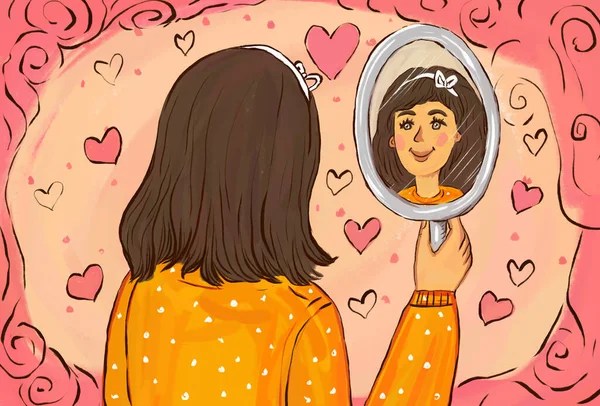
February is known to be the month of love, spreading love to our loved ones. We spend a lot of time trying to share that love that we often forget about ourselves. It’s important to learn how to love yourself. It helps us lead a healthier life and have better mental health. When we don’t love ourselves, it takes a toll on us, possibly leading to depression, anxiety, or an eating disorder. There are many ways to show love to ourselves, here are a couple ways.

Shift Your Perspective

  • Focusing on the bad aspects of ourselves won’t lead to anywhere good
  • Shift your perspective towards a more positive outlook
  • Don’t always see the cons, recognize the pros as well, they need love too

Affirmations

  • Write out a list of what you like + love about yourself
  • Tell yourself that you appreciate all parts of  your body/personality
  • Embrace the beauty of it all
  • Remember your body does plenty of work to keep you going every day
  • Keep telling yourself all these affirmations throughout the low points you may have

Practice Self-Love

  • Focus on the hobbies that you enjoy
  • Pour yourself  into becoming better at your hobbies
  • Be kind to yourself, you only have one body, so take care of it
  • Learn to forgive yourself when you haven’t accomplished everything you hoped for
  • Learn to forgive yourself when you aren’t kind to yourself
  • It’s okay to say “No.” You don’t have to please others all the time.

The most important relationship you can have is with yourself.  You may have heard this saying once or twice but it’s true, “Learn to love yourself first so you can spread love to others.”  Make time to focus and nourish your own self. It doesn’t all get done in one day. As long as you work on yourself a little bit every day that’s all that matters.

If you or someone you know is struggling with self-love, please contact our psychotherapy offices in New York or New Jersey to talk to one of our licensed professional psychologists, psychiatrists, psychiatric nurse practitioners, or psychotherapists at Arista Counseling and Psychotherapy. Contact our Paramus, NJ or Manhattan, NY offices respectively, at (201) – 368-3700 or (212)-722-1920 to set up an appointment. For more information, please visit https://www.counselingpsychotherapynjny.com/

References

Improving every area of your life starts with self-love. Improving Every Area of Your Life Starts with Self-Love | Tony Robbins. (n.d.). https://www.tonyrobbins.com/ultimate-relationship-guide/how-to-fall-in-love-with-yourself?srsltid=AfmBOoq4CvACby5hWenBdEGAH5zBgxAPOtKzEvtobHDRZ6cGfT9MaFtn


Pomlett, M. (2020, December 21). Learn how to self-love. Psychological Health Care. https://www.psychologicalhealthcare.com.au/blog/learn-how-to-self-love/

Caretaker: How to Take Care of Yourself When Taking Care of a Loved One

 Caretaker: How to Take Care of Yourself When Taking Care of a Loved One

By: Josette DeFranco

Participating in caregiving can come with a lot of stress and responsibility. Many individuals believe that they have to handle it all on their own which can lead to exhaustion and anxiety. Family caregivers at any age have reported that they experience a terrible sleep schedule, poor eating habits, failure to stay active, and failure to make medical appointments for themselves. If you are experiencing this, it is okay to let go of the load you are carrying and know that you are not alone. Caregiving can be an emotional roller coaster that may trigger the same hormonal and neural mechanisms that cause stress chemistry. However, it is noted that those who are caregiving for a loved one find this a rewarding experience.

Here are some tips to help you take care of yourself:

  • Prioritize sleep
  • Eat well
  • Acknowledge your feelings
  • Set boundaries
  • Take on fewer tasks
  • Ask for help
  • Practice Mindfulness
  • Treat yourself
  • Let go of guilt
  • Be honest with yourself

Here is a reminder that self-care isn’t selfish. To take care of others you have to take care of yourself first. Caring for you is the most important tip because we can’t share our assistance if we lack it in ourselves. Be kind to yourself. You may tell yourself “I never do anything right” or “There’s no way I can find time for myself.” Our brains are a reflection of us meaning your brain will start to believe what you are saying. Instead, try positive affirmations like “I am doing a good job at taking care of my parents” or “I will take at least 15 minutes for myself each day.”

If you or someone you know is struggling with their mental health, please contact our psychotherapy offices in New York or New Jersey to talk to one of our licensed professional psychologists, psychiatrists, psychiatric nurse practitioners, or psychotherapists at Arista Counseling & Psychotherapy. Contact our Paramus, NJ or Manhattan, NY offices respectively, at (201) 368-3700 or (212) 722-1920 to set up an appointment. For more information, please visit https://aristapsychiatrypsychotherapy.com/

Sources:

https://www.caregiver.org/resource/taking-care-you-self-care-family-caregivers/

Anxiety and Bullying

Image result for anxiety and bullying


Anxiety and Bullying

By: Vanessa Munera

Being bullied is not an easy thing to handle. It can be a traumatic experience for teens that are being targeted. Those who are bullied experience impacts in their lives such as feeling lonely, anxious, isolated, and vulnerable. Unfortunately, when a bully moves on to the next target, these consequences of bullying linger longer for the victim. After prolonged exposure, victims of bullying can develop adverse effects. These victims will experience depression, eating disorders, and thoughts of suicide. In addition, victims of bullying can develop some sort of anxiety disorder. The top four major anxiety disorders victims of bullying can experience are Post-Traumatic Stress Disorder (PTSD), generalized anxiety disorder (GAD), panic attacks and social anxiety disorder.

  1. Post-Traumatic Stress Disorder (PTSD): this occurs after a traumatic or life-threatening event. PTSD can develop due to events such as a car accidents or losing a close relative. This disorder can also show up after repeated abuse or even bullying. Children who are bullied may experience nightmares, flashbacks, withdraw from others, or are easily startled. Kids, who undergo long term and abusive bullying, have increased chances of developing PTSD.

2. Generalized Anxiety Disorder (GAD): Kids with GAD are often tormented with worries and fear that distract them for their daily life activities. Those with generalized anxiety have a constant feeling that something bad is going to happen. This is not uncommon with victims of bullying. With GAD, physical symptoms may appear such as insomnia, stomachaches, fatigue, and restlessness.

3. Panic Attacks: Those who suffer from panic disorders must deal with unpredictable and repeated attacks. When suffering from a panic attack, the attack is usually with no warning and can cause physically symptoms. These symptoms include sweating, chest pain, and rapid or irregular heartbeats. In fact, a part of the brain called the amygdala plays a pivotal role in panic attacks. When left untreated, the sufferer will begin to avoid going out or things they once enjoyed, in order to prevent another panic attack.

4. Social Anxiety Disorder: People who suffer from social anxiety fear being humiliated or seen negatively by others. Those with this disorder often worry that the way they look or act cause others to mock them. This can cause sufferers to avoid social gatherings to avoid being humiliated. In fact victims of bullying often develop social anxiety due to the repeated shame and public humiliation they experienced.

If you or a loved one appears to be suffering from an Anxiety Disorder, the licensed psychologists, psychiatrists, psychiatric nurse practitioners, and psychotherapists at Arista Counseling & Psychotherapy can assist you. Contact our Paramus, NJ or Manhattan, NY offices respectively, at (201) 368-3700 or (212) 722-1920 to set up an appointment. For more information, visit http://www.counselingpsychotherapynjny.com/


References:

https://www.verywellfamily.com/bullying-and-anxiety-connection-460631

https://www.stopbullying.gov/blog


Stress: Effects of Stress

Image result for stressed brain

Stress: Effects of Stress

By: Vanessa Munera

When people talk about stress, what exactly is it? Stress is the body’s reaction to any change that requires an adjustment or response. With stress the body reacts to these changes with emotional, physical, and mental responses. Stress could either be presented as a positive or negative outcome in people’s daily lives.

According to Bernstein “Stress can occur in a variety of forms” (2016). Some stress can result in short events such as an argument with a loved one. Furthermore, other stress can manifest due to reoccurring conditions; for example, a demanding job, financial problems, and/ or long term illness. When reoccurring conditions cause stress to be both intense and sustained over a long period of time, it can be considered as “chronic” or “toxic” stress”. While all stress triggers physiological reactions, chronic stress is indeed to be considered a problematic issue that creates significant harm to the brain and the functioning of the body. In fact, “stress continues to be a major American health issue”.

If you have experienced a stressful event, a certain area of the brain called the amygdala, responsible for emotional processing, sends a distress signal to the hypothalamus. The hypothalamus functions as a command center in the brain, communicating with the rest of the body through the nervous system so that person has the energy to fight or flee”. The sympathetic nervous system is responsible for the “fight or flight” response because it provides the body with a burst of energy so that it can respond to perceived dangers. Some of the affects from the “fight or flight” response are increased heart rate, deeper intake of oxygen, heightened senses, and the rush of adrenaline – also known as epinephrine, a hormone secreted by the adrenal gland. Finally a hormone known as cortisol is released to help restore the energy that was lost during the response. When stress is no longer present, your cortisol levels to go back to normal as if nothing happened. In addition cortisol helps regulate metabolism and immune responses.

When dealing with chronic stress, cortisol levels are at a constant high, which eventually causes health problems. Although cortisol is a natural and healthy hormone in the body, constant high levels of it can be bad for your brain. High levels of this hormone can wear down the brain’s ability to function properly. As stated in the article, “it can disrupt synapse regulation, resulting in the loss of sociability and the avoidance of interactions with others” (Bernstein, 2016). In addition, chronic stress can kill brain cells and cause the brain to shrink in size. It has a shrinking effect on the prefrontal cortex which is responsible for memory and learning. Besides chronic stress having effects on the brain, it causes effects to the human body. This type of stress can increase the risk of heart disease, high blood pressure and diabetes. Furthermore, it can affect other systems in the body and cause them to stop working properly. This includes digestive, excretory and reproductive structures and exacerbates already existing illness. Fighting and managing chronic stress can be difficult; however it is not too late to learn how to manage it. Toxic stress can negatively affect the brain but the brain and body can recover from these effects.

If you or someone you know is suffering from chronic stress and are seeking stress management, please do not hesitate to seek help by contacting  Arista Counseling & Psychotherapy, located in New York and New Jersey to speak to licensed professional psychologists, psychiatrists, psychiatric nurse practitioners or psychotherapists. To contact the office in Paramus NJ, call (201) 368-3700. To contact the office in Manhattan, call (212) 722-1920. For more information, please visit http://www.counselingpsychotherapynjny.com/ .


Sources:

https://www.tuw.edu/health/how-stress-affects-the-brain/


Shyness and Introversion

Shyness and Introversion

By Crystal Tsui

We all know someone who prefers to stay in rather than go out and party or someone who barely talk in a group setting. We may call them shy, quiet, or maybe socially awkward. But they may just be an introvert. Introversion and shyness are often times used together. However, shyness revolves around the fear of negative judgment while introversion is the preference for quiet, minimally stimulating environments. So it is possible for a person to be a shy extrovert, where the individual is afraid to speak up, fearing negative judgment, more so than exhausted in a certain social situation.

Despite the difference, there is also an overlap between shyness and introversion, e.i. many shy people are introverted. Some people are born with “high-reactive” temperaments that predispose them to both shyness and introversion. A shy person may become more introverted over time, motivated to discover the pleasures of solitude, other minimally stimulating social environments, and to move away from judgments. On the other hand, an introvert may become shy after continually receiving the message that there’s something wrong with them.

There’s a shared bias in our society against both shyness and introversion. Neither trait is welcomed in our society because studies have shown that we rank the fast and frequent talkers as more competent, likeable, and even smarter than slow and quiet talkers.

Here are 5 ways introverts can spend time that is deeply fulfilling and socially connected:

  1. Reading. Books transcend time and place. Studies have shown that reading fiction increases empathy and social skills.
  2. Enter a state of “flow” by doing work or a hobby that you love. Flow is the transcendent state of being, in which you feel totally engaged in an activity. People in flow don’t tend to wear the broad smiles of enthusiasm. When you watch them in action, the words “joy” and “excitement” don’t come to mind. But the words “engagement,” “absorption,” and “curiosity” do.
  3. Keep an informal quota system of how many times per week/month/year you plan to go out to social events and how often you get to stay home. This way you can plan which parties or get-togethers you can truly enjoy and which you don’t. So you are less likely to drive yourself mad thinking you should’ve stayed home.
  4. Have meaningful conversations.
  5. Spend time and show affection to the ones you love, whose company is so dear and comfortable that you feel neither over-stimulated nor anxious in their presence.

If you or someone you know is dealing with social anxiety or suffering from a disruption of their social life, please contact our psychotherapy offices in New York or New Jersey to talk to one of our licensed professional psychologists, psychiatrists, psychiatric nurse practitioners, or psychotherapists at Arista Counseling & Psychotherapy. Contact our Paramus, NJ or Manhattan, NY offices respectively, at (201) 368-3700 or (212) 722-1920 to set up an appointment. For more information, please visit http://www.counselingpsychotherapynjny.com/ .

Sources:

https://www.quietrev.com/wp-content/uploads/2015/05/QR_ebookMay8-2015.pdf

https://www.nytimes.com/2012/01/15/opinion/sunday/the-rise-of-the-new-groupthink.html?_r=0

https://live.staticflickr.com/627/21427437162_910d54e08e_b.jpg