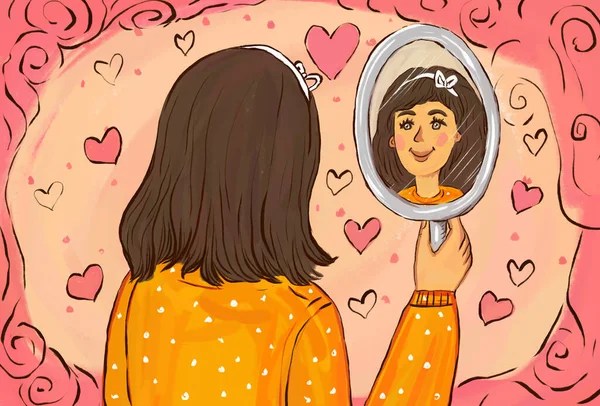
Self-Love: Learning to Love YourSELF

Self-Love: Learning to Love YourSELF

By: Michelle Cocone

February is known to be the month of love, spreading love to our loved ones. We spend a lot of time trying to share that love that we often forget about ourselves. It’s important to learn how to love yourself. It helps us lead a healthier life and have better mental health. When we don’t love ourselves, it takes a toll on us, possibly leading to depression, anxiety, or an eating disorder. There are many ways to show love to ourselves, here are a couple ways.

Shift Your Perspective

  • Focusing on the bad aspects of ourselves won’t lead to anywhere good
  • Shift your perspective towards a more positive outlook
  • Don’t always see the cons, recognize the pros as well, they need love too

Affirmations

  • Write out a list of what you like + love about yourself
  • Tell yourself that you appreciate all parts of  your body/personality
  • Embrace the beauty of it all
  • Remember your body does plenty of work to keep you going every day
  • Keep telling yourself all these affirmations throughout the low points you may have

Practice Self-Love

  • Focus on the hobbies that you enjoy
  • Pour yourself  into becoming better at your hobbies
  • Be kind to yourself, you only have one body, so take care of it
  • Learn to forgive yourself when you haven’t accomplished everything you hoped for
  • Learn to forgive yourself when you aren’t kind to yourself
  • It’s okay to say “No.” You don’t have to please others all the time.

The most important relationship you can have is with yourself.  You may have heard this saying once or twice but it’s true, “Learn to love yourself first so you can spread love to others.”  Make time to focus and nourish your own self. It doesn’t all get done in one day. As long as you work on yourself a little bit every day that’s all that matters.

If you or someone you know is struggling with self-love, please contact our psychotherapy offices in New York or New Jersey to talk to one of our licensed professional psychologists, psychiatrists, psychiatric nurse practitioners, or psychotherapists at Arista Counseling and Psychotherapy. Contact our Paramus, NJ or Manhattan, NY offices respectively, at (201) – 368-3700 or (212)-722-1920 to set up an appointment. For more information, please visit https://www.counselingpsychotherapynjny.com/

References

Improving every area of your life starts with self-love. Improving Every Area of Your Life Starts with Self-Love | Tony Robbins. (n.d.). https://www.tonyrobbins.com/ultimate-relationship-guide/how-to-fall-in-love-with-yourself?srsltid=AfmBOoq4CvACby5hWenBdEGAH5zBgxAPOtKzEvtobHDRZ6cGfT9MaFtn


Pomlett, M. (2020, December 21). Learn how to self-love. Psychological Health Care. https://www.psychologicalhealthcare.com.au/blog/learn-how-to-self-love/

Relationships and Money: Money problems could be affecting your relationship

Relationships and Money: Money problems could be affecting your relationship

By: Michelle Cocone

Money doesn’t usually get discussed in relationships until it becomes a hardship. When it does occur, you and your partner might find yourselves in a repetitive argument, leading to stress. According to Psychology Today, about 70% of the population in the U.S. is married; they might face money problems throughout their marriage. It’s not uncommon to have differences in handling money as people are raised differently. It’s never too late to discuss finances with your partner to improve your relationship moving forward. As well as it’s never too early to establish financial goals to promote a healthy relationship. There are three key questions to discuss with your partner about money problems.

  • What did your parents teach you about money?
  • What are your financial goals?
  • What are your fears about money?

Typically the information we have about managing money we learn from our parents. If your parents taught you how to keep track of bills, save money, and credit card management, then you have a good understanding of how to deal with money. Whereas some people had parents who were always late on bills, lost track, didn’t save money, and probably didn’t manage money well. Talk to your partner about financial goals and how you can combine them to fit both your needs. Remember you are a team with your partner and you are working together to improve your financial situation. Discuss the fears you have about money, which is where the money problems could be coming from. Set up a time to sit down and discuss creating a spending plan that works for both of you. Discuss how to divide the finances to help establish a baseline. Additionally, use any money left over to spend quality time as this will help relieve stress about money. Good communication about money problems will improve relationships and help avoid any anxiety/stress. When a couple suffers from anxiety or stress about financial hardship in their relationship, they may benefit from therapy to address the underlying psychological issues.

If you or someone you know is struggling with anxiety or stress about financial hardship, please contact our psychotherapy offices in New York or New Jersey to talk to one of our licensed professional psychologists, psychiatrists, psychiatric nurse practitioners, or psychotherapists at Arista Counseling and Psychotherapy. Contact our Paramus, NJ, or Manhattan, NY offices respectively, at (201) – 368-3700 or (212)-722-1920 to set up an appointment. For more information, please visit https://www.counselingpsychotherapynjny.com/

References

Klontz, B., & Gresham, M. (2015). Happy couples: How to avoid money arguments. American Psychological Association. https://www.apa.org/topics/money/conflict

Langabeer, J. (2022, December 7). The psychological impact of money on relationships. Psychology Today. https://www.psychologytoday.com/us/blog/how-make-better-choices/202212/the-psychological-impact-money-relationships

Narcissistic Personality Disorder: Being the Child of a Narcissistic Parent

Narcissistic Personality Disorder: Being the Child of a Narcissistic Parent

By, Dyami Efroimson

                Narcissistic Personality Disorder is characterized by having an inflated sense of importance. Those that have this disorder crave attention and admiration from those around them and have an obsession with others agreeing with their convictions. If these people feel as though they are not receiving this validation, they can be unpredictable in their reactions, sometimes lashing out at the people around them. Having narcissistic parents can result in an unstable household that leads to harmful personality traits in developing children. Some of these traits include

  1. Fawn Effect: This act of befriending and appeasing a perceived threat is also known as people pleasing and can manifest in children going along with whatever they believe will make their parents happy out of fear of retaliation. From this, their lives may begin to revolve around the happiness of others.
  2. Poor self-esteem: Because narcissistic parents desire to have the spotlight on them at all times, they may tear down their children and play off of their insecurities to then build themselves up, leading to their children holding a low opinion of themselves.
  3. Inability to set boundaries: After being trained to consider their parents wants and needs before everything, children of narcissistic parents can have trouble setting boundaries and doing what is best for themselves without feeling guilty.

                Although these traits can make transitioning into adulthood incredibly difficult for these children, it is possible for them to break out of these ingrained processes through therapy and can lead a healthy and happy life.

If you or someone you know is struggling with having a narcissistic parent or with their mental health please contact our psychotherapy offices in New York or New Jersey to talk to one of our licensed professional psychologists, psychiatrist, psychiatric nurse practitioners, or psychotherapists at Arista Counseling and Psychotherapy. Contact our Paramus, NJ or Manhattan, NY offices respectively, at (201) 368-3700 or (212) 722-1920 to set up an appointment. For more information, please visit http://www.counselingpsychotherapynjny.com/

Sources:

https://www.verywellmind.com/how-to-deal-with-a-narcissistic-parent-7373070

Grief: Grieving Around the Holidays

Grief: Grieving Around the Holidays

By Emily Ferrer

As the weather gets colder, the colorful leaves fall off the trees, and the holiday decorations start to light up the night, the feeling of the best time of the year starts to kick in. As merry and cozy as these holidays seem to be, they do not always have the same effect on everyone. Grieving around the holidays can feel extremely lonely, sad, and overwhelming. The first holiday season is always the hardest for individuals and families who have just lost someone close to them, such as a grandparent, parent, sibling, child, or other close relative that they would usually see during the holidays. The empty chair at the dining table during Thanksgiving, or the wonder of who is going to make the Christmas cookies this year can be extremely heartbreaking. Even after you feel as if you have started to feel better through your grieving process, the holidays can dig up more emotion than you have felt since losing your loved one. You may start to feel more down, tired, unmotivated, sluggish, and lonely. You may also start to get flashbacks of your loved one when they passed that may also make you feel as if you are grieving from the beginning all over again. As hard as the holiday season may be for grieving individuals and families, here are some tips to help make your holiday season a bit brighter this year[1]:

  • Surround yourself with people you love and care about. Being with a big group of people during the holidays after losing a loved one can help you feel less lonely and can also be a great opportunity to share stories about your loved one with your family.
  • Do not “cancel” the holiday. As tempting as it may be to forget about the holidays after losing your loved one it is important to keep it going and grieve along the way. Experiencing the holiday season after the death of a loved one is part of the grieving process from which you should not run away.
  • Create new traditions. Finding new traditions can also be a create way to cope during the holiday season. This can include changing the location of where holiday dinner is hosted, picking new family members to carve the turkey or make the Christmas cookies, or even coming up with a new holiday game to play to fill the emptiness that everyone may feel.
  • Practice self-care. Try not to indulge in alcohol or drugs during the holiday season to cope with your grief; instead, try journaling, spending time with friends, or physical activity to boost your mood. It is also important to let yourself feel any emotions that arise and to not fight the conflicting feelings of anger, sadness, joy, and happiness.
  • Seek professional help. It is important to be aware of your feelings during such a difficult time and recognize that if the holiday season is too much for you to handle to seek professional help to assist you during this challenging period.

If you or someone you know is struggling with grief this holiday season and wants help, please contact our psychotherapy offices in New York or New Jersey to talk to one of our licensed professional psychologists, psychiatrists, psychiatric nurse practitioners, or psychotherapists at Arista Counseling & Psychotherapy. Contact our Paramus, NJ or Manhattan, NY offices respectively at (201) 368-3700 or (212) 722-1920 to set up an appointment. For more information, please visit https://www.counselingpsychotherapynjny.com


Sources:

[1] https://www.vitas.com/family-and-caregiver-support/grief-and-bereavement/holidays-and-grief/coping-with-grief-during-the-holidays

Shopping Addiction? Can’t Save Money? That May Be A Real Issue

Shopping Addiction? Can’t Save Money? That May Be A Real Issue

By Erika Ortiz

             Most people like to spend and buy things, but some take that splurging a bit to the max and do it any opportunity possible. Shopping makes some feel good, however; some get this “high” feeling since the brain releases endorphins and dopamine as they shop. It’s one thing to shop while on a budget, while it’s another to shop with no budget in mind. All of the spending, unnecessary buying, and accumulation of debt is an actual issue called shopping addiction. It is imperative to break down shopping addiction and the different types. First, there is impulse buying which is buying something you did not plan on purchasing in the first place. It can range from buying a chocolate bar from the grocery store while waiting in line or buying your 50th pair of shoes. Compulsive buying is when you plan your shopping, but to an extreme and on unnecessary items. Compulsive buying is usually where the shopping addiction behavior occurs most. For example, say you did not do so well on an exam or had a bad day at work, your immediate solution is to go shopping afterward to make yourself feel better. Another type is bargain shoppers who think they are getting a steal price or great deal. They are still spending a lot instead of saving. Finally, there is bulimic shopping or circular shopping. These people buy and return just for fun; even though they are staying within their budget, they are wasting a lot of time and energy.

           Shopping addiction can be due to stress, loneliness, sadness, the need to fill a void, lack of control, avoidance of reality, depression, anxiety, etc. Nonetheless, this is a severe problem that needs an urgent solution because shopping addiction can lead to issues in relationships, growing debt, constant overspending, and even lying about spending. One way to help with this issue is to create a budget and try sticking with it. There are many resources online that can be great budgeting tools. It is critical to immediately get help if you have a very severe case of shopping addiction. Seek a mental health professional who can help you get to the root of the issue and understand what you are going through. Remember that there is hope and you can get through this.

If you or someone you know is struggling with a shopping addiction please contact our psychotherapy offices in New York or New Jersey to talk to one of our licensed professional psychologists, psychiatrists, psychiatric nurse practitioners, or psychotherapists at Arista Counseling & Psychotherapy. Contact our Paramus, NJ or Manhattan, NY offices respectively at (201) 368-3700 or (212) 722-1920 to set up an appointment. For more information, please visit https://www.counselingpsychotherapynjny.com

Sources

https://www.ramseysolutions.com/budgeting/shopping-addiction

Hypnotherapy: What is it?

Hypnotherapy: What is it?

By Emily Ferrer

Hypnotherapy helps clients gain control over unfavorable behaviors, cope with anxiety or pain, or alter their ideas about a certain idea or image. Hypnosis involves a trained psychologist and entails placing the patient into a trance-like state that can make you feel extremely calm, focused, and open to suggestions[1]. Over many years, hypnosis has been found to help many people with issues such as pain control, chemotherapy, hot flashes, behavioral changes, anxiety, depression, sleep disturbances, Irritable Bowel Syndrome (IBS), addiction, weight loss, and more[2]! In fact, a study done in 1970 found that hypnotherapy has a 93% success rate in less sessions compared to other forms of therapy[3]. The average amount of hypnotherapy sessions needed to see results can be as little as 4 and as much as 15[4]. This is much less than the average number of sessions needed for other forms of therapy, which are usually around 20 or more until you start to see results[5].

You are probably curious what exactly to expect in a hypnotherapy session and how to prepare. There is no preparation needed on your end before your first hypnotherapy session other than an open mind and a willingness to change your behaviors or ideas. The first session will usually not involve any hypnotism, however, the therapist may use this session as an opportunity to get to know you, the problems you are facing, and what you want to change. The second session is usually when your hypnotherapy begins. Your therapist will always explain the process to you and begin by talking in a soothing and gentle voice. The therapist may also start to describe very vivid images to you to create a sense of relaxation and security. Once you are in a relaxed state, your therapist may begin suggesting ways to work towards your goal that you wanted to work on, such as fear, pain, addiction, anxiety, sleep disturbances, etc. This will help you visualize your path to success and believe in your ability to accomplish your goals[6]. Eventually, your therapist will guide you out of your state of relaxation and the hypnosis session will end. Hypnosis can be extremely helpful to those it does work for but suicide/suicidal thoughts is not guaranteed.

If you or someone you know is interested in trying hypnotherapy, please contact our psychotherapy offices in New York or New Jersey to talk to one of our licensed professional psychologists, psychiatrists, psychiatric nurse practitioners, or psychotherapists certified in hypnotherapy at Arista Counseling & Psychotherapy. Contact our Paramus, NJ or Manhattan, NY offices respectively, at (201) 368-3700 or (212) 722-1920 to set up an appointment. For more information, please visit http://www.counselingpsychotherapynjny.com/ .


Sources:

[1] https://www.mayoclinic.org/tests-procedures/hypnosis/about/pac-20394405#:~:text=Hypnosis%2C%20also%20referred%20to%20as,verbal%20repetition%20and%20mental%20images.

[2] https://www.pennmedicine.org/updates/blogs/health-and-wellness/2019/january/hypnosis

[3] Barrios, A. A. (1970). Hypnotherapy: A reappraisal. Psychotherapy: Theory, Research & Practice, 7(1), 2–7. https://doi.org/10.1037/h0086544

[4] https://thehypnosisclinic.com/blog/how-many-sessions-do-i-need/

https://www.mayoclinic.org/tests-procedures/cognitive-behavioral-therapy/about/pac-20384610#:~:text=Length%20of%20therapy,Type%20of%20disorder%20or%20situation

[6] https://www.mayoclinic.org/tests-procedures/hypnosis/about/pac-20394405#:~:text=Hypnosis%2C%20also%20referred%20to%20as,verbal%20repetition%20and%20mental%20images.

Eating Disorders: How To Catch Them in Your Loved Ones

Eating Disorders: How To Catch Them in Your Loved Ones

By Emily Ferrer

Eating disorders are characterized by severe and persistent troubles related to eating behaviors, food, and weight[1]. There are many different types of eating disorders; however, the most common are anorexia nervosa, bulimia nervosa, and binge eating disorder. Nine percent of the entire population suffers from an eating disorder and 10,200 deaths are recorded each year due to an eating disorder[2]. After reading about how common they are, I am sure you are wondering, “How do I know if I or someone I know has an eating disorder?” There are many signs and symptoms associated with eating disorders[3]:

Anorexia Nervosa:

  • Extreme weight loss
  • Muscle weakness
  • Bone weakness
  • Amenorrhea
  • Brittle hair/nails
  • Always feeling cold
  • Obsession with food
  • Depression

Bulimia Nervosa:

  • Frequent trips to the bathroom after a meal
  • Chronic sore throat
  • Dental decay
  • Laxative/diuretic misuse
  • Large amounts of food disappearing
  • Fainting from excessive purging

Binge-Eating Disorder:

  • Weight gain
  • Eating very rapidly
  • Eating until very full
  • Eating even when not hungry
  • Hiding large amounts of food
  • Eating alone on purpose
  • Feeling guilty after eating large amounts of food

Eating disorders can be extremely serious if not treated. It is important to stay informed about the signs and symptoms of different eating disorders so you can find help for you or someone you know as soon as possible. Other general signs of eating disorders to look out for are a sudden obsession with food (cooking it, eating it, watching cooking shows/videos), social withdrawal, drastic changes in mood, new attitudes towards food, new dieting habits, self-harm, excessive exercise, obsession with calorie and step count, repeatedly weighing themselves, and body dysmorphia[4]

If you or someone you know is struggling with an eating disorder, please contact our psychotherapy offices in New York or New Jersey to talk to one of our licensed professional psychologists, psychiatrists, psychiatric nurse practitioners, or psychotherapists at Arista Counseling & Psychotherapy. Contact our Paramus, NJ or Manhattan, NY offices respectively, at (201) 368-3700 or (212) 722-1920 to set up an appointment. For more information, please visit http://www.counselingpsychotherapynjny.com


Sources:

[1] https://psychiatry.org/patients-families/eating-disorders/what-are-eating-disorders

[2] https://anad.org/eating-disorders-statistics/

[3] https://psychiatry.org/patients-families/eating-disorders/what-are-eating-disorders

[4] https://www.lifeworkscommunity.com/eating-disorders-treatment/how-to-recognise-the-early-signs-of-an-eating-disorder

Deep Brain Stimulation and Electroconvulsive Therapy: What are they?

Deep Brain Stimulation and Electroconvulsive Therapy: What are they?

By Emily Ferrer

Deep Brain Stimulation (DBS) is a brain surgery involving the implantation of electrodes in certain areas of the brain to treat different movement disorders such as OCD, dystonia, Parkinson’s disease, and epilepsy as well as other disorders such as depression and drug addiction[1]. These electrodes produce electrical impulses to regulate certain brain functions[2] and are controlled by a pacemaker-like device. This pacemaker is placed in your chest with a wire that runs from the pacemaker to the electrodes that were inserted into your brain[3]. The parts of the brain that the electrodes are inserted into are specific to the patient and their specific symptoms. For example, for a patient who suffers from severe OCD the electrodes would be placed in an area of the brain called the ventral capsule/ventral striatum, which has been found to be very effective for patients suffering from treatment resistant OCD at about a 61.5% positive response rate[4].

Electroconvulsive Therapy (ECT) is a medical treatment usually preformed on patients who suffer from severe clinical depression and are treatment resistant to other options to help their condition[5]. The treatment involves small electric currents being passed externally through the patient’s skull between the voltage ranges of 180 to 460 volts. While there is still much controversy and incorrectly portrayed media about this procedure, it is significantly safer today than it was almost 100 years ago. The patient is put under general anesthesia at a hospital during the entire treatment and wakes up after not feeling anything from the procedure. The only thing patients feel after the completion of the treatment is an increase in positive mood. A study done in 2007 revealed that out of the patients who did and did not receive ECT for their treatment resistant depression, 71% of the participants in the experimental group, that received ECT,  found they had a positive response. This is significant when compared to the control group, who did not receive ECT, where only 28% of the participants found they had a positive response to just antidepressant medication[6].  ECT has gained a lot of popularity recently because of how quickly and effectively you feel the effects after a few treatments. The positive effects increase even more quickly when combined with psychotherapy in between the ECT treatments.

If you or someone you know is experiencing OCD or major depressive disorder and are interesting in pursuing these treatments, please contact our psychotherapy offices in New York or New Jersey to talk to one of our licensed professional psychologists, psychiatrists, psychiatric nurse practitioners, or psychotherapists at Arista Counseling & Psychotherapy. Contact our Paramus, NJ or Manhattan, NY offices respectively at (201) 368-3700 or (212) 722-1920 to set up an appointment. For more information, please visit https://www.counselingpsychotherapynjny.com


Sources:

[1] https://atm.amegroups.com/article/view/16268/html

[2] https://www.mayoclinic.org/tests-procedures/deep-brain-stimulation/about/pac-20384562

[3] https://www.mayoclinic.org/tests-procedures/deep-brain-stimulation/about/pac-20384562

[4] https://iocdf.org/expert-opinions/expert-opinion-dbs/#:~:text=Another%20important%20development%20for%20treatment,targeted%20areas%20of%20the%20brain.

[5] https://www.webmd.com/depression/electroconvulsive-therapy

[6] https://doi.org/10.1111/j.1600-0447.1997.tb09926.x

ADHD: Gender Disparities in ADHD Diagnoses

ADHD: Gender Disparities in ADHD Diagnoses

By Jackie Molan

Attention deficit hyperactivity disorder (ADHD) is characterized by hyperactivity, impulsive behaviors, difficulty paying attention, and high distractibility. ADHD is one of the most common disorders of childhood, but boys are much more readily diagnosed than girls. It is believed that the prevalence of ADHD across genders is approximately equal, even though formal diagnoses strongly favor boys. Females are often underdiagnosed with ADHD and misdiagnosed with other disorders, such as bipolar, depression, and anxiety. The symptom profile for ADHD is the same across genders, but the behavioral presentation of symptoms tends to differ greatly.

Females are more likely to exhibit more internalized behavioral symptoms, such as:

  • Daydreaming
  • Losing focus
  • Forgetfulness
  • Anxiety
  • Insomnia
  • Impatience
  • Low self-esteem
  • People-pleasing
  • Deep emotional reactions/overwhelm

Males, on the other hand, often display more external behaviors, such as:

  • Hyperactivity
  • Disruptive behavior
  • Interrupting people during conversations
  • Losing items often
  • Anger outbursts

The external manifestation of ADHD symptoms makes the disorder more likely to be noticed in young boys by parents, teachers, and peers. Since young girls usually do not show such external symptoms, they tend to not receive a formal ADHD diagnosis until much later in life (if at all).

Regardless of gender, if you think you are experiencing any combination of ADHD symptoms, it is important to seek help from a mental health provider. A formal diagnosis from a professional can allow you to effectively manage your symptoms and improve daily functioning.

If you or someone you know is struggling with ADHD, please contact our psychotherapy offices in New York or New Jersey to talk to one of our licensed professional psychologists, psychiatrists, psychiatric nurse practitioners, or psychotherapists at Arista Counseling & Psychotherapy. Contact our Paramus, NJ or Manhattan, NY offices respectively, at (201) 368-3700 or (212) 722-1920 to set up an appointment. For more information, please visit http://www.counselingpsychotherapynjny.com/

Sources:

https://www.psychologytoday.com/us/basics/adhd

https://www.psychologytoday.com/us/blog/rethinking-adult-adhd/202203/why-adhd-in-women-is-so-often-overlooked

https://psychcentral.com/adhd/adhd-and-gender#recap

https://www.verywellhealth.com/add-vs-adhd-5193759

Family Therapy: Reasons to Seek Treatment & What to Expect

Family Therapy: Reasons to Seek Treatment & What to Expect

By Jackie Molan

Family therapy is a form of psychotherapy aimed at improving communication and relationships within a family unit. The therapeutic environment offers a safe and confidential space for family members to express thoughts and feelings that they might otherwise be uncomfortable sharing. Family therapy is usually about 12 sessions in length, allowing the therapist to follow a method with a clear end goal that is understood by each family member. Even though this is a short-term type of therapy, it can teach skills and coping strategies that can be used to remedy family problems even after the course of treatment has ended.

Family therapy is typically sought out by families experiencing one or more of the following issues:

  • Parent/child conflict
  • Child behavioral problems
  • Financial stress
  • Grief
  • Anger issues
  • Communication difficulties
  • A family member’s substance abuse or mental illness (depression, anxiety, schizophrenia, etc.) is negatively impacting the rest of the family

It is important to know what to expect when starting family therapy. During the first session, the therapist will likely want to meet with the family as a group in order to gather information about the issue and see how family roles and dynamics operate. In the subsequent sessions, they may sometimes choose to meet with each family member individually to focus more on personal considerations. Overall, you can expect to gain the skills to:

  • Identify strengths and weaknesses within the family
  • Learn to effectively express emotions with family members
  • Analyze existing factors that may contribute to both present and future conflicts, such as family roles

Family stressors can turn into damaging problems if they are not addressed in a timely fashion. Family therapy provides the tools needed to restore a dysfunctional family to a more healthy, unified, and empathetic unit.

If you or someone you know is seeking family therapy, please contact our psychotherapy offices in New York or New Jersey to talk to one of our licensed professional psychologists, psychiatrists, psychiatric nurse practitioners, or psychotherapists at Arista Counseling & Psychotherapy. Contact our Paramus, NJ or Manhattan, NY offices respectively, at (201) 368-3700 or (212) 722-1920 to set up an appointment. For more information, please visit http://www.counselingpsychotherapynjny.com/

Sources:

https://www.mayoclinic.org/tests-procedures/family-therapy/about/pac-20385237

https://www.psychologytoday.com/us/therapy-types/marriage-and-family-therapy

https://www.123rf.com/clipart-vector/family_therapy.html