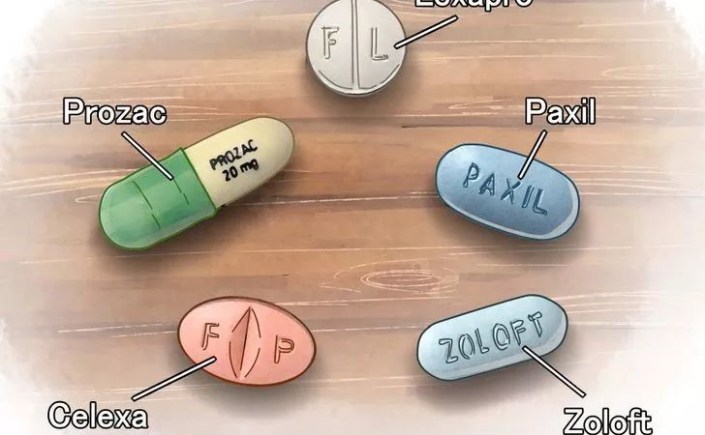
Psychiatric Medication: The Stigma of Mental Health Medication

By: Sanjita Ekhelikar

When someone gets a fever, a bacterial infection, or any other physical illness, what do we tell them? “Rest, go to the doctor, and take some medicine.” We strongly encourage them to receive a prescription for and to take medication for their illness. If a sick individual were to not take their medication, we would tell them that they are being irresponsible, and that they are not taking care of themselves. Why do we not say the same when it comes to medication for people struggling with mental illness?

In a time when mental health is becoming increasingly important, society still has a stigma around this, primarily regarding prescription psychiatric medications for it. There is still a lack of understanding about what mental health is and how it impacts people. Some view those with these difficulties as “crazy” and “unstable.” Medications for such conditions are seen in a negative light, and are seen to be only for people who are labelled “crazy” or “unstable.” Since mental illnesses are related to the mind and are invisible to the eye, many in our society cannot believe that these illnesses are serious, and thus consider taking medication for them to be shameful and unnecessary. As a result, thousands of individuals feel ashamed to get the proper help and take medications. They thus must struggle and suffer silently.

In reality, mental health medications can be extremely beneficial, and can change the lives of those who take them. Mental illness can be grueling to live with and can compromise one’s life and wellbeing. Medication helps these individuals to overcome their condition and lead a better life, especially paired with psychotherapy. Antipsychotic and antidepressant drugs have been developed to help these people in need, and we should be encouraging people to take them and take the necessary steps in getting better instead of shaming them.

While we have no problem encouraging our loved ones to take Tylenol, Advil, Cough syrup, and many other medications for their physical ailments, we should be just as promoting of them taking Lexapro, Zoloft, Prozac, and other psychological medications. It is time to eliminate stigmas around taking care of our mental health, and encourage and applaud those who have taken the steps towards a better life through using mental health medications.

If you or someone you know is suffering mental illness and would like to consider medication, please contact our psychotherapy offices in New York or New Jersey to talk to one of our licensed professional psychologists, psychiatrists, psychiatric nurse practitioners, or psychotherapists at Arista Counseling & Psychotherapy. Contact our Paramus, NJ or Manhattan, NY offices respectively, at (201) 368-3700 or (212) 722-1920 to set up an appointment. For more information, please visit http://www.counselingpsychotherapynjny.com/.

ADHD: How Medication Helps Your Children

By Samantha Glosser

Stimulant drugs, such as Adderall and Ritalin, have been used for numerous years as the frontline treatment of attention-deficit/hyperactivity disorder (ADHD) in children. ADHD is a disorder characterized by the following symptoms: inattentiveness, distractibility, hyperactivity, and impulsivity. The five to seven percent of children diagnosed with ADHD have difficulty concentrating, become disruptive and defiant, and have a hard time getting along with family members, peers, and teachers. These behaviors are clinically proven to improve with the use of stimulant drugs.

Treatment with stimulant drugs can improve classroom performance and behavior in children diagnosed with ADHD. But how does the medication do this? The medication works by targeting and improving specific cognitive processes, such as working memory, which is your ability to hold and manipulate information in your mind. Stimulants help kids store more information in their working memory, while also helping them to inhibit negative behaviors (i.e., raising their hand when they know the answer instead of shouting it out). Improvement of these cognitive processes also helps to increase attention span, which allows kids to stay on task for longer periods of time. If you believe medication is not the best option for your child, behavioral treatment and parent training can also be beneficial in improving these cognitive processes. Children can be trained to improve their self-control and sustain concentration.

If you or someone you know appears to be suffering from attention-deficit/hyperactivity disorder (ADHD), licensed psychologists, psychiatrists, psychiatric nurse practitioners, and psychotherapists at Arista Counseling & Psychotherapy can assist you. Contact our Paramus, NJ or Manhattan, NY offices respectively, at (201) 368-3700 or (212) 722-1920 to set up an appointment. For more information, visit http://www.counselingpsychotherapynjny.com/.

Nauret, R. (2018, July 31). Study Probes How ADHD Meds Improve Cognition & Behavior in Kids. Retrieved from https://psychcentral.com/news/2018/07/31/study-probes-how-adhd-meds-improve-cognition-behavior-in-kids/137456.html

ADHD. (n.d.). Retrieved from https://www.psychologytoday.com/us/basics/adhd

Prescription Drugs and Side Effects

Prescription Drugs and their Side Effects

Emily Ramos

The truth of the matter is that many prescription drugs contain side effects. It is hard to predict whether or not an individual will experience side effects, it depends on how their body reacts to the drug. The good thing is that there are steps an individual can take to reduce the risks. If the side effects persist you can speak with your doctor who can prescribe a lower dosage or a different medication. DO NOT stop taking medication if you experience a side effect, always speak with your doctor. They might have to wean you off of the drug instead of stopping all together. Here’s how you can learn about possible side effects and how to avoid them:

  • Before getting prescribed medicine, ask your doctor about possible side effects that may occur. For example, if nausea is a side effect your doctor may recommend that you eat or drink before taking the medication.
  • Once you start taking medication take note of any symptoms that arise and tell your doctor about them. This will give your doctor a better understanding.
  • Other ways to prevent side effects are to make appropriate lifestyle changes. For example: if a medication causes you to gain weight you will have to pay more attention to your nutrition and incorporate exercise plans.

It may take a few trial and errors before your doctor is able to find a medication that works best for you. That is why it is crucial to be honest with your doctor before and after he or she prescribes medication.

If you or a person you know is struggling with medication, it may be beneficial to contact a mental health professional and receive therapy. The psychologists, psychiatrists, and therapists at Arista Counseling and Psychiatric Services can help. Contact the Bergen County, NJ or Manhattan offices at (201) 368-3700 or (212) 722-1920. Visit http://www.acenterfortherapy.com for more information.


Cause of ADHD

Isabelle Kreydin

ADHD stands for attention deficit hyperactive disorder. It’s typical symptoms are easily distracted, has trouble organizing tasks, is forgetful, fidgets, squirms, or is restless, talks excessively or has trouble staying quit, always seems on the go, and sometimes can be impulsive and act without thinking or interrupt.

It’s really important to educate oneself about this disability because despite hard work and great efforts, it may be hard to stay focused on a certain goal and it may be difficult to be around students and coworkers whom can function normally without their body and brain working in a different function to distract them.

ADHD is frequently confused for being caused by external environments. However, it is the result of low or imbalance levels of chemicals in the brain, specifically neurotransmitters. The two specific neurotransmitters that are implicated in ADHD are dopamine, and norepinephrine. These specific chemicals that carry messages in the brain are related to hyperactivity, inattention and impulsiveness.

Fortunately, there has been medications made that are known to work to avoid consequences associated with the symptoms of ADHD, such as poor academic performance, difficulty in academic performance, trouble in peer relationships, low self-esteem, etc.

These medications target these neurotransmitters and allow ones to control their symptoms better throughout the duration of the day. They are best combined with learning strategies and behavior modification, in the school, home, and academic environments. It’s important to try the medicines and see which one is best to help, since everybody’s chemical makeup is different and has a different reaction to certain medicines. Examples of these are Adderall and Mydais.

If you or a person you know is struggling with a narcissistic personality disorder, or any personality disorder, it may be beneficial to have them contact a mental health professional and receive therapy for their illnesses. The psychologists, psychiatrists, and therapists at Arista Counseling and Psychiatric Services can help.  Contact the Bergen County, NJ or Manhattan offices at (201) 368-3700 or (212) 722-1920.  Visit http://www.acenterfortherapy.com for more information.

Skin-Picking/Excoriation Disorder: An Obsessive Compulsive Disorder

OCD: Skin-Picking/Excoriation

Written by: Jinal Kapadia

Obsessive Compulsive Disorder (OCD) is a common, long-lasting disorder in which a person has uncontrollable, reoccurring thoughts (obsessions) and behaviors (compulsions) that he or she feels the urge to repeat over and over. There are many different types of OCD disorders, but one disorder in particular deals with skin picking; it is called Excoriation.

Excoriation disorder affects around 1.4% of the general population, and its symptoms appear most commonly during adolescence, around the onset of puberty. This disorder, sometimes referred to as chronic skin-picking or dermatillomania, is characterized by repeated picking at one’s own skin resulting in skin lesions and sometimes significant disruption in one’s life.

In order to be diagnosed with Excoriation disorder, a person must exhibit the behavior of picking one’s skin that results in skin lesions and repeated attempt to stop this behavior. These symptoms must cause clinically significant distress or impairment, can not be caused by a medical or dermatological condition or substance, and can not be better explained by another psychiatric disorder.

The treatment for Excoriation disorder is similar to the treatment for general Obsessive Compulsive Disorder in the sense that both suggest the use of medication, specifically selective serotonin reuptake inhibitors (SSRIs), and cognitive-behavioral therapy (CBT) to reduce the obsessive thoughts and compulsive behaviors of the person suffering from the disorder.

If you or someone you know has Excoriation disorder or seems to have the symptoms of Excoriation disorder, and needs help, please contact our psychotherapy offices in New York or New Jersey to talk to one of our licensed professional psychologists, psychiatrists, psychiatric nurse practitioners, or psychotherapists at Arista Counseling & Psychotherapy. Contact our Paramus, NJ or Manhattan, NY offices respectively, at (201) 368-3700 or (212) 722-1920 to set up an appointment. For more information, please visit http://www.counselingpsychotherapynjny.com/.

Sources:

Mentalhealthamerica.com. (2018). Excoriation Disorder (Skin Picking or Dermatillomania). [online] Available at: http://www.mentalhealthamerica.net/conditions/excoriation-disorder-skin-picking-or-dermatillomania [Accessed 10 Jan. 2018].

Mghocd.org. (2015). Excoriation. [online] Available at: https://mghocd.org/clinical-services/excoriation/ [Accessed 10 Jan. 2018].

Nimh.nih.gov. (2016). NIMH » Obsessive-Compulsive Disorder. [online] Available at: https://www.nimh.nih.gov/health/topics/obsessive-compulsive-disorder-ocd/index.shtml [Accessed 10 Jan. 2018].