Screen Time & Technology: How Exposure Affects Long Term Mental and Visual Health

Screen Time & Technology: How Exposure Affects Long Term Mental and Visual Health

By Crystal Tsui

We are privileged to live in the digital world. We can go on-line and check on with friends who are thousands of miles away or go shopping on our device during our lunch break. Everything is just a touch away and has become so accessible, but all of this comes with a price. We are exposing our children to electronic screens at such a young age, even as early as two months. Although it may be easy for busy parents to calm their child with an iPad, the harm may be greater than the immediate good. During the time we are exposing our young children to screens, their brains are still developing.

There is a period, which psychologists call the Critical Period, when children need exposure to outside stimuli from the environment around them. This is when they learn to distinguish facial expressions, social cues, and even tone of voice. If they are not exposed to the environment around them, their development could be stunted.

Prolonged screen time can affect their neurodevelopment, learning, and can result in behavioral disorders. Parents try to utilize digital screens for the purpose of education in most cases. Since digital is instant, the technology is thinking for the children. Not only that, but screens shift the nervous system into fight-or-flight mode which can cause self-regulation and stress management to be less efficient. If stress management is less efficient, children might not be able to handle daily stressors when they grow up.

Apart from mental health deficits, early screen time can cause visual deficits in children. Dr. Rahul Bhola, pediatric ophthalmologist, states that in the past few decades there has been an increase in myopia or near-sightedness. Not only has myopia been increasing, but a study found that children who were exposed to digital screens at a very young age, developed acute onset esotropia or crossing of the eyes. Many children had to have surgery to correct their eyes. However, if children must use screens (school related or not) try to limit their time and encourage outdoor activities as well as breaks from the digital world.

If you or someone you know has behavioral or attention disorders, please contact our psychotherapy offices in New York or New Jersey to talk to one of our licensed professional psychologists, psychiatrists, psychiatric nurse practitioners, or psychotherapists at Arista Counseling & Psychotherapy. Contact our Paramus, NJ or Manhattan, NY offices respectively, at (201) 368-3700 or (212) 722-1920 to set up an appointment. For more information, please visit http://www.counselingpsychotherapynjny.com/ .

Citations:

https://blog.chocchildrens.org/effects-of-screen-time-on-childrens-vision/

https://www.psychologytoday.com/us/blog/behind-online-behavior/201604/what-screen-time-can-really-do-kids-brains

https://www.psychologytoday.com/us/blog/mental-wealth/201207/electronic-screen-syndrome-unrecognized-disorder

https://cdn.psychologytoday.com/sites/default/files/styles/article-inline-half/public/field_blog_entry_images/shutterstock_232911301.jpg?itok=d2s4ve_t

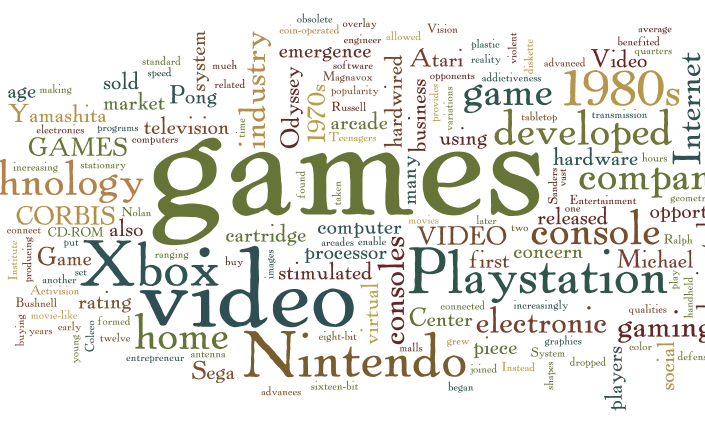
Video Games – Advantages and Disadvantages

By Dara Kushnir

Ever since its creation, people have debated whether video games are a help, a hindrance, or useful in moderation. Below presents evidence from the most disputed aspects of this argument as well as additional factors to consider:

Content. Countless studies show that violence in video games diminishes empathy and exacerbates behavioral problems. After playing even 30 minutes, less activation was found in the prefrontal portion of the brain (involved in concentration, inhibition, and self-control) and more in the amygdala (emotional arousal)1. People who play violent video games may expect others to be hostile, influencing how aggressively they themselves react in the future2.
Conversely, prosocial, nonviolent video games can promote empathy and helpful behaviors, even teaching empathy3, asthma management, rehabilitating stroke patients, learning resiliency from failures4, and being a therapy tool in moderating certain phobias5. Preschool children have also shown improved motor development and cognitive behavior5.  Children who play cooperative video games display fewer emotional problems and problems with peers whereas those who play solitary games do well academically6.

Time. Despite the noteworthy benefits, it is crucial to understand that these benefits apply to those who play for less than or equal to an hour. Excessive time is linked with behavioral problems, poorer social skills, and peer conflicts. A recent study revealed that playing for less than an hour reduces ADHD symptoms, has a calming effect, and is not associated with delinquency7 8. Less than one hour of gaming strengthens motor skills and leads to higher achievement scores. However, playing more than one hour increases ADHD symptoms and lowers grades, which means the difference between a “B” and an “A” grade9.

Motivation. One . One study argues that people play video games to meet their motivational needs rather than for the content itself10. Those who are more aggressive play violent video games rather than cause aggression. Violent video games were not associated with aggressive behavior. Those who play for enjoyment or catharsis (releasing anger) play violent video games, although it is unclear if playing actually helps. The researchers suggested that people seek out video games to meet their motivational needs rather than the violent content itself. More research is still needed.

Personality. People with certain personality traits can be predisposed to aggression after playing violent video games. One study states that the “perfect storm” of personality traits using the Five-Factor Model is high neuroticism (easily upset and angry), low agreeableness (little concern for others and their feelings), and low conscientiousness (act without thinking)11. These traits make individuals more susceptible to violent games and media.

Player abilities. Another study argues that regardless of video games’ content, frustration from failing sparks aggression12. When a person’s competency or ego is questioned, through a challenging game or failing to master the controls, they enjoy the game less and react with more aggression. This reaction is not limited to video games; people react with frustrated aggression playing sports and other activities, especially if they lose or play poorly.


Source:
(image) http://guides.library.ucla.edu/videogames
All articles are sourced in text.

If you or someone you know appears to be suffering from a video game addiction, please contact our psychotherapy offices in New York or New Jersey to talk to one of our licensed professional psychologists, psychiatrists, psychiatric nurse practitioners, or psychotherapists at Arista Counseling & Psychotherapy. Contact our Paramus, NJ or Manhattan, NY offices respectively, at (201) 368-3700 or (212) 722-1920 to set up an appointment. For more information, please visit http://www.counselingpsychotherapynjny.com/.

Self-Esteem and Shaming Parents

By Stephanie Osuba

We have all felt, in one way or another, like we weren’t good enough or even felt embarrassed after making a mistake at work. This is healthy in that we are expressing sadness or just reflecting on a situation that could have been handled differently, but we move on and eventually feel valued and confident again. However, for some, that feeling of shame and guilt never goes away. Some believe they are inherently flawed, worthless, and inferior to everyone else. These negative emotions and lack of self-esteem are largely rooted in repeated childhood and adolescence trauma that is often left unprocessed. Internalization of this emotional abuse leads to a conditioning of sort, usually by the primary caregiver, that the negative emotions constantly felt reflect who one is as a person. This person comes to genuinely believe that he or she is a bad person, unlovable, never good enough, and deserves to be treated with disrespect.

The constant shame is also accompanied by a constant feeling of guilt. Everything is his or her fault, regardless of the context. There is a sense of unjust responsibility for other people’s emotions and the outcome of all situations. Its no wonder why low self-esteem can manifest itself in anxiety, self-harm or poor self-care, or on the other extreme, narcissism and antisocial tendencies. Here are some behaviors that can be a manifestation of low self-esteem:

  • Lack of healthy self-love: poor self-care, self-harm, lack of empathy, and inadequate social skills
  • Emptiness: loneliness, lack of motivation, and finding distractions from emotions
  • Perfectionism: this is often a behavior that manifests as adults because of the unrealistic standards these children were held to by their parents and were punished for not meeting
  • Narcissism: grandiose fantasies of who they want others to perceive them to be; even if they do succeed however, this protective personality doesn’t numb the negative emotions they truly feel.
  • Unhealthy relationships: people with low self-esteem are incapable of building and maintaining a relationship with others, largely because they don’t know what a healthy relationship looks like. Both parties are usually extremely dependent.
  • Susceptibility to manipulation: the constant self-doubt, shame and guilt make it too easy to bend a person with low self-esteem to an experienced manipulator’s will.

Source: Cikanavicius, D. (2018, September 03). A Brief Guide to Unprocessed Childhood Toxic Shame. Retrieved from https://blogs.psychcentral.com/psychology-self/2018/09/childhood-toxic-shame/ 

If you or someone you know is struggling with self-esteem, the licensed psychologists, psychiatrists, psychiatric nurse practitioners, and psychotherapists at Arista Counseling & Psychotherapy can assist you. Contact our Paramus, NJ or Manhattan, NY offices respectively, at (201) 368-3700 or (212) 722-1920 to set up an appointment. For more information, visit http://www.counselingpsychotherapynjny.com/

Communication Differences Between Genders


By: Dianna Gomez

Where would the world be without communication? Whether it be conscious or unconscious, we communicate in one way or another with those around us every minute of every day. We communicate in the work place, in relationships, with our friends and family – sometimes even when passing by strangers walking down the street. You would think that with the amount of communicating we do as a human species on a daily basis, we would have it all down to a “ T ” by now but that is far from the truth. Every once in a while we experience miscommunication and other frustrations related to interacting with the people around us. In order to improve the quality of communication in one’s own life, it is important to begin by understanding the different methods of communication between each gender. There are so many fundamental differences regarding the way in which men and women behave and think when it comes to communication. On average, women tend to speak more than men and when each gender is communicating, they do so for different reasons and from different perspectives.

Here is a list of these differences:

  1. Reasons For Talking
  • Men believe that communication should always have a clear purpose. Whether there is a problem in need of a solution or a specific question needing an answer, men use communication to get to the bottom of any topic of conversation in the most efficient way possible. On the other hand, a woman views communication as a way to discover how she may feel about something. Women like to lay all the potential pros and cons out on the table and discuss each more thoroughly. When it comes to relationships, communication is a way in which women increase intimacy with their significant others. They share their thoughts to rid themselves of any negative feelings they may be having.

2. How Much Should Be Said

  • Similarly to the first point, men always put productivity and efficiency at the very top of their lists. When telling a story, men only share the details that are absolutely necessary to get to the point. Women tend to share as much detail as possible, even if it isn’t necessarily needed. This is often times why men may interrupt women half way through an explanation when they have already received the point that is ultimately trying to be made.

3. What Does It Mean To “Listen?

  • When a woman first initiates a conversation with a man, she assumes they are doing so to obtain some type of advice or assistance. They automatically think to themselves “what can we actually do about this?” From the woman’s perspective, having the conversation all on it’s own is a way of finding a solution to any problem. Women just want to feel like they are being heard and understood, and if they feel this is happening any problem will already feel partially solved.

Communication is so important in every aspect of our lives. Especially when it comes to having relationships with significant others, if these fundamental differences aren’t already understood, there will be many disagreements and arguments about things that there wouldn’t be otherwise. Regardless of what gender you are, the next time you find yourself feeling frustrated when communicating with the opposite sex, take a step back and try to see the situation from their point of view. If this is done over a long enough period of time, you will find that life will soon go a lot smoother in all areas of your life.


If you or anybody you know may be having trouble with communication or may be having relationship problems they can’t seem to resolve, the licensed psychologists, psychiatrists, psychiatric nurse practitioners, and psychotherapists at Arista Counseling & Psychotherapy can assist you. Contact our Paramus, NJ or Manhattan, NY offices respectively, at (201) 368-3700 or (212) 722-1920 to set up an appointment. For more information, visit us at http://www.counselingpsychotherapynjny.com/.

Postpartum Depression: Psychosocial Risk Factors

Postpartum Depression: Psychosocial Risk Factors

Written by: Jinal Kapadia

Postpartum depression, is a mood disorder that can affect women after childbirth. Mothers with postpartum depression generally experience feelings of extreme sadness, anxiety, and exhaustion that can make it difficult for them to complete daily care activities for themselves or for others. (Nimh.nih.gov, 2018)

There are multiple risk factors that make some women more susceptible to postpartum depression than others. A first-time mother is at a higher risk for depression. Fatigue, which can be caused by the actual process of giving birth, the energy spent on caring for the baby, and tending to other responsibilities can also lead to depression. Women who are single mothers with less social support are also more susceptible. A woman’s feelings towards her pregnancy, such as negativity or ambivalence, increases her chances for depression. (Psychology Today, 2018)

Another risk factor is a woman’s past, such as the loss of her mother or a poor mother-daughter relationship. This can cause a woman to feel unsure about her newly developing relationship with her baby. Women who have babies by cesarean birth take longer to recover and are, therefore, more likely to be stressed, have lower self-esteem, and feel more depressed. Women who have premature babies often become depressed because the early birth results in unexpected changes in routine and is an added stressor. Lastly, a baby with a birth defect or other challenges (e.g. infantile colic) can make adjustment even more difficult for parents. (Psychology Today, 2018)

If you or someone you know has postpartum depression or seems to have the symptoms of postpartum depression, and needs help, please contact our psychotherapy offices in New York or New Jersey to talk to one of our licensed professional psychologists, psychiatrists, psychiatric nurse practitioners, or psychotherapists at Arista Counseling & Psychotherapy. Contact our Paramus, NJ or Manhattan, NY offices respectively, at (201) 368-3700 or (212) 722-1920 to set up an appointment. For more information, please visit http://www.counselingpsychotherapynjny.com/.

Sources:

Psychology Today. (2018). Postpartum Disorder | Psychology Today. [online] Available at: https://www.psychologytoday.com/us/conditions/postpartum-disorder [Accessed 12 Apr. 2018].

Nimh.nih.gov. (2018). Postpartum Depression Facts. [online] Available at: https://www.nimh.nih.gov/health/publications/postpartum-depression-facts/index.shtml [Accessed 12 Apr. 2018].