Emotionally Abusive Relationship: How to Spot the Signs

Emotionally Abusive Relationship: How to Spot the Signs

By Erika Ortiz

Abuse of any kind must never be tolerated. Whether it is from your boss, spouse, family member, or friend, it should not be taken lightly and must be acted upon quickly before it can escalate to serious issues. However, some forms of abuse are difficult to distinguish and can be especially hard to come to terms with when the abuser is a significant other such as a spouse or boyfriend/girlfriend. Physical abuse is a well-known form of abuse; however, emotional abuse has a subtle component, making it very tricky to catch. Here are some signs that you are in an emotionally abusive relationship:

Controlling and manipulative- Your partner may make you feel bad for going out or give you a curfew when you’re out with friends.

Gaslighting- Your partner can make you believe points in their arguments or things you have “said” that never happened.

Humiliation and embarrassment- They may insult you, make fun, and make you feel bad about yourself in front of others.

Silent treatment/Stonewalling- After an argument, they may “shut down” to make you feel abandoned and cut communication.

Threats- They may flat-out threaten you in any way, shape, or form possible.

There is quite a lengthy list of signs of emotional abuse. However, it is crucial to be proactive and seek help. These issues can cause or result in depression, anxiety, suicide, and PTSD. It can even lead to physical abuse if it hasn’t already occurred. Please seek professional help immediately if you see any signs of abuse or feel unsafe or unwell.

If you or someone you know is experiencing an emotionally abusive relationship or signs of it, please contact our psychotherapy offices in New York or New Jersey to talk to one of our licensed professional psychologists, psychiatrists, psychiatric nurse practitioners, or psychotherapists at Arista Counseling & Psychotherapy. Contact our Paramus, NJ or Manhattan, NY offices respectively at (201) 368-3700 or (212) 722-1920 to set up an appointment. For more information, please visit https://www.counselingpsychotherapynjny.com

 Sources

https://www.webmd.com/sex-relationships/signs-emotionally-abusive-relationship

https://www.healthline.com/health/signs-of-mental-abuse#control-and-shame

Body Dysmorphia: How TikTok Impacts Self Image

Body Dysmorphia: How TikTok Impacts Self Image

By Erika Ortiz

            A new social media app called TikTok emerged and swept generations because of its easy use, likability, and relatability created by other users or creators. TikTok is used like a break from stressors in life since it can have a variety of entertaining and funny videos. The TikTok algorithm determines your perception and how you choose to “respond” to each video or comment you see and scroll past. TikTok has tons of videos, from cute cat videos to funny skits, serious world news, and even tips or “how to” for your everyday life. Since TikTok has gained massive popularity, it can be strikingly influential.  TikTok can also instill some negativity in your life.  Many videos go viral for the wrong reasons and are taken to a dangerous extremity. One type of TikTok video that always goes viral is known as, “What I eat in a day”. The creator documents all their meals throughout the day and some even calculate their calorie intake. Some creators claim it is to promote a “healthy lifestyle”, while others say it is solely because these types of videos happen to go viral and do well with their audience. Regardless, these kinds of videos seem to inflict the idea of having body dysmorphia or, ironically enough, an unhealthy eating style. Body dysmorphia or body dysmorphic disorder is a mental health condition in which people hyper-focus on their flaws and appearances to the point where they will never be “good enough” in their own eyes. Some of these videos show the over consumption of food, too few nutrients in each meal, or sometimes, too much food, and too much sugar and/or greasy foods. These videos have an alarming comment section. Users will comment something to the degree of, “Wow I eat too much”, or, “Maybe I should skip a meal or two.” As you scroll through these TikToks and come across a “What I eat in a day” or a video that promotes an unhealthy body image that makes you feel uncomfortable and/or negative about yourself, press report for “harmful activities”, then press the “not interested” option at the bottom right. Even if you do not necessarily feel that way, others still might, so it is best to do your part in preventing the spread or glorification of unhealthy lifestyles.

If you or someone you know is experiencing body dysmorphia and/or signs of an eating disorder, please contact our psychotherapy offices in New York or New Jersey to talk to one of our licensed professional psychologists, psychiatrists, psychiatric nurse practitioners, or psychotherapists at Arista Counseling & Psychotherapy. Contact our Paramus, NJ or Manhattan, NY offices respectively at (201) 368-3700 or (212) 722-1920 to set up an appointment. For more information, please visit https://www.counselingpsychotherapynjny.com

Groupthink and Conformity

Groupthink and Conformity

By Crystal Tsui

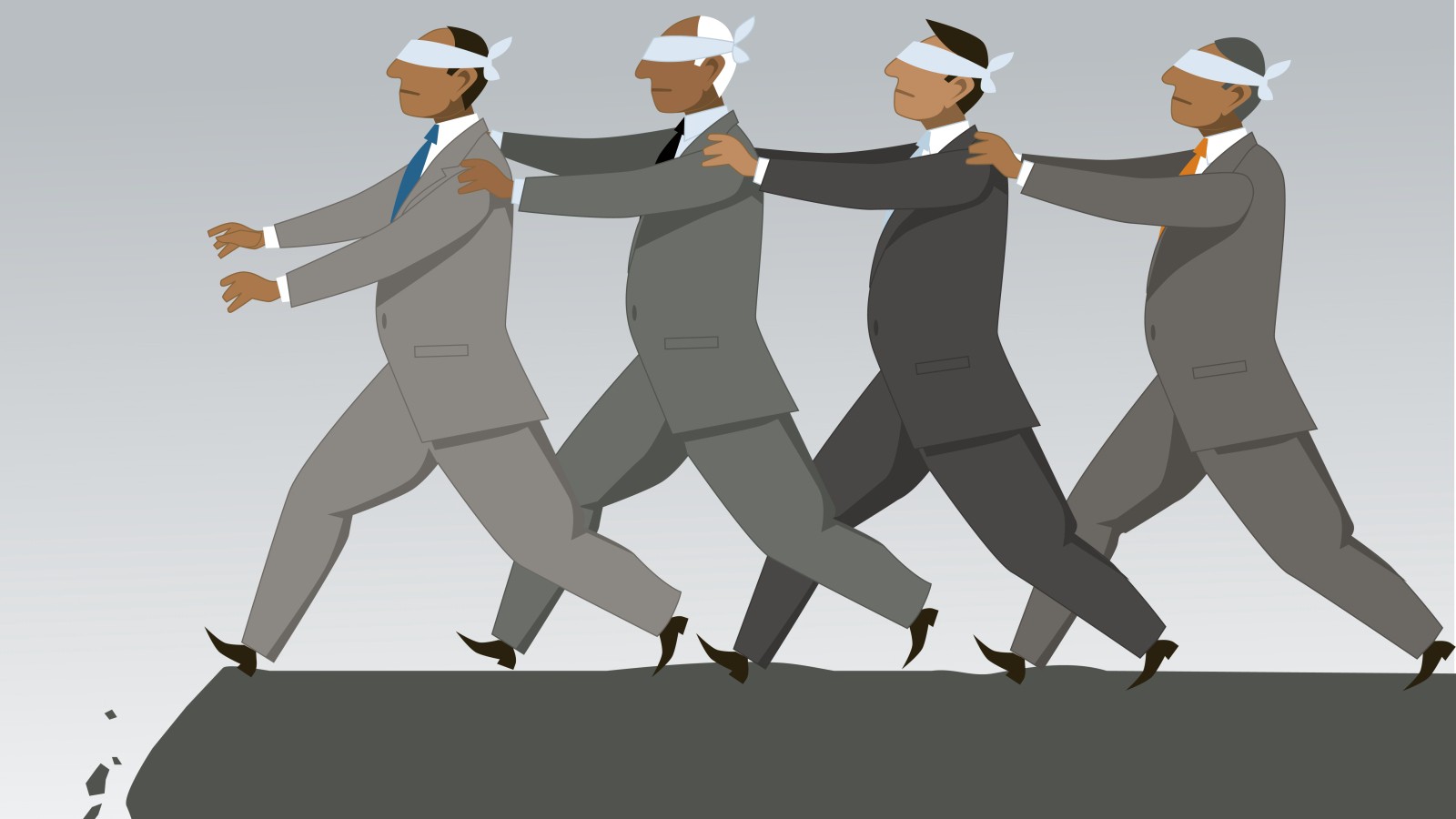
Have you ever been in a group and did not agree with the group’s decision, but had to agree because they would reject your idea?  Irving Janis, a social psychologist, first coined the term groupthink to describe this situation. His main aim was to understand how a group of individuals collectively come up with excellent decisions one time and fail at other times. Groupthink happens when a group of people with good intentions, but they make irrational decisions that are spurred by the urge to conform. Group members value harmony and coherence above rational thinking and refrain from expressing doubts and judgements or disagreeing with the consensus.

Irving Janis observed the following eight patterns of groupthink:

  1. Illusions of Invulnerability: when the group displays excessive optimism and takes big risks, the members of the group feel that anything they do will turn out to be successful.
  2. Collective Rationalization: when the group rationalizes thoughts or suggestions that challenge what the majority is thinking
  3. Belief in Inherent Morality of the Group: the belief that whatever the group does will be right. This causes the group members to overlook the consequences of what they decide.
  4. Out Group stereotypes: is the belief that those who disagree are opposing just to oppose the group
  5. Direct Pressure on Dissenters: the majority directly threatens the opposing group member by telling them that they can always leave the group if they don’t agree.
  6. Self-Censorship: the opposing individual believes that if they are the only odd one out then they must be the one who is wrong.
  7. Illusions of Unanimity: Silence from some is considered acceptance of the majority’s decision
  8. Self-Appointed Mind Guards: Members of the group who take it upon themselves to discourage alternative ideas from being expressed in the group.

There are numerous studies supporting the fundamentals of groupthink and conformity. One famous study was the Asch Conformity experiment. Solomon Asch gathered his participants to take a vision test where three lines at varied lengths were compared to one other; which was longer. The participants were asked to identify the lines with matching lengths. Ninety-five percent of participants answered every question correctly. Then Asch placed actors in the groups, who confidently volunteered the same incorrect answer. The accuracy dropped to 25 percent, indicating that 75 percent of the participants went along with the group’s incorrect answer for at least one question.

An Emory University neuroscientist, Gregory Berns, found that when we take a stance different from the group, we activate the amygdala, a small region in the brain associated with the fear. We don’t like to be rejected so we refrain from speaking up against the group, which supports Janis’ pattern of groupthink: Direct Pressure on Dissenters. Professor Berns defined this situation as “the pain of independence.” Many government decisions are cited as a result of groupthink, such as the Vietnam War or the invasion of Iraq.

Groupthink also fosters a strong “us vs. them” mentality that prompts members to accept group perspectives in the heat of the moment, where there is also a strong pressure from the outside to make a good decision. An example in literature is George Orwell’s Animal Farm, where the animals make a nonunanimous decision to rid the farm of humans. There were animals there that quite adored being loved and owned by a human, however, those animals had to agree because the leader of the animals would punish them otherwise.

After periodically experiencing groupthink, an individual may become shy and become more introverted. They may be afraid to speak and include their own ideas in fear of the group rejecting their idea.

If you or someone you know have social anxiety and fear of speaking up, please contact our psychotherapy offices in New York or New Jersey to talk to one of our licensed professional psychologists, psychiatrists, psychiatric nurse practitioners, or psychotherapists at Arista Counseling & Psychotherapy. Contact our Paramus, NJ or Manhattan, NY offices respectively, at (201) 368-3700 or (212) 722-1920 to set up an appointment. For more information, please visit http://www.counselingpsychotherapynjny.com/ .

Sources:

https://www.psychologytoday.com/us/basics/groupthink

https://www.communicationtheory.org/groupthink/

https://www.capitalideasonline.com/wordpress/the-pain-of-independence/

https://counselingrx.com/wp-content/uploads/2019/07/f74c8-1d9gxs1dxyteswk7e7zgd2q.jpeg