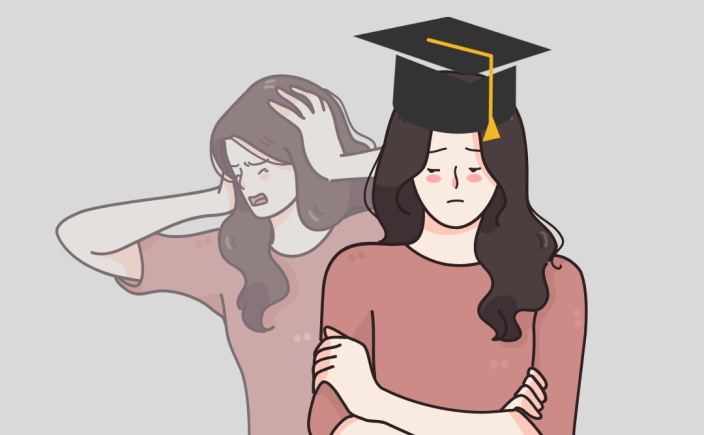
Post-Grad Depression

Depression/Post-College

By: Ingrid Guevara

Everyone knows and acknowledges that depression during college occurs. Statistics show that twenty-seven percent of college students had been diagnosed with depression and twenty-three percent said that depression impacted their academic performance negatively.  When it comes to post-grad students research shows that around twenty percent of student graduating experience depression. Post-grad depression is seen as situational depression. Situational depression is depression caused by a stressful or traumatic event. Post-Grad depression is caused by; pressure of finding a job, moving back in with parents, feeling a failure to launch, changes in friendships (friends scattering, not seeing them), student debt, comparison with friends and being overwhelmed by next steps and changes. Signs of post-grad depression are; lack of motivation, feeling worthless or guilty, loneliness, overwhelm (especially related to the next steps), feeling sad or down, isolation or wanting to isolate oneself, not enjoying activities that were previously enjoyed, poor sleep, appetite change, lower than usual frustration tolerance, feeling sluggish or super jittery and intense fear or expectation things will not go well in the future. Post-grad depression like any depression can really hinder your life so seeking help is suggested in order to properly cope with it. It is also suggested; avoiding comparing yourself with others, practice self-kindness and self-love, reach out to friends,  get some exercise/movement, don’t be too hard on yourself, recognize that transitions are difficult, find a support group/networking group, take care of yourself and confide in trusted family and friends. Depression is common when life is stressful and one feels pressure therefore, it is okay because always remember you are not alone.

If you or someone you know is struggling with their mental health, please contact our psychotherapy offices in New York or New Jersey to talk to one of our licensed professional psychologists, psychiatrists, psychiatric nurse practitioners, or psychotherapists at Arista Counseling & Psychotherapy. Contact our Paramus, NJ or Manhattan, NY offices respectively, at (201) 368-3700 or (212) 722-1920 to set up an appointment. For more information, please visit http://www.counselingpsychotherapynjny.com/

References

https://www.ncbi.nlm.nih.gov/pmc/articles/PMC9091131/

Shopping Addiction? Can’t Save Money? That May Be A Real Issue

Shopping Addiction? Can’t Save Money? That May Be A Real Issue

By Erika Ortiz

             Most people like to spend and buy things, but some take that splurging a bit to the max and do it any opportunity possible. Shopping makes some feel good, however; some get this “high” feeling since the brain releases endorphins and dopamine as they shop. It’s one thing to shop while on a budget, while it’s another to shop with no budget in mind. All of the spending, unnecessary buying, and accumulation of debt is an actual issue called shopping addiction. It is imperative to break down shopping addiction and the different types. First, there is impulse buying which is buying something you did not plan on purchasing in the first place. It can range from buying a chocolate bar from the grocery store while waiting in line or buying your 50th pair of shoes. Compulsive buying is when you plan your shopping, but to an extreme and on unnecessary items. Compulsive buying is usually where the shopping addiction behavior occurs most. For example, say you did not do so well on an exam or had a bad day at work, your immediate solution is to go shopping afterward to make yourself feel better. Another type is bargain shoppers who think they are getting a steal price or great deal. They are still spending a lot instead of saving. Finally, there is bulimic shopping or circular shopping. These people buy and return just for fun; even though they are staying within their budget, they are wasting a lot of time and energy.

           Shopping addiction can be due to stress, loneliness, sadness, the need to fill a void, lack of control, avoidance of reality, depression, anxiety, etc. Nonetheless, this is a severe problem that needs an urgent solution because shopping addiction can lead to issues in relationships, growing debt, constant overspending, and even lying about spending. One way to help with this issue is to create a budget and try sticking with it. There are many resources online that can be great budgeting tools. It is critical to immediately get help if you have a very severe case of shopping addiction. Seek a mental health professional who can help you get to the root of the issue and understand what you are going through. Remember that there is hope and you can get through this.

If you or someone you know is struggling with a shopping addiction please contact our psychotherapy offices in New York or New Jersey to talk to one of our licensed professional psychologists, psychiatrists, psychiatric nurse practitioners, or psychotherapists at Arista Counseling & Psychotherapy. Contact our Paramus, NJ or Manhattan, NY offices respectively at (201) 368-3700 or (212) 722-1920 to set up an appointment. For more information, please visit https://www.counselingpsychotherapynjny.com

Sources

https://www.ramseysolutions.com/budgeting/shopping-addiction

Anxiety in Athletes

Anxiety in Athletes

By Fiona McDermut

            Anxiety disorders are quite common in recent times, and can interfere with completing simple daily tasks. One population in which anxiety disorders can be particularly concerning is student athletes. Student athletes experience a tremendous amount of pressure coming from multiple facets of life. This includes pressure to perform/compete well, pressure to attend athletic training daily, pressure to maintain a healthy/fit figure, and the pressure to keep up with academic assignments. Competition and a moderate level of stress have proven to be beneficial to performance in many circumstances, but the overwhelming stress that often results from being a student athlete can be debilitating and may impact success.

            Although athletes may be at an increased risk for anxiety disorders, they often find that their schedules are too busy to seek help. In order to perform physically to one’s fullest potential, mental health is just as important as physical health. Anxiety can cause both mental and physiological symptoms that can impact athletic performance.

These symptoms include:

  • Feeling powerless
  • Feeling weak or tired
  • Increased heart rate
  • Rapid breathing
  • Trembling

            While decreasing the level of competition and pressure for student athletes may be a lost cause, there are ways to help deal with the feelings of anxiety that accompany this. First and foremost, it is crucial to allow yourself to take a day off when the pressure becomes too overwhelming. Do something that makes you happy, or simply give your body and mind a day of relaxation. This is especially important if you are injured, or not feeling well mentally or physically.

            If feelings of anxiety persist, it can be helpful to seek therapy. Therapy sessions provide an outlet to share emotions, as well as a professional who can help to manage anxiety. Some of the main treatments for anxiety include Cognitive Behavioral Therapy, Psychotherapy, and medication (mainly SSRIs and antidepressants). A mental health professional will work with your personal needs to establish the most effective treatment plan.

If you or someone you know is struggling with anxiety, please contact our psychotherapy offices in New York or New Jersey to talk to one of our licensed professional psychologists, psychiatrists, psychiatric nurse practitioners, or psychotherapists at Arista Counseling & Psychotherapy. Contact our Paramus, NJ or Manhattan, NY offices respectively, at (201) 368-3700 or (212) 722-1920 to set up an appointment. For more information, please visit http://www.counselingpsychotherapynjny.com/

Sources:

https://www.ncaa.org/sports/2014/10/8/mind-body-and-sport-anxiety-disorders.aspx

Image Source:

https://www.cnbc.com/2021/09/13/heres-impact-of-ncaa-letting-college-athletes-profit-off-their-marketability.html

Burnout; what it is and how to prevent it

By Katie Weinstein

When push comes to shove, stress becomes burnout. This can lead to detrimental effects on our physical and mental health, so it is important to recognize when burnout is beginning to occur. Burnout is a gradual process that is defined as an extended period of stress and exhaustion that feels like it isn’t improving. Some signs of burnout are losing interest and motivation to a point in which you become disengaged, which can cause a cynical and resentful attitude. Burnout also affects physical health, causing changes in appetite and sleep and frequent headaches.

The causes of burnout include work, lifestyle, and personality traits. Lack of recognition in a chaotic or high pressure environment can make someone more susceptible to burnout. Some ways to improve work related burnout are to outsource or share responsibilities and to set boundaries for off times such as not checking email. Another cause of burnout can be caregiver burnout, since it can be very tiring to care for a child. It’s important to remember that it does not make you a bad parent or friend to ask for help when you need it. Everyone needs a break. Additionally, a perfectionist attitude and pessimistic view on things may lead to burnout, it is important to recognize when burnout is beginning so that you can practice stress managing techniques and find time to do things that you enjoy to prevent burnout. 

Knowing the difference between a burnout and being overly stressed is essential for mental health. It is important to limit contact with negative people and reach out to supportive friends and family in order to shape a more positive attitude and prevent burnout.

If you or someone you know is experiencing burnout or high levels of stress, please contact our psychotherapy offices in New York or New Jersey to talk to one of our licensed professional psychologists, psychiatrists, psychiatric nurse practitioners, or psychotherapists at Arista Counseling & Psychotherapy. Contact our Paramus, NJ or Manhattan, NY offices respectively, at (201) 368-3700 or (212) 722-1920 to set up an appointment. For more information, please visit 

https://www.psychologytoday.com/us/basics/burnout

Physician Burnout during a Global Pandemic

By Eleanor Kim

Physicians and nurses around the world have been at the front lines fighting the coronavirus and saving the lives of those infected. Now more than ever, citizens are coming to realize the importance of those within the medical field and the bravery that comes with entering medicine. That being said, there has been an immense amount of pressure placed upon healthcare workers, often causing stress, anxiety, and depression. At the end of the day, doctors, nurses, and other healthcare workers are humans and can feel the effects of burnout during such a heightened and high stakes moment in medical history.

Burnout is when someone becomes overwhelmed by the demands of their daily life, becoming emotionally and physically exhausted and creating a sense of depersonalization and weakened personal accomplishments. Burnout is a common occurrence among physicians and nurses given the great amount of pressure that comes with saving lives. That being said, these feelings of burnout have skyrocketed given the additionally taxing nature of current frontline medical work such as the stress of isolating from friends and family, the extended hours of work, the tragic lack of medical supplies, and the fear of contracting or spreading the virus, to name a few. Physicians are also left to deal with the other struggles and anxieties that the past year has brought upon the general population regarding economic, political, racial, and other personal effects of the pandemic.

During these elongated periods where healthcare workers are left sleep deprived, improperly fed, and overall anxious about the current status of the pandemic, they are exposed to both mentally and physically long lasting effects. In 2020, there have been a record number of physicians who have reported feelings of burnout and other mental health concerns since the start of the pandemic. Should these issues go untreated, there is an increased risk for depression, self-medication, substance abuse, and suicidal thoughts or attempts. Burnout is more than just stress; it is a mental health crisis and should be treated as such.

If you or someone you know is feeling the effects of physician and healthcare worker burnout, please contact our psychotherapy offices in New York or New Jersey to talk to one of our licensed professional psychologists, psychiatrists, psychiatric nurse practitioners, or psychotherapists at Arista Counseling & Psychotherapy. Contact our Paramus, NJ or Manhattan, NY offices respectively, at (201) 368-3700 or (212) 722-1920 to set up an appointment. For more information, please visit http://www.counselingpsychotherapynjny.com/.

Resources:

https://www.forbes.com/sites/lipiroy/2020/05/17/doctor-heal-thyself-physician-burnout-in-the-wake-of-covid-19/

Image Source:

More than a third of medical staff suffered insomnia during the COVID-19 epidemic in China